

Existing law designates specific days as holidays in this state, including, among others, Dr. Martin Luther King, Jr. Day and Cesar Chavez Day. Existing law designates certain days as judicial holidays and exempts others including, Lunar New Year, Diwali, and Genocide Remembrance Day. This bill would designate Sylvia Mendez Day as a state holiday, but would exempt the holiday from being a judicial holiday. The bill would include related legislative findings and declarations. This bill would incorporate additional changes to Section 135 of the Code of Civil Procedure proposed by AB 2017 to be operative only if this bill and AB 2017 are enacted and this bill is enacted last. The bill would also incorporate additional changes to Section 6700 of the Government Code proposed by AB 2017 and SB 1394 to be operative only if this bill and either or both of those bills are enacted and this bill is enacted last.
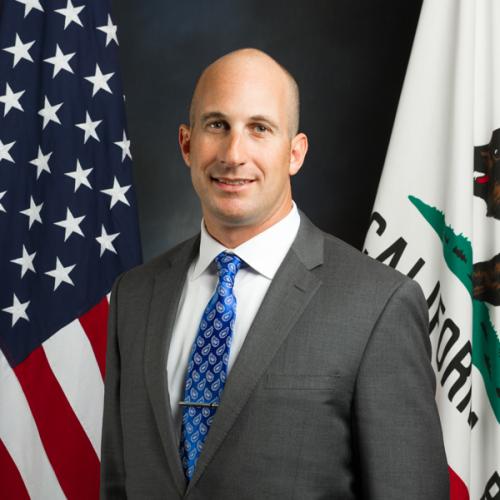
Rep. Heath Flora
Sponsored bills
Existing law, the California Emergency Services Act, authorizes the Governor to proclaim a state of emergency when specified conditions of disaster or extreme peril to the safety of persons and property exist, and authorizes the Governor to exercise certain powers in response to that emergency, including, but not limited to, suspending specified statutes, ordinances, orders, regulations, or rules. This bill would impose specific duties on the Department of Housing and Community Development if the Office of Emergency Services makes a written determination, within 10 days after the date that the Governor declared a state of emergency relating to a wildfire, that the wildfire caused substantial structural damage requiring significant rebuilding efforts, as defined. The bill would require the department, under this condition, to consult with other specified state entities and local governments to identify state permitting requirements and local procedures that could be suspended or revised to support recovery and rebuilding efforts as a result of the wildfire, as specified. The bill would require the department to prepare and submit initial and periodic reports to the Governor and Legislature with the information and recommendations. This bill, on or before July 1, 2028, would require the Department of Housing and Community Development, in consultation with other specified state entities, to convene a workgroup to review and provide a report to the Governor and the Legislature with recommendations regarding any provision of the California Building Standards Code that should be suspended for specified types of projects to facilitate rapid, safe, disaster-resilient, and cost-effective rebuilding and recovery guidance for any future state of emergency. The bill would require the workgroup to review and update the report to the Governor and Legislature after the release of every update to the California Building Standards Code. This bill, starting January 1, 2028, would require, upon the Governor's declaration of a state of emergency relating to a wildfire, every state agency or political subdivision, as defined, involved in postdisaster response, debris removal, reconstruction, housing, or land-use permitting to accept electronic submission of any application, form, plan set, appeal, or request for state agency or political subdivision action related to recovery efforts for that state of emergency, as provided. By imposing new duties on local agencies, the bill would impose a state-mandated local program. The California Constitution requires the state to reimburse local agencies and school districts for certain costs mandated by the state. Statutory provisions establish procedures for making that reimbursement. This bill would provide that, if the Commission on State Mandates determines that the bill contains costs mandated by the state, reimbursement for those costs shall be made pursuant to the statutory provisions noted above.
The Public Employees' Retirement Law (PERL) establishes the Public Employees' Retirement System (PERS) to provide a defined benefit to members of the system based on final compensation, credited service, and age at retirement, subject to certain variations. Existing law creates the Public Employees' Retirement Fund, which is continuously appropriated for purposes of PERS, including depositing employer and employee contributions. Under the California Constitution, assets of a public pension or retirement system are trust funds. The California Public Employees' Pension Reform Act of 2013 (PEPRA) establishes a variety of requirements and restrictions on public employers offering defined benefit pension plans. In this regard, PEPRA restricts the amount of compensation that may be applied for purposes of calculating a defined pension benefit for a new member, as defined, by restricting it to specified percentages of the contribution and benefit base under a specified federal law with respect to old age, survivors, and disability insurance benefits. Existing law, the Teachers' Retirement Law, establishes the State Teachers' Retirement System (STRS) and creates the Defined Benefit Program of the State Teachers' Retirement Plan, which provides a defined benefit to members of the program, based on final compensation, creditable service, and age at retirement, subject to certain variations. This bill, for service performed on and after January 1, 2027, would prohibit the pensionable compensation for calendar year 2027 used to calculate the defined benefit paid to a new member of a retirement system subject to PEPRA who retires from the system from exceeding specified percentages of the contribution and benefit base under the specified federal law with respect to old age, survivors, and disability insurance benefits. The bill would make related, conforming changes to these provisions on pensionable compensation. The bill also would require a new member of STRS to be subject to specified limits of the Teachers' Retirement Law. PEPRA requires each retirement system that offers a defined benefit plan for safety members of the system to use one of 3 formulas for safety members, 2% at age 57, 2.5% at age 57, or 2.7% at age 57. This bill would establish new retirement formulas, for employees first hired on or after January 1, 2027, as 2.5% at age 55, 2.7% at age 55, or 3% at age 55, subject to certain exceptions. For new members hired on or after January 1, 2013, who are safety members, the bill would require employers to adjust the formulas for service performed on or after January 1, 2027, to offer the formula that has the same fraction at age 55 as the fraction at age 57 in the formula the employer offered pursuant to existing law. The bill would authorize a public employer and a recognized employee organization to negotiate a prospective increase to the retirement benefit formulas for safety members and new safety members, consistent with the formulas permitted under PEPRA, including the new formulas described above. This bill would authorize an employer and its employees to agree in a memorandum of understanding to be subject to a higher safety plan or a lower safety plan, subject to certain requirements, including that the memorandum of understanding is collectively bargained in accordance with applicable laws. By increasing the contribution to continuously appropriated funds, and by increasing expenditures from those funds, this bill would make an appropriation.
Existing law establishes the California Community Colleges, the California State University, the University of California, independent institutions of higher education, and private postsecondary educational institutions as the segments of postsecondary education in the state. This bill, which would be known as Sarah Shulze's Law, would require each campus of the California State University, each community college of a community college district, and each private postsecondary educational institution and independent institution of higher education that receives state financial assistance, and would request each campus of the University of California, to require a person who serves as a coach or trainer in an athletic program, as a condition of the person's employment or volunteer service, to complete a student mental health training on or before July 1, 2028, and every 2 years thereafter. The bill would require the training, at a minimum, to cover suicide prevention education and would authorize the training to be provided by an entity that offers free, online, or other types of training courses. By imposing new duties on community college districts, the bill would impose a state-mandated local program. The California Constitution requires the state to reimburse local agencies and school districts for certain costs mandated by the state. Statutory provisions establish procedures for making that reimbursement. This bill would provide that, if the Commission on State Mandates determines that the bill contains costs mandated by the state, reimbursement for those costs shall be made pursuant to the statutory provisions noted above.
Existing law provides that in order for the state to recruit skilled firefighters for the Department of Forestry and Fire Protection, it is the policy of the state to consider prevailing salaries and benefits prior to making salary recommendations. Existing law requires the Department of Human Resources, in order to provide comparability in pay, to take into consideration the salary and benefits of other jurisdictions employing 75 or more full-time firefighters who work in California. This bill would require the state to bargain in good faith with firefighters who are rank-and-file members of State Bargaining Unit 8, employed by the Department of Forestry and Fire Protection, to reach a competitive range within 15% of the average salary for corresponding ranks in 20 California fire departments agreed to by the exclusive bargaining representative for Bargaining Unit 8 and the Department of Human Resources. The bill would require the state and the exclusive representative for State Bargaining Unit 8 to jointly survey the estimated average salaries for those 20 fire departments and report the findings, as provided. The bill would provide that nothing in the bill creates an entitlement to an automatic salary increase. The bill would require any salary increase for firefighters under these provisions to be implemented through a memorandum of understanding, in accordance with specified procedures governing collective bargaining agreements. The bill would include legislative findings and declarations related to its provisions.
Existing law authorizes the Public Utilities Commission to supervise and regulate every public utility in the state, including telephone corporations, and to fix just and reasonable rates and charges for public utilities. Existing law establishes the state's 6 universal service funds in the State Treasury, including the California High-Cost Fund-A Administrative Committee Fund (CHCF-A) and the California High-Cost Fund-B Administrative Committee Fund (CHCF-B) , and provides that moneys in each of the state's universal service funds are the proceeds of rates and are held in trust for the benefit of ratepayers and to compensate telephone corporations for their costs of providing universal service. Moneys in the funds may only be expended to accomplish specified telecommunications universal service programs, upon appropriation in the annual Budget Act or upon supplemental appropriation. Existing law, the CHCF-A program, until January 1, 2028, requires the commission to develop, implement, and maintain a suitable program to establish a fair and equitable local rate structure aided by universal service rate support to small independent telephone corporations that serve rural areas and are subject to rate-of-return regulation by the commission. Existing law, the CHCF-B program, until January 1, 2028, requires the commission to develop, implement, and maintain a suitable, competitively neutral, and broad-based program to establish a fair and equitable local rate support structure aided by universal service rate support to telephone corporations serving areas where the cost of providing services exceeds rates charged by providers, as determined by the commission. This bill would extend the CHCF-A program and CHCF-B program requirements to January 1, 2033. Under existing law, a violation of the Public Utilities Act or an order, decision, rule, direction, demand, or requirement of the commission is a crime. Because the CHCF-A program and CHCF-B program, which would be extended under the provisions of this bill, are part of the act, and a violation of a commission action implementing the programs' requirements would be a crime, the bill would impose a state-mandated local program. The California Constitution requires the state to reimburse local agencies and school districts for certain costs mandated by the state. Statutory provisions establish procedures for making that reimbursement. This bill would provide that no reimbursement is required by this act for a specified reason. This bill would declare that it is to take effect immediately as an urgency statute.
Existing law establishes the California Career Technical Education Incentive Grant Program, administered by the State Department of Education, with the purpose of encouraging, maintaining, and strengthening the delivery of high-quality career technical education programs. Existing law provides, for the 2021–22 fiscal year and each fiscal year thereafter, that $300,000,000 shall be available to the department, upon appropriation by the Legislature, for the program. Existing law requires an applicant to demonstrate a proportional dollar-for-dollar match and sets that amount for the 2021–22 fiscal year, and each fiscal year thereafter, at $2 for every $1 received from the program. Existing law prohibits an applicant from being awarded an amount higher than the amount that the allocation formula determines them to be eligible to receive under the program. Existing law requires the Superintendent of Public Instruction, in administering the program, to perform specified duties, including, among other duties, to (1) determine, in collaboration with the executive director of the State Board of Education, and make public on a preliminary basis at least 30 days before a regularly scheduled meeting of the state board, the allocation formula, (2) distribute funding on a multiyear schedule, (3) require grant recipients to submit program reports, (4) manage the grant process, and (5) promote the success of K–12 career technical education programs, as provided. This bill would require the department, instead of the Superintendent, to perform the above-described duties. The bill would, for purposes of allocations commencing no later than the 2027–28 fiscal year and pursuant to the above-described requirements, also require the department to determine, in consultation with the executive director of the state board, a revised allocation formula that ensures that all funds appropriated for the program in any given fiscal year are fully allocated to program applicants in that fiscal year, as provided.
Existing law requires the State Department of Public Health to license and regulate various health facilities, including general acute care hospitals. Existing law requires the department to issue a special permit, in addition to a license, to a health facility to offer one or more special services, such as an emergency center, if specified requirements are met, including that the department finds that the standards of care and services are adequate and appropriate. Existing law requires the department to issue a special permit to allow a general acute care hospital to offer emergency stabilization services at a location that is neither inside nor contiguous to the applicant hospital if the hospital provides satisfactory evidence to the department that, among other things, the hospital has a written transfer agreement with the hospital closest to the location where emergency stabilization services will be provided and satisfactory evidence to the department that this location meets certain requirements, including that the location is in the town of Paradise within the County of Butte and serves the same area previously served by Feather River Hospital. This bill would require the department to issue a waiver, as specified, to a publicly owned and operated general acute care hospital, in collaboration with Del Puerto Health Care District, to operate one rural emergency stabilization care unit and waive designated general acute care hospital licensure requirements if specified conditions are met. The bill would limit the term of the waiver based on prescribed factors, including the completion of a hospital build within a 5-mile radius of the emergency stabilization care unit or within 10 years from the initial issuance of the waiver, except as specified. This bill would make legislative findings and declarations as to the necessity of a special statute for Del Puerto Health Care District.
Existing law provides for the Medi-Cal program, administered by the State Department of Health Care Services and under which health care services are provided to low-income individuals pursuant to a schedule of benefits. The Medi-Cal program is, in part, governed and funded by federal Medicaid program provisions. Under existing law, pharmacist services are a benefit under the Medi-Cal program, subject to federal approval, and the rate of reimbursement for pharmacist services is 85% of the fee schedule for physician services, except for medication therapy management (MTM) pharmacist services. Existing law requires the department to implement an MTM reimbursement methodology relating to the dispensing of qualified specialty drugs by an eligible contracting pharmacy, which would be intended to supplement Medi-Cal payments to eligible pharmacies for MTM pharmacist services provided in conjunction with certain specialty drug therapy categories. This bill would additionally require the rate of reimbursement for advanced pharmacist practitioner services to be no less than 85% of the fee schedule for physician services, including MTM pharmacist services. The bill would, subject to, among other things, federal approval, require advanced pharmacist practitioners to be recognized as health care providers at federally qualified health centers and rural health clinics for reimbursement purposes under the Medi-Cal program. The bill would require the department to implement an MTM reimbursement methodology relating to the use of drugs to ensure that Medi-Cal payments are only made to eligible advanced pharmacist practitioners or pharmacies, including those operating at federally qualified health centers or rural health clinics, for MTM pharmacist services provided in conjunction with certain specialty drug therapy categories. Existing law, the Knox-Keene Health Care Service Plan Act of 1975, provides for the licensure and regulation of health care service plans by the Department of Managed Health Care, and makes a willful violation of the act a crime. Existing law provides for the regulation of health insurers by the Department of Insurance. Existing law requires a health care service plan or disability insurer that offers coverage for pharmacist services to pay or reimburse the cost of the service performed by a pharmacist at an in-network pharmacy or a pharmacist at an out-of-network pharmacy if the insurer has an out-of-network pharmacy benefit. Existing law authorizes this payment or reimbursement when specified conditions are met, including that the coverage otherwise provides reimbursement for identical services performed by other licensed health care providers. This bill would additionally require those health care service plans and disability insurers to pay or reimburse the cost of the service performed by a pharmacist enrolled as a provider with the plan or insurer. The bill would specify for these purposes that a pharmacist includes pharmacists who provide services at a federally qualified health center or a rural health clinic. The bill would authorize payment or reimbursement if the coverage otherwise provides reimbursement for similar services performed by other licensed health care providers, among other requirements. Because a willful violation of the bill's requirements relative to health care service plans would be a crime, the bill would impose a state-mandated local program. The California Constitution requires the state to reimburse local agencies and school districts for certain costs mandated by the state. Statutory provisions establish procedures for making that reimbursement. This bill would provide that no reimbursement is required by this act for a specified reason.
(1) Existing law, the Joint Exercise of Powers Act, authorizes 2 or more public agencies, by agreement, to form a joint powers authority to exercise any power common to the contracting parties, as specified. Existing law authorizes the agreement to set forth the manner by which the joint powers authority will be exercised. This bill, by January 1, 2028, would require the County of Sacramento, the City of Sacramento, the City of Elk Grove, the City of Rancho Cordova, the City of Citrus Heights, and the City of Folsom to participate in and work together to establish a joint powers authority, pursuant to the Joint Exercise of Powers Act, designed to make a meaningful difference for people experiencing housing insecurity and homelessness across the County of Sacramento. In this regard, the bill would require the above-specified local governments together to, among other things, bring the oversight and functions of the Sacramento City and County Continuum of Care under the jurisdiction of the joint powers authority, while maintaining the federally required composition and integrity of the continuum of care. The bill would require the joint powers authority to, among other things, provide direction to the continuum of care lead agency. The bill would specify that a local jurisdiction retains oversight and accountability over funding decisions, projects, and programs administered by the jurisdiction, including contracting for prevention, outreach, sheltering, and housing. The bill would declare that these provisions are severable. The bill would make findings and declarations relating to its provisions. By requiring the above-described local governments to establish the joint powers authority, this bill would impose a state-mandated local program. This bill would make legislative findings and declarations as to the necessity of a special statute for County of Sacramento. The bill would make additional related findings and declarations. (2) The California Constitution requires the state to reimburse local agencies and school districts for certain costs mandated by the state. Statutory provisions establish procedures for making that reimbursement. This bill would provide that, if the Commission on State Mandates determines that the bill contains costs mandated by the state, reimbursement for those costs shall be made pursuant to the statutory provisions noted above.