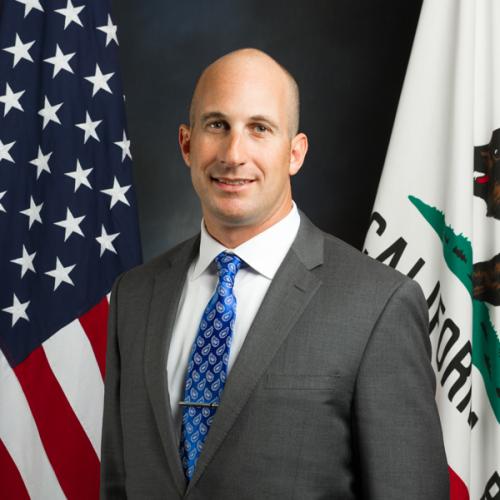
Photo of Heath Flora
R California House · District 9 On the 2026 ballot

Rep. Heath Flora

Compare
Total votes
23,533
all sessions
Attendance
83%
3,189 missed
Lower than 84% of chamber peers
With party
98%
of cast votes
Near the chamber average
Bipartisan score
1%
crosses aisle rarely
Near the chamber average
Sponsored
1,713
bills & resolutions
Higher than 88% of chamber peers
Committees
1
assignment
1,713 bills and resolutions

Sponsored bills

Total
1,713
Primary
192
Co-sponsor
1,521
This page
1,713
matching current filters
Co-sponsor HR 134
Passed · California House · Co-sponsor
Relative to California's First-Generation College Celebration Month.

Maddy summaryCalifornia House Resolution 134 designates the month of November as "California's First-Generation College Celebration Month." The resolution honors students whose parents did not complete a bachelor's degree and recognizes the specific academic and financial challenges they often face. It also highlights the importance of federal and state support programs, such as Pell Grants and the Educational Opportunity Program, in helping these students succeed in higher education.

Passed Aug 19, 2026 1 co-sponsor
Co-sponsor HR 135
Passed · California House · Co-sponsor
Relative to Neonatal Intensive Care Unit Awareness Month.

Maddy summaryThis California House Resolution declares September 2026 as Neonatal Intensive Care Unit (NICU) Awareness Month to highlight the challenges faced by families with newborns requiring extended hospital care. The bill notes that approximately 17,500 to 22,500 infants in the state experience NICU stays longer than two weeks each year, which can strain parental bonding and financial stability. It encourages individuals, businesses, and organizations to support parents in securing adequate time for bonding and home care after discharge. The resolution also directs copies of the text to be sent to the Governor and the Director of Employment Development for distribution.

Passed Aug 19, 2026 1 co-sponsor
Co-sponsor HR 130
Passed · California House · Co-sponsor
Relative to racial discrimination.

Maddy summaryCalifornia House Resolution 130 recognizes March 21, 2026, as the United Nations International Day for the Elimination of Racial Discrimination. The resolution cites historical context and current challenges in education, employment, criminal justice, and healthcare to highlight the impact of racial bias. It formally declares racism a public health crisis and commits the Assembly to actively participating in efforts to dismantle it.

Passed Aug 19, 2026 1 co-sponsor
Co-sponsor HR 86
Passed · California House · Co-sponsor
Relative to Canine "K-9" Appreciation Week.

Maddy summaryCalifornia Assembly Resolution 86 proclaims the week of September 1 through 7, 2026, as Canine "K-9" Appreciation Week to honor police dogs and their handlers. The resolution cites the historical growth of canine units in California and highlights their contributions to law enforcement, such as apprehending suspects, detecting narcotics, and locating missing persons. It also notes that these teams often reduce the need for lethal force and engage with the public through community demonstrations.

Passed Aug 19, 2026 1 co-sponsor
Co-sponsor AB 1830
Passed · California House · Co-sponsor
Ignition interlock devices.

(1) Existing law makes it unlawful for a person who is under the influence of any alcoholic beverage, has 0.08 or 0.04 percent or more, by weight, of alcohol in their blood, as specified, is addicted to the use of any drug, is under the influence of any drug, or is under the combined influence of any alcoholic beverage and drug to drive a vehicle. Existing law prohibits a person from driving a vehicle under the influence of any alcoholic beverage or drug and concurrently do an act forbidden by law, or neglect a duty imposed by law in driving the vehicle, which act or neglect proximately causes bodily injury to a person other than the driver. Existing law, until January 1, 2033, requires the Department of Motor Vehicles to immediately suspend or revoke the privilege of a person to operate a motor vehicle upon the receipt of an abstract of the record of a court showing that the person has been convicted of driving a vehicle under the circumstances above as well as for engaging in a motor vehicle speed contest for specified periods of time, depending on the statute under which the driving violation was punished, and prohibits the reinstatement of the driving privilege until the person gives proof of financial responsibility and proof satisfactory to the department of successful completion of a driving-under-the-influence (DUI) program, as specified. Existing law requires the department to advise the person that they may apply for a restricted driver's license if the person meets certain requirements, including, among others, satisfactorily providing proof of enrollment in a certain DUI program and the installment of a functioning, certified ignition interlock device (IID) . Existing law allows, for certain violations, a person who has had their driver's license suspended to apply to the department for a restricted license, subject to certain requirements. For specified violations, existing law requires the department to issue a restricted driver's license if the person has met certain requirements, including proof satisfactory to the department of enrollment in, or completion of, a DUI program, proof of financial responsibility, and the payment of all applicable reinstatement or reissue fees, among other fees, required by the department. This bill, beginning on January 1, 2031, would reorganize and recast the penalties and sanctions for the alcohol- and drug-related driving offenses described above. The bill would recast violations for driving under the influence of any alcoholic beverage or having 0.08 or 0.04 percent or more, by weight of alcohol in blood (collectively "alcohol-related driving violations") from violations for driving under the influence of any drug or driving while a person is addicted to the use of any drug (collectively "drug-related driving violations") . For convictions of alcohol-related driving violations, the bill would require the department to suspend the privilege to operate a motor vehicle and would allow the suspension to be indefinite. The bill would prohibit the reinstatement of that privilege until the person satisfies certain requirements, including, among others, the person applying for and maintaining a restricted driver's license for certain periods of time depending on the statute under which the driving violation is punished, which includes installing a certified IID on each vehicle operated by the person, providing proof satisfactory to the department of successful completion of a DUI program, as specified, paying all applicable reinstatement and reissue fees required by the department, and providing proof of financial responsibility. For convictions of drug-related driving violations described above, this bill would require the department to suspend the privilege to operate a motor vehicle for specified periods of time, depending on the statute under which the violation was punished. The bill would also prohibit the reinstatement of the privilege until the person satisfies certain requirements described above, but the bill would not require the person to install a certified IID or apply for and maintain a restricted driver's license for a specified period of time. This bill, beginning on January 1, 2031, would authorize a person, whose privilege to operate a motor vehicle is suspended for alcohol-related driving violations, to apply for a restricted license if certain requirements are met, including, among others, installing a certified IID on each vehicle operated by the person, as specified, providing proof of financial responsibility for 3 years, providing satisfactorily proof of enrollment in, or completion of, a DUI program, as specified, and paying a fee that is sufficient to cover the costs of administration of these requirements. The bill would require the department to terminate the restricted driver's license and suspend the privilege to drive if the person fails to comply with the DUI program requirements. The bill would also authorize a person, whose driving privilege was suspended for a conviction of a drug-related driving violation, to apply for a restricted driver's license if similar certain requirements are met, except the person would not be required to install a certified IID but would be required to complete a minimum number of months of a suspension period, as specified. This bill, beginning on January 1, 2031, would require the department to monitor the installation and maintenance of an IID that is installed pursuant to specified provisions. The bill would require the installer of the IID to notify the department if the device is removed or indicates that a person has attempted to remove, bypass, or tamper with the device, or the person fails 3 or more times to comply with these requirements. The bill would require the department to immediately suspend or revoke the privilege to operate a motor vehicle and any restricted driver's license if the person attempts to remove, bypass, or tamper with an IID, has the IID removed prior to the termination date of the restriction, or fails 3 or more times to comply with any requirement for the maintenance or calibration of the IID. The bill would require the department, and manufacturers, installers, and repairers of IIDs, to post information regarding filing complaints against manufacturers, installers, and repairers, as specified. (2) Existing law requires an order of suspension of a person's privilege to operate a motor vehicle for any of specified reasons, including the person was driving a motor vehicle when the person had 0.08 percent or more, by weight, of alcohol in their blood. Existing law requires the notice to be served on the person by a peace officer under specified conditions where test results show that the person has specified percentages of alcohol in the person's blood or where a person under 21 years of age refuses to take, or fails to complete, a specified test for alcohol in the blood. This bill, beginning on January 1, 2031, would include a person driving a motor vehicle when a passenger for hire was a passenger in the vehicle and the person had 0.04 percent or more, by weight, of alcohol in their blood as a reason to immediately suspend the privilege to operate a motor vehicle. The bill would authorize a person, whose driving privilege has been suspended pursuant to the provision above but not suspended or revoked based on the person's refusal to submit to, or failure to complete, a chemical test or tests, to apply for a restricted driver's license if certain requirements are met, including completing 30 days of the suspension period, providing proof of enrollment in a DUI program, installing a functioning, certified IID on any vehicle that they operate, being 21 years of age or older at the time of the offense, giving proof of financial responsibility, and paying all reissue and restriction fees. The bill would require the department to terminate the restricted driver's license and suspend the privilege to operate if the person has failed to comply with the DUI program requirements, or if the person attempts to remove, bypass, or tamper with the IID, removes the IID prior to the termination date of the restriction, or fails 3 or more times to comply with any requirement for the maintenance or calibration of the IID. (3) Existing law requires the department to suspend or revoke a person's privilege to operate a motor vehicle based on a peace officer's sworn statement or report, as specified. Existing law requires the department to review the record to determine whether the suspension or revocation is supported by the record, as specified. This bill, beginning on January 1, 2031, would require the department to review these determinations and consider the sworn report and any other information and evidence, as specified. If, by a preponderance of the evidence, the department determines in the review of a determination certain facts are proven, including, among other facts, that the peace officer had reasonable cause to believe that the person had been driving a motor vehicle in violation of an alcohol- or drug-related driving provision, the bill would require the department to sustain the order of suspension or revocation. If the department determines that any of these certain facts are not proven by a preponderance of the evidence, the bill would require the department to rescind the order of suspension or revocation, as specified. (4) Existing law allows, for certain violations, a person who has had their driver's license suspended to apply to the department for a restricted license, subject to certain requirements as provided above. This bill, beginning on January 1, 2031, would authorize a court to disallow the issuance of the restricted driver's license if the court determines that the person would present a traffic safety or public safety risk if the person were authorized to operate a motor vehicle during the period of suspension. This bill, beginning on January 1, 2031, would make conforming changes to include the provisions above, as applicable, in statutes that generally pertain to the suspension, revocation, or restriction of the privilege to operate a motor vehicle. (5) This bill would declare that it is to take effect immediately as an urgency statute.


Passed Aug 19, 2026 1 co-sponsor
Co-sponsor HR 128
Passed · California House · Co-sponsor
Relative to Aromatic L-Amino Acid Decarboxylase Deficiency Awareness Day.

Maddy summaryCalifornia House Resolution 128 designates October 23, 2026, as Aromatic L-Amino Acid Decarboxylase (AADC) Deficiency Awareness Day. The resolution aims to increase public and medical community awareness of this ultrarare genetic condition, which prevents the body from producing dopamine and causes severe developmental delays. By highlighting the challenges faced by patients and their caregivers, the bill encourages Californians to learn more about the disease to support earlier diagnosis and continued research into treatments.

Passed Aug 13, 2026 1 co-sponsor
Co-sponsor HR 131
Passed · California House · Co-sponsor
Relative to Student Cancer Education, Detection, and Prevention Week.

Maddy summaryCalifornia Assembly Resolution 131 proclaims October 11 through 17, 2026, as Student Cancer Education, Detection, and Prevention Week. The resolution encourages middle schools, high schools, colleges, public health agencies, pediatricians, and community health providers to promote educational campaigns on cancer prevention and detection. These efforts aim to inform students about risk factors, warning signs, and the importance of timely screenings to support better health outcomes for young people in the state.

Passed Aug 13, 2026 1 co-sponsor
Co-sponsor AB 2046
Passed · California House · Co-sponsor
Vehicles: pollution control devices.

Existing law prohibits a person from operating or leaving standing upon a highway a motor vehicle that is required to be equipped with a motor vehicle pollution control device or any other certified motor vehicle pollution control device, as specified, unless the motor vehicle is equipped with the required motor vehicle pollution control device that is correctly installed and in operating condition, and prohibits a person from disconnecting, modifying, or altering that device. Existing law also prohibits a person from installing, selling, offering for sale, or advertising any device, apparatus, or mechanism intended for use with, or as a part of, a required motor vehicle pollution control device or system that alters or modifies the original design or performance of the motor vehicle pollution control device or system. Existing law exempts from these provisions an alteration, modification, or modifying device, apparatus, or mechanism found by resolution of the State Air Resources Board to not reduce the effectiveness of a required motor vehicle pollution control device or to result in emissions from the modified or altered vehicle that comply with existing state or federal standards, as specified. A violation of these provisions is a crime. This bill would additionally exempt from the above-described provisions an alternative fuel retrofit system for a light-duty or medium-duty gasoline-fueled vehicle that converts the vehicle to a dual-fueled vehicle that can utilize gasoline or E85 fuel if the alternative fuel retrofit system has been certified by the United States Environmental Protection Agency as a clean alternative fuel conversion system, as specified, and would prohibit the State Air Resources Board from requiring state certification, executive order approval, or any additional testing or demonstration for such an alternative fuel retrofit device.

Passed Aug 13, 2026 1 co-sponsor
Co-sponsor HR 112
Passed · California House · Co-sponsor
Relative to Black Music Month.

Maddy summaryThis House Resolution officially designates September as Black Music Month to honor the significant contributions of Black artists to American culture. The measure recognizes a wide range of musical genres, including jazz, blues, gospel, and hip-hop, by highlighting their historical origins and influential figures. While the text celebrates these artistic achievements, it does not impose any new legal requirements or funding mandates.

Passed Aug 13, 2026 1 co-sponsor
Primary AB 1939
Passed · California House · Lead sponsor
Professional fiduciaries: corporate practice.

(1) Existing law, the Professional Fiduciaries Act, establishes, until January 1, 2028, the Professional Fiduciaries Bureau, and requires the bureau to license and regulate professional fiduciaries. Existing law defines various terms for these purposes. Existing law requires the bureau to maintain specified information in each licensee's file, and requires a licensee to annually file with the bureau a statement under penalty of perjury containing specified information, including among other things, any licenses or professional certificates held by the licensee. This bill, beginning January 1, 2029, would authorize licensees to organize professional fiduciary professional corporations to provide professional fiduciary services, and would prescribe requirements and regulations for those professional corporations to provide fiduciary services. The bill would require the bureau to set the registration and annual renewal professional fiduciary professional corporations regulatory fee in the amount of at least $1,000 but not to exceed the reasonable costs of implementing these provisions. This bill would require the information maintained by the bureau in each licensee's file, and the annual statement filed by a licensee, to include additional information, including information related to whether the licensee is serving with or under a professional fiduciary corporation. By expanding the scope of the crime of perjury, this bill would impose a state-mandated local program. Existing law authorizes the bureau to suspend, revoke, deny, or impose other disciplinary action on a professional fiduciary license for specified causes, including, among other things, violating specified laws, rules, or regulations pertaining to duties or functions of a professional fiduciary. This bill would add to that list of causes the failure of a licensee to respond to inquiries or produce documents requested by the bureau, including inquiries and documents related to a professional fiduciary professional corporation, within 60 days of when the request is made. (2) Existing law, the Moscone-Knox Professional Corporation Act, defines and regulates professional corporations. Existing law provides that a professional organization renders professional services that may be lawfully rendered only pursuant to a license, certification, or registration authorized by, among others, the Business and Professions Code pursuant to a certificate of registration issued by the governmental agency regulating the profession, as specified. This bill would require a professional fiduciary professional corporation to register with the Secretary of State, as provided, and would require the bureau to issue a certificate of registration to an applicant that meets the requirements of the Moscone-Knox Professional Corporation Act, the Professional Fiduciaries Act, and other applicable law. (3) Existing law generally regulates probate, guardianship, conservatorship, and other protective proceedings. Existing law defines various terms for these purposes, including "professional fiduciary." This bill would additionally define "professional fiduciary professional corporation" for these purposes. Existing law prohibits a superior court from appointing a person to carry out the duties of a professional fiduciary unless that person holds a valid, unexpired, and unsuspended license as a professional fiduciary or is exempt from those licensing requirements, as specified. This bill would repeal those provisions and would instead prohibit a superior court from appointing a professional fiduciary as, or permitting a professional fiduciary to continue as, a guardian, conservator, personal representative, or trustee, unless the professional fiduciary satisfies one of specified requirements. The bill would make conforming changes. (4) Existing constitutional provisions require that a statute that limits the right of access to the meetings of public bodies or the writings of public officials and agencies be adopted with findings demonstrating the interest protected by the limitation and the need for protecting that interest. This bill would make legislative findings to that effect. (5) The California Constitution requires the state to reimburse local agencies and school districts for certain costs mandated by the state. Statutory provisions establish procedures for making that reimbursement. This bill would provide that no reimbursement is required by this act for a specified reason.

Passed Aug 13, 2026 0 co-sponsors
Showing 21 to 30 of 1,713 bills
Previous 1 2 3 4 172 Next