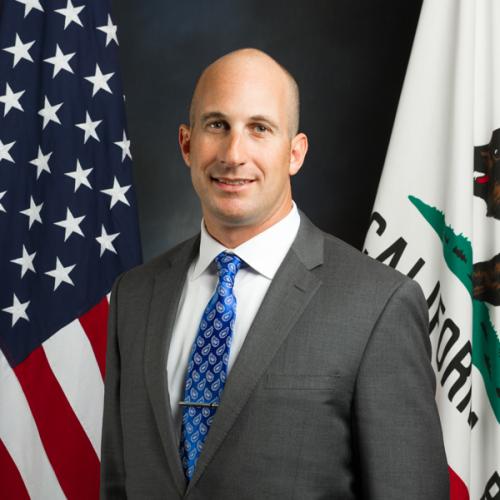
Photo of Heath Flora
R California Assembly · District 9 On the 2026 ballot

Asm. Heath Flora

Compare
Total votes
23,533
all sessions
Attendance
83%
3,189 missed
Lower than 85% of chamber peers
With party
98%
of cast votes
Near the chamber average
Bipartisan score
1%
crosses aisle rarely
Near the chamber average
Sponsored
1,713
bills & resolutions
Higher than 91% of chamber peers
Committees
1
assignment
1,713 bills and resolutions

Sponsored bills

Total
1,713
Primary
192
Co-sponsor
1,521
This page
1,713
matching current filters
Co-sponsor SCR 106
Signed into law · California Senate · Co-sponsor
Relative to Korean American Day.

Maddy summarySCR 106 designates January 13, 2026, as Korean American Day within the state. This ceremonial resolution officially recognizes the contributions of Korean Americans to the state's cultural and social fabric. It affects state records and calendar designations, adding a specific date for commemoration. The bill became law on February 3, 2026, as Chapter 2 of the Statutes of 2026.

Signed into law Feb 3, 2026 1 co-sponsor
Co-sponsor AB 469
died · California Assembly · Co-sponsor
Crimes: impersonation of first responders.

Existing law, the California Emergency Services Act, authorizes the Governor to proclaim a state of emergency, as defined, under specified circumstances. Existing law defines a "first responder" as an employee of the state or a local public agency who provides emergency response services. Existing law makes it a misdemeanor to impersonate certain first responders, including a member of a fire department. This bill would state the intent of the Legislature to enact legislation relating to the impersonation of first responders during a state of emergency.

died Feb 2, 2026 1 co-sponsor
Co-sponsor AB 12
Failed · California Assembly · Co-sponsor
Low-carbon fuel standard: regulations.

The California Global Warming Solutions Act of 2006 establishes the State Air Resources Board as the state agency responsible for monitoring and regulating sources emitting greenhouse gases. The act requires the state board to adopt rules and regulations to achieve the maximum technologically feasible and cost-effective greenhouse gas emissions reductions to ensure that the statewide greenhouse gas emissions are reduced to at least 40% below the statewide greenhouse gas emissions limit, as defined, no later than December 31, 2030. Pursuant to the act, the state board has adopted the Low-Carbon Fuel Standard regulations. This bill would void specified amendments to the Low-Carbon Fuel Standard regulations adopted by the state board on November 8, 2024.

Failed Feb 2, 2026 1 co-sponsor
Primary AB 1492
died · California Assembly · Lead sponsor
Elections: vote by mail voters.

Existing law defines a vote by mail voter as a voter who casts a ballot in any way other than at a polling place and defines a military or overseas voter as an elector who is absent from the county in which the voter is otherwise eligible to vote because the person is a member of the military or a specified federal government agency, a spouse or dependent of such a person, or a citizen living outside of the territorial limits of the United States. This bill would make nonsubstantive changes to these provisions.

died Feb 2, 2026 0 co-sponsors
Co-sponsor AB 1228
Failed · California Assembly · Co-sponsor
Electricity: expedited utility distribution infrastructure undergrounding program.

Existing law vests the Public Utilities Commission with regulatory authority over public utilities, including electrical corporations. Existing law requires the commission to establish an expedited utility distribution infrastructure undergrounding program for large electrical corporations. In order to participate in the program, existing law requires a large electrical corporation to submit to the Office of Energy Infrastructure Safety a distribution infrastructure undergrounding plan, as provided. Upon approval of the plan by the office, existing law requires the large electrical corporation to submit to the commission an application requesting review and conditional approval of the plan's costs and other specified information. This bill would specify that the approval of a distribution infrastructure undergrounding plan is not a project for purposes of the California Environmental Quality Act, as specified.

Failed Feb 2, 2026 1 co-sponsor
Primary AB 816
Failed · California Assembly · Lead sponsor
Employment: employees and independent contractors: merchandisers.

Existing law requires a 3-part test, commonly known as the "ABC" test, to determine if workers are employees or independent contractors for purposes of the Labor Code, the Unemployment Insurance Code, and the wage orders of the Industrial Welfare Commission. Under the ABC test, a person providing labor or services for remuneration is considered an employee rather than an independent contractor unless the hiring entity demonstrates that the person is free from the control and direction of the hiring entity in connection with the performance of the work, the person performs work that is outside the usual course of the hiring entity's business, and the person is customarily engaged in an independently established trade, occupation, or business. Existing law charges the Labor Commissioner with the enforcement of labor laws, including worker classification Existing law exempts certain occupations and business relationships from the application of the ABC test described above. Existing law, instead, provides that these exempt relationships are governed by the multifactor test previously adopted in the case of S. G. Borello & Sons, Inc. v. Department of Industrial Relations (1989) 48 Cal.3d 341. These exemptions include professional services provided by graphic designers, fine artists, content contributors, and various others, subject to meeting specified conditions. This bill would create an exemption for a merchandiser contracting with a bona fide business or hiring entity to provide stand-alone in-store inventory and product placement labor or services on behalf of retailers and brands in the consumer-packaged goods industry, as specified.

Failed Feb 2, 2026 0 co-sponsors
Primary AB 1176
Failed · California Assembly · Lead sponsor
Energy: renewable energy resources program.

Existing law establishes the renewable energy resources program to increase the amount of electricity generated from eligible renewable energy resources. Existing law defines various terms for purposes of the program, including "renewable electrical generation facility," a facility with specified characteristics that commences initial commercial operation after January 1, 2005. This bill would include as a "renewable electrical generation facility" for purposes of the program a facility that commenced initial commercial operation on January 1, 2005, and would make nonsubstantive changes.

Failed Feb 2, 2026 0 co-sponsors
Primary AB 765
Failed · California Assembly · Lead sponsor
Employment Training Fund: federal loan interest payments.

Existing law establishes the Employment Training Panel within the Employment Development Department and sets forth its powers and duties with respect to certain employment training programs. Existing law establishes the Employment Training Fund in the State Treasury, and requires that moneys in the fund be expended only for the purposes of the Employment Training Panel, except as provided. Existing law authorizes, with the approval of the Legislature, the fund or contributions to it to be used to pay interest charged on federal loans to the Unemployment Fund. This bill would instead prohibit moneys in the fund from being diverted, transferred, or otherwise used to pay interest charged on federal loans to the Unemployment Fund, or related liabilities, without the approval of the Legislature by statute and a public report justifying the necessity for the diversion, transfer, or use. The bill would also make related findings and declarations.

Failed Feb 2, 2026 0 co-sponsors
Primary AB 1019
Failed · California Assembly · Lead sponsor
Enhancing Law Enforcement Activities Subaccount: identification of unidentified human remains.

Existing law requires a certain percentage of funds to be allocated to specified rural and small county sheriffs' departments from funds remaining in the Enhancing Law Enforcement Activities Subaccount in the Local Revenue Fund 2011, as specified. Existing law requires that funds allocated pursuant to these provisions be used to enhance law enforcement efforts in those counties. This bill would specifically authorize a county sheriff's department to use up to 20% of those funds for the identification of unidentified human remains, including using the funds for forensic examination and genealogical research.

Failed Feb 2, 2026 0 co-sponsors
Primary AB 1397
Failed · California Assembly · Lead sponsor
Hemp: low-dose hemp drinks.

The Sherman Food, Drug, and Cosmetic Law, among other things, regulates the labeling of food, beverages, and cosmetics and makes it a crime to distribute in commerce any food, drug, device, or cosmetic if its packaging or labeling does not conform to these provisions. Existing law establishes a process for the embargo, condemnation, and destruction of a food, drug, device, or cosmetic that is adulterated, misbranded, or falsely advertised, gives the authority to place items under embargo to authorized agents of the State Department of Public Health, and requires the department to take specified actions. Violation of the Sherman Food, Drug, and Cosmetic Law is a misdemeanor. Existing law also requires hemp manufacturers who produce specified products that include industrial hemp or who produce raw hemp extract, as defined, to complete a registration process, under the State Department of Public Health, and to meet various requirements for testing and labeling on products. Existing law, as part of the registration process, requires the department to assess specified fees, including an oversight and authorization enrollment fee, to cover the actual reasonable costs of implementing the regulatory program. This bill would authorize a hemp manufacturer to produce and sell low-dose hemp drinks, as defined, if specified requirements are met, including that the low-dose hemp drink contains no greater than 5 milligrams of total THC per container and does not contain cannabis, as defined. The bill would require the low-dose hemp drink to be tested by an independent testing laboratory, and would prohibit a low-dose hemp drink from being sold to or consumed by an individual under 21 years of age. This bill would impose a low-dose hemp drink excise tax upon purchasers of low-dose hemp drinks sold in the state at 10% of the gross receipts of any retail sale of low-dose hemp drinks, as specified. The bill would require the California Department of Tax and Fee Administration to administer the tax pursuant to the Fee Collection Procedures Law, the violation of which is a crime. The bill would require a retailer to collect the tax from the purchaser and remit it to the California Department of Tax and Fee Administration. The bill would require the tax, and interest, penalties, and other amounts collected and paid to the department pursuant to the tax, to be deposited into the Low-Dose Hemp Drink Excise Tax Fund, which the bill would establish, and would continuously appropriate the moneys in the fund to the department and to the State Department of Public Health for regulatory purposes related to low-dose hemp drinks, as specified. By extending the application of the Fee Collection Procedures Law, and by expanding the application of the Sherman Food, Drug, and Cosmetic Law, both of which make a violation of their provisions a crime, the bill would impose a state-mandated local program. The California Constitution requires the state to reimburse local agencies and school districts for certain costs mandated by the state. Statutory provisions establish procedures for making that reimbursement. This bill would provide that no reimbursement is required by this act for a specified reason. This bill would include a change in state statute that would result in a taxpayer paying a higher tax within the meaning of Section 3 of Article XIIIA of the California Constitution, and thus would require for passage the approval of 23 of the membership of each house of the Legislature.


Failed Feb 2, 2026 0 co-sponsors
Showing 111 to 120 of 1,713 bills
Previous 1 11 12 13 172 Next