

Under existing law, a prisoner can reduce their term of imprisonment by earning credit for, among other things, continuous incarceration, good behavior, and participation in approved rehabilitative programming. Existing law makes an inmate of a county jail or state prison who has completed training for assignment to a conservation camp, state or county facility, or a correctional institution as an inmate firefighter, or who is assigned to a state or county facility or a correctional institution as an inmate firefighter, and who is eligible to earn one day of credit for every one day of incarceration, instead eligible to earn 2 days of credit for every one day served in that assignment or after completing that training. Existing law authorizes a juvenile court to order placement of a ward at the Pine Grove Youth Conservation Camp if specified criteria are met, including if the county has entered into a contract with the Department of Corrections and Rehabilitation and the department has found the ward amenable. Existing law authorizes the department to enter into contracts with counties to operate the Pine Grove Youth Conservation Camp through a state-local partnership, or other management arrangement, to train justice-involved youth, as specified, in wildland firefighting skills. This bill would require an incarcerated individual hand crew member, in addition to receiving credits, and a ward or youth hand crew member placed at the Pine Grove Youth Conservation Camp to be paid an hourly wage equal to $7.25 while assigned to an active fire incident. The bill would require that wage rate to be reviewed annually. The bill would require the Department of Corrections and Rehabilitation and counties to maintain regulations regarding an administrative adjudication and remedy process for any disputes over sums owned pursuant to these provisions. This bill would declare that it is to take effect immediately as an urgency statute.
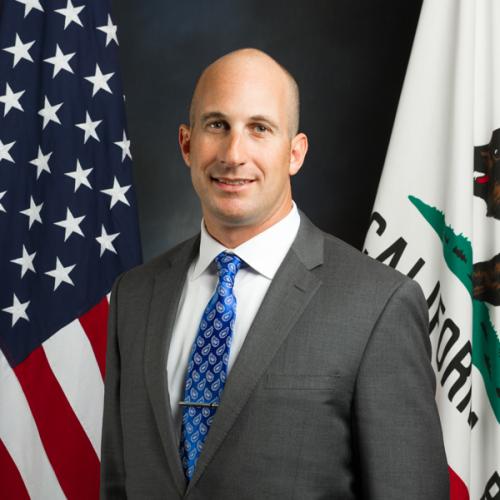
Asm. Heath Flora
Sponsored bills
Existing law governs the business of buying, selling, and dealing in secondhand and used machinery and all ferrous and nonferrous scrap metals and alloys, also known as "junk." Existing law requires junk dealers and recyclers to keep a written record of all sales and purchases made in the course of their business, including the place and date of each sale or purchase of junk and a description of the item or items, as specified. Existing law requires the written record to include a statement indicating either that the seller of the junk is the owner of it, or the name of the person they obtained the junk from, as shown on a signed transfer document. Existing law prohibits a junk dealer or recycler from providing payment for nonferrous materials until the junk dealer or recycler obtains a copy of a valid driver's license of the seller or other specified identification. Existing law requires a junk dealer or recycler to preserve the written record for at least 2 years. Existing law makes a violation of the recordkeeping requirements a misdemeanor. This bill would require junk dealers and recyclers to include additional information in the written record, including the time and amount paid for each sale or purchase of junk made, and the name of the employee handling the transaction. The bill would revise the type of information required to be included in the description of the item or items of junk purchased or sold, as specified. The bill would require the statement referenced above indicating ownership or the name of the person from whom the seller obtained the junk from to be signed. Existing law prohibits a junk dealer or recycler from possessing certain materials, including a fire hydrant or manhole cover or lid, without written certification from the agency owning or previously owning the material specifying that the agency has either sold the material or is offering the material for sale, salvage, or recycling and that the person is authorized to negotiate the sale of the material. Existing law makes it a crime for any person who is engaged in the salvage, recycling, purchase, or sale of scrap metal to possess specified items, including a fire hydrant or a manhole cover or lid, that were owned or previously owned by specified public entities and that have been stolen or obtained in a manner constituting theft or extortion, knowing the property to be stolen or obtained in that manner, or to fail to report possession of those items, as specified. A person who violates those provisions is subject to a criminal fine of not more than $3,000. This bill would expand the list of materials and items subject to those provisions to include, among other things, items reasonably recognizable as street lights and related equipment, and would increase the maximum amount of the criminal fine to $5,000. Existing law makes a person who is a dealer in or collector of junk, metals, or secondhand materials, or their agent, employee, or representative, who buys or receives any wire, cable, copper, lead, solder, mercury, iron, or brass that the person knows or reasonably should know is used by or belongs to specified entities, including a railroad, certain utility companies, or a public entity engaged in furnishing public utility service, without using due diligence to ascertain that the person selling or delivering that material has a legal right to do so, guilty of criminally receiving that property and, in addition to imprisonment, makes that act punishable by a fine of not more than $1,000. This bill would instead make the act punishable by a fine of not more than $5,000. By expanding the scope of existing crimes, the bill would impose a state-mandated local program. The California Constitution requires the state to reimburse local agencies and school districts for certain costs mandated by the state. Statutory provisions establish procedures for making that reimbursement. This bill would provide that no reimbursement is required by this act for a specified reason.
Existing law requires workers employed on public works to be paid not less than the general prevailing rate of per diem wages for work of a similar character in the locality that the public work is performed, as prescribed, unless an exception applies. Existing law requires the Director of the Department of Industrial Relations to determine the general prevailing rate of per diem wages for work of a similar character in the locality in which the public work is to be performed. Under existing law, per diem wages include certain employer payments made pursuant to a collective bargaining agreement or for a program or committee established under the federal Labor Management Cooperation Act of 1978, as specified. Existing law provides that these payments are a credit against the obligation to pay the general prevailing rate of per diem wages. Existing law requires the credit for employer payments to be computed on an annualized basis where the employer seeks credit for employer payments that are higher for public works projects than for private construction performed by the same employer, except under certain circumstances, including a determination by the director that annualization would not serve the purposes of the provisions relating to public works projects. This bill would remove that exception and revoke annualization exemptions authorized by the director prior to January 1, 2026. The bill would authorize an employer to take full credit for the hourly amounts contributed to defined contribution pension plans that provide for both immediate participation and essentially immediate vesting even if the employer contributes at a lower rate or does not make contributions to private construction. The bill would require the employer to prove that the credit for employer payments was calculated properly. The bill would authorize the Labor Commissioner to deny the employer credit for employment payments if the employer does not produce payment records. The bill would make related findings and declarations.
Existing law defines the crime of burglary as entering specified buildings, places, or vehicles with the intent to commit grand or petty theft or a felony. Existing law clarifies that a structure designed for habitation is being used for dwelling purposes if, at the time of the burglary, it was not occupied solely because a disaster caused the occupants to leave the premises. This bill would specify that neither the fact that the structure entered has been damaged by a natural or other disaster, nor the extent of the damage, shall preclude conviction. Existing law defines looting as the commission of certain offenses during and within an affected county in a state of emergency or local emergency, as specified. Existing law includes any 2nd-degree burglary or grand theft in the definition of looting, and makes looting based on those offenses punishable by either imprisonment in a county jail for one year or as a felony. Existing law also makes the crime of looting based on petty theft punishable as a misdemeanor. Existing regulations define an "evacuation area" as a geographic area from which civilians have been evacuated pursuant to an evacuation order and where movement and entry are controlled by fire and law enforcement personnel having jurisdictional authority. Existing regulations define an "evacuation warning" as alerting community members in a defined area of a potential threat to life or property. This bill would recast the offense of looting to include first degree burglary, 2nd degree burglary, grand theft, trespass, and theft from a vehicle, when those offenses are committed in an evacuation zone, to the crime of looting. The bill would also, for the purposes of the offense of looting, define an evacuation zone to include an evacuation area or an area subject to an evacuation warning, and to include any residential dwelling units in such an area for a period of one year after the evacuation order, or up to 3 years if the property is undergoing construction. The bill would impose increased penalties for these offenses committed within an evacuation zone, as specified. By increasing the punishment of specified crimes, this bill would impose a state-mandated local program. The California Constitution requires the state to reimburse local agencies and school districts for certain costs mandated by the state. Statutory provisions establish procedures for making that reimbursement. This bill would provide that no reimbursement is required by this act for a specified reason. This bill would make the operation of its provisions contingent upon the enactment of Senate Bill 571 of the 2025–26 Regular Session.
(1) Existing law, the California Nutrition Monitoring Development Act of 1986, requires the State Department of Public Health to assess the availability and adequacy of existing state and local food and nutrition data systems. The act requires different state departments, including the State Department of Education, to provide to the State Department of Public Health, upon request, nutrition-related data collection forms, documentation, and reports of various programs. This bill would define "ultraprocessed food" for certain school-related purposes and would require the State Department of Public Health to adopt regulations, on or before June 1, 2028, to define "ultraprocessed foods of concern" and "restricted school foods," as specified. The bill would require the department, when defining ultraprocessed foods of concern and restricted school foods, to consider specified factors, including, among others, whether, based on reputable peer-reviewed scientific evidence, a substance or group of substances are linked to health harms or adverse health consequences, as specified. The bill would require schools, as defined, to begin to phase out restricted school foods and ultraprocessed foods of concern by no later than July 1, 2029. Beginning July 1, 2032, the bill would prohibit a vendor from offering restricted school foods and ultraprocessed foods of concern to a school. This bill, on or before February 1, 2028, and on or before February 1 of each year thereafter through February 1, 2032, would require a vendor to report specified information to the State Department of Public Health for each food product sold to a school in the past calendar year, including, among others, the total quantity of food product sold to schools and whether that food product is an ultraprocessed food, a restricted school food, or an ultraprocessed food of concern. The bill, on or before July 1, 2028, and on or before July 1 of each year thereafter through July 1, 2032, would require the State Department of Public Health, in consultation with the State Department of Education, to submit to the Legislature and the Governor a report that contains, among other things, a summary and analysis of the information reported to the State Department of Public Health by vendors and recommendations for state and local legislative actions that could reduce the consumption of ultraprocessed foods, restricted school foods, and ultraprocessed foods of concern in schools. The bill would require the State Department of Public Health to consult with the State Department of Education regarding compliance training and technical assistance for school food service and procurement staff for these purposes and would require the State Department of Public Health to establish a structure to deliver training and technical assistance to local educational agencies. (2) Existing law requires the State Department of Education to develop and maintain nutrition guidelines for school lunches and breakfasts, and for all food and beverages sold on public school campuses, consistent with the requirements for a nutritionally adequate breakfast and a nutritionally adequate lunch. Existing law defines a nutritionally adequate breakfast and a nutritionally adequate lunch for these purposes to mean those that qualify for reimbursement under the most current meal pattern for the federal School Breakfast Program and the federal National School Lunch Program, respectively. Existing law requires a school district, county superintendent of schools, or charter school maintaining kindergarten or any of grades 1 to 12, inclusive, to make available a nutritionally adequate breakfast and a nutritionally adequate lunch, free of charge, during each schoolday to any pupil who requests a meal without consideration of the pupil's eligibility for a federally funded free or reduced-price meal. Existing law authorizes a school operated and maintained by a school district or county office of education, from the midnight before to 30 minutes after the end of the official schoolday, to sell food and beverages other than meals reimbursed by specified federal nutrition programs, only if the food or beverages meet dietary guidelines, as specified, depending on grade level. This bill, beginning July 1, 2035, would prohibit a school district, county superintendent of schools, or charter school maintaining kindergarten or any of grades 1 to 12, inclusive, from offering a nutritionally adequate breakfast or lunch that includes restricted school foods or ultraprocessed foods of concern, as provided, and would prohibit a school operated and maintained by a school district or county office of education from selling food or beverages, except for food items sold as part of a school fundraising event, containing those restricted school foods or ultraprocessed foods of concern, as provided. (3) To the extent this bill would impose additional requirements on public schools, the bill would impose a state-mandated local program. (4) The California Constitution requires the state to reimburse local agencies and school districts for certain costs mandated by the state. Statutory provisions establish procedures for making that reimbursement. This bill would provide that, if the Commission on State Mandates determines that the bill contains costs mandated by the state, reimbursement for those costs shall be made pursuant to the statutory provisions noted above.
(1) Existing law authorizes specified drowning or injury prevention organizations (DIP organization) to provide informational materials, in electronic or hardcopy form, to a public school regarding specified topics relating to drowning prevention. Existing law requires a DIP organization that chooses to provide informational materials to provide, upon request by a public school, the informational materials in the 3 most commonly spoken languages associated with the population attending the school. This bill would instead require a DIP organization that chooses to provide informational materials to provide, upon request by a public school, the informational materials in English and would encourage the DIP organization to provide informational materials in the other most commonly spoken languages associated with the population attending the school. The bill would require a DIP organization that chooses to provide informational materials to a public school to provide those materials at no cost to the public school, allow the school to offer copies of the materials to pupils and parents, and provide written evidence to a school administrator that demonstrates that the informational materials provided by the DIP organization align with the drowning, drowning prevention, water safety, rescue, and swim skills lesson information found on the drowning prevention web page of the federal Centers for Disease Control and Prevention, as provided. The bill also would require the State Department of Education, in consultation with the State Department of Developmental Services and the State Department of Public Health, to gather and make available on its internet website school-based water safety and drowning prevention education resources and curriculum, as provided. The bill would authorize public schools to provide to their pupils those water safety informational materials identified by the department and provided by a DIP organization, as provided. (2) Existing law requires the State Department of Public Health to adopt and enforce regulations relating to public swimming pools, as defined. This bill would expressly authorize the State Department of Public Health to review and evaluate existing statutes and regulations under its jurisdiction recommended by the California Unintentional Injury Prevention Strategic Plan Project to ensure clarity, consistency, and alignment with current public health practices, as provided, and would authorize the department to recommend to the Legislature updates or nonsubstantive technical corrections to support effective implementation and regulatory compliance.
Existing law, the Alcoholic Beverage Control Act, establishes the Department of Alcoholic Beverage Control for the regulation of licenses or the manufacture, distribution, and sale of alcoholic beverages within the state. Existing law prescribes various penalties for violations of the act, including that every person who sells, furnishes, gives, or causes to be sold, furnished, or given away any alcoholic beverage to any person under 21 years of age is guilty of a misdemeanor. Existing law provides that a licensee's acceptance of bona fide evidence, as defined, or utilization of a biometric system constitutes a defense to any prosecution or proceedings against the licensee, as specified. This bill would provide that the use of an active age verification software or an age verification device, as provided, to establish the age of a purchaser of alcoholic beverages that fails to identify a false identification card is considered evidence in any prosecution or proceedings against the licensee, as specified, if the identification is bona fide evidence and was physically inspected, is seemingly legitimate, and matches the physical appearance of the customer.
Under existing law, the residence address, telephone number, and email address of a registered voter is confidential, except that under certain circumstances a county elections official must provide that information to any candidate for federal, state, or local office, to any committee for or against any initiative or referendum measure, and to any person for election, scholarly, journalistic, political, or governmental purposes. This bill would exempt the residence address, telephone number, and email address of a federal, state, or local elected official or candidate from that disclosure requirement, except that the information may be disclosed for journalistic or governmental purposes under specified conditions. The bill would require the Secretary of State to provide each county elections official with a list identifying each federal and state elected official or candidate residing in the county, require the county elections official to add each local elected official or candidate to that list, and require the county elections official to make the elected official or candidate's information confidential within 5 business days. The bill would require the county elections official to exclude the elected official or candidate's confidential information when producing any list, roster, or index. The bill would require an elected official or candidate to contact their county elections official to ensure their voter registration record has been made confidential. The bill would authorize an elected official or candidate to opt out of making their residence address, telephone number, and email address confidential. By adding new duties for county elections officials, this bill would create a state-mandated local program. This bill would incorporate additional changes to Section 2194 of the Elections Code proposed by AB 827 to be operative only if this bill and AB 827 are enacted and this bill is enacted last. Existing constitutional provisions require that a statute that limits the right of access to the meetings of public bodies or the writings of public officials and agencies be adopted with findings demonstrating the interest protected by the limitation and the need for protecting that interest. This bill would make legislative findings to that effect. The California Constitution requires the state to reimburse local agencies and school districts for certain costs mandated by the state. Statutory provisions establish procedures for making that reimbursement. This bill would provide that, if the Commission on State Mandates determines that the bill contains costs mandated by the state, reimbursement for those costs shall be made pursuant to the statutory provisions noted above.
Existing law requires the State Air Resources Board to adopt and implement motor vehicle fuel specifications for the control of air contaminants and sources of air pollution. Existing law prohibits the state board from adopting any regulation that establishes a specification for motor vehicle fuel unless that regulation, and a multimedia evaluation conducted by affected agencies and coordinated by the state board, are reviewed by the California Environmental Policy Council. This bill would, notwithstanding that prohibition, authorize blends of gasoline containing 10.5% to 15% ethanol by volume to be sold in the state for use as a transportation fuel until (1) the California Environmental Policy Council completes its review of those blends and (2) the state board either adopts a regulation establishing a specification for those blends or posts an assessment on its internet website demonstrating that it is not possible for a regulation establishing a specification for those blends to meet specified requirements. This bill would declare that it is to take effect immediately as an urgency statute.
Existing law, the Nurse Anesthetists Act, provides for the certification and regulation of nurse anesthetists by the Board of Registered Nursing. Existing law requires the utilization of a nurse anesthetist to provide anesthesia services in an acute care facility to be approved by the acute care facility administration and the appropriate committee, as defined, and at the discretion of the physician, dentist, or podiatrist. Existing law makes a nurse anesthetist who is not an employee of an acute care facility subject to the bylaws of the facility. This bill would expressly provide that a nurse anesthetist is authorized to perform anesthesia services. The bill would define "anesthesia services" for purposes of the act to mean, among other things, preoperative, intraoperative, and postoperative care and pain management provided by a nurse anesthetist for patients receiving anesthesia pursuant to an order by a physician, dentist, or podiatrist for anesthesia services. Under the bill, an order by a physician, dentist, or podiatrist for anesthesia services for a specific patient would be deemed the authorization for the nurse anesthetist to select and implement the modality of anesthesia for the patient and to abort or modify the modality of anesthesia during the course of care. The bill would provide that the selection and administration of medication by a nurse anesthetist for preoperative, intraoperative, and postoperative care and for pain management purposes pursuant to an order by a physician, dentist, or podiatrist shall not constitute a prescription as that term is defined in a specified provision of federal law. The bill would state that the provisions of the Nurse Anesthetists Act are declaratory of existing law and of an advisory opinion, including specified case law.