

Passed Aug 27, 2020
1 co-sponsor
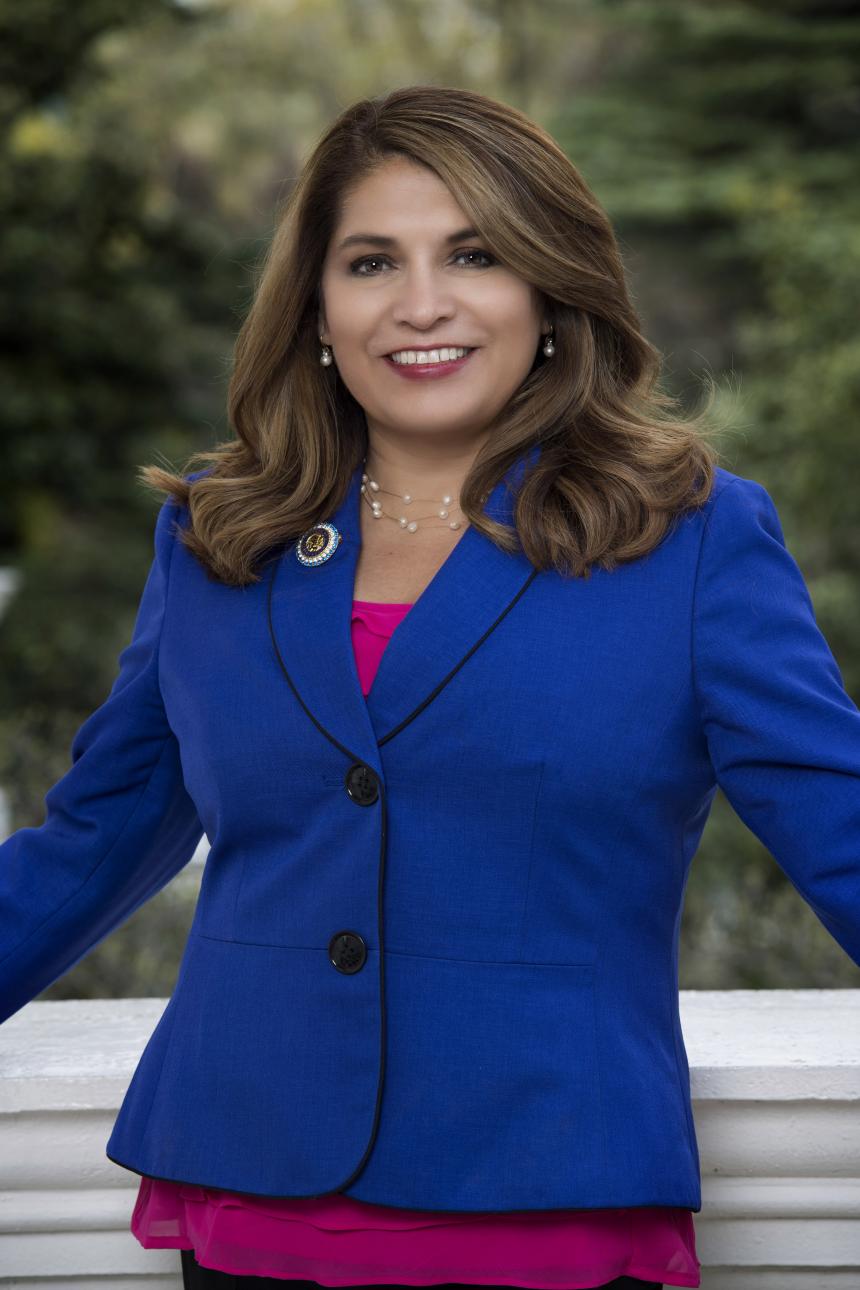
D
California Assembly
·
District 67
Asm. Sharon Quirk-Silva
Total votes
25,250
all sessions
Attendance
94%
1,303 missed
Near the chamber average
With party
98%
of cast votes
Higher than 76% of chamber peers
Bipartisan score
1%
crosses aisle rarely
Lower than 78% of chamber peers
Sponsored
2,398
bills & resolutions
Near the chamber average
Committees
15
assignments
2,398 bills and resolutions
Sponsored bills
Total
2,398
Primary
286
Co-sponsor
2,112
This page
2,398
matching current filters
California Manufacturing Emergency Preparedness Act of 2020.
The Bergeson-Peace Infrastructure and Economic Development Bank Act establishes the California Infrastructure and Economic Development Bank (I-Bank) . Among other things, the act authorizes I-Bank to make loans, issue bonds, and provide financial assistance to economic development or public development facilities. Under existing law, the Disaster Assistance Fund is continuously appropriated, without regard to fiscal year, for purposes of the California Disaster Assistance Act. That act provides that when funds are available for purposes of the act, the Governor may allocate the funds, in connection with relief provided, in affected areas during the period of federal disaster relief, to the Small Business Expansion Fund for use by the California Infrastructure and Economic Development Bank (I-Bank) , to provide guarantees for low-interest interim loans to be made by lending institutions for the purpose of providing interim financing to enable small businesses that have suffered actual physical damage or significant economic losses, as a result of the disaster or state of emergency for which funding is made available. This bill would enact the California Manufacturing Emergency Preparedness Act of 2020, which would authorize I-Bank to establish the California Manufacturing Disaster Loan and Loan Guarantee Program for the purpose of attracting, retaining, retooling, establishing, and expanding manufacturing and logistics capacity in the state, and would require I-Bank to establish guidelines for the implementation and oversight of the program. The bill would prohibit I-Bank from commencing the program until it adopts a resolution finding that there is sufficient funding in the account to cover the costs of implementing the program and that the I-Bank has sufficient direction from the Director of the Office of Emergency Services, as provided. The bill would require I-Bank to provide for the development and administration of the program, as specified, and would require program applicants to demonstrate satisfaction of specified requirements. The bill would also require each applicant to pay a nonrefundable application fee, as provided. The bill would create the Manufacturing Program Account within the California Infrastructure and Economic Development Bank Fund. The bill would authorize the Governor to allocate disaster relief funds, including funds in the Disaster Assistance Fund, to the Manufacturing Program Account for use by I-Bank, to cover the costs of administering the program and to provide direct loans or guarantees, or both, made by lending institutions, and to forgive those loans in appropriate circumstances, for the purpose of providing financing to enable the manufacturing and logistics sectors to support the emergency needs of Californians. The bill would provide that the moneys in the account be made available to I-Bank, upon a transfer of funds by the Director of Finance pursuant to an allocation by the Governor under the California Disaster Assistance Act, for specified purposes. The bill would authorize moneys in the account to be allocated to a lending institution or financial company that will act as trustee of the funds, with the approval of the Department of Finance. The bill would authorize I-Bank to create subaccounts in the account for specified purposes. Because this bill would expand the purposes for which a continuously appropriated fund is expended and would deposit moneys and fees into a new, continuously appropriated account, the bill would make an appropriation. The bill would require I-Bank to annually report, commencing with January 1, 2022, to the Governor and the Legislature on program activity, as specified, in any fiscal year that the program receives funding or has active loans. The bill would further provide that the above described provisions will be implemented only to the extent that sufficient moneys are available to I-Bank to implement the California Manufacturing Disaster Loan and Loan Guarantee Program. The bill would permit these provisions to be used to respond to, and recover from, the conditions arising from the state of emergency declared by the Governor on March 4, 2020, related to the COVID-19 virus. The bill would prohibit I-Bank from entering into loans or loan guarantees pursuant to the bill's provisions on or after January 1, 2026. This bill would declare that it is to take effect immediately as an urgency statute.
Passed Aug 20, 2020
1 co-sponsor
Public postsecondary education: University of California and California State University: student eligibility policy.
Existing law establishes the University of California, under the administration of the Regents of the University of California, and the California State University, under the administration of the Trustees of the California State University, as the 2 segments of public postsecondary education in the state generally authorized to grant baccalaureate degrees. The Donahoe Higher Education Act sets forth the missions and functions of the segments of postsecondary education in this state. Provisions of the act apply to the University of California only to the extent that the regents act, by appropriate resolution, to make those provisions applicable. A provision of the act expresses the intent of the Legislature that, in determining the standards and criteria for undergraduate and graduate admissions to the University of California and the California State University, the governing bodies of the segments develop processes that, among other things, strive to be fair and are easily understandable. This bill would require the trustees, and request the regents, before making any change in undergraduate student eligibility policy that adds new eligibility requirements, as described, that impact students across its segment, to engage in discussions with and coordinate with other educational segments that will be impacted by the policy in order to understand the impacts of the policy and try to align their respective student eligibility policies. The bill would also require the trustees, and request the regents, to commission an independent study by a third-party research organization to assess the impact of the change in student eligibility policy on the eligibility rates of the graduates of public secondary schools who are members of underrepresented student groups. The bill would also require, or request, as applicable, if either the trustees or the regents approve a change in student eligibility policy that adds new eligibility requirements that impact students across its segment, that an implementation committee, with members selected as designated, be convened to develop a multiyear plan for that segment to work with the public elementary and secondary school system, the California Community Colleges, and the governing body of the other segment to implement the change, and would require in those circumstances annual progress reports to the Governor, the Legislature, and the governing body of the other segment, as specified. If such a change in student eligibility requirements is approved by either the trustees or the regents between January 1, 2020, and the operative date of this bill, the bill would additionally require the trustees or request the regents, as applicable, to commission an independent study by a third-party research organization to assess the actual impact of this change, as specified. This bill would declare that it is to take effect immediately as an urgency statute.
Passed Aug 20, 2020
1 co-sponsor
Teacher credentialing: reading instruction.
Existing law requires the Commission on Teacher Credentialing to, among other duties, establish standards for the issuance and renewal of credentials, certificates, and permits. Existing law requires the commission to develop, adopt, and administer a reading instruction competence assessment consisting of one or more instruments to measure an individual's knowledge, skill, and ability relative to effective reading instruction, as provided. Existing law requires the requirements for the issuance of the preliminary multiple subject teaching credential to include successful passage of one of specified components of the reading instruction competence assessment. This bill would additionally authorize the passage of a combination of those specified components, as approved by the commission, or the completion of specified coursework that meets the commission's standards, to meet that requirement, and would extend these requirements to the issuance of a preliminary education specialist credential. The bill would make the requirements relating to the reading instruction competence assessment, as revised by this bill, inoperative on July 1, 2024. The bill would authorize a holder of a preliminary multiple subject credential or a preliminary education specialist credential who was unable to take the reading instruction competence assessment due to the closure of assessment centers during the COVID-19 pandemic, and who must complete this requirement in order to earn a professional clear credential, if the reading instruction competence assessment is no longer being administered because of the inoperation of the requirements relating to that assessment on July 1, 2024, to complete this requirement through successful completion of coursework in reading instruction that meets the commission's standards. Existing law requires, as a minimum requirement for a preliminary multiple or single subject teaching credential, the satisfactory completion of a program of professional preparation that includes a teaching performance assessment that meets specified requirements and has been approved by the commission. Existing law requires an internship program to provide interns who meet entrance criteria and are accepted to a multiple subject teaching credential program, a single subject teaching credential program, or a level 1 education specialist credential program that provides instruction to individuals with mild to moderate disabilities, the opportunity to choose an early program completion option, culminating in a 5-year preliminary teaching credential. Existing law requires that this early program completion option be made available to interns who meet specified requirements, including, among others, that the intern pass the teaching performance assessment. This bill would require the commission, by July 1, 2024, to ensure that an approved teaching performance assessment assess candidates for preliminary multiple subject and preliminary education specialist credentials for competence in instruction in literacy, including, but not limited to, foundational reading skills, as provided. The bill would make other revisions relating to those internship programs, as provided. Existing law includes as a minimum requirement for the preliminary multiple or single subject teaching credential the study of alternative methods of developing English language skills, including the study of reading, among all pupils, including those for whom English is a second language, in accordance with the commission's standards of program quality and effectiveness. This bill would instead require as a minimum requirement for the preliminary multiple or single subject teaching credential the study of effective means of teaching literacy, as provided, and fluency to all pupils, including English learners and pupils with exceptional needs, in accordance with the commission's standards of program quality and effectiveness, current teaching performance expectations, and the current English Language Arts/English Language Development (ELA/ELD) Framework adopted by the State Board of Education.
Passed Aug 20, 2020
1 co-sponsor
Tenancy: rental payment default: mortgage forbearance: state of emergency: COVID-19.
(1) Existing law provides that a tenant is guilty of unlawful detainer if the tenant continues to possess the property without permission of the landlord after the tenant defaults on rent or fails to perform a condition or covenant of the lease under which the property is held, among other reasons. Existing law requires a tenant be served a 3 days' notice in writing to cure a default or perform a condition of the lease, or return possession of the property to the landlord, as specified. Existing law, the Mobilehome Residency Law, prohibits a tenancy from being terminated unless specified conditions are met, including that the tenant fails to pay rent, utility charges, or reasonable incidental service charges and 3 days' notice in writing is provided to the tenant, as specified. This bill would enact the COVID-19 Tenant Relief Act of 2020. This bill would require that any 3 days' notice that demands payment of COVID-19 rental debt that is served on a tenant during the covered time period meet specified criteria, including that the notice include an unsigned copy of an attestation of COVID-19-related financial distress and that the notice advise the tenant that the tenant will not be evicted for failure to comply with the notice if the tenant delivers a signed attestation of COVID-19-related financial distress to the landlord, as specified. The bill would define "covered time period" for purposes of these provisions as the time between March 4, 2020, and either 90 days after the termination of the COVID-19 state of emergency or April 1, 2021, whichever occurs earlier. The bill would provide that a tenant is not guilty of an unlawful detainer if the tenant makes the demanded payment, vacates the property, or delivers a signed attestation of COVID-19-related financial distress within 15 days of the service of the notice. The bill would deem a 3 days' notice that fails to comply with this criteria void and insufficient to support a judgment for unlawful detainer or to terminate a tenancy under the Mobilehome Residency Law. The bill would prohibit a tenant that delivers an attestation of COVID-19-related financial distress pursuant to these provisions from being deemed in default with regard to the COVID-19 rental debt. Existing law regulates specified terms and conditions of tenancies. Existing law authorizes a landlord to demand security at the beginning of a tenancy for residential property and specifies the purposes for which the security may be used, including, among others, compensating the landlord for the tenant's default in payment of rent. The bill would prohibit a landlord from applying a security deposit to satisfy COVID-19 rental debt or applying a monthly rental payment to any COVID-19 rental debt, unless the tenant agrees in writing. The bill would define "COVID-19 rental debt" as unpaid rent or any other unpaid financial obligation under the tenancy that accrued during the covered time period. The bill would prohibit a landlord from charging a tenant, or attempting to collect from a tenant, fees for a late payment of COVID-19 rental debt. The bill would prohibit a landlord from terminating a tenancy or threatening to terminate a tenancy, in retaliation against a tenant for having COVID-19 rental debt. This bill would prohibit a housing provider, credit reporting agency, tenant screening company, or other specified entities from using an alleged COVID-19 rental debt as a negative factor in evaluating creditworthiness, as specified. The bill would prohibit a cause of action to recover COVID-19 rental debt until 15 months after the date the COVID-19 state of emergency terminates or April 1, 2022, whichever is earlier. This bill would provide that any provision of a stipulation settlement agreement, or other agreement that conflicts with or purports to waive these provisions is prohibited and void as contrary to public policy. The bill would provide that if a local initiative, ordinance, regulation, or other policy conflicts with these provisions, the provision that provides the greater protection to tenants controls. (2) Existing law prescribes various requirements to be satisfied before the exercise of a power of sale under a mortgage or deed of trust. In this regard, existing law requires that a notice of default and a notice of sale be recorded and that specified periods of time elapse between the recording and the sale. Existing law establishes certain requirements in connection with foreclosures on mortgages and deeds of trust, including restrictions on the actions mortgage servicers may take while a borrower is attempting to secure a loan modification or has submitted a loan modification application. This bill would enact the Small Landlord and Homeowner Relief Act of 2020. The bill would authorize a borrower to request forbearance during the effective time period from any mortgage obligation by submitting a request to the borrower's mortgage servicer, either orally or in writing, affirming that the borrower is experiencing a financial hardship that prevents the borrower from making timely payments on the mortgage obligation due, directly or indirectly, to the COVID-19 emergency. The bill would define "borrower" for these purposes as a natural person who is a mortgagor, trustor, or confirmed successor in interest; an entity other than a natural person provided that the secured property is currently occupied by one or more residential tenants; or a mobilehome owner who is the borrower on a security agreement relating to a loan or conditional sale contract that gives the secured party the right to foreclose its security interest in a manufactured home or mobilehome, except as specified. The bill would define "effective time period" as the time period between the operational date of these provisions and either 90 days after the termination of the COVID-19 state of emergency or April 1, 2021, whichever occurs first. This bill would also authorize a mobilehome owner who is the borrower on any security agreement relating to a loan or conditional sale contract which, according to its terms, gives the secured party the right to foreclose its security interest in a manufactured home or mobilehome to request forbearance during the effective time period, as specified. This bill would require a mortgage servicer or lienholder to, if certain requirements are met, offer the forbearance requested for an initial period of up to 180 days, which may be extended at the request of the borrower or mobilehome borrower, as specified. The bill would authorize a mortgage servicer or lienholder to limit the total forbearance provided to 360 days and authorize the mortgage servicer or lienholder to count any forbearance already provided to the borrower between March 4, 2020, and the date of the mobilehome borrower's initial request against that 360 days. The bill would prohibit a mortgage servicer or lienholder from assessing, accruing, or applying any fees, penalties, or additional interest during the forbearance period, as specified. The bill would require a mortgage servicer or lienholder to attempt to contact the borrower, including a mobilehome borrower, with diligent effort at least 30 days before the end of any forbearance period granted pursuant to these provisions to inquire whether the borrower is able to resume making preforbearance mortgage or loan payments. The bill would, if the borrower indicates that they will not be able to resume preforbearance payments, require the mortgage servicer or lien holder to evaluate the borrower for loss mitigation and foreclosure prevention, as specified. Alternatively, if the borrower affirms they are able to resume preforbearance payments or fails to respond to the mortgage servicer, the bill would require the mortgage servicer or lienholder to reinstate the preforbearance payments and provide a specified notice to the borrower that includes, among other things, a description of any options available to the borrower to address the amount unpaid during the forbearance. This bill would authorize a multifamily borrower that was current on its payments as of February 1, 2020, to submit a written request for forbearance to the mortgage servicer affirming that the multifamily borrower is experiencing a financial hardship during the COVID-19 emergency. The bill would define "multifamily borrower" for purposes of these provisions as a borrower of a residential mortgage loan that is secured by a lien against a property comprising 5 or more dwelling units. The bill would require a mortgage servicer to provide an initial forbearance period of 30 days and grant additional 30-day extension periods upon the request of the borrower, as specified. The bill would authorize a mortgage servicer to limit the total forbearance provided to 180 days and authorize the mortgage servicer to count any forbearance already provided to the borrower between March 4, 2020, and the date of the mobilehome borrower's initial request against that 180 days. The bill would authorize a mortgage servicer to condition forbearance on the receipt of reasonable documentation from the borrower that demonstrates a decrease of at least 10% or more of the multifamily borrower's gross rental revenue, as specified. The bill would authorize a mortgage servicer to condition any extension of the forbearance period on the receipt of payment equal to the net operating income derived from the property and the borrower keeping all property tax and insurance payments current. This bill would authorize a borrower, including a mobilehome borrower and multifamily borrower, who is likely to suffer material harm from a violation of these provisions to bring an action to obtain injunctive relief, damages, and restitution, as specified. The bill would require a court to award a prevailing borrower reasonable attorney's fees and costs in any action based on a violation of these provisions. This bill would provide that any waiver by a borrower of these provisions is contrary to public policy and void.
Passed Aug 20, 2020
1 co-sponsor
State and local agencies: homelessness plan.
Existing law establishes in state government the Business, Consumer Services, and Housing Agency, comprised of the Department of Consumer Affairs, the Department of Housing and Community Development, the Department of Fair Employment and Housing, the Department of Business Oversight, the Department of Alcoholic Beverage Control, the Alcoholic Beverage Control Appeals Board, the California Horse Racing Board, and the Alfred E. Alquist Seismic Safety Commission. Existing law requires the Governor to create the Homeless Coordinating and Financing Council (referred to as "the coordinating council") and to appoint up to 19 members of that council, as provided. Existing law specifies the duties of the coordinating council, including creating partnerships among state agencies and departments, local government agencies, and specified federal agencies and private entities, for the purpose of arriving at specific strategies to end homelessness. This bill, upon appropriation by the Legislature or upon receiving technical assistance offered by the federal Department of Housing and Urban Development (HUD) , if available, would require the coordinating council to conduct, or contract with an entity to conduct, a statewide needs and gaps analysis to, among other things, identify state programs that provide housing or services to persons experiencing homelessness and create a financial model that will assess certain investment needs for the purpose of moving persons experiencing homelessness into permanent housing. The bill would provide that the council's obligation to conduct the statewide needs and gaps analysis is fulfilled if a technical assistance provider from HUD conducts the analysis on behalf of the council. The bill would require the council to work with the technical assistance provider to complete the analysis. The bill would authorize local governments to collaborate with the coordinating council or other entity conducting the analysis upon an appropriation by the Legislature to cover costs of the collaboration or upon provision of technical assistance by HUD. The bill would also require the coordinating council or any other entity conducting the analysis to seek input from the coordinating council's members on the direction of, design of data collection for, and items to be included in the statewide needs and gaps analysis. The bill would require the council to report on the analysis to specified committees in the Legislature by July 31, 2021. The bill would require the coordinating council or other entity conducting the analysis to evaluate all available data, including, among other things, data from other state departments and agencies. The bill would require a state department or agency with a member on the coordinating council to assist in data collection for the analysis by responding to data requests within 180 days, as specified. This bill would require the Department of Housing and Community Development (department) to set a benchmark goal in reducing homelessness by January 1, 2028, for the state pursuant to the statewide needs and gaps analysis. The bill would require the department to approve or work with local agencies, as defined, to identify, as provided, appropriate benchmark goals to reduce homelessness for each local agency and cities within each local agency. The bill would also require the department to set annual benchmarks to meet these benchmark goals. The bill, on or before January 1, 2022, would require each local agency to submit to the department an actionable county-level plan for meeting specific annual benchmarks, with the goal of achieving the state-identified benchmark goal. The bill would require each city in the local agency's jurisdiction to participate in the plan, and each local agency would be required to request and actively seek the participation of all homeless continuums of care that serve the local agency's jurisdiction. The bill would require the plan to include, among other things, a description and the amount of all funding sources the local agency, and any incorporated jurisdiction and continuum of care, has earmarked or committed to addressing homelessness, mental illness, and substance abuse within its jurisdiction. The bill would require the state and each local agency to submit an annual progress report to the department that details the progress and implementation of the adopted plan and any amendments proposed to the plan. This bill would require the department to review submitted plans and provide feedback and recommended revisions. The bill would require the state or a local agency to either adopt those recommended revisions, or adopt findings as to why the recommended revisions are not needed. The bill would require the department to monitor the implementation and progress of state and local agency plans. The bill would require the department to notify the state or the local agency and the inspector general if the agency fails, within a reasonable time, to make progress in accordance with their plan. The bill would provide that an innovative project to test new programs, as described, shall be deemed approved by the department if the department approves a plan or plan amendment with the innovative project and the local agency or city establishes and documents outcomes upon implementation of the project. This bill would establish an independent state officer, named the Housing and Homelessness Inspector General, within the department. The bill would require the Governor to appoint the Housing and Homelessness Inspector General, subject to confirmation by the Senate. The bill would, on and after January 1, 2022, authorize the inspector general to bring an action against the state, a local agency, or a city that fails to adopt a plan or fails, within a reasonable time, to make progress in accordance with their adopted plan. The bill, if the court finds that the state or applicable local agency or city has not substantially complied, would authorize the Housing and Homelessness Inspector General to request the court to issue an order or judgment directing the state, local agency, or city to substantially comply, as provided. The bill would authorize the inspector general to impose a civil penalty on the state, a local agency, or a city that is found to have deliberately and intentionally transported a homeless individual to a different jurisdiction in order to reduce the number of homeless individuals within their jurisdiction, as specified. By requiring local agencies to submit a county-level plan for meeting specific annual benchmarks relating to homelessness and to develop and implement a homelessness plan to achieve the benchmark goal developed by the department, this bill would impose a state-mandated local program. The California Constitution requires the state to reimburse local agencies and school districts for certain costs mandated by the state. Statutory provisions establish procedures for making that reimbursement. This bill would provide that, if the Commission on State Mandates determines that the bill contains costs mandated by the state, reimbursement for those costs shall be made pursuant to the statutory provisions noted above.
Passed Aug 20, 2020
1 co-sponsor
Mobilehome parks: rent caps.
Existing law, the Mobilehome Residency Law, prescribes various terms and conditions of tenancies in mobilehome parks. Existing law defines "tenancy" for these purposes as the right of a homeowner to use a site within a mobilehome park on which to locate, maintain, and occupy a mobilehome for human habitation, including the use of the services and facilities of the park. Existing law, the Tenant Protection Act of 2019, prohibits, with certain exceptions, an owner of residential real property from increasing the gross rental rate for a dwelling or unit more than 5% plus the percentage change in the cost of living, as defined, or 10%, whichever is lower, of the lowest gross rental rate charged for the immediately preceding 12 months, subject to specified conditions. Existing law excludes an owner or operator of a mobilehome park and an owner of a mobilehome or their agent from these provisions. This bill would, until January 1, 2030, prohibit the management of a mobilehome park from increasing the gross rental rate for a tenancy for a mobilehome space more than 5% plus the percentage change in the cost of living, as defined, or 10%, whichever is lower, of the lowest gross rental rate charged for the immediately preceding 12 months, as specified. The bill would prohibit management of a mobilehome park from increasing the gross rental rate for a tenancy in more than 2 increments over a 12-month period, after the tenant maintains a tenancy over a 12-month period. The bill would exempt specified mobilehome spaces from these provisions, including, among others, mobilehome spaces restricted by deed, regulatory restriction contained in an agreement with a government agency, or other recorded document as affordable for very low, low-, or moderate-income persons and families and mobilehome spaces within a resident-owned mobilehome park. The bill would specify that these provisions apply to rent increases for mobilehome spaces occurring on or after February 20, 2020. The bill would provide that in the event that management increased the rent by more than the amount specified above between February 20, 2020, and January 1, 2021, the applicable rent on January 1, 2021, shall be the rent as of February 20, 2020, plus the maximum permissible increase, and that management shall not be liable to the homeowner for any corresponding rent overpayment. The bill would authorize management who increased the rent by less than the amount specified above between February 20, 2020, and January 1, 2021, to increase the rent twice within 12 months of February 20, 2020, but not by more than the amount specified above. The bill would void any waiver of the rights under these provisions. Existing law, the Tenant Protection Act of 2019, prohibits, until January 1, 2030, an owner of residential real property from terminating the tenancy of certain tenants without just cause, either at-fault or no-fault of the tenant. The act exempts certain types of residential real properties or residential circumstances from these provisions, including, among others, housing that has been issued a certificate of occupancy within the previous 15 years and certain housing that is not owned by specified entities, including a corporation or limited liability corporation in which at least one member is a corporation, if specified notice is provided to the tenant. The act defines the term "owner" to exclude an owner or operator of a mobilehome park and an owner of a mobilehome or their agent from these provisions. This bill would, for purposes of these provisions, redefine the term "owner" to include an owner or operator of a mobilehome park and an owner of a mobilehome or their agent. The bill would exclude mobilehomes from the provision that exempts housing issued a certificate of occupancy within the previous 15 years from the just cause requirements. The bill would exclude certain mobilehomes from these provisions, including mobilehomes that are not owned by the management of a mobilehome park or any of the other entities specified above, if notice is provided to the tenant as specified. The bill would require an owner of a mobilehome subject to these provisions to provide written notice of these provisions to a tenant, as specified.
Passed Aug 18, 2020
0 co-sponsors
Small businesses: reduction or waiver of civil penalties for violation of regulations or statutes.
Existing law establishes the Office of Small Business Advocate, within the Governor's Office of Business and Economic Development, and establishes the duties and functions of the Director of the Office of Small Business Advocate including, among other duties, representing the views and interests of small businesses before other state agencies whose policies and activities may affect small businesses. Existing law requires each state agency that significantly regulates small business or that significantly impacts small business to designate at least one person who is required to serve as a small business liaison. This bill would require a state agency to establish a policy, by January 1, 2022, that provides for the reduction or waiver of civil penalties for a violation of a regulatory or statutory requirement by a small business if the violation did not involve willful or criminal conduct and did not pose a serious health, safety, or environmental threat. The bill would require the policy to include various factors the state agency would be required to consider when making a determination as to whether to reduce or waive the civil penalty. The bill would authorize the state agency to update the policy to reflect current issues and conditions affecting small businesses and the state agency. This bill would require the state agency to post a current copy of the policy on the state agency's internet website and to annually post a utilization report that contains specified information about enforcement actions and penalty reductions and waivers. The bill would require a state agency to notify the Office of Small Business Advocate of certain events relating to its policy and annual report. This bill would make the bill's provisions operative only upon the Legislature making an appropriation to implement these provisions.
Passed Aug 10, 2020
1 co-sponsor
California Environmental Quality Act: projects funded by qualified opportunity zone funds or other public funds.
The California Environmental Quality Act (CEQA) requires a lead agency, as defined, to prepare, or cause to be prepared, and certify the completion of an environmental impact report on a project that it proposes to carry out or approve that may have a significant effect on the environment or to adopt a negative declaration if it finds that the project will not have that effect. CEQA also requires a lead agency to prepare a mitigated negative declaration for a project that may have a significant effect on the environment if revisions in the project would avoid or mitigate that effect and there is no substantial evidence that the project, as revised, would have a significant effect on the environment. CEQA establishes a procedure by which a person may seek judicial review of the decision of the lead agency made pursuant to CEQA. This bill would, until January 1, 2025, establish specified procedures for the administrative and judicial review of the environmental review and approvals granted for projects located in specified counties that are funded, in whole or in part, by specified public funds or public agencies and that meet certain requirements. Because a public agency would be required to comply with those new procedures, this bill would impose a state-mandated local program. The bill would require the Judicial Council, by March 31, 2021, to adopt rules of court applicable to an action or proceeding brought to attack, review, set aside, void, or annul the certification or adoption of an environmental review document or the granting of project approvals, including any appeals therefrom, to be resolved, to the extent feasible, within 270 days of the filing of the certified record of proceedings with the court to an action or proceeding seeking judicial review of the lead agency's action related to those projects. The bill would require a party seeking to file an action or proceeding pursuant to CEQA to provide the lead agency and the real party in interest a notice of intent to sue within 10 days of the posting of a certain notice and would prohibit a court from accepting the filing of an action or proceeding from a party that fails to provide the notice of intent to sue. The bill would also require a qualified opportunity fund that finances, in whole or in part, a qualified project to provide, to the Governor's Office of Business and Economic Development and upon initial application for a qualified project and every 6 months thereafter, specified information regarding the fund and the qualified opportunity zone in which the project is located. This bill would make legislative findings and declarations as to the necessity of a special statute for the Counties of Fresno, Madera, Merced, Monterey, San Benito, and Stanislaus. The California Constitution requires the state to reimburse local agencies and school districts for certain costs mandated by the state. Statutory provisions establish procedures for making that reimbursement. This bill would provide that no reimbursement is required by this act for a specified reason.
Passed Aug 6, 2020
1 co-sponsor
Homelessness: California Access to Housing and Services Act.
Existing law establishes the Homeless Housing, Assistance, and Prevention program for the purpose of providing jurisdictions with one-time grant funds to support regional coordination and expand or develop local capacity to address their immediate homelessness challenges informed by a best-practices framework focused on moving homeless individuals and families into permanent housing and supporting the efforts of those individuals and families to maintain their permanent housing. Upon appropriation, existing law requires the Business, Consumer Services, and Housing Agency to distribute $650,000,000 among continuums of care, cities, and counties pursuant to the program. By executive order, the Governor required the Department of Finance to establish the California Access to Housing and Services Fund, administered by the State Department of Social Services, to provide funding for additional affordable housing units, providing rental and operating subsidies, and stabilizing board and care homes. This bill, the California Access to Housing and Services Act, would establish the California Access to Housing and Services Fund in the State Treasury and continuously appropriate moneys in the fund solely for the purpose of implementing and administering the bill's provisions. The bill, for the 2020–21 fiscal year and each fiscal year thereafter, would require, upon appropriation by the Legislature, the Controller to transfer up to $2,000,000,000 from the General Fund to the fund and require the Department of Housing and Community Development and the State Department of Social Services to jointly administer the fund pursuant to a memorandum of understanding, as provided. The bill would provide that deposits into the fund may also include, but are not limited to, other state funds; private, nonprofit, or philanthropic donations; local government contributions; and any recoveries or reversions resulting from activities pursuant to the act. The bill would require the departments, in collaboration with the California Health and Human Services Agency and after deduction for administrative costs and certain allocations to the Governor's Office to End Homelessness, if the bill establishing that office is enacted, to allocate 55% of the moneys in the fund to counties and continuums of care that apply jointly, 45% to large cities, and 5% to developers operating in unincorporated areas and cities that are not eligible for an allocation. The bill would define various terms for these purposes. The bill would require that recipients and subrecipients ensure that any expenditure of moneys allocated to them serve the eligible population, as defined, unless otherwise expressly provided in the bill. The bill would require eligible recipients to apply for allocations and require the departments to evaluate those applications based on specified criteria and make annual allocations, as provided. The bill would require recipients to contractually obligate 100% of the amount allocated to them under the bill within 4 years, and expend the entirety of that amount within 5 years, of entering into a grant agreement with the departments, except for moneys used to provide a capitalized operating subsidy reserve, which the bill would require to be expended over a period of at least 17 years. If a developer awarded moneys under the bill does not comply with these time periods, the bill would require that the allocation revert to the fund. If a county and continuum of care or a large city does not comply with these time periods, is otherwise not in compliance with specified requirements under the bill, or does not apply for an allocation, the bill would require the departments to designate an alternate entity to administer the allocation until the departments approve a compliance plan submitted by the recipient, as provided. The bill would require the departments to evaluate the outcomes of the program and submit a report to specified committees of the Legislature every 5 years, beginning on January 1, 2023, as provided. The bill would specify various requirements for counties and continuums of care to jointly apply, and for a large city to apply, for allocations from the fund. The bill would also specify various eligible activities for which moneys allocated to counties and continuums of care that apply jointly or to large cities may be expended, which generally include services offered in connection with providing permanent housing and supportive housing, in the case of joint allocations to counties and continuums of care, and capital expenditures to fund the creation of affordable housing and supportive housing, in the case of allocations to large cities. The bill would require recipients under these provisions to comply with specified requirements, including a requirement that the recipient match 25% of the amount allocated to it, and quality standards for housing units assisted under the bill. The bill would require the departments to establish a process for awarding grants to these recipients in subsequent years. The bill would also require the Department of Housing and Community Development to provide grants to eligible developers based on a competitive application process and require the recipient to use that grant for development, acquisition, rehabilitation, preservation, motel conversion, and capitalized operating subsidy reserves in accordance with specified requirements. The California Environmental Quality Act (CEQA) requires a lead agency, as defined, to prepare, or cause to be prepared, and certify the completion of, an environmental impact report on a project that it proposes to carry out or approve that may have a significant effect on the environment or to adopt a negative declaration if it finds that the project will not have that effect. If a local agency determines that a project is not subject to CEQA and approves or determines to carry out the project, CEQA authorizes the local agency to file a notice of exemption with the county clerk of each county in which the project will be located in a specified manner. This bill would exempt from CEQA specified actions taken by a large city in connection with making land available or approving the development of low barrier interim interventions, affordable housing, or supportive housing funded under the bill. The bill would require the large city to file a notice of exemption with the clerk of the county in which the large city is located and the Office of Planning and Research in the manner specified above.
Passed Aug 4, 2020
1 co-sponsor
Ask Maddy
·
AI policy assistant
Ask Maddy about Sharon Quirk-Silva
Scope: CA
Hi! I can help you understand Sharon Quirk-Silva's legislative record. What would you like to know?
Try one of these
i
Maddy answers using official bill text and legislative records. Always verify before sharing.
Sources cited inline