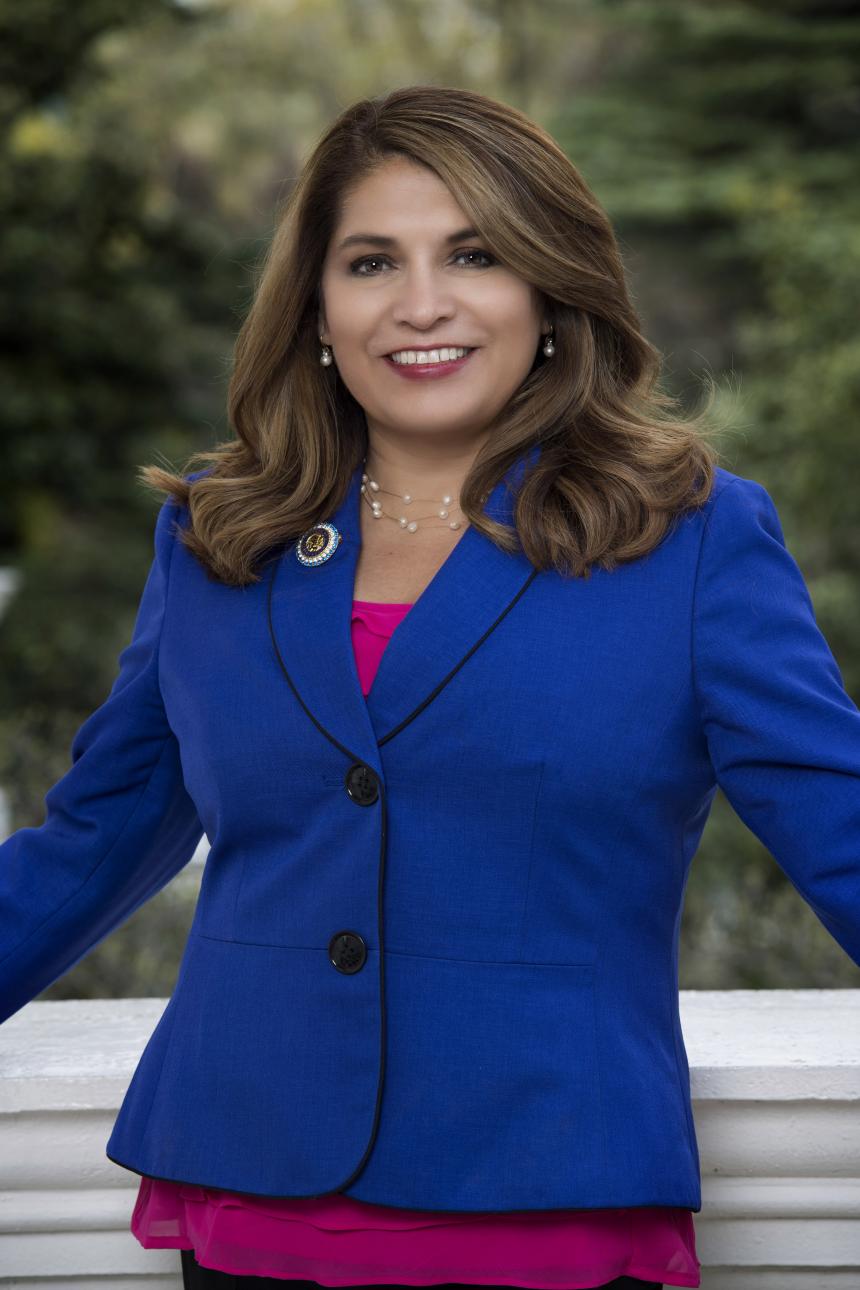
This measure would call on Congress to enact legislation that restores and strengthens the full protections of the Voting Rights Act of 1965, and it would call on the President to sign the legislation.

Sponsored bills
(1) The Personal Income Tax Law and the Corporation Tax Law allow various credits against the taxes imposed by those laws, including a credit for specified new hiring and employment. Existing law establishes the continuously appropriated Tax Relief and Refund Account and provides that payments required to be made to taxpayers or other persons from the Personal Income Tax Fund are to be paid from that account. Existing law also establishes the continuously appropriated Corporation Tax Fund in the State Treasury for the purpose of making refunds pursuant to existing law. This bill would, for taxable years beginning on or after January 1, 2027, and before January 1, 2032, allow a credit against those taxes to a qualified taxpayer, as defined, equal to $20,000 for each qualifying journalist, as defined, continuously employed on a full-time basis by the taxpayer, not to exceed 5 qualifying journalists. The bill would also allow a credit of $15,000 for each qualifying journalist continuously employed on a full-time basis by the taxpayer in excess of 5 qualifying journalists, and a credit of $7,500 for each qualifying journalist employed on a part-time basis by the taxpayer. The bill would allow an additional credit of $15,000 for each qualifying journalist employed on a full-time basis in a new journalism position, as defined. The bill would require the amount of the credit exceeding the taxpayer's liability to be credited against other amounts due, if any, and would require the balance to be paid from the Tax Relief and Refund Account or the Corporation Tax Fund, as specified, and refunded to the taxpayer. By increasing the payments from the Tax Relief and Refund Account and the Corporation Tax Fund, which are continuously appropriated funds, the bill would make an appropriation. The bill would allow the credit to organizations that are exempt from income taxation, as specified, and would allow the refund provisions to apply for those organizations. Existing law requires any bill authorizing a new tax expenditure, as defined, to include tax credits, to contain, among other things, specific goals that the tax credit will achieve, detailed performance indicators, and data collection requirements. This bill also would include additional information required for any bill authorizing a new tax expenditure. The bill would also require the Franchise Tax Board to publish a report on its internet website detailing the total number of taxpayers allowed the credit, the total dollar value of credits allowed, and the average dollar amount per qualified taxpayer allowed a credit. The bill would require the Franchise Tax Board to submit a report to the Legislature providing guidance on potential administration and enforcement of a refundable tax credit for organizations exempt from federal income tax, as provided. (2) Under the Personal Income Tax Law and the Corporation Tax Law, various provisions of the federal Internal Revenue Code, as enacted as of a specified date, are referenced in various sections of the Revenue and Taxation Code. Those laws provide that, for taxable years beginning on or after January 1, 2025, the specified date of those referenced Internal Revenue Code sections is January 1, 2025, unless otherwise specifically provided. The Personal Income Tax Law and the Corporation Tax Law, in modified conformity with federal income tax laws, allow various deductions from gross income in calculating adjusted gross income, including a deduction for the ordinary and necessary expenses paid or incurred during the taxable year in carrying on any trade or business. Existing law does not allow a deduction as an ordinary and necessary business expense for the wages or other remuneration of a covered employee, as defined, to the extent that remuneration exceeds $1,000,000. Existing federal income tax law, enacted after January 1, 2025, amends the application of the limitations relating to covered employees in the case of taxpayers that are members of a controlled group. This bill would specifically conform to the federal application of the limitations relating to covered employees in the case of taxpayers that are members of a controlled group for state tax purposes. The bill would also further conform to the federal definition of a covered employee. This bill would incorporate additional changes to Sections 17039 and 23036 of the Revenue and Taxation Code proposed by AB 2319 to be operative only if this bill and AB 2319 are enacted and this bill is enacted last.

Existing law requires the Department of Corrections and Rehabilitation, when amending or adopting regulations that may impact the visitation of inmates, to recognize and consider the value of visiting as a means to improve prison safety, the important role of inmate visitation in maintaining connection with family and community, and the role of inmate visitation in preparing for successful release. This bill would require each facility, as defined, to establish at least 3 days of visitation per week. The bill would require a facility, if it will not be open for visitation, to provide notice to the impacted population as soon as possible. The bill would authorize a facility to deny contact visits only for specified reasons, including, among others, possession of contraband or pending or sustained rules violations that result in a restricted housing unit term. The bill would require facility staff to take specified actions with regard to correctable issues with a visitation, including, among other things, allowing the visitor a reasonable opportunity to correct the issue and return to visiting up to one hour before the end of the visiting period. The bill would prohibit denial of visitation if a visitor has traveled more than 170 miles to attend a visit and has not visited within 30 days, unless there has been a finding of a credible and documented security threat. The bill would prohibit a facility from searching visitors without their voluntary, informed, and written consent. The bill would authorize a facility to respond to refusal of that search only with denial of contact visiting for that day, and would require the facility to offer a noncontact visit on the same day, if space is available. The bill would authorize other restrictions and procedures for searches of visitors, as specified.
Existing law, the California Building Standards Law, establishes the California Building Standards Commission within the Government Operations Agency. Existing law requires the commission to approve and adopt building standards and to codify those standards in the California Building Standards Code. Existing law, the California Factory-Built Housing Law, generally regulates the design, manufacture, and installation of factory-built housing, as defined and specified. That law specifically and entirely reserves to local jurisdictions certain local requirements, including local use zone requirements, snow load requirements, and wind pressure requirements. That law provides that any person who violates any of those provisions and other specified law is guilty of a misdemeanor, as specified. This bill also would prohibit a city, county, city and county, or district from imposing or enforcing local building standards applicable to a factory-built housing structure, as defined, that exceed or differ from the applicable mandatory standards contained in the California Building Standards Code. The bill would authorize a city or county to make changes or modifications in the requirements contained in the provisions published in the California Building Standards Code that are reasonably necessary to maintain minimum health and safety because of local climatic, geological, or topographical conditions, subject to the city or county making a specified finding. The bill would create a rebuttable presumption in favor of a determination that facilitates the use of factory-built housing and allows a project to qualify as a factory-built housing structure. This bill would define certain key terms for purposes of the California Factory-Built Housing Law. In this regard, the bill would define "building assembly" to mean assembled construction materials, components, subsystems, subassemblies or other systems designed for use in, or as part of, factory-built housing, and "factory-built housing structure" as a residential building where at least 23 of the new or converted square footage is designated for residential use and in which at least 30% of the residential use portion of the building is built using factory-built housing. The bill would recast the definition of "factory-built housing" to mean, among other things, a residential building, dwelling unit, building component, building assembly, or building system that is manufactured in a specified manner. The bill would make other conforming changes to definitions in the California Factory-Built Housing Law, the Sales and Use Tax Law, and the Vehicle Code. By adding to the duties of local officials, and expanding the scope of a crime, this bill would impose a state-mandated local program. The bill would include findings that certain changes proposed by this bill address a matter of statewide concern rather than a municipal affair and, therefore, apply to all cities, including charter cities. The California Constitution requires the state to reimburse local agencies and school districts for certain costs mandated by the state. Statutory provisions establish procedures for making that reimbursement. This bill would provide that no reimbursement is required by this act for specified reasons.
Existing law, the Protecting Our Kids from Social Media Addiction Act, prohibits an operator of an addictive internet-based service or application from providing an addictive feed, as defined, to a user unless the operator does not have actual knowledge that the user is a minor, as specified, or the operator has obtained verifiable parental consent to provide an addictive feed to the user who is a minor. Existing law, the Digital Age Assurance Act, beginning January 1, 2027, requires a person who owns, maintains, or controls a software application, as defined, to request age bracket data sent by a real-time secure application programming interface or operating system with respect to a particular user from an operating system provider or a covered application store when the application is downloaded and launched. This bill would prohibit a covered platform, as defined, from providing an addictive feature, as defined, to a user who is under 16 years of age and would require a covered platform to implement reasonable measures to ensure that users under 16 years of age are not offered or provided any addictive feature on the covered platform. The bill would also authorize the Attorney General to adopt regulations to implement and enforce the bill in order to further the purpose of protecting minors online, including by altering the scope of "covered platform" if the Attorney General determines that doing so is necessary to ensure that "covered platform" applies to internet websites, online services, online applications, or mobile applications that make addictive features, as defined, available to users under 16 years of age. This bill would impose a civil penalty upon a noncompliant platform and would require its provisions to be enforced by a civil action brought only by the Attorney General or a local public prosecutor, as specified. This bill would also establish the e-Safety Advisory Commission within the Department of Justice as an independent advisory body that is only for administrative purposes to advise state government on certain matters related to online safety and would require the commission to, on or before January 1 of each year, report to the Legislature and the Governor on, among other things, its activities under the bill.
Existing law requires, until July 1, 2027, the Attorney General, or their designee, to engage in reviews of county, local, or private locked detention facilities in which noncitizens are being housed or detained for purposes of civil immigration proceedings in California, and, on or before March 1, 2019, to conduct a review of these facilities, as specified, including a review of the circumstances of apprehension and transfer. Existing law also requires the Department of Justice to provide, during the budget process, updates and information to the Legislature and the Governor, concerning the reviews, as provided and pursuant to a specified date. Existing law requires the comprehensive report to be completed by March 1, 2019, and to be posted on the Attorney General's internet website and made available to the public, as provided. Existing law makes these provisions inoperative on July 1, 2027, and repeals those provisions January 1, 2028. This bill would delete all dates specified above, including inoperative and repeal provisions, thereby indefinitely extending those provisions, and would delete the requirement for the review to include an individual's circumstances of apprehension and transfer. The bill would also make nonsubstantive changes.
(1) Existing law requires a court to determine whether a minor in custody will be released from, or detained in, custody, considering, among other things, whether it is a matter of immediate and urgent necessity for the protection of the minor or reasonably necessary for the protection of the person or property of another and whether continuance in the home is contrary to the minor's welfare. This bill would prohibit the court from ordering that a minor be detained in a juvenile hall unless it makes a finding that a less restrictive alternative to detention in the juvenile hall is unsuitable. The bill would also require the court, upon request, to reconsider whether continued detention in the juvenile hall is necessary based on new or current information and consistent with these provisions. (2) Existing law prohibits a ward or dependent child from being taken from the physical custody of a parent or guardian unless the court makes specified findings. Under existing law, if a minor is removed from the physical custody of the minor's parent or guardian as a result of an order of wardship pursuant to specified provisions, the order is required to specify the period of imprisonment. Existing law authorizes the court to commit a minor to a juvenile hall, juvenile home, ranch, camp, or forestry camp. This bill would prohibit a minor from being committed to physical confinement, unless the court finds that a less restrictive alternative disposition for the ward is unsuitable. The bill would require the court to consider, prior to removing a minor from the physical custody of the minor's parent or guardian, whether reasonable efforts were made to prevent or eliminate the need for removal or continued removal from the home, and whether services could be provided to enable the child's parent or legal guardian to effectively provide the care and control necessary for the child to return home.
Existing law requires the State Department of Social Services, in collaboration with the State Department of Education, to implement a reimbursement system plan that establishes reasonable standards and assigned reimbursement rates for subsidized childcare and development services, and to develop and conduct an alternative methodology for ratesetting, as specified. Existing law requires the Governor and the Legislature to, by no later than July 1, 2025, establish reimbursement rates based on the alternative methodology, as specified. Existing law requires the department to provide quarterly updates from October 1, 2024, to July 1, 2027, inclusive, on the implementation of the new reimbursement rates set under the alternative methodology. If the new reimbursement rates do not take effect on July 1, 2025, existing law also requires the department to provide the Legislature with a timeline for transitioning from the rates that are in effect on July 1, 2025, to the new established rates. This bill would instead, under those circumstances, require the department to provide the Chairperson of the Joint Legislative Budget Committee with the department's anticipated timeline for the above-described rate transition. The bill would also require the quarterly reports described above to continue until July 1, 2028. Existing law states the intent of the Legislature that the reimbursement rates established under the alternative methodology satisfy certain parameters, including, among others, that the rates vary based on geography, type of care setting, regulatory requirements applicable to each type of care setting, time categories, and child age. This bill would impose various requirements on the department, in consultation with the State Department of Education, when establishing new reimbursement rates using a single-rate structure informed by the alternative methodology, to the extent those requirements are consistent with the approved Child Care and Development Fund state plan. Among other things, the bill would require the department to vary rates based on geographic regions and specific age groupings and to include in the rates an enhanced rate for nonstandard hours of care and enhanced inclusion rates for children with special needs. The bill would authorize the department to implement these provisions by means of all-county letters, childcare bulletins, or similar written instructions. This bill would incorporate additional changes to Section 10227.6 of the Welfare and Institutions Code proposed by AB 190 or SB 190 to be operative only if this bill and AB 190 or SB 190 are enacted and this bill is enacted last. This bill would declare that it is to take effect immediately as an urgency statute.

Existing law defines "disadvantaged communities" and requires the California Environmental Protection Agency to identify disadvantaged communities for investment opportunities from the Greenhouse Gas Reduction Fund and for other purposes. This bill would require the agency to do specified things regarding farmworker communities for purposes of identifying disadvantaged communities including, among other things, assessing whether designating farmworker communities as disadvantaged communities would increase those communities' access to investment opportunities and identifying potential barriers faced by low-income farmworker communities in accessing investment opportunities, as specified. The bill would require the agency to make its findings publicly available on its internet website and consider those findings when identifying disadvantaged communities. The bill would require the agency and the Office of Environmental Health Hazard Assessment to develop and implement a strategy for engaging with farmworker communities on environmental, health, and socioeconomic burdens, as provided.
Existing law makes it a crime to operate a vehicle while under the influence of alcohol or drugs, and sets forth the penalties for a violation of these provisions. Existing law requires the driver of a vehicle involved in an accident resulting in injury or death to a person, other than that driver, to immediately stop the vehicle at the scene of the accident and provide specified personal information to the injured person or the occupants of the other vehicle and to any traffic or police officer at the scene of the accident. Existing law makes failing to comply with these requirements a crime, punishable as a misdemeanor for an accident resulting in injury and punishable as a misdemeanor or a felony for an accident resulting in death or serious injury, as defined. This bill would make the above-described violation for an accident resulting injury punishable as a misdemeanor or a felony and would impose an increased felony penalty for the above-described violation for an accident resulting in death or serious injury, if either of those violations occurred within 10 years of a separate driving under the influence, reckless driving, or gross vehicular manslaughter violation, as specified. By increasing the potential time of imprisonment, the bill would impose a state-mandated local program. Existing law requires a person who is convicted of specified crimes related to driving under the influence to be advised by the court of the dangerousness of their actions and that if that behavior in the future results in a person's death, they may be charged with murder. This bill would additionally require this advisement to be given if a person enters a plea to a different or lesser offense, as described. The California Constitution requires the state to reimburse local agencies and school districts for certain costs mandated by the state. Statutory provisions establish procedures for making that reimbursement. By imposing an increased term of imprisonment, this bill would create a state-mandated local program. This bill would provide that no reimbursement is required by this act for a specified reason.