

Existing law creates within the Department of Corrections and Rehabilitation, under the Undersecretary for Operations, the Division of Adult Institutions, among others, and requires each division to be headed by a director, who is appointed by the Governor, as specified. Existing law also requires the Governor to appoint 4 subordinate officers to the division, as specified. Existing law requires each subordinate officer appointed to oversee an identified category of adult institutions, one of which oversees female offender facilities. This bill would instead require the Governor to appoint 3 subordinate officers, as specified, who would oversee an identified category of male adult institutions, and one subordinate officer, as specified, who would oversee female adult institutions. The bill would create within the department, and under the Undersecretary for Operations, the Division of Female Programs and Services. The bill would require the director of this division to be responsible solely for female adult institutions and community facilities housing female offenders. The bill would require the director to report to the undersecretary and to have a minimum of 5 years of experience serving a female correctional population in a custody setting. The bill would also require this new division to manage and provide oversight of adult female programs, including prisons, conservation camps, and parole and community programs and to develop gender-responsive, trauma-informed, culturally sensitive approaches to program and policy development. Existing law requires the department to create a Female Offender Reform Master Plan and present it to the Legislature by a specified date. Existing law requires the department to, among other things, create policies and operational practices that are designed to ensure a safe and productive institutional environment for female offenders. This bill would require the department to provide a report to the Legislature on the implementation of the plan, and update statistics contained in the plan, by March 1, 2027, and every 3 years thereafter. The bill would require the department to maintain the plan, including subsequent updates and reports, in consultation with the commission and others, as specified. The bill would also require the department to post the plan, any reports, and any updates to the plan to the department's internet website. This bill would require the department to establish the Gender Responsive Strategies Commission (GRSC) to develop active partnerships and to support successful implementation of gender responsive practices and rehabilitation programs for incarcerated individuals. The bill would require the GRSC to be composed of 19 representatives, as specified, and would require the department, by June 1, 2027, and annually thereafter, to provide a written report to the Legislature on appointments to the GRSC and the department's response and progress toward implementing the GRSC's recommendations. Existing law also requires the department to contract with nationally recognized gender-responsive experts in prison operational practices, staffing, classification, substance abuse, trauma treatment services, mental health services, transitional services, and community corrections to, among other things, conduct a staffing analysis of all current job classifications assigned to each prison that houses only females, as specified, and develop programs and training for department staff in correctional facilities. This bill would require the department, through this contract, no later than March 1, 2027, and every 3 years thereafter, to prepare and submit to the Legislature an updated staffing analysis and would require a comprehensive review of the office's policies and practices and other aspects of women-centered corrections developed to enhance safety and rehabilitative efforts, as specified. The bill would also require the training program to include training at the academy and, for those working in a female prison, 40 hours of initial training with a curriculum specifically focused on working with the population within female institutions and an 8-hour annual training thereafter. Existing law requires the secretary of the department to expand the existing prison ombudsperson program to ensure the comprehensive deployment of ombudspersons throughout the state prison system with specific focus on the maximum security institutions. This bill would instead require the Undersecretary for Operations to perform this duty and would require the undersecretary to appoint an ombudsperson solely assigned to adult female institutions.
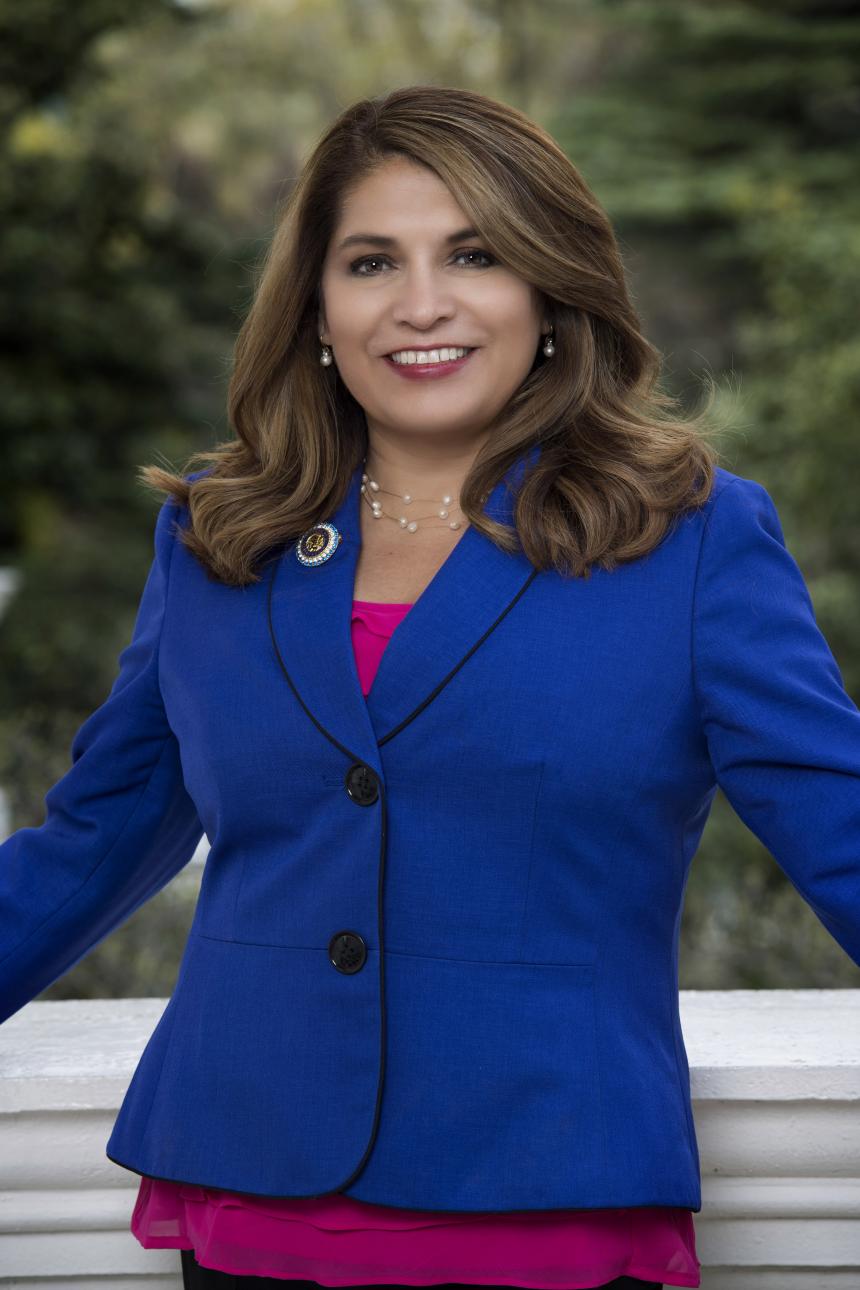
Rep. Sharon Quirk-Silva
Sponsored bills
(1) Existing law, the California Factory-Built Housing Law, generally regulates the design, manufacture, and installation of factory-built housing and defines terms for its purposes. The law authorizes the Department of Housing and Community Development, among other things, to regulate quality assurance agencies to perform inspections of factory-built housing manufacturers. The law requires a local enforcement agency, among other things, to enforce and inspect the installation of factory-built housing. The law provides that any person who violates any of its provisions and other specified law is guilty of a misdemeanor, as specified. This bill would revise these provisions, among other things, to authorize a quality assurance agency to also perform an installation inspection of factory-built housing, at the choice of a first user, after the department adopts regulations regarding the requirements for a quality assurance agency to perform these inspections. The bill would require the department to adopt those regulations by January 1, 2029. The bill would set the maximum fees that a local enforcement agency is authorized to impose for the inspection or permitting of factory-built housing, and prohibit a local enforcement agency from imposing fees under certain circumstances. The bill would prohibit a quality assurance agency or a local enforcement agency from disassembling, damaging, or destroying factory-built housing while inspecting the installation. The bill would make conforming changes and define terms for its purposes. By increasing the duties of local officials, and by expanding the scope of a crime, this bill would impose a state-mandated local program. (2) The bill would include findings that changes proposed by this bill address a matter of statewide concern rather than a municipal affair and, therefore, apply to all cities, including charter cities. (3) The California Constitution requires the state to reimburse local agencies and school districts for certain costs mandated by the state. Statutory provisions establish procedures for making that reimbursement. This bill would provide that with regard to certain mandates no reimbursement is required by this act for a specified reason. With regard to any other mandates, this bill would provide that, if the Commission on State Mandates determines that the bill contains costs so mandated by the state, reimbursement for those costs shall be made pursuant to the statutory provisions noted above.
Existing law establishes the California Community Colleges, under the administration of the Board of Governors of the California Community Colleges, as one of the segments of public postsecondary education in this state. Existing law establishes community college districts throughout the state and authorizes them to operate campuses and provide instruction. Existing law authorizes the governing board of a community college district to enter into a College and Career Access Pathways (CCAP) partnership with the governing board of a school district, a county office of education, or the governing body of a charter school for the purpose of offering or expanding dual enrollment opportunities for pupils who may not already be college bound or who are underrepresented in higher education, as provided. Existing law authorizes the office of the Chancellor of the California Community Colleges to establish the Rising Scholars Network to enter into agreements with community colleges to provide additional funds for services in support of postsecondary education for justice-involved students, as defined. This bill, the Juvenile Justice Education Access and Equity Act, would authorize a home community college district, as defined, or a college that is part of the home community college district, to enter into an instructional services agreement with a county probation department to provide academic or career technical education courses at a juvenile justice facility operated by the county probation department. The bill would authorize a community college district outside of the home community college district, or a college that is part of that district outside of the home district, to enter into an instructional services agreement with a county probation department if the home community college district has declined or failed to take action on a request by the county probation department to either (1) enter into an instructional services agreement or (2) approve the community college district outside of the home community college district, or a college that is part of that district outside of the home district, to enter into an instructional services agreement. The bill would prohibit the home community college district and colleges that are part of that district from prohibiting, blocking, or otherwise interfering with the ability of the community college outside of the home community college district, or a college that is part of that district outside of the home district, to provide instruction at the juvenile justice facility, as provided.
Existing law, the State Housing Law, establishes statewide construction and occupancy standards for buildings used for human habitation. Existing law requires the building department of every city or county to enforce the provisions of the State Housing Law, the State Building Standards Code, and other specified rules and regulations promulgated pursuant to the State Housing Law pertaining to standards for buildings used for human habitation. Existing law authorizes an officer, employee, or agent of an enforcement agency to enter and inspect any building or premises whenever necessary to secure compliance with, or prevent a violation of, any provision of the State Housing Law, the building standards published in the State Building Standards Code, and other rules and regulations promulgated pursuant to the provisions of the State Housing Law. Existing law provides certain immunities to a public entity or employee immunity relative to an inspection or license, as provided. This bill would require a city, including a charter city, county, or city and county, except as specified, to offer a homeowner or contractor, as described, the option of requesting remote inspections for all or a subset of an inspection required by a building permit for specified works in one- or 2-family dwelling units, by either January 1, 2028, or July 1, 2028, as provided. The bill would authorize these local agencies to adopt reasonable protocols governing the technical conduct of a remote inspection, as specified. The bill would apply the above-described immunities to remote inspections. The bill would authorize these local agencies to temporarily ban the homeowner or contractor from using the remote inspection if a homeowner is found to have willfully misrepresented the work, as provided. By imposing new duties on local agencies, the bill would impose a state-mandated local program. The bill would include findings that changes proposed by this bill address a matter of statewide concern rather than a municipal affair and, therefore, apply to all cities, including charter cities. The California Constitution requires the state to reimburse local agencies and school districts for certain costs mandated by the state. Statutory provisions establish procedures for making that reimbursement. This bill would provide that no reimbursement is required by this act for a specified reason.
Existing law establishes the California Career Technical Education Incentive Grant Program, administered by the State Department of Education, with the purpose of encouraging, maintaining, and strengthening the delivery of high-quality career technical education programs. Existing law provides, for the 2021–22 fiscal year and each fiscal year thereafter, that $300,000,000 shall be available to the department, upon appropriation by the Legislature, for the program. Existing law requires an applicant to demonstrate a proportional dollar-for-dollar match and sets that amount for the 2021–22 fiscal year, and each fiscal year thereafter, at $2 for every $1 received from the program. Existing law prohibits an applicant from being awarded an amount higher than the amount that the allocation formula determines them to be eligible to receive under the program. Existing law requires the Superintendent of Public Instruction, in administering the program, to perform specified duties, including, among other duties, to (1) determine, in collaboration with the executive director of the State Board of Education, and make public on a preliminary basis at least 30 days before a regularly scheduled meeting of the state board, the allocation formula, (2) distribute funding on a multiyear schedule, (3) require grant recipients to submit program reports, (4) manage the grant process, and (5) promote the success of K–12 career technical education programs, as provided. This bill would require the department, instead of the Superintendent, to perform the above-described duties. The bill would, for purposes of allocations commencing no later than the 2027–28 fiscal year and pursuant to the above-described requirements, also require the department to determine, in consultation with the executive director of the state board, a revised allocation formula that ensures that all funds appropriated for the program in any given fiscal year are fully allocated to program applicants in that fiscal year, as provided.
The Planning and Zoning Law requires each county and city to adopt a comprehensive, long-term general plan for the physical development of the county or city, and of any land outside its boundaries that bears relation to its planning. Existing law authorizes the legislative body of a county or city to adopt ordinances that, among other things, regulate the use of buildings, structures, and land as between industry, business, residences, open space, and other purposes, as provided. For these purposes, existing law authorizes the legislative body to divide a county or city into zones, but requires that regulations adopted be uniform for each class or kind of building or use of land throughout each zone. The California Environmental Quality Act (CEQA) requires a lead agency, as defined, to prepare an environmental impact report on a project that it proposes to carry out or approve that may have a significant effect on the environment or to adopt a negative declaration if it finds that the project will not have that effect. This bill, the Public Lands Protection Act, would, upon transfer to any private or nonfederal entity of a parcel of land located within the state that is owned by the United States government on or after January 1, 2025, and that has been designated in an adopted general plan or zoning ordinance as open space, public land, resource conservation, or an equivalent conservation-oriented designation, immediately subject that parcel to the zoning designation and associated state and local restrictions. The bill would also, upon transfer of a parcel of land located within the state that is owned by the United States government on or after January 1, 2025, and that has not been designated in an adopted general plan or zoning ordinance at the time of transfer to any private or nonfederal entity, automatically subject that parcel to the most restrictive conservation-oriented zoning designation currently applied in the jurisdiction, by operation of law. The bill would prohibit a parcel of land governed by these provisions from being rezoned, subdivided, or granted any development entitlement that is inconsistent with a conservation-oriented zoning designation, unless certain requirements are satisfied, including that a full environmental impact report is completed in accordance with CEQA. Notwithstanding these provisions, the bill would require electric infrastructure and clean energy facilities necessary to achieve California's climate and decarbonization goals to be deemed permitted uses in a conservation-oriented zoning designation if certain conditions are met. The bill would also exempt certain other parcels from these provisions. This bill would include findings that changes proposed by this bill address a matter of statewide concern rather than a municipal affair and, therefore, apply to all cities, including charter cities. This bill would make these provisions severable. This bill would declare that it is to take effect immediately as an urgency statute.
The California Constitution authorizes the Legislature to exempt from taxation, in whole or in part, property that is used exclusively for religious, hospital, or charitable purposes, and is owned or held in trust by a nonprofit entity. Pursuant to that authority, existing law provides for a welfare exemption under which property used exclusively for an exempt purpose and owned and operated by specified entities, including foundations, limited liability companies, or corporations meeting certain statutory requirements is exempt from taxation. This bill would specify that for the purposes of the welfare exemption provisions above, "property used exclusively for religious, hospital, scientific, or charitable purposes" shall not include property, or any portion thereof, operated as a detention facility, as defined. The bill would declare that the above provision is declarative of, and not a change in, existing law.
Existing law establishes the California Housing Finance Agency for the primary purpose of meeting the housing needs of persons and families of low or moderate income, and sets forth various programs administered by the agency to fulfill that purpose. This bill would require the agency to conduct a comprehensive assessment of potential credit enhancement mechanisms designed to reduce borrowing costs for housing projects receiving state financial assistance that includes specified evaluations. The bill would require the agency to submit an interim report by January 1, 2028, and a final report by July 1, 2028, as specified.
Maddy summaryThis bill designates September 2026 as Childhood Cancer Awareness Month. It directly affects state agencies and organizations by encouraging them to recognize this specific month for awareness activities. The measure does not change laws or allocate funding but serves as a formal commemorative resolution.
Existing law establishes the California Interagency Council on Homelessness and requires the council to take various actions to prevent and end homelessness in California. Existing law establishes various programs to prevent homelessness or assist persons experiencing homelessness, including the No Place Like Home Program and the Homeless Housing, Assistance, and Prevention program. This bill would require the council, by July 1, 2028, to develop a statewide homelessness prevention strategy in the council's publicly available Action Plan to Prevent and End Homelessness. The bill would require the strategy to include specified elements, including a homelessness prevention action plan for certain state agencies and evidence-based model homeless prevention practices, as specified. The bill would require the council to review and update the strategy in the Action Plan to Prevent and End Homelessness. The bill would define various terms for these purposes. The bill would limit each state agency's participation to its existing statutory authority, activities, data, and subject-matter responsibilities.