

State and local agencies: homelessness plan.
Summary
Existing law establishes in state government the Business, Consumer Services, and Housing Agency, comprised of the Department of Consumer Affairs, the Department of Housing and Community Development, the Department of Fair Employment and Housing, the Department of Business Oversight, the Department of Alcoholic Beverage Control, the Alcoholic Beverage Control Appeals Board, the California Horse Racing Board, and the Alfred E. Alquist Seismic Safety Commission. Existing law requires the Governor to create the Homeless Coordinating and Financing Council (referred to as "the coordinating council") and to appoint up to 19 members of that council, as provided. Existing law specifies the duties of the coordinating council, including creating partnerships among state agencies and departments, local government agencies, and specified federal agencies and private entities, for the purpose of arriving at specific strategies to end homelessness. This bill, upon appropriation by the Legislature or upon receiving technical assistance offered by the federal Department of Housing and Urban Development (HUD) , if available, would require the coordinating council to conduct, or contract with an entity to conduct, a statewide needs and gaps analysis to, among other things, identify state programs that provide housing or services to persons experiencing homelessness and create a financial model that will assess certain investment needs for the purpose of moving persons experiencing homelessness into permanent housing. The bill would provide that the council's obligation to conduct the statewide needs and gaps analysis is fulfilled if a technical assistance provider from HUD conducts the analysis on behalf of the council. The bill would require the council to work with the technical assistance provider to complete the analysis. The bill would authorize local governments to collaborate with the coordinating council or other entity conducting the analysis upon an appropriation by the Legislature to cover costs of the collaboration or upon provision of technical assistance by HUD. The bill would also require the coordinating council or any other entity conducting the analysis to seek input from the coordinating council's members on the direction of, design of data collection for, and items to be included in the statewide needs and gaps analysis. The bill would require the council to report on the analysis to specified committees in the Legislature by July 31, 2021. The bill would require the coordinating council or other entity conducting the analysis to evaluate all available data, including, among other things, data from other state departments and agencies. The bill would require a state department or agency with a member on the coordinating council to assist in data collection for the analysis by responding to data requests within 180 days, as specified. This bill would require the Department of Housing and Community Development (department) to set a benchmark goal in reducing homelessness by January 1, 2028, for the state pursuant to the statewide needs and gaps analysis. The bill would require the department to approve or work with local agencies, as defined, to identify, as provided, appropriate benchmark goals to reduce homelessness for each local agency and cities within each local agency. The bill would also require the department to set annual benchmarks to meet these benchmark goals. The bill, on or before January 1, 2022, would require each local agency to submit to the department an actionable county-level plan for meeting specific annual benchmarks, with the goal of achieving the state-identified benchmark goal. The bill would require each city in the local agency's jurisdiction to participate in the plan, and each local agency would be required to request and actively seek the participation of all homeless continuums of care that serve the local agency's jurisdiction. The bill would require the plan to include, among other things, a description and the amount of all funding sources the local agency, and any incorporated jurisdiction and continuum of care, has earmarked or committed to addressing homelessness, mental illness, and substance abuse within its jurisdiction. The bill would require the state and each local agency to submit an annual progress report to the department that details the progress and implementation of the adopted plan and any amendments proposed to the plan. This bill would require the department to review submitted plans and provide feedback and recommended revisions. The bill would require the state or a local agency to either adopt those recommended revisions, or adopt findings as to why the recommended revisions are not needed. The bill would require the department to monitor the implementation and progress of state and local agency plans. The bill would require the department to notify the state or the local agency and the inspector general if the agency fails, within a reasonable time, to make progress in accordance with their plan. The bill would provide that an innovative project to test new programs, as described, shall be deemed approved by the department if the department approves a plan or plan amendment with the innovative project and the local agency or city establishes and documents outcomes upon implementation of the project. This bill would establish an independent state officer, named the Housing and Homelessness Inspector General, within the department. The bill would require the Governor to appoint the Housing and Homelessness Inspector General, subject to confirmation by the Senate. The bill would, on and after January 1, 2022, authorize the inspector general to bring an action against the state, a local agency, or a city that fails to adopt a plan or fails, within a reasonable time, to make progress in accordance with their adopted plan. The bill, if the court finds that the state or applicable local agency or city has not substantially complied, would authorize the Housing and Homelessness Inspector General to request the court to issue an order or judgment directing the state, local agency, or city to substantially comply, as provided. The bill would authorize the inspector general to impose a civil penalty on the state, a local agency, or a city that is found to have deliberately and intentionally transported a homeless individual to a different jurisdiction in order to reduce the number of homeless individuals within their jurisdiction, as specified. By requiring local agencies to submit a county-level plan for meeting specific annual benchmarks relating to homelessness and to develop and implement a homelessness plan to achieve the benchmark goal developed by the department, this bill would impose a state-mandated local program. The California Constitution requires the state to reimburse local agencies and school districts for certain costs mandated by the state. Statutory provisions establish procedures for making that reimbursement. This bill would provide that, if the Commission on State Mandates determines that the bill contains costs mandated by the state, reimbursement for those costs shall be made pursuant to the statutory provisions noted above.
Bill status
passed
3 of 5 stages cleared
Introduction
Feb 2020
Committee Review
Aug 2020
Assembly Passage
Jun 2020
Senate Passage
Governor
Introduced Feb 21, 2020
Last action Aug 20, 2020
Floor votes · Assembly Jun 10, 2020
How they voted
52–10
Passed · 10 other
Total votes 72
Jun 10, 2020
D
Democratic55
89% Yea
I
Independent1
100% Yea
R
Republican16
62% Nay
Vote distribution
All Yea
All Nay
Mixed
No data
Full legislative history
Actions timeline
Total actions
20
Key actions
8
Committee
9
Amendments
4
Aug 20, 2020
Upper · Passed
In committee: Held under submission.
upper
Aug 13, 2020
Committee
In committee: Referred to APPR. suspense file.
upper
Aug 7, 2020
Upper · Passed
From committee: Do pass and re-refer to Com. on APPR. (Ayes 7. Noes 3.) (August 6). Re-referred to Com. on APPR.
upper
Jul 1, 2020
Committee
Referred to Com. on HOUSING.
upper
Jun 10, 2020
Lower · Passed
Read third time. Passed. Ordered to the Senate. (Ayes 58. Noes 10. Page 4795.)
lower
Jun 4, 2020
Lower · Passed
Read second time and amended. Ordered returned to second reading.
lower
Jun 3, 2020
Lower · Passed
From committee: Amend, and do pass as amended. (Ayes 12. Noes 0.) (June 3).
lower
Jun 2, 2020
Committee
In committee: Set, first hearing. Referred to APPR. suspense file.
lower
May 26, 2020
Committee
Re-referred to Com. on APPR.
lower
May 22, 2020
Lower · Passed
Read second time and amended.
lower
May 21, 2020
Lower · Passed
From committee: Amend, and do pass as amended and re-refer to Com. on APPR. (Ayes 6. Noes 1.) (May 20).
lower
May 5, 2020
Committee
Re-referred to Com. on H. & C.D.
lower
Apr 24, 2020
Committee
Referred to Com. on H. & C.D.
lower
Feb 22, 2020
Lower · Passed
From printer. May be heard in committee March 23.
lower
Feb 21, 2020
Introduced
Introduced. To print.
lower
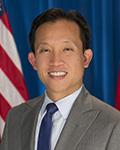
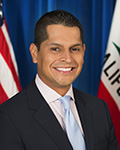
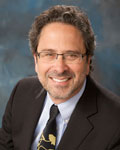
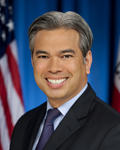
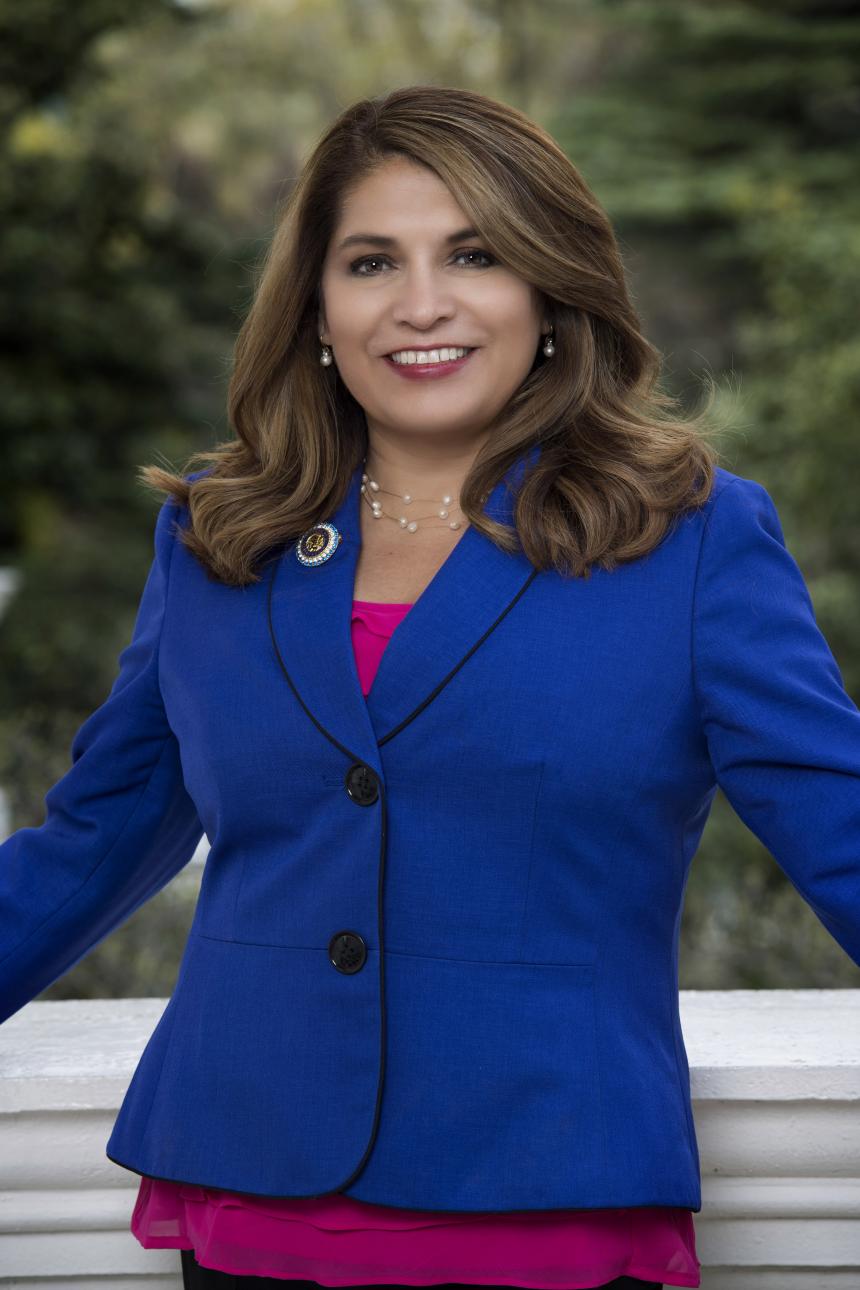
1 primary · 5 co-sponsors
Sponsors

Ask Maddy
·
AI policy assistant
Ask Maddy about AB 3269
Scope: CA
Hi! I can help you understand AB 3269. What would you like to know?
Try one of these
i
Maddy answers using official bill text and legislative records. Always verify before sharing.
Sources cited inline