

The Planning and Zoning Law requires each county and each city to adopt a comprehensive, long-term general plan for its physical development, and the development of specified land outside its boundaries, that includes, among other mandatory elements, a housing element. Existing law, the Permit Streamlining Act, among other things, requires a public agency that is the lead agency for a development project to approve or disapprove that project within specified time periods. This bill would extend by 18 months the period for the expiration, effectuation, or utilization of a housing entitlement, as defined, that was issued before, and was in effect on, March 4, 2020, and that will expire before December 31, 2021, except as specified. The bill would toll this 18-month extension during any time that the housing entitlement is the subject of a legal challenge. The bill would also provide that if the state or a local agency extends, on or after March 4, 2020, but before the effective date of the bill, the otherwise applicable time for the expiration, effectuation, or utilization of a housing entitlement for not less than 18 months and pursuant to the same conditions provided by this bill, that housing entitlement shall not be extended an additional 18 months pursuant to this bill. The bill would include findings that changes proposed by this bill address a matter of statewide concern rather than a municipal affair and, therefore, apply to all cities, including charter cities. By adding to the duties of local officials with respect to housing entitlements, this bill would impose a state-mandated local program. The California Constitution requires the state to reimburse local agencies and school districts for certain costs mandated by the state. Statutory provisions establish procedures for making that reimbursement. This bill would provide that no reimbursement is required by this act for a specified reason.
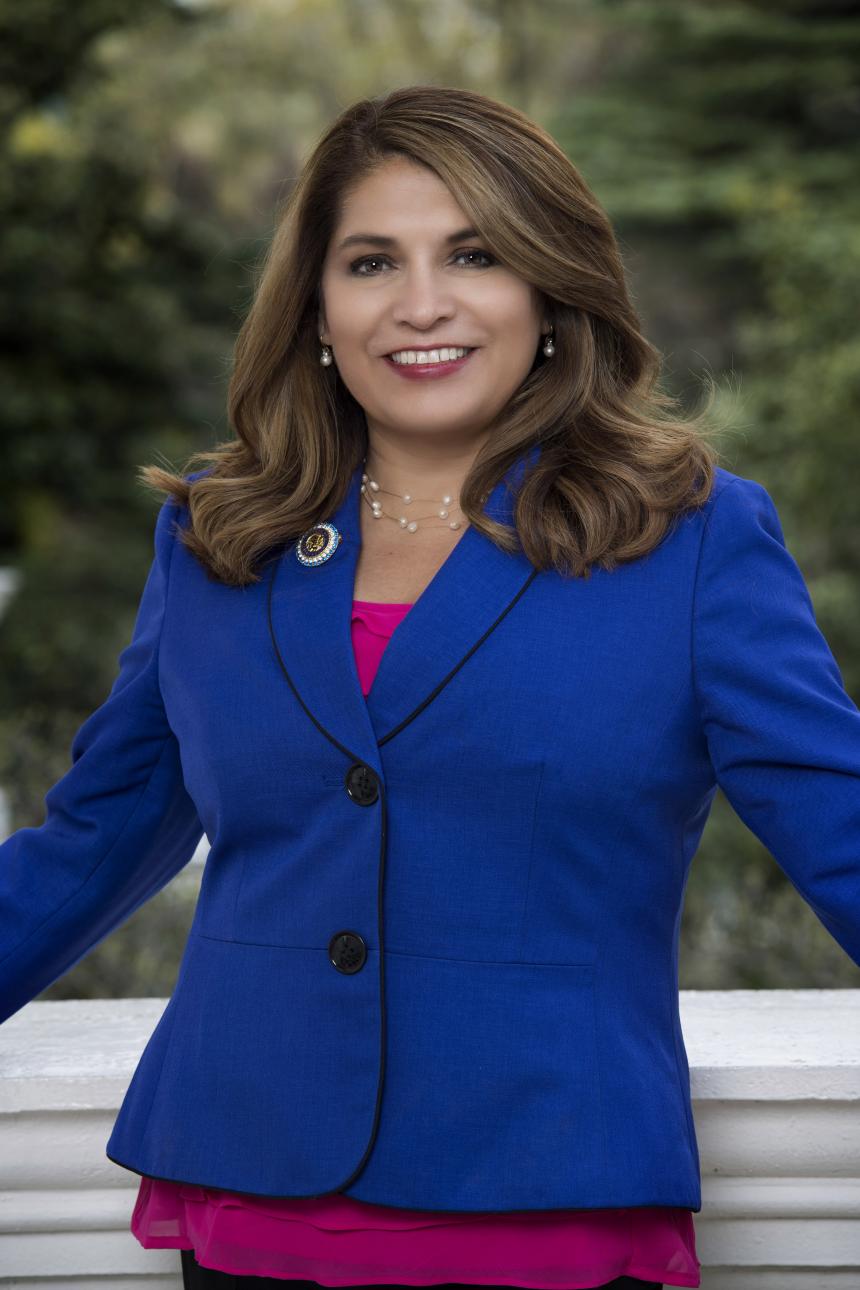
Asm. Sharon Quirk-Silva
Sponsored bills
Existing law establishes a system of public elementary and secondary schools in the state, and authorizes local educational agencies throughout the state to operate schools and provide instruction to pupils in kindergarten and grades 1 to 12, inclusive. Existing law provides that no monetary liability and no cause of action arises against specified entities for certain conduct, including, except for specified damages, for a hospital for any action taken upon the recommendation of its medical staff, or against any other person or organization for any action taken, or restriction imposed, which is required to be reported, if that action or restriction is reported, as specified. This bill would require, during the COVID-19 pandemic, as defined, the governing board of a local educational agency, as defined, or its designee, to establish health and safety policies and procedures for operating programs and facilities in a manner consistent with applicable federal, state, and local requirements and COVID-19-related guidelines published by the State Department of Public Health. The bill would require the governing boards of local educational agencies, or their designees, to ensure that reasonable efforts are undertaken to implement those policies and procedures. The bill would exempt a local educational agency, and its officers or employees, that meet these requirements from monetary liability and damages for injury relating to COVID-19 infection, transmission, or specified policies and procedures established pursuant to the bill, any condition in existence because of the COVID-19 pandemic, or any act or omission by the local educational agency, its officers, or its employees in response to the COVID-19 pandemic, as provided, with specified exceptions. By imposing new duties on local educational agencies, this bill would impose a state-mandated local program. The California Constitution requires the state to reimburse local agencies and school districts for certain costs mandated by the state. Statutory provisions establish procedures for making that reimbursement. This bill would provide that, if the Commission on State Mandates determines that the bill contains costs mandated by the state, reimbursement for those costs shall be made pursuant to the statutory provisions noted above.
Existing sales and use tax laws impose a tax on retailers measured by the gross receipts from the sale of tangible personal property sold at retail in this state, or on the storage, use, or other consumption in this state of tangible personal property purchased from a retailer for storage, use, or other consumption in this state. Those laws provide various exemptions from those taxes, including, until July 1, 2023, an exemption for the sale of, or the storage, use, or other consumption of, menstrual hygiene products, defined as tampons, specified sanitary napkins, menstrual sponges, and menstrual cups. Existing law requires the Department of Finance, beginning on May 15, 2020, to estimate the total dollar amount of revenue that would have been credited to the Local Revenue Fund 2011 if not otherwise exempted under the sales and use tax exemption for menstrual hygiene products and requires the Controller to transfer that amount from the General Fund to the Local Revenue Fund 2011, a continuously appropriated fund, no later than June 30 of each fiscal year. This bill would establish a similar exemption for the sale of, or the storage, use, or other consumption of, menstrual hygiene products beginning July 1, 2023, and would define menstrual hygiene products to additionally include menstrual underwear. The bill would provide that the Department of Finance is required to calculate, and the Controller is required to transfer, the total dollar amount of revenue prior to January 1, 2024, that would have been credited to the Local Revenue Fund 2011 if not otherwise exempted under the sales and use tax with respect to menstrual hygiene products, as specified. The Bradley-Burns Uniform Local Sales and Use Tax Law authorizes counties and cities to impose local sales and use taxes in conformity with the Sales and Use Tax Law, and existing laws authorize districts, as specified, to impose transactions and use taxes in accordance with the Transactions and Use Tax Law, which generally conforms to the Sales and Use Tax Law. Amendments to the Sales and Use Tax Law are automatically incorporated into the local tax laws. Existing law requires the state to reimburse counties and cities for revenue losses caused by the enactment of sales and use tax exemptions. This bill would provide that, notwithstanding Section 2230 of the Revenue and Taxation Code, no appropriation is made and the state shall not reimburse any local agencies for sales and use tax revenues lost by them pursuant to this bill. This bill would take effect immediately as a tax levy.
Existing law, the Ortiz-Pacheco-Poochigian-Vasconcellos Cal Grant Program, establishes the Cal Grant A and B Entitlement Awards, the California Community College Transfer Entitlement Awards, the Competitive Cal Grant A and B Awards, the Cal Grant C Awards, and the Cal Grant T Awards under the administration of the Student Aid Commission, and establishes eligibility requirements for awards under these programs for participating students attending qualifying institutions. Existing law specifies the amounts of the maximum Cal Grant A and B awards for students attending private nonprofit postsecondary institutions of higher education and private for-profit postsecondary educational institutions that are regionally accredited, as specified. Beginning with the 2020–21 award year, the maximum tuition award is either $9,084 or $8,056, depending upon whether the number of new unduplicated transfer students accepted by private nonprofit postsecondary educational institutions who have been given associate degree for transfer commitments, as defined, in the prior award year meet specified minimum targets. This bill would change, in accordance with a prescribed formula, the maximum Cal Grant award for tuition for a new recipient attending an independent institution of higher education, commencing with the 2021–22 award year. This bill would provide that the award amount for a student attending an independent institution of higher education may instead be determined in the annual Budget Act if the independent institutions of higher education, as a group, do not accept the specified number of transfer students who have been given associate degree for transfer commitments.
The California Global Warming Solutions Act of 2006 establishes the State Air Resources Board as the state agency responsible for monitoring and regulating sources emitting greenhouse gases. The act authorizes the state board to include the use of market-based compliance mechanisms. Pursuant to the act, the state board has adopted the Low-Carbon Fuel Standard regulations. Existing law requires all moneys, except for fines and penalties, collected by the state board from a market-based compliance mechanism to be deposited in the Greenhouse Gas Reduction Fund and to be available upon appropriation by the Legislature. Existing law requires the Legislative Analyst's Office to annually submit a report to the Legislature on the economic impacts and benefits of specified greenhouse gas emissions targets. This bill would require the state board to ensure alternative fuels are treated equally with regard to the requirements for generating credits under the Low-Carbon Fuel Standard regulations. The bill would, commencing January 1, 2021, require the Legislative Analyst's Office to also annually prepare an analysis of moneys allocated from the Greenhouse Gas Reduction Fund, as specified.
(1) The Child Care and Development Services Act establishes a system of childcare and development services for children up to 13 years of age and requires the State Department of Education to contract with local contracting agencies for alternative payment programs for childcare services to be provided throughout the state. The act requires the alternative payment program to reimburse childcare providers based upon specified criteria, including the actual days and hours of attendance for those families with variable schedules, or for license-exempt childcare providers that provide part-time services, up to the maximum certified hours. This bill would delete the requirement that alternative payment programs provide reimbursement based on the actual days and hours of attendance to families with variable schedules or license-exempt childcare providers. (2) The act authorizes each licensed childcare provider to alter rate levels for subsidized children once per year and requires the provider to provide the alternative payment program and resource and referral agency with the updated information, as provided. Existing law requires an alternative payment program to verify childcare provider rates no less frequently than once a year, as provided. The act requires the department to develop regulations for addressing discrepancies in the childcare provider rate levels identified through the rate verification process described above. This bill would delete these provisions. (3) The act requires an alternative payment program to provide notice to a childcare provider of specified changes relating to childcare services at least 14 calendar days before the effective date of the intended actions. This bill would instead require the alternative payment program to provide the notice, as well as the effective date of any change described above, on the same day that a notice of action is issued to a family, as provided. (4) The act requires, on and after the date on which the Superintendent of Public Instruction determines that the Financial Information System for California (Fi$Cal Project) has been implemented within the department, at the request of a contractor, the department to request the Controller to make a payment via direct deposit by electronic funds transfer through the Fi$Cal Project into the contractor's account at the financial institution of the contractor's choice, as provided. This bill would instead require, at the request of a contractor, the department to require the Controller to make a payment via direct deposit by electronic funds into the contractor's account at the financial institution of the contractor's choice, as provided. (5) The act authorizes a contractor to retain a reserve fund balance for alternative payment model and certificate childcare contracts, as provided. The act prohibits these funds from exceeding either 2% of the sum of the parts of each contract, as provided, or $1,000, whichever is greater. This bill would instead prohibit the funds from exceeding either 15% of the sum of the parts of each contract, as provided, or $1,000, whichever is greater.
This measure would proclaim the week of March 1, 2020, to March 7, 2020, inclusive, as Women in Construction Week.
Under the Sales and Use Tax Law, the California Department of Tax and Fee Administration is authorized to relieve a person from the payment of sales and use taxes, penalties, and interest if the department finds that a person's failure to make a timely return or payment is due to that person's reasonable reliance on written advice from the department, as specified. This bill would require the department to confirm receipt of a request by a person for written advice from the department other than presentation of a taxpayer's books and records for audit by sending a letter or email within 30 days from the date of receipt of the request. The bill would require the department to provide a response within 180 days from the date the request by a person for written advice from the department is received by the department, except as specified. The bill would make the changes to the written advice provisions apply to written requests received by the department on or after January 1, 2021. Under existing law, the Katz-Harris Taxpayers' Bill of Rights Act, the Franchise Tax Board is authorized to relieve a person from the payment of taxes under the Personal Income Tax Law and the Corporation Tax Law, interest, additions to those taxes, or penalties if the Franchise Tax Board finds that a person's failure to make a timely return or payment is due to that person's reasonable reliance on written advice from the board or written advice of a legal ruling by the Chief Counsel of the Franchise Tax Board, as specified. Existing law requires chief counsel rulings to be issued as provided in published guidelines. This bill would require the chief counsel to confirm receipt of a request by a person fora chief counsel ruling by sending a letter or email within 30 days of the date of receipt of the request for a chief counsel ruling. The bill would require the chief counsel to provide a response within 180 days from the date the request by a person for a chief counsel ruling is received. Under the bill, all published guidelines issued pursuant to the chief counsel rulings provisions in effect on December 31, 2020, would remain in effect and be fully enforceable unless and until modified or superseded by the board. The bill would make the changes to the chief counsel rulings provisions apply to a written request for a chief counsel ruling received on or after January 1, 2021.
This measure would declare the week of February 17 to February 21, 2020, inclusive, as California Fitness Week, and would encourage Californians to enrich their lives through proper nutrition and exercise.
This measure would proclaim February 20, 2020, as Introduce a Girl to Engineering Day.