

Existing law, the Mental Health Services Act (MHSA) , an initiative measure enacted by the voters as Proposition 63 at the November 2, 2004, statewide general election, funds a system of county mental health plans for the provision of mental health services, as specified. The act establishes the Mental Health Services Fund, which is continuously appropriated to, and administered by, the State Department of Health Care Services to fund specified county mental health programs. This bill would authorize the services for adults, older adults, and children, as well as innovative programs and prevention and early intervention programs that are provided by counties as part of the MHSA to include substance use disorder treatment for children, adults, and older adults with cooccurring mental health and substance use disorders who are eligible to receive mental health services pursuant to those programs. The bill would also authorize the use of MHSA funds to assess whether a person has cooccurring mental health and substance use disorders and to treat a person who is preliminarily assessed to have cooccurring mental health and substance use disorders, even when the person is later determined not to be eligible for services provided with MHSA funds. The bill would require a person being treated for cooccurring mental health and substance use disorders who is determined to not need the mental health services that are eligible for funding pursuant to the act, to be referred to substance use disorder treatment services in a timely manner. By authorizing the use of continuously appropriated funds for a new purpose, this bill would make an appropriation. This bill would require a county to report to the State Department of Health Care Services the number of people assessed for cooccurring mental health and substance use disorders and the number of people who were ultimately determined to have only a substance use disorder without another cooccurring mental health condition. The bill would also require the department, by January 1, 2022, and each January 1 thereafter, to publish on its internet website a report summarizing the county data for the prior fiscal year. By imposing a new duty on counties, this bill would impose a state-mandated local program. The California Constitution requires the state to reimburse local agencies and school districts for certain costs mandated by the state. Statutory provisions establish procedures for making that reimbursement. This bill would provide that, if the Commission on State Mandates determines that the bill contains costs mandated by the state, reimbursement for those costs shall be made pursuant to the statutory provisions noted above.
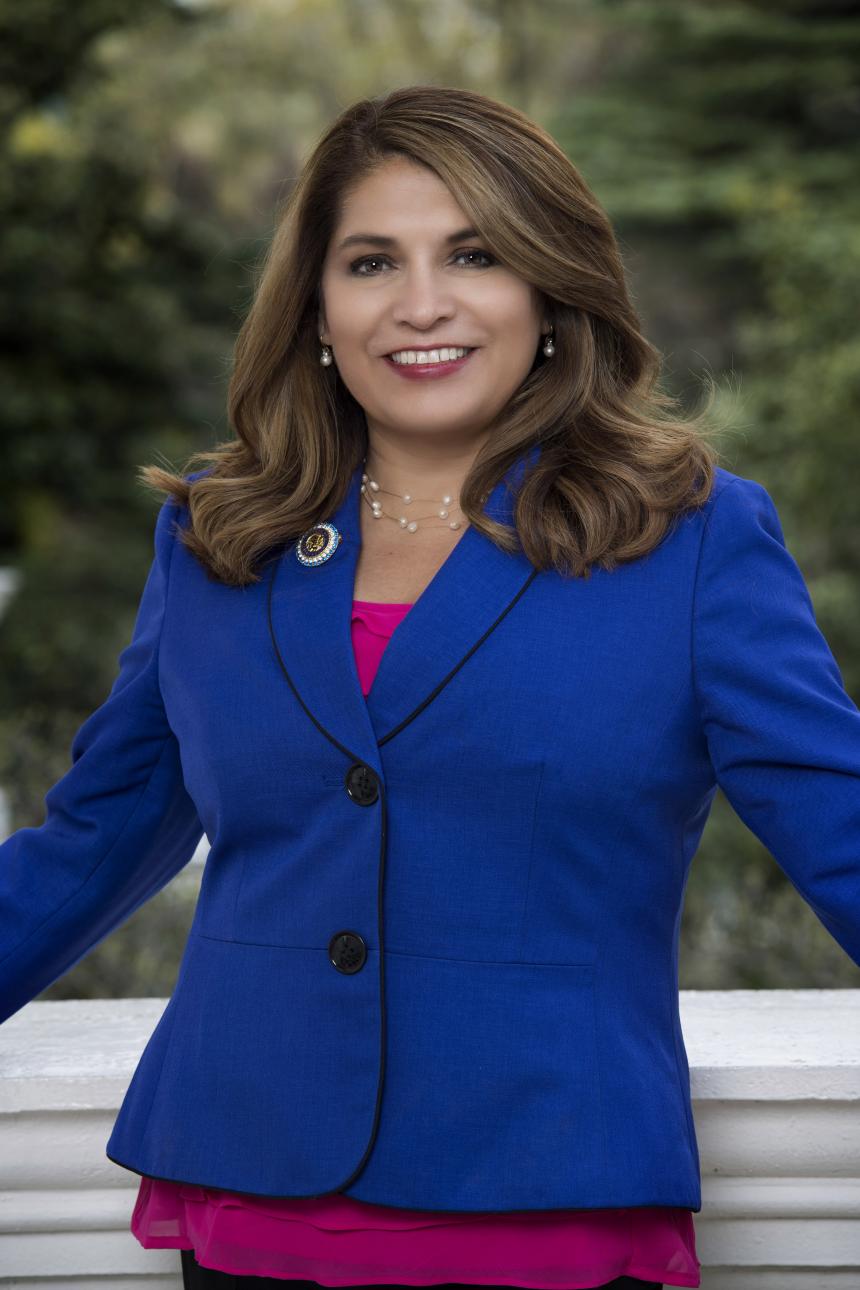
Asm. Sharon Quirk-Silva
Sponsored bills
This measure would designate a specified portion of State Route 50 in the County of El Dorado as the Deputy Sheriff Brian "Ish" Ishmael Memorial Highway. The measure would request that the Department of Transportation determine the cost of appropriate signs showing this special designation and, upon receiving donations from nonstate sources covering that cost, erect those signs.
Under existing law, the California Emergency Services Act, the Governor is authorized to proclaim a state of emergency, as defined, under specified circumstances. The California Emergency Services Act also authorizes the governing body of a city, county, city and county, or an official designated by ordinance adopted by that governing body, to proclaim a local emergency, as defined. Under existing law, the Office of Emergency Services within the Governor's office is required to, among other things, develop curriculum for first responder training, and to adopt standards and procedures for training first responder instructors. A person who violates any provision of the act is guilty of a misdemeanor. This bill would, for purposes of the California Emergency Services Act, define "first responder" as an employee of the state or a local public agency who provides emergency response services, including a peace officer, firefighter, paramedic, emergency medical technician, public safety dispatcher, or public safety telecommunicator. The bill would provide that the definition of first responder described above does not confer a right to, or entitlement upon, an employee or prospective employee to obtain a retirement benefit formula for an employment classification that is not included in, or is expressly excluded from, that formula, as specified. The bill would prohibit an employer from offering, or indicating an ability to offer to an employee or prospective employee a retirement benefit formula for an employment classification that is not included in, or is expressly excluded from, that formula because of the definition of "first responder." The California Constitution requires the state to reimburse local agencies and school districts for certain costs mandated by the state. Statutory provisions establish procedures for making that reimbursement. This bill would provide that no reimbursement is required by this act for a specified reason.
Existing provisions of the California Constitution establish the University of California as a public trust under the administration of the Regents of the University of California. The California Constitution grants to the regents all the powers necessary or convenient for the effective administration of this public trust. Pursuant to the California Constitution, there are 7 ex officio members of the regents and 18 appointive members appointed by the Governor and approved by the Senate, a majority of the membership concurring. This measure would enact the University of California Equal Employment Opportunity Standards Act, which would, effective January 1, 2021, except as specified, require the regents to ensure that all contract workers, as defined, who are paid to perform support services for students, faculty, patients, or the general public at any campus, dining hall, medical center, clinic, research facility, laboratory, or other university location, are at all times subject to and afforded the same equal employment opportunity standards, as defined, as university employees performing similar services. The measure would authorize the regents, or any campus or other entity of the University of California, to contract for, or otherwise arrange to use, contract labor, as defined, to perform support services only under specified conditions, only if authorized to do so by statute, and only to the extent necessary to address one or more of prescribed needs. The measure would authorize the Legislature to enact statutes to further the purposes of, and to aid the enforcement of, this measure.
This measure would urge each bank with which the State of California has a business relationship to evaluate its commercial relationship with gun manufacturers and to consider the repercussions of that relationship, and urge all banks to discuss their lending practices with their shareholders and to adopt lending practices that mirror the people of California's values of protecting citizens before profit.
The California Constitution establishes the Public Utilities Commission and authorizes the commission to exercise ratemaking and rulemaking authority over all public utilities, as defined, subject to control by the Legislature. The Public Utilities Act authorizes the commission to supervise and regulate every public utility, including electrical corporations, and to do all things that are necessary and convenient in the exercise of that power and jurisdiction. Existing law authorizes the commission to fix the rates and charges for every public utility and requires that those rates and charges be just and reasonable. Existing law authorizes the commission, in a proceeding on an application by an electrical corporation to recover costs and expenses arising from a catastrophic wildfire occurring on or after January 1, 2019, to allow cost recovery if the costs and expenses are just and reasonable, after consideration of the conduct of the utility, including consideration of specified factors. Existing law establishes the Wildfire Fund to pay eligible claims arising from a covered wildfire, as provided. Existing law requires the commission to initiate a rulemaking proceeding to consider using its existing authority to require certain electrical corporations to collect a nonbypassable charge from its ratepayers to support the Wildfire Fund, and requires the commission to direct those electrical corporations to collect that charge if the commission determines that the imposition of the charge is just and reasonable and that it is an appropriate exercise of its authority, as specified. This bill would enact the Wildfire Prevention and Community Resilience Act of 2020 and would require the Natural Resources Agency, in consultation with the commission, to adopt an interim expenditure plan and an expenditure plan that are focused on reducing wildfire risk on the ground and in communities through activities such as defensible space implementation, home hardening, improved public safety, including expenditures to add trained emergency medical technicians to the workforce, and other authorized activities, as well as to prepare residents for wildfires through public education and outreach, as provided. The bill would establish the Wildfire Prevention and Community Resilience Fund and, upon appropriation by the Legislature, would require moneys in the fund be used for the implementation of those plans. The bill would require the Secretary of the Natural Resources Agency, upon the adoption of the interim plan, to notify the State Controller of the adoption. The bill would require, within 30 days of the notification, the transfer of $500,000,000 from the Surplus Money Investment Fund to the Wildfire Prevention and Community Resilience Fund, and would appropriate the money to the Natural Resources Agency for the implementation of the interim expenditure plan. The bill would provide for the repayment of the moneys transferred from the Wildfire Prevention and Community Resilience Fund to the Surplus Money Investment Fund, as provided. The bill would require the commission to require large electrical corporations, as defined, to collect, on and after a specified time, a nonbypassable charge from their ratepayers, as provided, to finance the bonds issued for the support of the Wildfire Prevention and Community Resilience Fund, as described below. Existing law, until January 1, 2003, authorizes the Department of Water Resources to enter into contracts for the purchase of electric power. Existing law authorizes the department to sell power to retail end use customers and local publicly owned electric utilities under certain circumstances. Existing law authorizes the department to issue revenue bonds and entitles the department to recover, as a revenue requirement, amounts necessary to enable it to finance the bonds and purchase electric power pursuant to these provisions. Existing law authorizes the department to issue Wildfire Fund bonds on and after either the date on which the department legally defeases all of its remaining bonds under the provisions described above or the date on which it pays those obligations in full at maturity, whichever is earlier, to support the Wildfire Fund. Existing law entitles the department to recover, as a revenue requirement, amounts necessary to enable it to finance the bonds in support of the Wildfire Fund. Existing law requires those bond proceeds and revenues received by the department to be deposited in the Department of Water Resources Charge Fund. Existing law continuously appropriates the moneys in the Department of Water Resources Charge Fund to the department for specified purposes, including transfers to the Wildfire Fund and repayment of the bonds issued in support of the Wildfire Fund. This bill would authorize the department to issue bonds, in an aggregate amount of up to $3,000,000,000, the repayment of which, including interest, commences on the date on which the department has paid in full, at maturity, or legally defeases any outstanding bonds issued for the support of the Wildfire Fund or on January 1, 2036, whichever is later, to support the Wildfire Prevention and Community Resilience Fund. The bill would entitle the department to recover, as a revenue requirement, amounts necessary to enable it to finance the bonds in support of the Wildfire Prevention and Community Resilience Fund. The bill would require those bond proceeds and revenues received by the department to be deposited in the Department of Water Resources Charge Fund. The bill would continuously appropriate the moneys in the Department of Water Resources Charge Fund to the department for specified purposes, including transfers to the Wildfire Prevention and Community Resilience Fund and repayment of the bonds issued for the support of the Wildfire Prevention and Community Resilience Fund. Under existing law, a violation of the Public Utilities Act or any order, decision, rule, direction, demand, or requirement of the commission is a crime. Because certain of the above provisions would be codified in the act and would require action by the commission, a violation of which would be a crime, this bill would impose a state-mandated local program. This bill would incorporate additional changes to Section 3289 of the Public Utilities Code proposed by SB 350 to be operative only if this bill and SB 350 are enacted and this bill is enacted last. The California Constitution requires the state to reimburse local agencies and school districts for certain costs mandated by the state. Statutory provisions establish procedures for making that reimbursement. This bill would provide that no reimbursement is required by this act for a specified reason. This bill would declare that it is to take effect immediately as an urgency statute.
Existing law prescribes various requirements to be satisfied before the exercise of a power of sale under a mortgage or deed of trust. Existing law requires that a notice of default and a notice of sale be recorded and that specified periods of time elapse between the recording and the sale. Existing law establishes certain requirements in connection with foreclosures on mortgages and deeds of trust, including restrictions on the actions mortgage servicers may take while a borrower is attempting to secure a loan modification or has submitted a loan modification application. Existing law applies certain of those requirements only to a first lien mortgage or deed of trust that is secured by owner-occupied residential real property containing no more than four dwelling units. This bill, the Tenant, Homeowner, and Small Landlord Relief and Stabilization Act of 2020, would, among other things, until January 1, 2023, additionally apply those protections to a first lien mortgage or deed of trust that is secured by residential real property that is occupied by a tenant, contains no more than four dwelling units, and meets certain criteria, including that a tenant occupying the property is unable to pay rent due to a reduction in income resulting from the novel coronavirus. The bill would also enact the COVID-19 Small Landlord and Homeowner Relief Act of 2020 (Homeowner Act) , which would require a mortgage servicer, as defined, to provide a specified written notice to a borrower, as defined, if the mortgage servicer denies forbearance during the effective time period, as defined, that states the reasons for that denial if the borrower was both current on payments as of February 1, 2020, and is experiencing a financial hardship that prevents the borrower from making timely payments on the mortgage obligation due, directly or indirectly, to the COVID-19 emergency. The Homeowner Act would also require a mortgage servicer to comply with applicable federal guidance regarding borrower options following a COVID-19 related forbearance. Existing law provides that a tenant is guilty of unlawful detainer if the tenant continues to possess the property without permission of the landlord after the tenant defaults on rent or fails to perform a condition or covenant of the lease under which the property is held, among other reasons. Existing law requires a tenant be served a 3 days' notice in writing to cure a default or perform a condition of the lease, or return possession of the property to the landlord, as specified. Existing law, the Mobilehome Residency Law, prohibits a tenancy from being terminated unless specified conditions are met, including that the tenant fails to pay rent, utility charges, or reasonable incidental service charges, and 3 days' notice in writing is provided to the tenant, as specified. This bill would, until February 1, 2025, enact the COVID-19 Tenant Relief Act of 2020 (Tenant Act) . The Tenant Act would require that any 3 days' notice that demands payment of COVID-19 rental debt that is served on a tenant during the covered time period meet specified criteria, including that the notice include an unsigned copy of a declaration of COVID-19-related financial distress and that the notice advise the tenant that the tenant will not be evicted for failure to comply with the notice if the tenant delivers a signed declaration of COVID-19-related financial distress to the landlord, as specified. The Tenant Act would define "covered time period" for purposes of these provisions to mean the time between March 1, 2020, and January 31, 2021. The Tenant Act would deem a 3 days' notice that fails to comply with this criteria void and insufficient to support a judgment for unlawful detainer or to terminate a tenancy under the Mobilehome Residency Law. The Tenant Act would prohibit a tenant that delivers a declaration, under penalty of perjury, of COVID-19-related financial distress pursuant to these provisions from being deemed in default with regard to the COVID-19 rental debt, as specified. By expanding the crime of perjury, this bill would create a state-mandated local program. The Tenant Act would prohibit a court from finding a tenant guilty of an unlawful detainer before February 1, 2021, subject to certain exceptions, including if the tenant was guilty of the unlawful detainer before March 1, 2020. The bill would prohibit, before October 5, 2020, a court from taking specified actions with respect to unlawful detainer actions, including issuing a summons on a complaint for unlawful detainer in any action that seeks possession of residential real property and that is based, in whole or in part, on nonpayment of rent or other charges. The Tenant Act would also authorize a landlord to require a high-income tenant, as defined, to additionally submit documentation supporting the claim that the tenant has suffered COVID-19-related financial distress if the landlord has proof of income showing the tenant is a high-income tenant. The Tenant Act would preempt an ordinance, resolution, regulation, or administrative action adopted by a city, county, or city and county in response to the COVID-19 pandemic to protect tenants from eviction based on nonpayment of rental payments, as specified. The bill would require the Business, Consumer Services and Housing Agency to, in consultation with the Department of Finance, engage with residential tenants, landlords, property owners, deed-restricted affordable housing providers, and financial sector stakeholders about strategies and approaches to direct potential future federal stimulus funding to most effectively and efficiently provide relief to distressed tenants, landlords, and property owners, as specified. Existing law prohibits a landlord from taking specified actions with intent to terminate the occupancy under any lease or other tenancy or estate at will, however created, of property used by a tenant as the tenant's residence. Existing law makes a violator of those provisions subject to certain damages in a civil action. This bill would, until February 1, 2021, make a violator of those provisions whose tenant has provided to that violator the declaration of COVID-19-related financial distress described above liable for damages in an amount between $1,000 and $2,500. Existing law, The Small Claims Act, grants jurisdiction to a small claims court in cases where the amount demanded does not exceed $5,000, as specified, and prohibits a person from filing more than 2 small claims actions in which the amount demanded exceeds $2,500 anywhere in the state in any calendar year. This bill would instead, until February 1, 2025, provide that a small claims court has jurisdiction in any action for recovery of COVID-19 rental debt, as defined, regardless of the amount demanded and would provide that a claim for recovery of a COVID-19 rental debt is exempt from the prohibition on filing more than 2 small claims actions described above. Existing law, the Tenant Protection Act of 2019, prohibits, with certain exceptions, an owner of residential real property from increasing the gross rental rate for a dwelling or unit more than 5% plus the "percentage change in the cost of living," as defined, or 10%, whichever is lower, of the lowest gross rental rate charged for the immediately preceding 12 months, subject to specified conditions. The act exempts certain types of residential real properties, including dormitories constructed and maintained in connection with any higher education institution within the state for use and occupancy by students in attendance at the institution and housing that has been issued a certificate of occupancy within the previous 15 years. This bill would revise and recast those exemptions to exempt dormitories owned and operated by an institution of higher education or a kindergarten and grades 1 to 12, inclusive, school. The bill would also make clarifying changes to the definition of "percentage change in the cost of living." This bill would also make clarifying and conforming changes. The bill would include findings that changes proposed by this bill address a matter of statewide concern rather than a municipal affair and, therefore, apply to all cities, including charter cities. The California Constitution requires the state to reimburse local agencies and school districts for certain costs mandated by the state. Statutory provisions establish procedures for making that reimbursement. This bill would provide that no reimbursement is required by this act for a specified reason. This bill would declare that it is to take effect immediately as an urgency statute.
(1) Under existing law, the Public Utilities Commission has regulatory authority over public utilities, including telephone corporations. Existing law requires the commission to develop, implement, and administer the California Advanced Services Fund (CASF) program to encourage deployment of high-quality advanced communications services to all Californians. Existing law provides that the goal of the program is to, no later than December 31, 2022, approve funding for infrastructure projects that will provide broadband access to no less than 98% of California households, as provided. Existing law requires the commission, in approving infrastructure projects, to approve projects that provide last-mile broadband access to households that are unserved by an existing facility-based broadband provider, and give preference to projects in areas where internet connectivity is only available through dial-up service, as provided. Existing law authorizes the commission to collect a sum not to exceed $330,000,000 to implement the CASF program through the imposition of a surcharge that is collected starting on January 1, 2018, and continuing through the 2022 calendar year. Existing law prohibits the surcharge collected for the CASF program from exceeding $66,000,000 unless the commission determines that collecting a higher amount of surcharge for the CASF program in any year will not result in an increase in all surcharges collected from telephone customers for that year. This bill would instead require the commission to develop, implement, and administer the California Advanced Services Fund program to encourage deployment of 21st century-ready communications, as provided. The bill would provide that the goal of the program is instead to, no later than December 31, 2024, approve funding for infrastructure projects that will provide high-capacity, future-proof infrastructure, as defined, based on current engineering and scientific information available at the time of program application, to no less than 98% of California households, as provided. The bill would require the commission, in approving infrastructure projects, to approve projects with a goal of providing high-capacity, future-proof infrastructure to households that are unserved areas, as defined, or unserved high-poverty areas, as defined, prioritize projects in unserved areas and unserved high-poverty areas where internet connectivity is available only below specified speed thresholds or not at all, and ensure that no awardee receives a grant for an infrastructure project for which the awardee has already received the full cost of the project from a federal grant. The bill would repeal the authority of the commission to increase the maximum amount of the surcharge collected for the CASF program in any year if the commission makes the above-described determination. Existing law establishes the Broadband Infrastructure Grant Account in the CASF, and makes moneys in the account available, upon appropriation by the Legislature, for grants for projects that deploy infrastructure capable of providing broadband access at speeds of at least 10 megabits per second (mbps) downstream and one mbps upstream to unserved households and provide last-mile infrastructure to unserved households, as specified. Existing law requires the commission to annually offer an existing facility-based broadband provider the opportunity to demonstrate that it will deploy broadband or upgrade existing facilities to a delineated unserved area within 180 days, with opportunity for extension beyond the 180 days, as provided, if the commission makes a specified finding. This bill would revise the requirements applicable to grants awarded from the account. The bill would require an eligible project to deploy infrastructure capable of providing broadband access at speeds of at least 25 mbps downstream and 25 mbps upstream and with a latency that is sufficiently low to allow real-time interactive applications to unserved areas and unserved high-poverty areas, and provide last-mile infrastructure to unserved areas and unserved high-poverty areas. The bill would require the commission to annually offer an existing facility-based broadband provider the opportunity to demonstrate that it will deploy broadband or upgrade existing facilities to a delineated unserved area within 90 days, rather than 180 days. Existing law authorizes an individual household or property owner to be eligible to apply for a grant from the account to offset the costs of connecting the household or property to an existing or proposed facility-based broadband provider. Existing law requires the aggregate amount of these grants to not exceed $5,000,000. This bill would delete these provisions. (2) Existing law requires the commission to conduct various interim and final audits of the California Advanced Services Fund to ensure that funds have been expended in accordance with the approved terms of the grant awards and loan agreements, as specified. Existing law requires the commission to report the interim findings to the Legislature by April 1, 2020. This bill would require the commission to also report interim findings by April 1, 2022. (3) Existing law requires the commission to, until April 1, 2023, annually provide a report to the Legislature that includes certain information, including the remaining unserved areas in the state, the status of the California Advanced Services Fund balance, and the projected amount to be collected in each year through 2022. This bill would instead require the commission to provide this report until April 1, 2025. The bill would require that the information specified above include the remaining unserved areas and unserved high-poverty areas in the state and the status of the fund balance and the projected amount to be collected in each year through 2024.
(1) Existing law establishes the State Department of Education in state government, and vests the department with specified powers and duties relating to the state's public school system. This bill would authorize local educational agencies to report to the department their pupils' estimated needs for computing devices and internet connectivity adequate for at-home learning. The bill would require the department, in consultation with the Public Utilities Commission, to compile that information and to annually post that compiled information on the department's internet website. (2) Existing law expressly authorizes a county service area to acquire, construct, improve, maintain, and operate broadband internet access services, and requires a county service area that does so to take certain actions regarding the accessing of content on the internet by end users of that service. This bill would similarly authorize the board of supervisors of a county to acquire, construct, improve, maintain, or operate broadband internet access service, and any other communications service necessary to obtain federal or state support for the acquisition, construction, improvement, maintenance, or operation of broadband internet access service, and would require a board that does so to take certain actions regarding the accessing of content on the internet by end users of that service. (3) Existing law establishes the Governor's Office of Business and Economic Development, known as "GO-Biz," within the Governor's office to serve the Governor as the lead entity for economic strategy and the marketing of California on issues relating to business development, private sector investment, and economic growth. This bill would require the office, on or before June 30, 2021, to develop recommendations and a model for streamlined local land use approval and construction permit processes for projects related to broadband infrastructure deployment and connectivity and to adopt, and post on its internet website, the recommendations and model, as specified. (4) Under existing law, the Public Utilities Commission has regulatory authority over public utilities, including telephone corporations. Existing law requires the commission to develop, implement, and administer the California Advanced Services Fund (CASF) program to encourage deployment of high-quality advanced communications services to all Californians that will promote economic growth, job creation, and the substantial social benefits of advanced information and communications technologies. Existing law requires the commission, in approving CASF infrastructure projects, to give preference to projects in areas where only dial-up internet service is available or where no internet service is available. Existing law authorizes the commission to impose a surcharge to collect $330,000,000 for deposit into the CASF beginning January 1, 2018, and continuing through the 2022 calendar year. Existing law establishes 4 accounts, the Broadband Infrastructure Grant Account, the Rural and Urban Regional Broadband Consortia Grant Account, the Broadband Public Housing Account, and the Broadband Adoption Account within the CASF and specifies the amount of moneys to be deposited into each account, subject to appropriation by the Legislature. Existing law specifies, among other things, eligibility criteria for grants awarded from each of those accounts. Existing law requires moneys in the Broadband Public Housing Account that have not been awarded by December 31, 2020, be transferred back to the Broadband Infrastructure Grant Account. This bill would require that the CASF program promote remote learning and telehealth, in addition to economic growth, job creation, and the substantial social benefits of advanced information and communications technologies. The bill would require the commission, in approving CASF infrastructure projects, to instead prioritize projects that reach the greatest number of unserved and underserved households, as defined, and to further prioritize projects based on other specified attributes. The bill would revise, among other things, the eligibility criteria for grants awarded from each account in the CASF, as specified. The bill would repeal the requirement that moneys in the Broadband Public Housing Account not awarded by December 31, 2020, be transferred back to the Broadband Infrastructure Grant Account. The bill would establish the State Agency Direct Allocation Account in the CASF for specified purposes relating to the deployment of broadband infrastructure. The bill would require the commission to improve the efficiency of the administration of the CASF program to ensure for the most cost-effective and timely achievement of the goal of the program. The bill would authorize the commission to convene a peer review panel to review grant applications submitted under the CASF program. This bill would require the commission to engage all relevant state agencies to facilitate planning and accelerate deployment of broadband infrastructure through both projects funded pursuant to the CASF program and other infrastructure construction projects that can incorporate high-speed broadband. This bill would authorize the commission to require each internet service provider, as defined, to report specified information regarding each affordable internet service plan advertised by the provider. (5) Under existing law, a violation of the Public Utilities Act or any order, decision, rule, direction, demand, or requirement of the commission is a crime. Because a violation of a commission action implementing this bill's requirements would be a crime, the bill would impose a state-mandated local program. The California Constitution requires the state to reimburse local agencies and school districts for certain costs mandated by the state. Statutory provisions establish procedures for making that reimbursement. This bill would provide that no reimbursement is required by this act for a specified reason. (6) This bill would declare that it is to take effect immediately as an urgency statute.
Existing law, the Stop Tobacco Access to Kids Enforcement (STAKE) Act, prohibits a person from selling or otherwise furnishing tobacco products, as defined, to a person under 21 years of age. Existing law also prohibits the use of tobacco products in county offices of education, on charter school or school district property, or near a playground or youth sports event, as specified. This bill would prohibit a tobacco retailer, or any of the tobacco retailer's agents or employees, from selling, offering for sale, or possessing with the intent to sell or offer for sale, a flavored tobacco product or a tobacco product flavor enhancer, as those terms are defined, except as specified. The bill would make a violation of this prohibition an infraction punishable by a fine of $250 for each violation. The bill would state the intent of the Legislature that these provisions do not preempt or prohibit the adoption and implementation of local ordinances that impose greater restrictions on the access to tobacco products than the restrictions imposed by the bill, as specified. The bill would state that its provisions are severable. By creating a new crime, the bill would impose a state-mandated local program. The California Constitution requires the state to reimburse local agencies and school districts for certain costs mandated by the state. Statutory provisions establish procedures for making that reimbursement. This bill would provide that no reimbursement is required by this act for a specified reason.