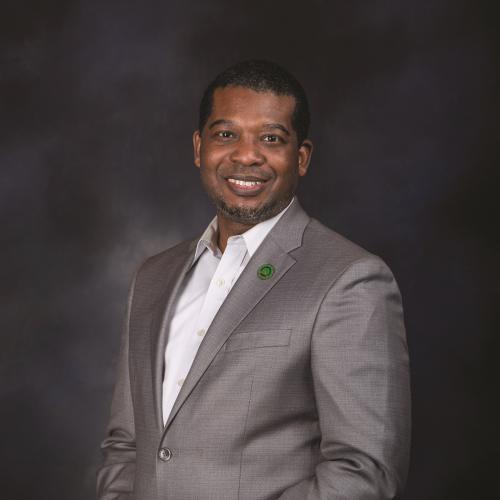
Photo of Corey Jackson
D California Assembly · District 60 On the 2026 ballot

Asm. Corey Jackson

Compare
Total votes
9,714
all sessions
Attendance
97%
242 missed
Near the chamber average
With party
99%
of cast votes
Near the chamber average
Bipartisan score
0%
crosses aisle rarely
Near the chamber average
Sponsored
946
bills & resolutions
Near the chamber average
Committees
13
assignments
946 bills and resolutions

Sponsored bills

Total
946
Primary
94
Co-sponsor
852
This page
946
matching current filters
Co-sponsor HR 77
Passed · California Assembly · Co-sponsor
Relative to school governance.

Maddy summaryThis House Resolution declares January 2026 as School Board Recognition Month to honor the nearly 5,000 school board members across California's 1,000 school districts and county offices of education. The resolution recognizes these locally elected officials for their work in guiding public education and serving diverse communities, emphasizing their role in ensuring students' academic, social-emotional, and health needs are met. It calls on community members to join in acknowledging the dedication of school board members and collaborate to improve the education system. The bill has no operational effect beyond this symbolic recognition and does not change any laws or policies.

Passed Feb 5, 2026 1 co-sponsor
Co-sponsor HR 76
Passed · California Assembly · Co-sponsor
Relative to affordable homeownership.

Maddy summaryThis House Resolution formally recognizes the importance of affordable homeownership for California families, particularly those with lower incomes, and highlights how nonprofit-led programs help build generational wealth and reduce economic disparities. The document emphasizes that existing state programs like CalHome support the construction and preservation of affordable homes through competitive funding to cities, counties, indigenous communities, and nonprofit builders such as Habitat for Humanity. While the resolution does not create new laws or funding, it serves as an official acknowledgment of homeownership's role in improving educational outcomes, health, civic participation, and neighborhood stability. The text also notes California's significant housing deficit and racial wealth gaps as context for why expanding affordable ownership opportunities is a priority for state policy.

Passed Feb 5, 2026 1 co-sponsor
Primary AB 98
Failed · California Assembly · Lead sponsor
State property: City of Moreno Valley.

Existing law authorizes the Director of General Services to execute grants to real property belonging to the state in the name and upon behalf of the state, whenever the sale or exchange of real property is authorized or contemplated by law, if no other state agency is specifically authorized and directed to execute the grants. This bill would, subject to specified requirements, require the director to quitclaim to the City of Moreno Valley, at no cost to the city, all interests of the state in 11 specified parcels of land located in the City of Moreno Valley that consist mainly of undeveloped open-space land. The bill would require the City of Moreno Valley to use the land to conduct wildfire mitigation to ensure fire protection for residents and businesses, to increase open-space and outdoor recreational opportunities, and any other similar use the City of Moreno Valley deems necessary. The bill would exempt the land from specified provisions of law governing the disposal of surplus state and local real property. This bill would make legislative findings and declarations as to the necessity of a special statute for the City of Moreno Valley. This bill would make legislative findings and declarations related to a gift of public funds.

Failed Feb 2, 2026 0 co-sponsors
Co-sponsor AB 1157
Failed · California Assembly · Co-sponsor
Tenancy: just cause termination: rent increases.

(1) Existing law prohibits the owner of a residential real property from terminating a tenancy without just cause, as defined, after a tenant has continuously and lawfully occupied a residential real property for 12 months. Among other residential real properties or residential circumstances, existing law exempts from these provisions a residential real property, including a mobilehome, that is alienable separate from the title to any other dwelling unit if the owner meets specified criteria and the tenants have been provided a specified written notice of the exemption. Existing law repeals these provisions on January 1, 2030. This bill would revise these provisions by removing the exemption for separately alienable residential real property and, instead, only exempting a mobilehome if the above-described criteria are met. The bill would delete the January 1, 2030, repeal date, thereby extending these provisions indefinitely. (2) Existing law prohibits an owner of residential real property, except as specified, from increasing over the course of any 12-month period the gross rental rate for a dwelling or a unit more than 5% plus the percentage change in the cost of living, or 10%, whichever is lower, of the lowest gross rental rate charged for that dwelling or unit at any time during the 12 months prior to the effective date of the increase, as specified. This bill would reduce the permissible gross rental rate increase under these provisions to the lesser of 2% plus the percentage change in the cost of living, or 5%. Among other residential real properties, existing law exempts from these provisions a residential real property that is alienable separate from the title to any other dwelling unit, including a mobilehome, if the owner meets specified criteria and the tenants have been provided a specified written notice of the exemption. This bill would revise these provisions by removing the exemption for separately alienable residential real property and, instead, only exempting a mobilehome if the above-described criteria are met. Existing law repeals these provisions on January 1, 2030. This bill would delete the January 1, 2030, repeal date, thereby extending these provisions indefinitely. (3) Notwithstanding the above-described gross rental rate increase prohibition, existing law, upon the expiration of rental restrictions, as defined, authorizes the owner of affordable housing units that meet certain requirements to establish the initial rental rate for the unit, and also authorizes the owner of an assisted housing development who demonstrates compliance with certain requirements under penalty of perjury to establish the initial unassisted rental rate for units in the assisted housing development. Existing law repeals these provisions on January 1, 2030. This bill would remove the January 1, 2030, repeal date, thereby extending the initial rental rate authorizations indefinitely. By extending provisions that require the owner of an assisted housing development to demonstrate compliance with specified requirements under penalty of perjury, the bill would impose a state-mandated program. (4) The California Constitution requires the state to reimburse local agencies and school districts for certain costs mandated by the state. Statutory provisions establish procedures for making that reimbursement. This bill would provide that no reimbursement is required by this act for a specified reason.


Failed Feb 2, 2026 1 co-sponsor
Co-sponsor AB 868
Failed · California Assembly · Co-sponsor
Primary elections: county officers: top two candidates.

Existing law provides that a candidate for a nonpartisan office who at a primary election receives votes on a majority of all the ballots cast for candidates for that office is elected to that office. This bill would exempt from that provision candidates for county nonpartisan offices, including a county office in a charter county, but not including a charter city and county, and would require the candidates who received the highest and second highest number of votes cast for nomination to that office to be placed on the ballot at the ensuing general election, except as specified. By imposing new duties on counties, including county elections officials, the bill would impose a state-mandated local program. The California Constitution requires the state to reimburse local agencies and school districts for certain costs mandated by the state. Statutory provisions establish procedures for making that reimbursement. This bill would provide that, if the Commission on State Mandates determines that the bill contains costs mandated by the state, reimbursement for those costs shall be made pursuant to the statutory provisions noted above.

Failed Feb 2, 2026 1 co-sponsor
Primary AB 407
Failed · California Assembly · Lead sponsor
California Pollution Control Financing Authority.

(1) Existing law establishes the California Pollution Control Financing Authority (CPCFA) , consisting of 3 members: the Director of Finance, the State Treasurer, and the State Controller. Existing law establishes the Capital Access Loan Program for Small Businesses, which is administered by the CPCFA, to assist qualifying small businesses in the state access capital. Existing law establishes the California Capital Access Fund within the authority to be used for purposes of the program. This bill would require all moneys accruing to the authority pursuant to the program to be deposited into the fund. The bill would authorize other private, state, or federal funding sources to be received and accepted into the fund, as specified. By creating a continuously appropriated fund, this bill would make an appropriation. (2) Existing law establishes the California Americans with Disabilities Act Small Business Capital Access Loan Program to assist small businesses in complying with the federal Americans with Disabilities Act of 1990. Existing law establishes the California Americans with Disabilities Act Small Business Capital Access Loan Program Fund, which is continuously appropriated to CPCFA for carrying out the purposes of the program. Existing law requires that all moneys in the fund be held in trust for the life of the program, subject to program expenditures and costs of administering the program. Existing law specifies those program expenditures. This bill would include financial assistance, as defined and specified, as a program expenditure described above. By expanding the expenditures that may be made from a continuously appropriated fund, this bill would make an appropriation. (3) Existing law establishes the California Seismic Safety Capital Access Loan Program to cover losses on qualified loans by participating lenders to qualified residential property owners or qualified small businesses, as those terms are defined. Existing law establishes the California Seismic Safety Capital Access Loan Program Fund, which is continuously appropriated to CPCFA for carrying out the purposes of the program. Existing law requires that all moneys in the fund be held in trust for the life of the program, subject to program expenditures and costs of administering the program. Existing law specifies those program expenditures. This bill would include financial assistance, as defined and specified, as a program expenditure described above. By expanding the expenditures that may be made from a continuously appropriated fund, this bill would make an appropriation.

Failed Feb 2, 2026 0 co-sponsors
Primary AB 427
Failed · California Assembly · Lead sponsor
Social workers: interstate compact.

Existing law, the Clinical Social Worker Practice Act, provides for the licensure and regulation of clinical social workers by the Board of Behavioral Sciences. Existing law requires the board to issue a clinical social worker license to each applicant who qualifies pursuant to the act and who successfully passes a California law and ethics examination and a clinical examination. This bill would ratify and approve the Social Work Licensure Compact, which authorizes member states to issue multistate licenses to applicants meeting specified education and experience requirements. Under the compact, a multistate license grants the holder an authorization to practice in other member states. The compact provides for the creation of a commission and requires the board to select a delegate to serve on the commission. This bill would require the board to comply with the requirements of the compact and to adopt regulations necessary to implement that compact. Existing law prohibits an individual from styling themselves, or holding themselves out to be, a "licensed clinical social worker," and makes it unlawful to engage in the practice of clinical social work unless they hold a license under the Clinical Social Worker Practice Act. This bill would instead prohibit those acts unless they hold a license under the act or under the above-described compact. This bill would become operative only upon certification by the Director of Consumer Affairs that a majority of the board has voted in favor of joining the compact and would require the director to notify the Secretary of State and the Legislative Counsel Bureau of the date of that certification.

Failed Feb 2, 2026 0 co-sponsors
Primary AB 345
Failed · California Assembly · Lead sponsor
Apprenticeship programs: approval process.

Existing law provides for apprenticeship programs within the Division of Apprenticeship Standards within the Department of Industrial Relations, sponsored by specific entities and employers, and requires the Chief of the Division of Apprenticeship Standards to perform various functions with respect to apprenticeship programs and the welfare of apprentices, including the approval of new apprenticeship programs. Existing law makes any person who willfully discriminates in any recruitment or apprenticeship program, as specified, guilty of a misdemeanor. This bill would require the Division of Apprenticeship Standards to confirm the completeness of an application for a new apprenticeship program within 30 days of receiving the application. The bill would provide that, where the chief has not made a final determination on a completed application for a new program within 6 months of receiving the application, the program shall have conditional approval to operate if it satisfies specified conditions, including approval by the United States Department of Labor. The bill would require the chief to make a final determination on an application for a new apprenticeship program within one year of receiving a completed application. The bill would provide its provisions do not apply to apprenticeship programs in the building and construction trades or to firefighter programs. Because the bill would expand the scope of an existing crime with respect to willful violations of provisions of the law related to discrimination in apprenticeship and preapprenticeship programs, the bill would impose a state-mandated local program. The California Constitution requires the state to reimburse local agencies and school districts for certain costs mandated by the state. Statutory provisions establish procedures for making that reimbursement. This bill would provide that no reimbursement is required by this act for a specified reason.
Failed Feb 2, 2026 0 co-sponsors
Primary AB 73
Failed · California Assembly · Lead sponsor
Mental Health: Black Mental Health Navigator Certification.

Existing law establishes, within the Health and Welfare Agency, the Department of Health Care Access and Information, which is responsible for, among other things, administering various health professions training and development programs. Existing law requires the department to develop and approve statewide requirements for community health worker certificate programs. Existing law defines "community health worker" to mean a liaison, link, or intermediary between health and social services and the community to facilitate access to services and to improve the access and cultural competence of service delivery. This bill would require the department to develop criteria for a specialty certificate program and specialized training requirements for a Black Mental Health Navigator Certification, as specified. The bill would require the department to collect and regularly publish data, not less than annually, including, but not limited to, the number of individuals certified, including those who complete a specialty certificate program, as specified, and the number of individuals who are actively employed in a community health worker role. The bill would make these provisions subject to an appropriation by the Legislature.

Failed Feb 2, 2026 0 co-sponsors
Co-sponsor AB 857
Failed · California Assembly · Co-sponsor
School employees: cultural competency training.

Existing law establishes a system of public elementary and secondary schools in this state and authorizes local educational agencies throughout the state to operate schools and provide instruction to pupils in kindergarten and grades 1 to 12, inclusive. Existing law authorizes local educational agencies to employ personnel to provide services in schools pursuant to that system. This bill would require the State Department of Education to, on or before July 1, 2027, develop an online cultural competency training delivery platform and online cultural competency training curriculum for school employees to support pupils of color. The bill would, commencing with the 2027–28 school year and ending with the completion of the 2031–32 school year, require a school district, county office of education, or charter school serving pupils in kindergarten or any of grades 1 to 12, inclusive, to annually provide that training to all school employees, unless an employee is exempt from the training or an employee provides proof of completion for a cultural competency training completed while employed at another local educational agency, as provided. The bill would also require local educational agencies to provide a proof of completion to school employees that complete the training and to ensure that all school employees complete the required training on paid time during the employees' regular work hours or designated professional development hours, as provided. By imposing additional duties on local educational agencies, this bill would impose a state-mandated local program. The bill would require the department to (1) monitor compliance with the training requirement as part of the department's annual compliance monitoring of state and federal programs, (2) report data, within 9 months of the completion of the 5-year training period, from that compliance monitoring to the Legislature, and (3) post the report on the department's internet website, as provided. The bill would make these provisions inoperative on July 1, 2033, and would repeal them as of January 1, 2034. The California Constitution requires the state to reimburse local agencies and school districts for certain costs mandated by the state. Statutory provisions establish procedures for making that reimbursement. This bill would provide that, if the Commission on State Mandates determines that the bill contains costs mandated by the state, reimbursement for those costs shall be made pursuant to the statutory provisions noted above.

Failed Feb 2, 2026 1 co-sponsor
Showing 221 to 230 of 946 bills
Previous 1 … 22 23 24 … 95 Next