

Existing law authorizes the governing board of a school district that determines during a fiscal year that its revenues are less than the amount necessary to meet its current year expenditure obligations to request an emergency apportionment through the Superintendent of Public Instruction, subject to specified requirements. Existing law authorizes emergency apportionments to be provided through an interim loan from the General Fund and lease financing made available by the California Infrastructure and Economic Development Bank, which is authorized to issue bonds for purposes of the emergency apportionments and related costs, or as an alternative to lease financing, as an emergency apportionment from the General Fund. Existing law prescribes the financing conditions on emergency apportionments, including the calculation of the interest rate. Existing law, notwithstanding any other law, authorizes the Inglewood Unified School District, through the State Department of Education, to request cashflow loans from the General Fund for a total of up to $55,000,000 for emergency operational purposes, as provided. Existing law requires the interest on these loans to be charged at the annual rate of return of the Pooled Money Investment Account, plus an additional 2%. This bill, notwithstanding any other law, and once the Inglewood Unified School District has successfully repaid at least 10 years of a General Fund cashflow loan made pursuant to those provisions, would authorize the school district to seek, and would require the Department of Finance to grant, a waiver of interest on that loan for the next succeeding fiscal year if specified conditions are met, including, among other conditions, that the Los Angeles County Superintendent of Schools, in consultation with the County Office Fiscal Crisis and Management Assistance Team, determines that the school district is making substantial progress towards fiscal solvency and that a waiver of interest would help the school district to exit receivership, as provided. In each subsequent fiscal year, the bill would authorize the school district to seek, and would require the Department of Finance to grant, a subsequent waiver of interest for the applicable fiscal year if the school district again meets those same requirements. To the extent the bill would impose additional duties on the Los Angeles County Superintendent of Schools, the bill would impose a state-mandated local program. This bill would make legislative findings and declarations as to the necessity of a special statute for the Inglewood Unified School District. The California Constitution requires the state to reimburse local agencies and school districts for certain costs mandated by the state. Statutory provisions establish procedures for making that reimbursement. This bill would provide that, if the Commission on State Mandates determines that the bill contains costs mandated by the state, reimbursement for those costs shall be made pursuant to the statutory provisions noted above.
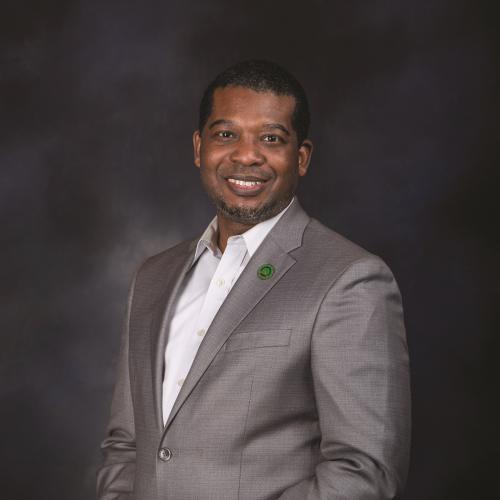
Asm. Corey Jackson
Sponsored bills
Existing law vests the state board with the authority to regulate transportation fuels and requires the state board to adopt standards and regulations providing for specification for vehicular fuel composition to achieve the maximum degree of emission reduction possible from vehicular sources to attain the state air quality standards. This bill would require the state board, on a quarterly basis, to submit to the relevant policy committees of the Legislature a report providing data and describing the impacts of its regulations of transportation fuels on the prices of those fuel to California consumers.
Existing law requires each county to develop and implement a memorandum of understanding (MOU) setting forth the roles and responsibilities of agencies and other entities that serve children and youth in foster care who have experienced severe trauma. Existing law requires that the MOU include provisions addressing, among other things, the establishment and operation of an interagency leadership team. Existing law requires the Secretary of California Health and Human Services and the Superintendent of Public Instruction to establish a joint interagency resolution team consisting of representatives from specified state departments to support implementation of those MOUs, among other functions. Existing law requires the resolution team to develop and submit certain recommendations to the Legislature on various items, including a statewide plan for any additional development needed for a trauma-informed, therapeutic continuum of care to support youth in-state in the least restrictive setting. Existing law requires the team to track and report deidentified information of children and nonminor dependents in foster care who have been assisted to preserve, or secure new, intensive therapeutic options. This bill would require a county, in collaboration with the leadership team, inclusive of tribes, to submit plans to the resolution team describing how the county intends to ensure that coordinated, timely, and trauma-informed services are provided to children and youth in foster care who have experienced severe trauma. The bill would require the county to submit the first plan by January 1, 2027, and to submit updated plans every 2 years thereafter. The bill would require the county to take into consideration certain information regarding the placement and service options available to county child welfare agencies and county probation departments for children and youth in foster care who have experienced severe trauma, as specified. By creating new duties for counties relating to those plans, the bill would impose a state-mandated local program. The California Constitution requires the state to reimburse local agencies and school districts for certain costs mandated by the state. Statutory provisions establish procedures for making that reimbursement. This bill would provide that no reimbursement is required by this act for a specified reason.
Existing law makes it a crime to possess, cultivate, and administer specified controlled substances, including psilocybin and psilocyn. Existing law makes it a crime for a person to rent, lease, or make available for use any building or room for the purpose of storing or distributing any controlled substance. This bill would, until January 1, 2031, request the University of California to establish local pilots in up to 5 counties to allow for the research and development of psilocybin services for veterans and former first responders as part of the Veterans and Former First Responders Research Pilot Program ("Pilot Program") . The bill would require these university partners, overseeing each Pilot Program to be responsible for protocol design, institutional review board approvals, training of psilocybin facilitators, data collection, and reporting. The bill would require each local pilot to partner with licensed health care and licensed community-based providers that provide services and care to the target population. The bill would require psilocybin to be provided by or under the supervision of a practitioner who has experience in providing or overseeing psilocybin or other psychedelic therapy services. The bill would require that each person being considered for the Pilot Program meet specified criteria, including that they are 21 years of age or older and have been given specified assessments. This bill would request the University of California to report specified information about the Pilot Program to the Legislature, the Secretary of California Health and Human Services, and the Governor by January 15, 2030. The bill would establish the Veterans and Former First Responders Research Pilot Special Fund and would continuously appropriate the fund to the University of California for the purposes of these provisions. The bill would request the University of California to apply for and accept grants, donations, and federal funding for the purposes of the Pilot Program, and would require those moneys to be deposited in the fund.
Existing law, the Financial Code, provides for the licensure and regulation of various types of financial institutions and transactions. Existing law, the Song-Beverly Credit Card Act of 1971, regulates the issuance, use, and processing of credit cards and credit card transactions. This bill would enact the Consumer Inflation Reduction and Tax Fairness Act, within the Financial Code, to require that the calculation of interchange fees charged by an issuer, a payment card network, an acquirer bank, or a processor not take into account certain state and local taxes and fees, as specified. The bill would define various terms for these purposes. The bill would prohibit a payment card network, an acquirer bank, or a processor from altering the computation of interchange fees, either by increasing the rate or the amount of fees applicable, to circumvent the effects of the act. Existing law, the Unfair Competition Law, makes various practices unlawful and provides that a person who engages, has engaged, or proposes to engage in unfair competition is liable for a civil penalty, as specified. This bill would provide a violation of its provisions is enforceable pursuant to the Unfair Competition Law, as provided.
The Personal Income Tax Law allows various credits against the taxes imposed by that law, including a young child tax credit to a qualified taxpayer in a specified amount multiplied by the earned income tax credit adjustment factor, as provided. That law also allows a payment from the continuously appropriated Tax Relief and Refund Account for an amount in excess of tax liability. Existing law defines "qualified taxpayer" for this purpose to include an eligible individual, as defined, who has a qualifying child, defined to be a child younger than 6 years of age as of the last day of the taxable year, and who meets other specified criteria. This bill, for taxable years beginning on or after January 1, 2025, would instead define a "qualifying child" to mean a child younger than a specified age as of the last day of the taxable year, as described. By increasing the payments from the Tax Relief and Refund Account, a continuously appropriated fund, the bill would make an appropriation. Existing law requires any bill authorizing a new tax expenditure to contain, among other things, specific goals that the tax expenditure will achieve, detailed performance indicators, and data collection requirements. This bill would include additional information required for any bill authorizing a new tax expenditure.
The California Constitution authorizes the development, construction, or acquisition of developments composed of urban or rural dwellings, apartments, or other living accommodations for persons of low income financed in whole or in part by the federal government or a state public body, or to which the federal government or a state public body extends assistance, if a majority of the qualified electors of the city, town, or county in which the housing is proposed to be located approves the project by voting in favor thereof, as specified. This measure, the Housing Opportunities Made Equal (HOME) Act, would create an account in the General Fund into which, beginning in the 2027–28 fiscal year, and each fiscal year thereafter until September 30, 2036, a sum would be transferred from the General Fund equal to or greater than 5% of the estimated amount of General Fund revenues for that fiscal year, as specified. The measure would require the moneys in the account to be appropriated by the Legislature to the Business, Consumer Services, and Housing Agency, and would authorize that agency to expend the moneys to fund prescribed matters related to homelessness and affordable housing, including housing and services to prevent and end homelessness. This measure would require the agency to develop a 10-year investment strategy, with input from stakeholders, that demonstrates how moneys in the account will be used to produce affordable housing and end homelessness through specific performance measures and benchmarks. On or before October 1 of each year, and until October 1, 2036, the measure would require the agency to annually report to the Legislature on its progress in meeting those performance measures and benchmarks.
Existing law establishes the Air Quality Improvement Program that is administered by the State Air Resources Board for purposes of funding projects related to, among other things, the reduction of criteria air pollutants and improvement of air quality. Existing law establishes the Medium- and Heavy-Duty Zero-Emission Vehicle Fleet Purchasing Assistance Program (program) within the Air Quality Improvement Program to make financing tools and nonfinancial supports available to operators of medium- and heavy-duty vehicle fleets to enable those operators to transition their fleets to zero-emission vehicles. This bill, for any regulation adopted to develop or implement the program, or other regulations that are regarding the procurement or use of medium- and heavy-duty zero-emission vehicles by a public or private fleet, would require the state board to consider specified things, including, among other things, the environmental and supply chain benefits of renting medium- and heavy-duty zero-emission vehicles compared to procuring them.
Existing law establishes, until January 1, 2030, the Racial Equity Commission within the Office of Planning and Research and requires the commission to develop resources, best practices, and tools for advancing racial equity by, among other things, developing a statewide Racial Equity Framework that includes methodologies and tools that can be employed to advance racial equity and address structural racism in California. Existing law, the California Fair Employment and Housing Act, establishes the Civil Rights Department and sets forth its powers and duties, including, among others, receiving, investigating, and prosecuting complaints alleging violations of civil rights, as specified. This bill would require the Civil Rights Department (department) , to, upon appropriation by the Legislature, review, investigate, and make certain determinations regarding applications from persons who claim they are the dispossessed owner, as defined, of property taken as a result of racially motivated eminent domain. The bill would define "racially motivated eminent domain" to mean when the state, county, city, city and county, district, or other political subdivision of the state acquires private property for public use and does not distribute just compensation to the owner at the time of the taking, and the taking, or the failure to provide just compensation, was due, in whole or in part, to the owner's ethnicity or race. Upon a determination that providing property or just compensation is warranted, as provided, the bill would require the department to certify that the dispossessed owner is entitled to the return of the taken property, as specified, or other publicly held property, as defined, of equal value, or financial compensation, as specified. Upon a determination that the dispossessed owner is entitled to other publicly held property of equal value, the bill would require the department to solicit and select, as specified, a list of recommendations of publicly held properties that are suitable as compensation, as provided. Upon a rejection of the determination of the department by the state or local agency that took property by racially motivated eminent domain, the bill would authorize the dispossessed owner, as specified, to bring an action to challenge the taking or the amount of compensation, as provided. Upon a determination that an applicant is not a dispossessed owner or issuing property or just compensation is not warranted, the bill would require the department to notify the applicant of its finding and provide an appeal process, as specified. The bill would require the department to prioritize processing applications for claims made by the individual or individuals who held legal title to the affected property at the time of its taking, as specified. The bill would make every finding, decision, determination, or other official act of the department subject to judicial review. Existing law generally prohibits state agencies from employing in-house counsel to act on behalf of the agency or its employees in specified judicial or administrative adjudicative proceedings, but exempts specified agencies from this provision. This bill would exempt the Civil Rights Department from that provision, as specified. This bill would make related findings and declarations, including those related to a gift of public funds.
Existing law, the California Fair Employment and Housing Act, establishes the Civil Rights Department within the Business, Consumer Services, and Housing Agency and sets forth its powers and duties relating to enforcement of civil rights laws and assistance to communities in resolving disputes, disagreements, or difficulties relating to discriminatory practices. This bill, upon appropriation by the Legislature and commencing on or before the later of either July 1, 2026, or one year after the date of the appropriation, would require the department to create and implement statewide and regional radio, social media, and television campaigns for the purposes of discouraging discrimination. The bill would require the department to convene a working group to develop a plan to implement the campaigns above. The bill would exempt the working group from the Bagley-Keene Open Meeting Act. Existing constitutional provisions require that a statute that limits the right of access to the meetings of public bodies or the writings of public officials and agencies be adopted with findings demonstrating the interest protected by the limitation and the need for protecting that interest. This bill would make legislative findings to that effect.