

Existing law entitles state employees to a paid holiday on specific days, including the 3rd Monday in February, except as specified. Existing law, in addition, authorizes state employees to elect to use 8 hours of vacation, annual leave, compensating time off, or personal holiday credit corresponding with specific dates, including the 4th Friday in September, known as "Native American Day," as specified. This bill would, upon appropriation by the Legislature, entitle state employees to a holiday on the 4th Friday in September, known as "Native American Day," as specified, in lieu of the above-described election. The bill would authorize any state bargaining unit to negotiate for a paid holiday on Native American Day, as specified. This bill would incorporate additional changes to Sections 19853 and 19853.1 of the Government Code proposed by AB 2017 and SB 1394 to be operative only if this bill and either or both of those bills are enacted and this bill is enacted last.
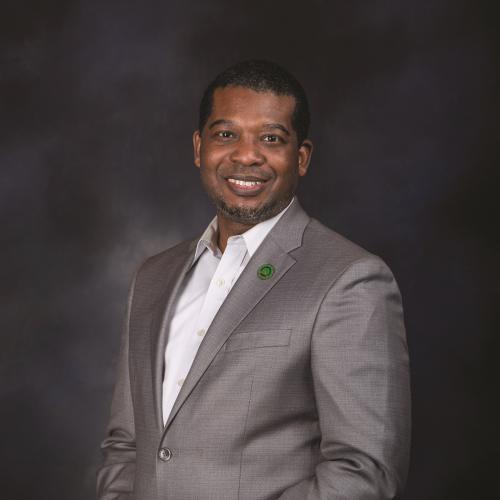
Rep. Corey Jackson
Sponsored bills
This measure would call on Congress to enact legislation that restores and strengthens the full protections of the Voting Rights Act of 1965, and it would call on the President to sign the legislation.
Existing law requires each law enforcement agency, on or before January 1, 2021, to maintain a policy that provides a minimum standard on the use of force. Existing law requires that the policy include, among other things, training standards and requirements relating to demonstrated knowledge and understanding of the law enforcement agency's use of force policy by officers, investigators, and supervisors. Existing law prohibits a law enforcement agency from authorizing the use of a carotid restraint or choke hold by any peace officer employed by that agency. This bill would, until January 1, 2030, prohibit a law enforcement agency, including a federal law enforcement agency, from using a wearable electroshock device within the State of California. The bill would also prohibit a law enforcement agency from using state funds to purchase a wearable electroshock device. The bill would require a law enforcement agency to update their use of force policies to prohibit the use of a wearable electroshock device. By increasing the duties on local law enforcement, the bill would impose a state-mandated local program. The bill would require the Division of Law Enforcement within the Department of Justice to conduct a study on the safety and community impacts of wearable electroshock devices and provide recommendations for appropriate standards and safeguards for their use, and would require the department to report to the Legislature on the findings and recommendations of the study on or before January 1, 2029. The California Constitution requires the state to reimburse local agencies and school districts for certain costs mandated by the state. Statutory provisions establish procedures for making that reimbursement. This bill would provide that, if the Commission on State Mandates determines that the bill contains costs mandated by the state, reimbursement for those costs shall be made pursuant to the statutory provisions noted above.
Existing law contains numerous provisions governing the qualifications, standards, and training of peace officers. Existing law specifies circumstances that disqualify a person from holding office or being employed as a peace officer, including, among other things, having been convicted of a felony. This bill, the GTFO Act, would, commencing January 1, 2028, disqualify from being a peace officer a person previously employed as a sworn law enforcement officer or individual contractor and personally engaged in immigration enforcement, as defined, except as specified. Existing law requires each class of public officers or employees declared by law to be peace officers to meet specified minimum standards, including that they be 18 years of age or older, be fingerprinted for purposes of search of local, state, and national fingerprint files to disclose a criminal record, and be of good moral character, as determined by a thorough background investigation. This bill would, for purposes of those background investigations, authorize a hiring agency to consider news articles, verified social media posts, filings of civil complaints, and other verified sources. This bill, for purposes of an applicant who was previously employed as a sworn law enforcement officer or individual contractor and personally engaged in immigration enforcement, would require the hiring agency to complete the background investigation before the candidate participates in a Peace Officer Standards and Training (POST) basic course. The bill would require the hiring agency to review the background investigation and determine if the individual is suitable to enter the POST basic course subject to certain suitability standards adopted by the Commission on Peace Officer Standards and Training. This bill would require every applicant seeking appointment as a peace officer or enrollment in a POST basic course to submit to the hiring agency a declaration submitted under penalty of perjury that states whether the applicant has, at any time been employed as a sworn law enforcement officer or individual contractor that personally engaged in immigration enforcement, as specified. By requiring this statement to be made under penalty of perjury, the bill would expand the scope of a crime and impose a state-mandated local program. Existing law, the State Civil Service Act, requires that the employment procedures of the Department of Human Resources (CalHR) and of each state agency conform to the federal and state laws governing employment practices, including the use of employment forms. Existing law requires employment forms used by a state agency to require a person applying for employment to disclose whether the person has entered into an agreement with the state regarding any previous employment with the state that prohibits the person from seeking or accepting any subsequent employment with the state. This bill would additionally require the above-described employment forms to require a person applying for employment to disclose whether the person has been employed as a sworn law enforcement officer or individual contractor that personally engaged in immigration enforcement, as defined. Existing law authorizes CalHR or a designated appointing power to refuse to examine or, after examination, to refuse to declare as eligible, or to withhold or withdraw from certification, prior to appointment, anyone who meets certain criteria, such as a person who has misrepresented themselves during the application process. This bill would add to these criteria a person who was previously employed as a sworn law enforcement officer or individual contractor and personally engaged in immigration enforcement, as defined, except as specified. Existing law makes a person ineligible to hold office or employment of any kind with the state, or any county, city, district, or other political or governmental unit of the state, if the person has by oath bound themselves to support, maintain, or further the military or political activities or policies of a foreign government, as specified, or to obey the orders or directions of any foreign government or its officials. This bill, commencing January 1, 2028, would make a person ineligible to hold public employment, including employment with a city, county, district, or any other public agency of the state, because the person was previously employed as a sworn law enforcement officer or individual contractor and personally engaged in immigration enforcement, as defined, except as specified. Existing law requires the Commission on Peace Officer Standards and Training to establish a certification program for peace officers. Existing law requires, for each applicant for admission to a basic course of training certified by the commission that includes the carrying and use of firearms, who is not sponsored by a local or other law enforcement agency or is not a peace officer employed by a state or local agency, department, or district, to submit written certification from the Department of Justice that the applicant is eligible to possess, receive, own, and purchase a firearm pursuant to state and federal law. This bill would, for purposes of an applicant for the basic course who was previously employed as a sworn law enforcement officer or individual contractor and personally engaged in immigration enforcement, require the commission to deny suitability for enrollment in the basic course, unless the commission receives notice from the hiring agency granting the applicant's suitability, as specified. The bill, by January 1, 2028, would require the commission to adopt, by regulation, a definition of "suitability," as specified. Existing law requires any background investigation of a candidate for a peace officer position to include an inquiry into whether the candidate has engaged or is engaging in membership in a hate group. This bill would require the background investigation to include an inquiry into whether the candidate has engaged in immigration enforcement. By increasing the duties of local agencies, this bill would impose a state-mandated local program. The bill would make the provisions of the act severable. The bill would include findings that changes proposed by this bill address a matter of statewide concern rather than a municipal affair and, therefore, apply to all cities, including charter cities. This bill would incorporate additional changes to Section 1029 of the Government Code proposed by AB 1627 to be operative only if this bill and AB 1627 are enacted and this bill is enacted last. The bill would also incorporate additional changes to Section 13510.8 of the Penal Code proposed by AB 2337 to be operative only if this bill and AB 2337 are enacted and this bill is enacted last. The California Constitution requires the state to reimburse local agencies and school districts for certain costs mandated by the state. Statutory provisions establish procedures for making that reimbursement. This bill would provide that with regard to certain mandates no reimbursement is required by this act for a specified reason. With regard to any other mandates, this bill would provide that, if the Commission on State Mandates determines that the bill contains costs so mandated by the state, reimbursement for those costs shall be made pursuant to the statutory provisions noted above.
Existing law, the Protecting Our Kids from Social Media Addiction Act, prohibits an operator of an addictive internet-based service or application from providing an addictive feed, as defined, to a user unless the operator does not have actual knowledge that the user is a minor, as specified, or the operator has obtained verifiable parental consent to provide an addictive feed to the user who is a minor. Existing law, the Digital Age Assurance Act, beginning January 1, 2027, requires a person who owns, maintains, or controls a software application, as defined, to request age bracket data sent by a real-time secure application programming interface or operating system with respect to a particular user from an operating system provider or a covered application store when the application is downloaded and launched. This bill would prohibit a covered platform, as defined, from providing an addictive feature, as defined, to a user who is under 16 years of age and would require a covered platform to implement reasonable measures to ensure that users under 16 years of age are not offered or provided any addictive feature on the covered platform. The bill would also authorize the Attorney General to adopt regulations to implement and enforce the bill in order to further the purpose of protecting minors online, including by altering the scope of "covered platform" if the Attorney General determines that doing so is necessary to ensure that "covered platform" applies to internet websites, online services, online applications, or mobile applications that make addictive features, as defined, available to users under 16 years of age. This bill would impose a civil penalty upon a noncompliant platform and would require its provisions to be enforced by a civil action brought only by the Attorney General or a local public prosecutor, as specified. This bill would also establish the e-Safety Advisory Commission within the Department of Justice as an independent advisory body that is only for administrative purposes to advise state government on certain matters related to online safety and would require the commission to, on or before January 1 of each year, report to the Legislature and the Governor on, among other things, its activities under the bill.
Existing law establishes various protections for California Native American tribes, including prohibiting a public agency or private party using or occupying public property or operating on public property from interfering with the free expression or exercise of Native American religion as provided in the United States Constitution and the California Constitution. Existing law also requires a local government to provide formal notification to each California Native American tribe that is traditionally and culturally affiliated with the project site as an invitation to consult on the proposed project, as provided. Existing law requires the local government, during the consultation, to give deference to the tribal information, tribal knowledge and customs, and the significance of the resource to the California Native American tribe. Existing law prohibits any information, as described, that is submitted by a California Native American tribe during the environmental review process from being included in the environmental document or otherwise disclosed by the lead agency or any other public agency to the public, as specified, without the prior consent of the tribe that provided the information. Existing law, the California Public Records Act, requires each state and local agency, as defined, to make its records open to public inspection at all times during office hours, except as specifically exempted from disclosure by law. The act specifically exempts from disclosure records that are exempted or prohibited from disclosure by federal or state law and lists records subject to that exemption, specifying that the listed exemptions are not inclusive of all exemptions under the act. This bill, the California Indian Freedom Act of 2026, would, commencing January 1, 2028, prohibit a governmental agency from substantially burdening a California Indian or California Native American tribe's exercise of religious beliefs or spiritual practices on state lands, except as necessary to protect public safety and security, including their access to and use of sacred sites and objects, and their ability to perform religious ceremonies and rites, even if the burden results from a rule of general applicability, unless the governmental agency demonstrates that application of the burden is in furtherance of a compelling governmental interest and is in the least restrictive means of furthering that interest. The bill would provide that a California Native American tribe has exclusive standing to assert a violation of these provisions and would authorize a California Native American tribe to assert a violation of these provisions as a claim or defense in any judicial or administrative proceeding, as specified. The bill would require a governmental agency to allow California Indians access to sacred sites on state lands, as specified. The bill would require a governmental agency to seek and document free, prior, and informed consent from affected tribes before undertaking any physical change to a state land, as described, which the agency has actual knowledge is a sacred site where the action may pose a risk to sacred sites, as specified. The bill would require the affirmation of consent from the governing body of the affected tribe to be in writing, as described. This bill would require the Department of General Services, in coordination with the Capitol Protective Section and the Joint Rules Committee, to the greatest extent possible, to uphold the religious freedom, ceremonial practices, sacred sites, cultural patrimony, and cultural landscapes of tribes when accessing the State Capitol grounds. The bill would require the Joint Rules Committee, in coordination with the Capitol Protective Section and the State Senate Capitol Security Program, to the greatest extent possible, to uphold the religious freedom, ceremonial practices, sacred sites, cultural patrimony, and cultural landscapes of tribes when accessing the State Capitol Building, as specified. This bill would provide that the application of the act is strictly limited to a governmental agency's management actions that involve only state lands, as specified. The bill would declare that specified provisions of the bill do not apply to the authority of the State Water Resources Control Board to authorize, curtail, or otherwise regulate the diversion and use of water, or to the Porter-Cologne Water Quality Control Act. This bill would require information identifying sacred sites, cultural landscapes, or religious practices obtained by a governmental agency for the purposes of the California Indian Freedom Act of 2026 to be confidential and would exempt this information from public record laws, including the California Public Records Act. The bill would revise the list of exempted records under the California Public Records Act to add the above-described exemption. The bill would prohibit the provisions of the act from being construed to limit or restrict the authority of the state or any state agency to enter into an agreement, memorandum of understanding, or other arrangement with any tribe to allow access to any state lands for the purpose of conducting religious, cultural, or ceremonial practices. The bill would define various terms for these purposes and would make related legislative findings. Existing constitutional provisions require that a statute that limits the right of access to the meetings of public bodies or the writings of public officials and agencies be adopted with findings demonstrating the interest protected by the limitation and the need for protecting that interest. This bill would make legislative findings to that effect.
The Budget Act of 2026 appropriates, for the 2026–27 fiscal year, $1,000,000,000 from the General Fund to the State Department of Education to administer the California Community Schools Partnership Program to distribute funding to local educational agencies, as defined, in accordance with a specified formula, to support a network of their eligible schoolsites to implement new, and provide ongoing support for existing, community schools, as provided. Existing law authorizes a local educational agency who receives funds under these provisions to retain up to 10% of the total funds awarded for its eligible schoolsites each fiscal year to be used for specified activities, including, among other things, administering community schools established at eligible schoolsites. This bill, to be known as the It Takes a Village Act of 2026, would (1) require any retained funds described above to be used consistent with a specified community schools framework, as provided, and (2) authorize a local educational agency that retains those funds to also use those funds to serve as a network lead for multiple schoolsites located in a Promise Neighborhood, as provided. By expanding the purposes for which previously appropriated moneys may be expended, the bill would make an appropriation. This bill would incorporate additional changes to Section 8903 of the Education Code proposed by AB 133 or SB 133 to be operative only if this bill and either AB 133 or SB 133 are enacted and this bill is enacted last.
Existing federal law, the National Suicide Hotline Designation Act of 2020, designates the 3-digit telephone number "988" as the universal number within the United States for the purpose of the national suicide prevention and mental health crisis hotline system operating through the 988 Suicide and Crisis Lifeline. Existing law, the Miles Hall Lifeline and Suicide Prevention Act, requires, among other things, the Office of Emergency Services (OES) to verify that technology that allows for transfers between 988 centers, as well as between 988 centers and 911 public safety answering points, is available to 988 centers and 911 public safety answering points throughout the state, to appoint a 988 system director, and to verify interoperability between and across 911 and 988. Existing law establishes the 988 State Suicide and Behavioral Health Crisis Services Fund and provides that 988 surcharge revenue in the fund is available, upon appropriation by the Legislature, for purposes of the act. This bill would require the California Health and Human Services Agency (agency) to annually determine whether an adequate specialized LGBTQ+ suicide prevention hotline is activated by the federal government under 988. When making this determination, the bill would require the agency to consider specified factors, including, among other things, any factor the agency considers relevant to evaluating the adequacy of press 3 operations. The bill would authorize the agency to, no later than 6 months after its determination, request the federal Substance Abuse and Mental Health Services Administration (SAMHSA) to allow the state to implement the press 3 function at the state level for calls originating in the State of California, which would allow callers to dial "988" and press "3" to be automatically routed to a specialized 988 center. The bill would require OES and the agency to, no later than 12 months following the approval by SAMHSA, ensure that press 3 function technologies are available. This bill would require, no later than 12 months following approval by SAMHSA, the agency to identify and contract with a qualified entity or entities that specialize in LGBTQ+ suicide prevention services. The bill would require the agency to determine the eligibility criteria, establish an application process, and administer funds to the qualified entity, as specified. The bill would require a qualified entity to comply with various requirements, including having a primary objective of reducing suicide rates or addressing mental health crises. The bill would make its implementation subject to an appropriation by the Legislature, as specified. This bill would declare that it is to take effect immediately as an urgency statute.
The California Fair Employment and Housing Act makes specified employment practices unlawful, including the harassment of an employee directly by the employer or indirectly by agents of the employer with the employer's knowledge. Under existing law, the Civil Rights Department administers these provisions. Existing law requires a specified employer with 5 or more employees to, by January 1, 2021, provide at least 2 hours of classroom or other effective interactive training and education regarding sexual harassment to all supervisory employees and at least one hour of classroom or other effective interactive training and education regarding sexual harassment to all nonsupervisory employees in California and, after that date, once every 2 years. Existing law requires an employer to include prevention of abusive conduct as a component of that training and education. This bill would require, beginning on January 1, 2028, if a state agency provides any type of compensation, salary, or stipend to a state agency official of that agency, that all state agency officials of that agency receive training on responding to hate, as prescribed. The bill would define "state agency official" to mean a state elected official for that purpose. The bill would require at least one hour of training and education for a state agency official within the first 6 months of taking office or commencing employment, and every 2 years thereafter. The bill would authorize a state agency or an association of state agencies to offer one or more training courses, or sets of self-study materials with tests, to meet these requirements. The bill would authorize a state agency to develop its own training that meets the requirements or direct elected officials to complete a training developed by the department. The bill would require the department to develop or obtain an online training course on responding to hate and make the course available on its internet website. Existing law requires local agency officials, as defined, to receive sexual harassment prevention training and education if the local agency provides any type of compensation, salary, or stipend to those officials. Existing law requires the training and education to include practical examples aimed at instructing the local agency official in the prevention of sexual harassment, discrimination, and retaliation. This bill would additionally require, beginning on January 1, 2028, the above-described training and education to include for any elected local agency official, as a component of the training and education, anti-hate speech training, as described. The bill would authorize an elected local agency official to take a training developed for state agency officials pursuant to the bill to satisfy the anti-hate speech training requirement. By imposing new requirements on local agencies, this bill would impose a state-mandated local program. The California Constitution requires the state to reimburse local agencies and school districts for certain costs mandated by the state. Statutory provisions establish procedures for making that reimbursement. This bill would provide that, if the Commission on State Mandates determines that the bill contains costs mandated by the state, reimbursement for those costs shall be made pursuant to the statutory provisions noted above.
Existing law contains numerous provisions governing the qualifications, standards, and training of peace officers. Existing law specifies circumstances that disqualify a person from holding office or being employed as a peace officer, including, among other things, any person previously employed in law enforcement in any state or United States territory or by the federal government whose name is listed in any of specified indexes whose certification as a law enforcement officer in that jurisdiction was revoked for misconduct or who, while employed as a law enforcement officer, engaged in serious misconduct that would have resulted in their certification being revoked by the commission if employed as a peace officer in this state. This bill would specify that, for purposes of the disqualification circumstances described above, the terms "employed in law enforcement" and "law enforcement officer" include a law enforcement officer employed in any state or United States territory or by the federal government who engages in immigration enforcement, as provided. The bill would make the provisions of the act severable. The bill would include findings that changes proposed by this bill address a matter of statewide concern rather than a municipal affair and, therefore, apply to all cities, including charter cities. This bill would incorporate additional changes to Section 1029 of the Government Code proposed by AB 1896 to be operative only if this bill and AB 1896 are enacted and this bill is enacted last.