

The California Environmental Quality Act (CEQA) requires a lead agency, as defined, to prepare, or cause to be prepared, and certify the completion of, an environmental impact report on a project that it proposes to carry out or approve that may have a significant effect on the environment or to adopt a negative declaration if it finds that the project will not have that effect. CEQA also requires a lead agency to prepare a mitigated negative declaration for a project that may have a significant effect on the environment if revisions in the project would avoid or mitigate that effect and there is no substantial evidence that the project, as revised, would have a significant effect on the environment. CEQA, until January 1, 2040, exempts from its requirements certain projects for the improvement, institution, or increase of passenger rail service, including the maintenance, construction, or rehabilitation of stations, terminals, or existing operations facilities, which will be exclusively used by zero-emission trains or certified Tier 4 or cleaner rolling stock or locomotives, as provided. CEQA requires, for purposes of this exemption, that the project be located entirely within an existing rail right-of-way or existing highway right-of-way, as provided. This bill would instead eliminate the condition that the public project be exclusively used by zero-emission trains or certified Tier 4 or cleaner rolling stock or locomotives, thereby expanding the scope of the exemption. The bill would require, for purposes of the exemption, the mainline rail of the project, instead of the whole project, to be located entirely within an existing right-of-way or existing highway right-of-way. As part of the above-described exemption, CEQA prohibits a public project from being eligible for that exemption if used by certified Tier 4 or cleaner rolling stock or locomotives that are not zero-emission rolling stock or locomotives and the project is located in an air basin designated as a serious, severe, or extreme nonattainment area for particulate matter and ozone. This bill would instead authorize an otherwise ineligible project, as described above, to be eligible for the exemption if the project would provide daily passenger rail service between termini more than 5 miles apart where none exists as of January 1, 2027, and the rail service would run parallel to a state highway or interstate highway corridor. Because a lead agency would be required to determine whether a project qualifies for these expanded exemptions, the bill would impose a state-mandated local program. The California Constitution requires the state to reimburse local agencies and school districts for certain costs mandated by the state. Statutory provisions establish procedures for making that reimbursement. This bill would provide that no reimbursement is required by this act for a specified reason.
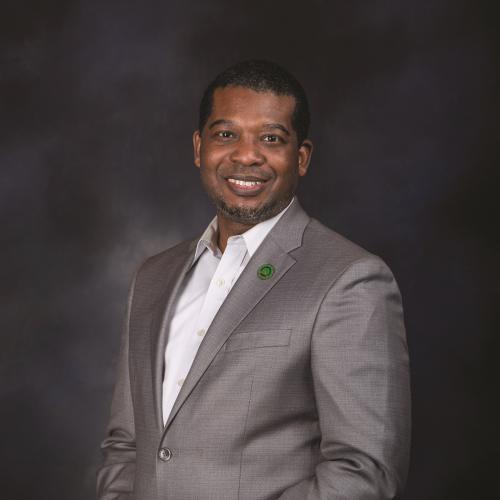
Asm. Corey Jackson
Sponsored bills
Maddy summaryThis is a ceremonial resolution (SCR 107) that formally honors Reverend Dr. Martin Luther King, Jr. and commemorates Martin Luther King, Jr. Day within the state. It does not create new laws or affect specific groups; instead, it serves as an official state recognition of Dr. King's legacy and the holiday. The resolution was unanimously adopted by the Senate and referred to the Assembly for further consideration. As a commemorative measure, it has no direct policy impact beyond symbolic acknowledgment.
This measure would designate the portion of State Route 101 in the County of Santa Clara from Story Road to the junction with State Highway Route 280 and State Highway Route 680 as the Little Saigon Freeway. The measure also would request the Department of Transportation to determine the cost of appropriate signs showing that special designation and, upon receiving donations from nonstate sources sufficient to cover the cost, to erect those signs.
Maddy summaryThis bill is a House Resolution that formally recognizes the history of Japanese American incarceration during World War II and honors the service of Japanese American veterans. It details how Executive Order 9066 led to the removal of over 125,000 people of Japanese ancestry from their homes and describes the subsequent military contributions of these individuals, including recipients of the Medal of Honor. The resolution also acknowledges the government's admission that the incarceration was based on racial prejudice rather than military necessity and notes previous state and federal apologies and reparations. By citing these historical facts, the bill serves to educate the public and reaffirm the state's commitment to preventing similar civil rights violations in the future.
Maddy summaryThis bill designates February 15, 2026, as Angelman Syndrome Awareness Day in California to highlight a rare genetic disorder affecting speech, movement, and development. The resolution recognizes the condition's impact on individuals and their families while promoting public understanding of its symptoms and current lack of a cure. By officially acknowledging this date, the legislature aims to support awareness efforts similar to those held internationally on the same day.
This measure would urge the United States Congress and the President of the United States to immediately restore and extend the enhanced Affordable Care Act premium tax credits.
Maddy summaryThis House Resolution officially recognizes February 17, 2026, as the beginning of the Lunar New Year in California. It acknowledges the cultural significance of the holiday for over 3 million Asian and Pacific Islander residents who celebrate it as a time to renew family ties and start fresh. The resolution highlights the state's diverse population and the contributions of Asian and Pacific Islander communities to California's social, cultural, and economic life. It formally extends best wishes for a peaceful and prosperous Lunar New Year to all Californians.
This measure would, among other things, reaffirm California's commitment to universal human rights and call for the end to the humanitarian catastrophe in Gaza and the immediate release of all hostages.
Maddy summaryThis bill designates February 2026 as Unclaimed Property Month in California to raise awareness about state-held financial assets. It encourages residents to check the state Controller's website to claim unclaimed funds such as uncashed checks and insurance proceeds. The resolution does not change any laws or policies but serves as a public awareness campaign to help people locate and claim their abandoned property. It directs the Assembly Chief Clerk to distribute copies of the resolution for public distribution.