

The Donahoe Higher Education Act establishes the California Community Colleges, under the administration of the Board of Governors of the California Community Colleges, the California State University, under the administration of the Trustees of the California State University, and the University of California, under the administration of the Regents of the University of California, as the 3 segments of public postsecondary education in the state. Existing law establishes uniform residency requirements for purposes of ascertaining the amount of tuition and fees to be paid by students of public postsecondary education institutions. Existing law, until July 1, 2032, entitles a Team USA student athlete, as defined, who trains in the state in an elite level program approved by the United States Olympic and Paralympic Committee to resident classification for the purpose of determining tuition and fees. After July 1, 2032, existing law entitles an amateur student athlete in training at the United States Olympic Training Center in the City of Chula Vista to resident classification for that same purpose. These provisions apply to the University of California only to the extent that the regents, by appropriate resolution, make them applicable. This bill would remove the July 1, 2032, sunset provision, and make conforming changes, thereby extending the provisions that entitle a Team USA student athlete who trains in the state in an elite level program approved by the United States Olympic and Paralympic Committee to resident classification indefinitely. To the extent the bill would require community college districts to exempt more students from nonresident tuition, the bill would impose a state-mandated local program. The California Constitution requires the state to reimburse local agencies and school districts for certain costs mandated by the state. Statutory provisions establish procedures for making that reimbursement. This bill would provide that, if the Commission on State Mandates determines that the bill contains costs mandated by the state, reimbursement for those costs shall be made pursuant to the statutory provisions noted above.
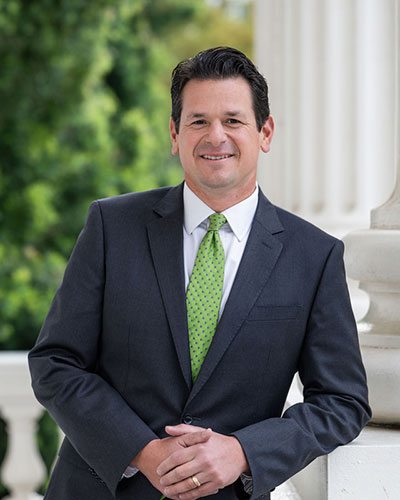
Rep. John Harabedian
Sponsored bills
Existing law generally regulates classes of insurance, including residential property insurance. Existing law requires an insurer, in the case of a total loss to the primary insured structure under a policy of residential property insurance, for at least the next two annual renewal periods, but no less than 24 months of coverage from the date of the loss, to renew the policy under certain circumstances, including that the total loss to the primary insured structure was caused by a disaster. Existing law prohibits an insurer from canceling or refusing to renew a policy of residential property insurance for a property located in a ZIP Code within or adjacent to a fire perimeter for one year after the declaration of a state of emergency, if the cancellation or nonrenewal is based solely on the fact that the insured structure is located in an area in which a wildfire has occurred. This bill would instead require an insurer to renew the policy of residential property insurance, under the above-described circumstances, for at least the next three annual renewal periods, but no less than 36 months of coverage from the date of the loss. The bill would also prohibit an insurer from canceling or refusing to renew a policy of residential property insurance for a property located in a ZIP Code within or adjacent to a fire perimeter for two years after the declaration of a state of emergency.
(1) Existing law makes it a misdemeanor to willfully fail to appear in court, as specified. Existing law, when a person has failed to appear and has not posted bail, requires the magistrate to issue a warrant for the person's arrest within 20 days of the failure to appear. This bill would make those sections only apply when the underlying charge is not an infraction. (2) Existing law authorizes the issuance of a bench warrant of arrest when a person fails to appear in court as promised in specified criminal proceedings. This bill would prohibit the issuance of a bench warrant of arrest when the underlying crime is an infraction issued pursuant to the Vehicle Code. The bill would require bench warrants for other infractions to be limited to only authorizing arrest and booking at the scene followed by immediate release, as specified. (3) Existing law makes it a misdemeanor to willfully fail to appear in court for a violation of the Vehicle Code, and requires the court to report a conviction of this offense to the Department of Motor Vehicles. This bill would make that misdemeanor only apply when the underlying charge is not an infraction. The bill would also remove the requirement for the court to report a conviction of this offense to the department. (4) Existing law authorizes the imposition of a civil assessment or the issuance of an arrest warrant when a person fails to make an installment payment on bail imposed by the court for an infraction violation of the Vehicle Code. Existing law also makes it a misdemeanor to fail to pay bail in installments or to fail to pay a fine imposed for the violation of a state or local traffic law. This bill would remove the misdemeanor for failure to pay a bail installment or fine if the original charge was an infraction. The bill would remove the authorization to issue an arrest warrant for failure to pay a bail installment. (5) Existing law, if a defendant does not appear at the time the case is called for a violation of the Vehicle Code, authorizes the court to declare the bail forfeited and order that no further proceedings be had in the case, or to issue a warrant for the arrest of the defendant. However, if a defendant is charged with specified crimes, including disposing of a flaming or glowing substance on or near a road and littering a highway, has previously been convicted of the same crime, and fails to appear at the time the case is called to trial, existing law authorizes the court to declare the bail forfeited and requires the court to issue a bench warrant for the arrest of the person charged, unless the magistrate finds that undue hardship will be imposed by requiring the defendant to appear. This bill would remove the requirement that the magistrate issue a bench warrant when the person has committed one of the crimes specified above.
This measure would proclaim the month of October 2026 as California Firefighter Appreciation Month and October 3, 2026, as California Firefighters Memorial Day.
Existing law vests the Public Utilities Commission with regulatory authority over public utilities, including electrical corporations, gas corporations, water corporations, and sewer system corporations. Existing law authorizes the commission to fix the rates and charges for every public utility and requires that those rates and charges be just and reasonable. Existing law prohibits a utility from recording to an above-the-line account, as defined, or otherwise recovering from ratepayers specified costs. This bill would require the commission to find that an electrical corporation, gas corporation, water corporation, or sewer system corporation has engaged in prohibited cost recovery if the corporation records a cost to a regulator-approved financial account and the cost is categorically excluded from ratepayer recovery by statute, commission decision, or commission rule or has already been authorized for recovery through another ratemaking mechanism. The bill would require the commission, upon making a determination that such a corporation has recorded prohibited costs to a ratepayer-funded account in violation of commission rule, tariff, or statute, to disallow recovery of the cost from ratepayers and to impose a financial penalty for prohibited cost recovery equal to the amount of the prohibited cost recovery or 3 times that amount, except as specified. The bill would require each such corporation to submit an annual report to the commission identifying all instances in the prior year in which prohibited cost recovery was identified, the actions that were taken in response to the identification, and any actions that were taken by the corporation to prevent future occurrences. Under existing law, a violation of the Public Utilities Act or any order, decision, rule, direction, demand, or requirement of the commission is a crime. Because the provisions of this bill would be a part of the act and because a violation of a commission action implementing the bill's requirements would be a crime, the bill would impose a state-mandated local program. The California Constitution requires the state to reimburse local agencies and school districts for certain costs mandated by the state. Statutory provisions establish procedures for making that reimbursement. This bill would provide that no reimbursement is required by this act for a specified reason.
Existing law, the Sacramento-San Joaquin Delta Reform Act of 2009, declares that the Sacramento-San Joaquin Delta (Delta) is a critically important natural resource for California and the nation and it serves as both the hub of the California water system and the most valuable estuary and wetland ecosystem on the west coast of North and South America. Existing law establishes in the Natural Resources Agency the Department of Water Resources (department) . Existing law requires the department and the Department of Fish and Wildlife to determine the principal options for the Delta and requires the department to evaluate and comparatively rate each option for its ability to do specified things, including, among others, to maintain Delta water quality for Delta users, and to preserve, protect, and improve Delta levees. Existing law establishes in the agency the Sacramento-San Joaquin Delta Conservancy. Existing law requires the conservancy to act as a primary state agency to implement ecosystem restoration in the Delta and to support efforts that advance environmental protection and the economic well-being of Delta residents. Existing law provides for the preservation of specified management areas of the Suisun Marsh, pursuant to a protection plan prepared and adopted by the San Francisco Bay Conservation and Development Commission, as provided. Existing law establishes the Delta Stewardship Council, and requires the council to develop, adopt, and implement a comprehensive long-term management plan for the Delta, known as the Delta Plan, as provided. Existing law requires the department, upon appropriation, to reimburse an eligible local agency for costs incurred for the maintenance or improvement of specified levees, in an amount not to exceed 75% of costs incurred in excess of a set amount per mile, as provided. This bill would require the department to reimburse 100% of the excess costs if a local agency demonstrates economic hardship and the reimbursement is for a project that addresses a threat to life, property, water supply, or habitat. This bill would establish the Delta Levees and Canal Subsidence Fund in the State Treasury and, upon appropriation, would make the moneys in the fund available to the Secretary of the Natural Resources Agency for expenditure consistent with the allocations described below. The bill would authorize the secretary to seek out, and the fund to accept, state moneys from, among other sources, any bond funds, the General Fund, or the Greenhouse Gas Reduction Fund. The bill would authorize the fund to accept moneys from nonstate sources, including federal and private moneys, and would continuously appropriate those moneys without regard to fiscal year, for allocation as described below, thereby making an appropriation. The bill would require the secretary to allocate moneys in the fund, as specified, subject to funding availability, as follows: (1) to the department for the purposes of supporting capital improvements to restore the original design water conveyance capacity for state water conveyance systems, as defined, impacted operationally by land subsidence, and (2) to the department for projects in the Delta or Suisun Marsh to improve existing levees, as specified. The bill would require the conservancy to convene a working group with specified representation to develop a list of recommended projects, as provided. The bill would require the conservancy to publish the list on its internet website, allow 45 days for public comment, and hold at least one community meeting before the list is approved by the conservancy's governing board. The bill would require the department to administer any grants or funding agreements from the list of projects. The bill would require at least 15% of the funds for projects in the Delta or Suisun Marsh, as described in (2) above, to be for Delta levee projects from the list developed by the working group, as provided. The bill would authorize the department to impose additional requirements on projects to meet the conditions of the funding source, as provided. The bill would prohibit these moneys from being expended to pay the costs of the design, construction, operation, mitigation, or maintenance of any additional Delta conveyance facilities, as provided. The bill would require the secretary, no later than January 1, 2032, and by January 1 every 5 years thereafter, to report to the Legislature on expenditures, as provided. This bill would also require the department to provide a report to the budget committees of the Assembly and Senate no later than May 1, 2027, and biennially thereafter, that contains a 5-year spending plan detailing the engineering and capital improvements necessary to address state water conveyance systems impacted operationally by land subsidence, as provided. The bill would authorize the department to charge the state water supply contractors for the actual and reasonable cost of developing the plan.
(1) Existing law establishes various grant and loan programs for research, including, among others, the California Institute for Regenerative Medicine, California Firefighter Cancer Prevention and Research Program, and the Public Interest Research, Development, and Demonstration Program. This bill would establish the California Foundation for Science and Health Research within the Government Operations Agency. The bill would require the Secretary of Government Operations to oversee the process of appointing the director of the foundation, and would authorize the Secretary of Government Operations to delegate the task of hiring and determining the salaries, bonuses, and benefits of additional personnel to the director, as specified. The bill would require the director and personnel of the foundation to be responsible for implementing the strategic objectives of the California Foundation for Science and Health Research Council, as described below, administering grants, loans, and contracts awarded by the council, and all other duties as deemed necessary for the operation of the foundation. This bill would create the California Foundation for Science and Health Research and Innovation Acceleration Fund and require the moneys in the fund to be used by the foundation to award grants and make loans to, and enter into contracts with, public or private research companies, universities, academic medical centers, institutes, and organizations for scientific research and development and for certain economic sectors, as specified, in specific areas of research, including, but not limited to, biomedical, behavioral health, and climate research. The bill would also create the California Foundation for Science and Health Research and Innovation Acceleration Benefit Fund, to consist solely of private donations. The bill would make the moneys in the benefit fund available for the same purposes as the California Foundation for Science and Health Research and Innovation Acceleration Fund. This bill would require that, prior to the first grant from the foundation and no later than one year from the date the bill takes effect, the council develop various provisions and requirements to facilitate the foundation's goals of affordability and equitable access. The foundation shall impose various requirements on the grantees, loan recipients, and contractors, as specified, including, among other things, developing strategies to promote equitable access to the subject invention in various specified communities and making the data resulting from the bond-funded research available to the broader scientific community, except in cases involving national security interests. The council shall also establish standards requiring that all grants, awards, and contracts be subject to intellectual property agreements that balance the opportunity for the State of California to benefit from the inventions, technologies, patents, royalties, and licenses that result from research funded by certain public and private grants, as specified. This bill would create the California Foundation for Science and Health Research Council, as specified, which shall be vested with full power, authority, and jurisdiction over the foundation. The bill would require the council to, among other things, develop the strategic objectives and priorities of the foundation and provide the opportunity for public comment on the foundation's priorities, as specified, determine the research projects that will be funded by the California Foundation for Science and Health Research and Innovation Acceleration Fund, develop objectives and opportunities that offer support to early career researchers, and adopt certain regulations and standards, as specified. The bill would also require the council to consider how the foundation's research priorities relate to or support various economic and industry considerations, as specified. The bill would provide that a majority of the members of the council constitutes a quorum for the transaction of any business, for the performance of any duty, or for the exercise of any power of the council, except as otherwise provided. The bill would authorize the council to establish one or more scientific peer review panels consisting of experts in specified fields of research for the purposes of reviewing and prioritizing proposals on the basis of the scientific merit of the proposal, the potential benefit to the health and well-being of the population, natural resources, and environment of the state, and the demonstrated background, training, and expertise of the researchers and investigators to conduct the proposed work. This bill would require all research and development funded by the California Foundation for Science and Health Research and Innovation Acceleration Fund to be conducted under established standards of open scientific exchange, peer review, and public oversight. The bill would require the funds and contracts to be awarded on the basis of the research priorities established for the foundation by the council and the scientific merit of the proposed research, as determined by an open, competitive, scientific peer review process that ensures objectivity, consistency, and high quality. This bill would enact the California Science and Health Research Bond Act, which, if approved by the voters, would authorize the issuance of bonds in the amount of $7,500,000,000, pursuant to the State General Obligation Bond Law, to finance grants and loans to fund research and operate and maintain facilities for research. The bill would provide for the submission of the bond act to the voters at the March 7, 2028, statewide primary election. (2) Existing law establishes prohibitions and penalties with respect to ethical obligations and conflicts of interest for public officials, including a prohibition on engaging in activities that are incompatible with their official duties and a prohibition on being financially interested in a contract made by them in their official capacity or the board of which they are a part. This bill would authorize a council member to participate in a decision to approve or award a grant, loan, or contract for the purpose of research into a disease in which the member or their immediate family member has a personal interest, as specified. The bill would provide that service with specified educational institutions and organizations is not incompatible with a council member's duties. The bill would provide that the prohibition on being financially interested in a contract, as specified, does not apply if the council member recuses themself from a decision to award or approve a grant, loan, or contract that would otherwise be subject to the prohibition. The bill would provide that council members are subject to certain disclosure requirements relating to personal investments and potential conflicts of interest, as specified. (3) Existing law, the Bagley-Keene Open Meeting Act, requires that all meetings of a state body be open and public and all persons be permitted to attend any meeting of a state body, with specified exceptions for authorized closed sessions. This bill would require the Bagley-Keene Open Meeting Act to apply to all meetings of the council and scientific peer review panels, except as specified for when the council or scientific peer review panels meet to consider or discuss specified matters in closed sessions, including matters involving information relating to patients or medical or scientific research subjects, the disclosure of which would constitute an unwarranted invasion of personal privacy. Existing constitutional provisions require that a statute that limits the right of access to the meetings of public bodies or the writings of public officials and agencies be adopted with findings demonstrating the interest protected by the limitation and the need for protecting that interest. This bill would make legislative findings to that effect. (4) This bill would declare that it is to take effect immediately as an urgency statute.
Existing law defines a safe-surrender site to mean a location designated by the board of supervisors of a county or by a local fire agency, or a location within a public or private hospital that is designated by that hospital, to be responsible for accepting physical custody of a minor child who is 72 hours old or younger from a parent or individual who has lawful custody of that child and who surrenders the child. Existing law requires personnel on duty at a safe-surrender site to accept physical custody of the minor child, and to notify child protective services or a county agency providing child welfare services as soon as possible, but no later than 48 hours after accepting custody of the child. Under existing law, a parent or other individual with lawful custody of a minor child 72 hours old or younger who voluntarily surrenders physical custody of the child to personnel on duty at a safe-surrender site cannot be prosecuted for child abandonment. This bill, the Keeping Infants from Danger (KID) Act, would expand the scope of these provisions to apply to children who are 30 days of age or younger. By imposing new duties on local officials, the bill would impose a state-mandated local program. This bill would also make a conforming change. The California Constitution requires the state to reimburse local agencies and school districts for certain costs mandated by the state. Statutory provisions establish procedures for making that reimbursement. This bill would provide that, if the Commission on State Mandates determines that the bill contains costs mandated by the state, reimbursement for those costs shall be made pursuant to the statutory provisions noted above.
Existing law requires the governing board of each school district to have general control of, and be responsible for, all aspects of the interscholastic athletic policies, programs, and activities in its school district, as provided, and requires the governing board of a school district to ensure that all interscholastic policies, programs, and activities in the school district are in compliance with state and federal law. Existing law authorizes the governing board of a school district to enter into associations or consortia with other governing boards for purposes of governing regional or statewide interscholastic athletics, as provided. Existing law describes the California Interscholastic Federation (CIF) as a voluntary organization that consists of school and school-related personnel with responsibility for administering interscholastic athletic activities in secondary schools and states the intent of the Legislature that the CIF, in consultation with the State Department of Education, implement specified policies relating to interscholastic athletics. Existing law, the 1998 California High School Coaching Education and Training Program, declares the intent of the Legislature to establish a California High School Coaching Education and Training Program, to be administered by school districts with an emphasis on specific components, including, among other components, sports psychology. Existing law requires every high school sports coach to complete, at their own expense, a coaching education program that meets the guidelines established by the California High School Coaching Education and Training Program. This bill would require specified trainings for coaches described in AB 1665 of the 2025–26 Regular Session to cover specified mental-health related topics, including, among other topics, trauma-informed care, as provided, and strategies of creating a positive team culture, as provided. The bill would require the department, on or before September 1, 2027, to identify existing training or develop a model youth athletics behavioral and mental health training, as specified, for persons who serve as coaches in youth sports organizations, both for recreational leagues and competitive or club leagues. The bill would require the department to post the training on its internet website and work with local partners to disseminate the training to appropriate youth athletic leagues, youth coaching entities, and relevant statewide organizations and associations. This bill would incorporate additional changes to Section 35179.1 of the Education Code proposed by AB 1665 to be operative only if this bill and AB 1665 are enacted and this bill is enacted last. This bill would make the operation of its provisions contingent upon the enactment of AB 1665 of the 2025–26 Regular Session.
Existing law vests the Public Utilities Commission (PUC) with regulatory authority over public utilities, including electrical corporations. Existing law requires the PUC, in consultation with the Independent System Operator, to establish resource adequacy requirements for all electrical corporations, electric service providers, and community choice aggregators. Existing law requires that the resource adequacy program achieve specified objectives, including that it establish new or maintain existing demand response products and tariffs, as specified. This bill would require the PUC, in coordination with the State Energy Resources Conservation and Development Commission and the Independent System Operator, on or before June 30, 2028, to enhance existing market-integrated pathways for aggregated distributed energy resources, as defined, to qualify as resource adequacy capacity, as specified. The bill would require the commission to establish conditions for the use of aggregated distributed energy resources while ensuring net energy metering customers and net billing tariff customers do not receive duplicate compensation, as provided. The bill would require the PUC to allow electrical corporations, electric service providers, and community choice aggregators to include aggregated distributed energy resources in resource adequacy filings and PUC-ordered procurement, as specified. The bill would require the PUC, on or before June 30, 2028, to develop recommendations for changes to the Independent System Operator's proxy demand resource and distributed energy resource aggregation participation models to be consistent with the PUC's requirements for aggregated distributed energy resources pursuant to these provisions, and to communicate the recommendations to the Independent System Operator for consideration in a new or existing initiative. Under existing law, a violation of the Public Utilities Act or any order, decision, rule, direction, demand, or requirement of the PUC is a crime. Because the provisions of this bill would be part of the act and a violation of a PUC action implementing the bill's requirements would be a crime, the bill would impose a state-mandated local program. The California Constitution requires the state to reimburse local agencies and school districts for certain costs mandated by the state. Statutory provisions establish procedures for making that reimbursement. This bill would provide that no reimbursement is required by this act for a specified reason.