Maddy summaryThis bill designates September 2026 as Childhood Cancer Awareness Month. It directly affects state agencies and organizations by encouraging them to recognize this specific month for awareness activities. The measure does not change laws or allocate funding but serves as a formal commemorative resolution.
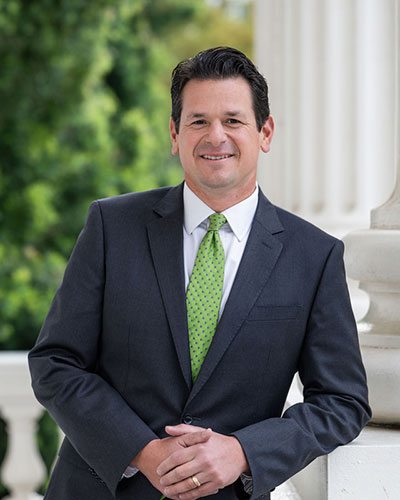
Rep. John Harabedian
Sponsored bills
Existing law provides that reproductive health care services, gender-affirming health care services, and gender-affirming mental health care services are rights secured by the Constitution and laws of California, and interference with these rights, whether or not under the color of law, is against the public policy of California. Existing law defines "gender-affirming health care services" to mean medically necessary health care that respects the gender identity of the patient, as experienced and defined by the patient, as specified. Existing law provides for various protective measures for persons engaging in legally protected health care activity, including prohibiting a provider of health care, health care service plan, health insurer, or contractor from releasing medical information related to, among other things, an individual seeking or obtaining gender-affirming health care or gender-affirming mental health care, and prohibiting a state or local public agency, or any employee thereof acting in their official capacity, from cooperating with or providing information to an individual or agency from another state or a federal law enforcement agency, as specified, regarding a legally protected health care activity that is lawful in this state and performed in this state. Existing law defines "legally protected health care activity" for those purposes to include, among other things, the exercise and enjoyment, or attempted exercise and enjoyment, by a person of rights to the health care services described above and the provision of those health care services by a person duly licensed under the laws of California. This bill would require a person or entity that is located, headquartered, incorporated, or otherwise conducting business in California and receives, is served with, or is subject to a subpoena, discovery request, or other request for information that is part of a legal process related to a civil, criminal, regulatory, or legislative investigation regarding abortion, as defined, or gender-affirming health care services that are legally protected health care activities secured by the Constitution or laws of California to provide specified notice to the Attorney General at least 7 business days prior to producing records in response to the request unless a shorter response time is required by federal law or other federal obligation, as specified. If a shorter response time is required by federal law or other federal obligation, the bill would require the responding person or entity to provide notice to the Attorney General no later than contemporaneously with producing the responsive records. The bill would exempt a person or entity from the notice requirement if the subpoena, discovery request, or other request for information meets certain requirements, including that it is accompanied by an attestation verifying that the use or disclosure of the requested information meets certain requirements, including that the requested information is related to an investigation or proceeding regarding activity that is unlawful under California civil or criminal law, and it identifies the California law under which the activity is unlawful. The bill would prohibit a person or entity receiving, served with, or subject to a subpoena, discovery request, or other request for information described above who is not subject to the above-described exemption from producing the responsive records until at least 7 business days after providing notice to the Attorney General unless a shorter response time is required by federal law or other federal obligation, as specified. If a shorter response time is required by federal law or other federal obligation, the bill would require the responding person or entity to make best efforts to deliver the responsive records on the date on which the person or entity is required to respond to the subpoena, discovery request, or other request for information. The bill would authorize the Attorney General to make reasonable attempts to notify the individual who provided, sought, received, facilitated, or otherwise engaged in the abortion or gender-affirming health care service pertaining to the subpoena, discovery request, or other request for information. The bill would entitle a person or entity subject to these provisions to rely on the representations made in an attestation described above. The bill would authorize the Attorney General to intervene in any civil action instituted by a person or entity to protect against compliance with or providing information in response to the subpoena, discovery request, or other request for information. The bill would authorize the Attorney General to commence certain actions, including a civil action against any person or entity that attaches a false attestation described above, and would make the attachment of a false attestation by a person or entity punishable by a civil penalty of $15,000, as specified. The bill would require any action brought by the Attorney General to be commenced within 6 years of the date on which the Attorney General received the notice of the subpoena, discovery request, or other request for information at issue, and would require the court to award court costs and attorney's fees to the Attorney General in any civil action in which the court imposes any penalty authorized by the bill's provisions.

Existing law requires the State Fire Marshal to identify areas in the state as moderate, high, and very high fire hazard severity zones, as specified. Existing law also requires the State Fire Marshal to classify lands within state responsibility areas into fire hazard severity zones, and, by regulation, to designate fire hazard severity zones and assign to each zone a rating reflecting the degree of severity of fire hazard that is expected to prevail in the zone. Existing law requires the State Fire Marshal to periodically review very high fire hazard severity zones that are not state responsibility areas, and designated and rated zones that are state responsibility areas, as provided. This bill would require the Office of the State Fire Marshal, on or before January 1, 2028, to develop home hardening standards, as provided. The bill would require the State Fire Marshal to, on or before January 1, 2030, compile a report concerning homes in moderate, high, and very high fire hazard severity zones in state and local responsibility areas. The bill would require the State Fire Marshal, on or before July 1, 2030, to make the completed report available on its internet website and to submit copies to the Legislature, as provided. The bill would require the report to include, among other things, estimates of both the number of homes that meet those home hardening standards and the number of homes that require more home hardening to meet those standards in each responsibility area and county.
Existing law authorizes the Department of Transportation or a local authority, upon application in writing and if good cause appears, to issue a special or annual permit for the transporting of a manufactured home that does not exceed 14 feet in total width, exclusive of lights and devices, upon any highway, as specified. Existing law prescribes specified requirements and conditions for transporting the above-described manufactured homes and additional requirements and conditions for manufactured homes exceeding 14 feet but not exceeding 16 feet in width, including requiring the Department of Transportation, in cooperation with the Department of the California Highway Patrol, or the local authority to require pilot car or special escort services for the movement of these manufactured housing units, and makes it unlawful for a person to violate the terms or conditions of a permit issued to haul specified loads, including the above-described permits. Existing regulations provide a schedule for the number of pilot cars and Department of the California Highway Patrol escorts that are required based on the width and length of the load and the route class. This bill would remove the good cause requirement for the department or the local authority to issue the above-described permits. The bill would expand the issuance of a special or annual permit to include transportation of a manufactured home, factory-built housing, and commercial modular, as defined, not exceeding 14 feet in total width. By expanding the scope of an existing crime, the bill would create a state-mandated local program. The bill would clarify that a special permit is not required to move a manufactured home, factory-built housing, or commercial modular if the applicant has obtained an annual permit. The bill would authorize the Department of Transportation, in cooperation with the Department of the California Highway Patrol, or the local authority to require pilot car or special escort services for the movement of the above-described manufactured housing units, as specified. This bill would require the Department of Housing and Community Development, in consultation with the Department of Transportation and the Department of the California Highway Patrol, to convene a stakeholder workgroup, as specified, to gather feedback and provide a report on cost pressures associated with, and opportunities to facilitate and make efficient, the movement of a manufactured home, factory-built housing, and commercial modular, as specified. The bill would require the workgroup to begin no later than March 31, 2027, and meet at least quarterly. The bill would require the Department of Housing and Community Development, in consultation, to solicit feedback from the workgroup on specified topics, including the feasibility of deploying a single crew of Department of the California Highway Patrol escorts in operation across multiple jurisdictions. The bill would require the Department of Housing and Community Development, in consultation, to provide a report to the Legislature by January 1, 2029, as specified. The California Constitution requires the state to reimburse local agencies and school districts for certain costs mandated by the state. Statutory provisions establish procedures for making that reimbursement. This bill would provide that no reimbursement is required by this act for a specified reason.
This measure would recognize and affirm the important role of artists, arts organizations, creative arts therapists, and arts for health initiatives in supporting behavioral health, promoting recovery, strengthening community resilience, and contributing to public safety. The measure would encourage and recognize exploration, support, and integration of arts and behavioral health within California's health care, behavioral health, and community-based systems.
Existing law authorizes the presiding judge, or a judge designated as an alternative to judicial arbitration, of the courts of the County of Los Angeles to submit to mediation any civil case in which arbitration is otherwise required, as specified. Beginning on January 1, 2027, existing law will prohibit the court from ordering a case into mediation unless, among other required conditions, the amount in controversy does not exceed $75,000. This bill would authorize the Superior Court of the County of Los Angeles to issue an order permitting any case into mediation, notwithstanding the $75,000 limitation on the amount in controversy described above. The bill would require any case submitted to mediation pursuant to such order to meet all mandatory conditions to qualify for mediation, other than the limitation on the amount in controversy. The bill would require all cases ordered to mediation to be entitled up to 3 hours of no-cost mediation services provided by a court-sanctioned mediation program. The bill would authorize the parties to appear remotely. The bill would also prohibit a mediation ordered pursuant to these provisions from delaying or serving as grounds to continue the trial date or otherwise to delay or continue any expedited procedures. If the presiding judge issues the order described above, the bill would require the court to transmit a report to the Assembly and Senate Committees on Judiciary on or before January 31, 2028, and annually thereafter, containing specified information about the cases submitted to mediation. The bill would repeal these provisions on January 1, 2032. This bill would make legislative findings and declarations as to the necessity of a special statute for the County of Los Angeles.
Existing law establishes a program to allow counties to select a bidder on the basis of best value, as defined, for construction projects in excess of $1,000,000. Existing law also authorizes counties to use a best value construction contracting method to award individual annual contracts, not to exceed $3,000,000, for repair, remodeling, or other repetitive work to be done according to unit prices, as specified. Existing law establishes procedures and criteria for the selection of a best value contractor and requires that bidders verify specified information under oath. Existing law requires the board of supervisors of a participating county to submit a report that contains specified information about the projects awarded using the best value procedures described above to the appropriate policy committees of the Legislature and the Joint Legislative Budget Committee before March 1, 2029. Existing law repeals the program provisions on January 1, 2030. This bill would, instead, authorize a county, city, or the San Gabriel Valley Council of Governments to select a bidder on the basis of best value, as described above, for construction projects in excess of $500,000, would make various conforming changes to the above-described provisions, and would extend the operation of those provisions until January 1, 2032. With regard to the above-specified reporting requirement, the bill would, instead, require the governing body of a participating county, city, or the San Gabriel Valley Council of Governments to submit the report, as specified, to the appropriate policy committees of the Legislature and the Joint Legislative Budget Committee before March 1, 2031. The bill would expand the crime of perjury by extending the operation of the program and expanding the program to cities and the San Gabriel Valley Council of Governments, thereby imposing a state-mandated local program. The California Constitution requires the state to reimburse local agencies and school districts for certain costs mandated by the state. Statutory provisions establish procedures for making that reimbursement. This bill would provide that no reimbursement is required by this act for a specified reason. This bill would make legislative findings and declarations as to the necessity of a special statute for the San Gabriel Valley.
The Personal Income Tax Law, in modified conformity with federal income tax laws, defines "gross income" as income from whatever source derived, except as specifically excluded, and provides various exclusions from gross income. This bill, for taxable years beginning on or after January 1, 2028, and before January 1, 2033, would exclude from gross income any reparations benefit or payment, as defined, received by a taxpayer during the taxable year. Existing law requires any bill authorizing a new tax expenditure to contain, among other things, specific goals, purposes, and objectives that the tax expenditure will achieve, detailed performance indicators, and data collection requirements. This bill also would include additional information required for any bill authorizing a new tax expenditure. This bill would take effect immediately as a tax levy.
Existing law establishes within the office of the Governor, the office of the Governor's Tribal Advisor, which is headed by the Governor's Tribal Advisor who is appointed by and serves at the pleasure of the Governor. This bill would, instead, establish within the Office of the Governor, the Office of Tribal Affairs (office) , which is headed by the Secretary of Tribal Affairs who is appointed by and serves at the pleasure of the Governor, as specified. The bill would require each state agency that engages, or has programs, services, or responsibilities affecting tribal governments to, among other things, designate a tribal liaison, as described. The bill would require the office to be advised by a Tribal Advisory Committee, as described, and would require the committee to, among other things, provide recommendations and tribal perspectives to assist the office in strengthening government-to-government engagement and improving the design, access, and implementation of state programs and services affecting tribal governments. The bill would require the office to, among other things, support the implementation of consultation policies, facilitate direct engagement between state agencies and tribal governments, and provide training, guidance, and technical assistance to tribal liaisons and state agency personnel, as specified.
Existing law provides that a housing development project shall be an allowed use as a transit-oriented housing development if specified conditions and requirements are met. Existing law provides that these provisions do not apply to a local agency until July 1, 2026, unless the local agency adopts an ordinance or local transit-oriented development alternative plan, as defined, deemed compliant by the Department of Housing and Community Development before July 1, 2026. Existing law specifies that, beginning on January 1, 2027, a local government that denies a housing development project meeting the requirements referenced above that is located in a high-resource area is presumed to be in violation of specified law and immediately liable for specified penalties. Existing law specifies exclusions from the provisions described above, including, among other sites prior to one year following the adoption of the 7th revision of the housing element, a site with a historic resource designated as of January 1, 2025, on a local register. This bill would also exclude from the provisions described above, a contributing site within a historic district included on the State Historic Resources Inventory designated before January 1, 2025, and a parcel individually listed as a historical resource included on the State Historic Resources Inventory designated before January 1, 2025. This bill would incorporate additional changes to Section 65912.161 of the Government Code proposed by AB 2415 to be operative only if this bill and AB 2415 are enacted and this bill is enacted last.