

Existing law makes it unlawful to dump waste matter in certain locations, such as upon a public or private highway or road, upon private property without the consent of the owner, or in or upon a public park or other public property, as specified. Existing law also makes it unlawful to place, deposit, or dump rocks, concrete, asphalt, or dirt in certain locations, as specified. A person violating these provisions is guilty of an infraction, as specified. Existing law makes a violation of these provisions in commercial quantities, as defined, a misdemeanor punishable by imprisonment in a county jail and by a fine, as specified. Under existing law, a private owner is not restricted in the use of their own private property, unless the placing, depositing, or dumping of the waste matter on the property creates a public health and safety hazard, a public nuisance, or a fire hazard, as determined by a local health or fire department or the Department of Forestry and Fire Protection. This bill would make it a crime to transport waste matter, rocks, concrete, asphalt, dirt, or other construction debris for the purpose of placing, depositing, or dumping it in the locations described above. The bill would increase the maximum fine to $5000 for violating these provisions a 4th or subsequent time. The bill would also make it unlawful to transport for the purpose of placing, depositing, or dumping waste matter, rocks, concrete, asphalt, dirt or other construction debris in commercial quantities, as defined, in the locations described above. The bill would specify that the fact that a person is operating a vehicle with actual or apparent rocks, concrete, asphalt, dirt, or other construction debris in their vehicle does not in itself constitute reasonable suspicion to stop or detain the person, or probable cause to arrest the person. For a person who violates these provisions in commercial quantities in excess of 25 cubic yards, the bill would make that violation a misdemeanor punishable in a county jail for not more than one year and by a fine, as specified. For commercial quantities in excess of 50 cubic yards, the bill would make a violation punishable as a misdemeanor or a felony, as specified. By expanding the application of a crime and creating new crimes, this bill would impose a state-mandated local program. The bill would specify that a private owner or a person with the owner's permission is prohibited from placing, depositing, dumping, or transporting waste matter, rocks, concrete, asphalt, dirt, or construction debris on their property if the activity requires a permit or license from a state or local agency and one was not obtained, or creates a public health and safety hazard, a public nuisance, or a fire hazard, as determined by specified entities. The bill would prohibit a person from being charged with dumping commercial quantities under these provisions if it was completed during the course of the person's employment and at the direction of their employer, as specified. The California Constitution requires the state to reimburse local agencies and school districts for certain costs mandated by the state. Statutory provisions establish procedures for making that reimbursement. This bill would provide that no reimbursement is required by this act for a specified reason.
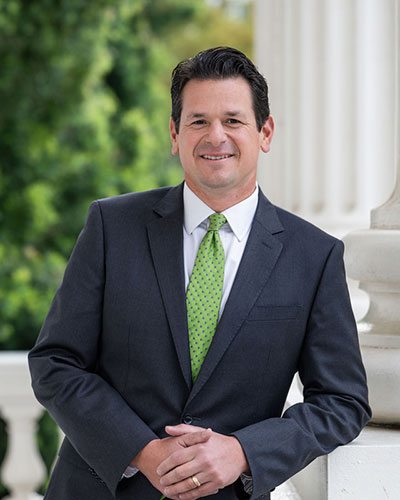
Rep. John Harabedian
Sponsored bills
Existing law, the State Housing Law, establishes statewide construction and occupancy standards for buildings used for human habitation. Existing law requires the building department of every city or county to enforce the provisions of the State Housing Law, the State Building Standards Code, and other specified rules and regulations promulgated pursuant to the State Housing Law pertaining to standards for buildings used for human habitation. Existing law authorizes an officer, employee, or agent of an enforcement agency to enter and inspect any building or premises whenever necessary to secure compliance with, or prevent a violation of, any provision of the State Housing Law, the building standards published in the State Building Standards Code, and other rules and regulations promulgated pursuant to the provisions of the State Housing Law. Existing law provides certain immunities to a public entity or employee immunity relative to an inspection or license, as provided. This bill would require a city, including a charter city, county, or city and county, except as specified, to offer a homeowner or contractor, as described, the option of requesting remote inspections for all or a subset of an inspection required by a building permit for specified works in one- or 2-family dwelling units, by either January 1, 2028, or July 1, 2028, as provided. The bill would authorize these local agencies to adopt reasonable protocols governing the technical conduct of a remote inspection, as specified. The bill would apply the above-described immunities to remote inspections. The bill would authorize these local agencies to temporarily ban the homeowner or contractor from using the remote inspection if a homeowner is found to have willfully misrepresented the work, as provided. By imposing new duties on local agencies, the bill would impose a state-mandated local program. The bill would include findings that changes proposed by this bill address a matter of statewide concern rather than a municipal affair and, therefore, apply to all cities, including charter cities. The California Constitution requires the state to reimburse local agencies and school districts for certain costs mandated by the state. Statutory provisions establish procedures for making that reimbursement. This bill would provide that no reimbursement is required by this act for a specified reason.
Existing law establishes the Medi-Cal program, which is administered by the State Department of Health Care Services and under which qualified low-income individuals receive health care services. The Medi-Cal program is in part governed by, and funded pursuant to, federal Medicaid program provisions. Existing law sets forth a schedule of benefits covered under the Medi-Cal program, including acupuncture, but only to the extent that federal matching funds are provided for acupuncture. Under this bill, acupuncture would instead be a covered Medi-Cal benefit subject to utilization controls and the availability of federal financial participation. The bill would, if federal financial participation is not available for coverage of acupuncture services, make acupuncture a covered benefit subject to an appropriation and utilization controls. This bill would incorporate additional changes to Section 14132 of the Welfare and Institutions Code proposed by AB 1949 and AB 350 to be operative only if this bill and either or both AB 1949 and AB 350 are enacted and this bill is enacted last.
Existing law vests the Public Utilities Commission with regulatory authority over public utilities, including electrical corporations and gas corporations. Existing law authorizes the commission to fix the rates and charges for every public utility and requires that those rates and charges be just and reasonable. Existing law requires the commission, whenever the commission authorizes a change in rates reflecting and passing through to customers specific changes in costs, to require a public utility to establish and maintain a balancing account to reflect the balance between the related costs and revenues. Existing law further directs the commission to authorize public utilities to establish catastrophic event memorandum accounts, as provided. Existing law authorizes each electrical corporation to establish a memorandum account to track costs incurred for wildfire risk mitigation that are unforeseen and incremental to the wildfire risk mitigation programs and activities authorized in the electrical corporation's revenue requirements, as specified. This bill would provide that it is the policy of the state that the regularly scheduled general rate case process is the preferred and primary method of establishing authorized revenue requirements for electrical corporations and gas corporations. The bill would require the commission, in exercising its ratemaking authority, to apply specified principles and requirements, including a requirement that memorandum accounts and balancing accounts, as defined, be authorized and maintained only when necessary to address costs that cannot reasonably be anticipated in the general rate case process, as provided. The bill would require each memorandum account or balancing account authorized by statute, or by the commission, before January 1, 2027, to be included and reviewed in the subsequent general rate case proceeding cycle or at a similar cyclical review interval to the general rate case proceeding, as provided. The bill would require the commission, as part of its review, to close any memorandum account or balancing account if the commission determines that the account is no longer necessary, as specified. The bill would authorize the commission to establish exceptions to those principles and requirements for categories of costs not reviewed pursuant to that requirement, as provided. The bill would require the commission to prepare a report to post on its public website about the process and outcome of the review of each utility's memorandum accounts and balancing accounts. The bill would further require that the ratemaking treatment of memorandum accounts or balancing accounts that are in effect on January 1, 2027, remain unchanged until the commission reviews the account pursuant to that requirement. Under existing law, a violation of the Public Utilities Act or any order, decision, rule, direction, demand, or requirement of the commission is a crime. Because the above requirements would be a part of the act, and a violation of a commission action implementing those requirements would be a crime, this bill would impose a state-mandated local program. The California Constitution requires the state to reimburse local agencies and school districts for certain costs mandated by the state. Statutory provisions establish procedures for making that reimbursement. This bill would provide that no reimbursement is required by this act for a specified reason.
Existing law establishes the Medi-Cal program, which is administered by the State Department of Health Care Services and under which qualified low-income individuals receive health care services. The Medi-Cal program is in part governed by, and funded pursuant to, federal Medicaid program provisions. Under existing law, certain vision care benefits are covered under the Medi-Cal program, relating to, among other things, optometric and optician services and eyeglasses, as specified. This bill would require the department, by no later than January 1, 2028, to establish a list of performance measures to ensure that the vision services under the Medi-Cal program meet quality and access criteria. The bill would require that the performance measures be designed to evaluate utilization, access, and availability of Medi-Cal vision services. The bill would require certain information within the performance measures, relating to providers and examinations, among other factors. The bill would require the department, when evaluating performance measures, to consider certain criteria, including trended data and other state performance and quality measures. The bill would require the department to report on each performance measure only to the extent that the department has existing data sources from which to calculate the applicable measure, as specified. The bill would specify a timeline for the posting of performance measures and data on the department's internet website. The bill would also require the department to establish benchmarks for each performance measure and to annually prepare a summary report on complaints and grievances, as specified.
Existing law vests the Public Utilities Commission with regulatory authority over public utilities, including electrical corporations. Existing law authorizes the commission to fix the rates and charges for every public utility and requires that those rates and charges be just and reasonable. This bill, the California Technology Innovation and Ratepayer Protection Act, would require the commission, on or before January 1, 2028, to establish new tariffs or update existing electric rules for the interconnection of participating customer facilities and the provision of retail electric service, transmission, distribution, and generation services to participating customers, as specified. The bill would require the commission, as part of establishing and updating electric rules, to, at a minimum, evaluate the risks and benefits of the tariffs to nonparticipating customers, ensure that the tariffs prevent the creation of stranded costs for, or cost shifts to, nonparticipating customers, and, for unbundled customers, ensure that charges generally included in the generation component of the unbundled customer's consolidated bill are assessed as a separate line item on their bill. The bill would require, as part of a new or existing proceeding, the commission to establish a tariff for the interconnection of a participating customer seeking to receive retail electric service at the transmission level that meets certain requirements, as specified. The bill would authorize a participating customer to participate in a new demand response program authorized by the commission, as specified. The bill would authorize an electrical corporation to submit an exceptional case filing to approve a contract between the electrical corporation and a data center seeking interconnection at the transmission level for those facilities that seek to obtain retail electric service after January 1, 2027, but before the commission has approved the tariff, as specified. Under existing law, a violation of the Public Utilities Act or any order, decision, rule, direction, demand, or requirement of the commission is a crime. Because the above provisions would be a part of the act, and a violation of a commission action implementing this bill's requirements would be a crime, the bill would impose a state-mandated local program. The California Constitution requires the state to reimburse local agencies and school districts for certain costs mandated by the state. Statutory provisions establish procedures for making that reimbursement. This bill would provide that no reimbursement is required by this act for a specified reason.
Existing law establishes the California Career Technical Education Incentive Grant Program, administered by the State Department of Education, with the purpose of encouraging, maintaining, and strengthening the delivery of high-quality career technical education programs. Existing law provides, for the 2021–22 fiscal year and each fiscal year thereafter, that $300,000,000 shall be available to the department, upon appropriation by the Legislature, for the program. Existing law requires an applicant to demonstrate a proportional dollar-for-dollar match and sets that amount for the 2021–22 fiscal year, and each fiscal year thereafter, at $2 for every $1 received from the program. Existing law prohibits an applicant from being awarded an amount higher than the amount that the allocation formula determines them to be eligible to receive under the program. Existing law requires the Superintendent of Public Instruction, in administering the program, to perform specified duties, including, among other duties, to (1) determine, in collaboration with the executive director of the State Board of Education, and make public on a preliminary basis at least 30 days before a regularly scheduled meeting of the state board, the allocation formula, (2) distribute funding on a multiyear schedule, (3) require grant recipients to submit program reports, (4) manage the grant process, and (5) promote the success of K–12 career technical education programs, as provided. This bill would require the department, instead of the Superintendent, to perform the above-described duties. The bill would, for purposes of allocations commencing no later than the 2027–28 fiscal year and pursuant to the above-described requirements, also require the department to determine, in consultation with the executive director of the state board, a revised allocation formula that ensures that all funds appropriated for the program in any given fiscal year are fully allocated to program applicants in that fiscal year, as provided.
Existing law, the State Aeronautics Act, governs various matters relative to aviation in the state, and authorizes the Department of Transportation to adopt, administer, and enforce rules and regulations for the administration of the act. This bill, the Advanced Air Mobility Infrastructure Act, would require the department, in coordination with specified agencies, to include advanced air mobility, as defined, in the next update to the California Transportation Plan prepared after January 1, 2027, and to establish a statewide working group to facilitate ongoing collaboration to explore California's role as a leader in the development and implementation of advanced air mobility, as specified. The bill would prohibit its provisions from being construed to (1) interfere with or suspend the authority of the Federal Aviation Administration or any other federal department or agency, or state zoning laws or regulations, as specified, or (2) limit or interfere with the jurisdiction, authority, rights, or responsibilities of any airport sponsor or operator, as specified.
Existing law provides that everyone is responsible not only for the result of their willful acts but also for an injury occasioned to another by their want of ordinary care or skill in the management of their property or person. This bill would, until January 1, 2035, make a social media platform, as defined, liable for specified damages if the social media platform fails to exercise ordinary care or skill by causing injury to a child.
Maddy summaryThis bill designates the week of September 13 to September 19, 2026, as Direct Support Professional Recognition Week in California. It serves as a commemorative measure intended to highlight the contributions of direct support professionals who assist individuals with disabilities. The legislation does not establish new funding or regulatory requirements but rather provides an official state observance for this specific period.