

Existing law authorizes any corporation organized for or engaged in the business of selling, distributing, supplying, or delivering water for irrigation purposes, and requires any corporation organized for or engaged in the business of selling, distributing, supplying, or delivering water for domestic use, to provide in its articles or bylaws that water shall be sold, distributed, supplied, or delivered only to owners of its shares and that those shares are appurtenant to certain lands, as specified. Under existing law, these corporations are known as mutual water companies. This bill would prohibit a mutual water company from charging, issuing a bill, or otherwise seeking to hold tenants of shareholders responsible for the costs of water or its delivery, except for specified tenants, and would require all notices of charges for water to be sent to the last known address of the shareholder or tenant, as applicable, or by electronic mail if the shareholder or tenant, as applicable, has provided and verified the use of an electronic mail address to the company within the last year. Existing law authorizes a mutual water company that is not a public utility to levy assessments upon its shares, except as provided. This bill would require a mutual water company that operates a public water system and that proposes to levy an assessment or to increase the charge for water to shareholders by more than 20% to comply with specified notice and public meeting requirements before it seeks to collect the assessment or increase the water charge. The bill would require the mutual water company to prepare a written proposal at least 45 days before a public meeting to adopt a proposal to collect an assessment or to increase a water charge, as specified, and to convene a public meeting regarding the proposal, as provided. The bill would require the mutual water company to provide or send a copy of the written proposal and the notice of the public meeting, at least 45 days beforehand, to specified persons, along with other information, and to also provide or send a copy of the written proposal and the notice to a newspaper of general circulation or another specified communication outlet. The bill would also require the company to post a copy of the written proposal and the notice, at least 45 days beforehand, on the company's internet websites or social media platforms, as applicable. The bill would require the individual votes of board members of the mutual water company on the assessment or the increase of the water charge to be recorded in the minutes of the board meeting. The bill would prohibit the mutual water company from beginning to collect an assessment or increase a water charge earlier than 30 days after the public meeting where the proposed assessment is adopted. Existing law requires a mutual water company that operates a public water system to make certain records promptly available upon written request to an eligible person, as defined, upon payment of fees covering direct costs of duplication, including, among other documents, agendas and minutes of board meetings and copies of the mutual water company's annual budget and accounting report. Existing law defines "eligible persons" for purposes of this requirement to include, among others, shareholders of the mutual water company, a person who is an occupant, pursuant to a lease or rental agreement, of commercial space or a dwelling unit to which the mutual water company sells, distributes, supplies, or delivers drinking water, and an elected official of a city or county who represents people who receive drinking water directly from the mutual water company, as specified. This bill would additionally require a mutual water company to make available to those eligible persons, upon request, a copy of a written proposal to levy an assessment or to increase a water charge. The bill would also include as an eligible person, for purposes of all of the above-described provisions, the chief administrative officer for each city, county, and government water agency in the mutual water company's service area, as specified. The bill would prohibit a mutual water company that provides the requested records in digital form from charging for any duplication costs, as provided.
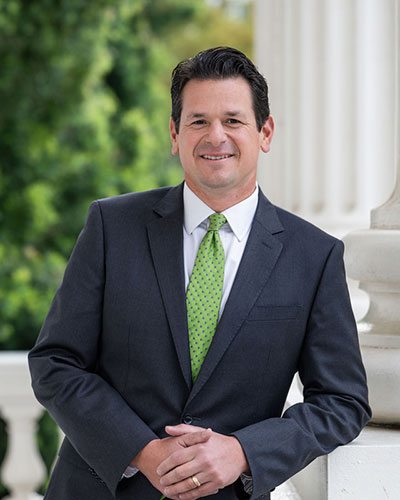
Rep. John Harabedian
Sponsored bills
Under the Planning and Zoning Law, the legislative body of a county or city may adopt ordinances that, among other things, regulate the use of buildings, structures, and land, as provided. The Subdivision Map Act vests the authority to regulate and control the design and improvement of subdivisions in the legislative body of a local agency and sets forth procedures governing the local agency's processing, approval, conditional approval or disapproval, and filing of tentative, final, and parcel maps. Existing law authorizes a development proponent to submit an application for a housing development project on a subdivided lot, as specified, that meets specified requirements, and requires a local agency to ministerially consider that application, as specified. Existing law requires a local agency to ministerially consider, without discretionary review or a hearing, a parcel map or a tentative and final map for a housing development project that meets specified requirements. This bill would, until January 1, 2030, provide that the above-described ministerial approval requirements do not apply to an application for a proposed housing development or map located in ZIP Code 91001 or 91003 and submitted on or after October 1, 2026, except as specified. This bill would make legislative findings and declarations as to the necessity of a special statute for the unincorporated area known as Altadena in the County of Los Angeles. This bill would incorporate additional changes to Section 65852.28 of the Government Code proposed by AB 2601 and SB 1116 to be operative only if this bill and either or both AB 2601 and SB 1116 are enacted and this bill is enacted last. This bill would incorporate additional changes to Section 66499.41 of the Government Code proposed by AB 2601 and SB 1116 to be operative only if this bill and either or both AB 2601 and SB 1116 are enacted and this bill is enacted last. This bill would declare that it is to take effect immediately as an urgency statute.
Existing federal law, the National Suicide Hotline Designation Act of 2020, designates the 3-digit telephone number "988" as the universal number within the United States for the purpose of the national suicide prevention and mental health crisis hotline system operating through the 988 Suicide and Crisis Lifeline. Existing law, the Miles Hall Lifeline and Suicide Prevention Act, requires, among other things, the Office of Emergency Services (OES) to verify that technology that allows for transfers between 988 centers, as well as between 988 centers and 911 public safety answering points, is available to 988 centers and 911 public safety answering points throughout the state, to appoint a 988 system director, and to verify interoperability between and across 911 and 988. Existing law establishes the 988 State Suicide and Behavioral Health Crisis Services Fund and provides that 988 surcharge revenue in the fund is available, upon appropriation by the Legislature, for purposes of the act. This bill would require the California Health and Human Services Agency (agency) to annually determine whether an adequate specialized LGBTQ+ suicide prevention hotline is activated by the federal government under 988. When making this determination, the bill would require the agency to consider specified factors, including, among other things, any factor the agency considers relevant to evaluating the adequacy of press 3 operations. The bill would authorize the agency to, no later than 6 months after its determination, request the federal Substance Abuse and Mental Health Services Administration (SAMHSA) to allow the state to implement the press 3 function at the state level for calls originating in the State of California, which would allow callers to dial "988" and press "3" to be automatically routed to a specialized 988 center. The bill would require OES and the agency to, no later than 12 months following the approval by SAMHSA, ensure that press 3 function technologies are available. This bill would require, no later than 12 months following approval by SAMHSA, the agency to identify and contract with a qualified entity or entities that specialize in LGBTQ+ suicide prevention services. The bill would require the agency to determine the eligibility criteria, establish an application process, and administer funds to the qualified entity, as specified. The bill would require a qualified entity to comply with various requirements, including having a primary objective of reducing suicide rates or addressing mental health crises. The bill would make its implementation subject to an appropriation by the Legislature, as specified. This bill would declare that it is to take effect immediately as an urgency statute.
Existing law generally regulates classes of insurance, including residential property insurance. Existing law prohibits a policy of residential property insurance from being issued or renewed by an insurer unless the named insured is provided a copy of specified information, including the California Residential Insurance Disclosure. Under existing law, the California Standard Form Fire Insurance Policy requires an insured to notify every claimant that they can request copies of claim-related documents, as defined to include all valuation, measurement, and loss adjustment calculations of the amount of loss, covered damage, and cost of repairs, that the insurer is required to provide within 15 calendar days of the request. Under existing law, it is a misdemeanor to issue or countersign a fire policy that varies from the standard form fire insurance policy. This bill would modify the definition of claim-related documents for purposes of the above-described provisions to include all valuation, measurement, and loss adjustment calculations, whether preliminary or final, that relate to the amount of loss, covered damage, and cost of repairs. Because the bill would make changes to the standard form for fire insurance, the bill would expand the scope of an existing crime and impose a state-mandated local program. The California Constitution requires the state to reimburse local agencies and school districts for certain costs mandated by the state. Statutory provisions establish procedures for making that reimbursement. This bill would provide that no reimbursement is required by this act for a specified reason. This bill would incorporate additional changes to Section 2071 of the Insurance Code proposed by SB 876 to be operative only if this bill and SB 876 are enacted and this bill is enacted last.
Existing law establishes the Department of Toxic Substances Control, which regulates the handling and management of hazardous waste and hazardous materials, and establishes the Office of Environmental Health Hazard Assessment and the State Air Resources Board. Existing federal law sets action levels for lead in dust and emission standards for asbestos, and existing state law sets workplace standards for asbestos. Existing law authorizes local health officers to take specified actions to protect public health and establishes procedures for the remediation of certain contaminated properties. This bill would require the Department of Toxic Substances Control, in consultation with the Office of Environmental Health Hazard Assessment and other relevant coordinating agencies, on or before December 31, 2028, to develop and adopt regulations pertaining to lead and asbestos testing, remediation, and restoration after a wildfire and, on or before December 31, 2029, to develop and publish guidance pertaining to specified other contaminants, as provided. The bill would require the State Air Resources Board, on or before December 31, 2028, to develop and publish guidance on indoor air contaminants following residential smoke damage from a wildfire, as provided. The bill would provide that, until the adoption of the regulations and guidance, specified lead and asbestos standards shall apply for wildfire-caused lead and asbestos remediation, as provided. The bill would require the department, in collaboration with the State Department of Education and other relevant state agencies, no later than July 1, 2028, to develop advisory, nonregulatory guidance for schools after a wildfire, as provided. The bill would exempt the regulations and guidance from the Administrative Procedure Act. The bill would become operative only if AB 1795 of the 2025–26 Regular Session is enacted and takes effect on or before January 1, 2027.
Existing law, the Mobilehome Residency Law, prescribes various terms and conditions of tenancies in mobilehome parks. The law deems the substantial failure of the management of a mobilehome park, as defined, to provide and maintain physical improvements in the common facilities in good working order and condition, and the substantial violation of a mobilehome park rule, to be a public nuisance that may be remedied only by a civil action or abatement, as specified. The law authorizes a civil action for purposes of that provision to be brought by, among others, the Attorney General. Existing law establishes within the Department of Housing and Community Development the Mobilehome Residency Law Protection Program, which authorizes additional enforcement measures for violations of the Mobilehome Residency Law. Existing law requires the department to refer any alleged violations of law or regulations within the department's jurisdiction to the Division of Codes and Standards within the department, and to refer any alleged violations of law or regulations that are not within the jurisdiction of the department, as specified, to the appropriate enforcement agency. This bill would require the department to additionally refer alleged violations of the Mobilehome Residency Law, certain laws relating to the conversion or closure of a mobilehome park, and related local government ordinances to a nonprofit legal services provider within 5 days of receipt. Existing law authorizes the department to refer alleged violations of law or regulations that are not within the jurisdiction of the department, including, but not limited to, rent disputes, criminal activity, or alleged discrimination, to the appropriate enforcement agency. This bill would authorize the department to also refer alleged violations of a local ordinance to the appropriate enforcement agency. Existing law requires the department to contract with one or more qualified and experienced nonprofit legal services providers for purposes of the Mobilehome Residency Law Protection Program and to refer complaints to those providers for possible enforcement action. Existing law establishes minimum requirements for nonprofit legal services providers that may contract with the department for these purposes. This bill would instead require the department to develop a grant process to distribute funds to those nonprofit legal services providers and to refer program complaints to those providers for possible enforcement action. The bill would require that grant process to be fully developed and operational for program complaints by July 1, 2029. The bill would require nonprofit legal services providers, in order to receive a grant, to meet the same requirements applicable to a provider contracting with the department under existing law. The bill would specify that these provisions do not interfere with or replace any existing contracts or commitments between the department and any legal services provider entered into before the grant program is operational. Existing law creates the Mobilehome Dispute Resolution Fund, as specified, and requires moneys in the fund to be available, upon appropriation by the Legislature, for purposes of implementing the program. This bill would require moneys in the fund to be made available to the department or to the Attorney General, upon appropriation by the Legislature, for purposes of implementing the program. The bill would require the Attorney General to use funds appropriated to it as necessary to perform duties related to enforcing the alleged violations described above. Existing law requires the department to submit an annual report to the Governor and the Legislature outlining, among other things, the amount of registration fees collected and the amount expended on the program. This bill would additionally require the department to include the amount expended by the Attorney General, as specified, and the number of complaint allegations referred to the Attorney General, as specified, in the annual report. Existing law repeals the above-described provisions relating to the Mobilehome Residency Law Protection Program on January 1, 2027. This bill would extend that repeal date to June 30, 2033.
Existing law sets forth provisions, under the California Constitution, regarding the fundamental right to choose to have an abortion. Existing law, the Reproductive Privacy Act, prohibits the state from denying or interfering with a pregnant person's right to choose or obtain an abortion prior to viability of the fetus, or when the abortion is necessary to protect the life or health of the pregnant person. This bill, the Access to Safe Abortion Care Act, would make legislative findings about medication abortion, with a focus on use of the drugs mifepristone and misoprostol. Under the bill, the Legislature would reaffirm that it has been, and would continue to be, lawful to cause the delivery of, or mail, ship, take, receive, or otherwise transport, any drug, medicine, or instrument that can be designed or adapted to produce an abortion that is lawful in the State of California. The bill would set forth provisions regarding the lack of civil or criminal liability, or professional disciplinary action, for accessing or administering brand name or generic mifepristone or any drug used for medication abortion that is lawful under the laws of the state, on or after January 1, 2020, with this provision applied retroactively, as specified. The bill would make its provisions severable.
The California FAIR Plan Association is a joint reinsurance association in which all insurers licensed to write basic property insurance participate to administer a program for the equitable apportionment of basic property insurance for persons who are unable to obtain that coverage through normal channels. Existing law requires the association to implement programs to help reduce the number of existing FAIR Plan policies, including clearinghouse programs in which a participating insurer offers homeowners or commercial insurance to FAIR Plan policyholders. Existing law requires an agent or broker transacting basic property insurance to assist a person in obtaining basic property insurance coverage by one of several specified methods, including making an application for insurance through the FAIR Plan. On and after January 1, 2028, this bill would authorize the association to share policyholder information with insurers participating in the clearinghouse program, as specified, to allow a participating insurer to offer a policy to a FAIR Plan policyholder and, if there is an agent or broker of record listed on the policy, would require the insurer to make the offer simultaneously to the agent or broker of record and the FAIR Plan policyholder. Commencing May 1, 2027, the bill would require a participating insurer to report to the association on a quarterly basis the number of policies it has issued to FAIR Plan policyholders. The bill would require the association to report aggregated numbers within 30 days, as specified, and post and quarterly update on its internet website a list of participating insurers in the clearinghouse programs. The bill would require the association to provide all policyholders with a notice regarding their coverage options at least annually, including with the initial policy issuance and upon each renewal. The bill would require an agent or broker transacting basic property insurance to assist a person in obtaining basic property insurance coverage by providing the person with information on the clearinghouse programs, among other specified assistance. The bill would require the association to require registered agents and brokers to complete the association's department-approved training on the association's and the broker's responsibility to advise policyholders on the voluntary market options. This bill would incorporate additional changes to Section 10095 of the Insurance Code proposed by AB 1680 to be operative only if this bill and AB 1680 are enacted and this bill is enacted last. This bill would incorporate additional changes to Section 10095.5 of the Insurance Code proposed by AB 2061 to be operative only if this bill and AB 2061 are enacted and this bill is enacted last.
(1) Existing law, the California Factory-Built Housing Law, generally regulates the design, manufacture, and installation of factory-built housing and defines terms for its purposes. The law authorizes the Department of Housing and Community Development, among other things, to regulate quality assurance agencies to perform inspections of factory-built housing manufacturers. The law requires a local enforcement agency, among other things, to enforce and inspect the installation of factory-built housing. The law provides that any person who violates any of its provisions and other specified law is guilty of a misdemeanor, as specified. This bill would revise these provisions, among other things, to authorize a quality assurance agency to also perform an installation inspection of factory-built housing, at the choice of a first user, after the department adopts regulations regarding the requirements for a quality assurance agency to perform these inspections. The bill would require the department to adopt those regulations by January 1, 2029. The bill would set the maximum fees that a local enforcement agency is authorized to impose for the inspection or permitting of factory-built housing, and prohibit a local enforcement agency from imposing fees under certain circumstances. The bill would prohibit a quality assurance agency or a local enforcement agency from disassembling, damaging, or destroying factory-built housing while inspecting the installation. The bill would make conforming changes and define terms for its purposes. By increasing the duties of local officials, and by expanding the scope of a crime, this bill would impose a state-mandated local program. (2) The bill would include findings that changes proposed by this bill address a matter of statewide concern rather than a municipal affair and, therefore, apply to all cities, including charter cities. (3) The California Constitution requires the state to reimburse local agencies and school districts for certain costs mandated by the state. Statutory provisions establish procedures for making that reimbursement. This bill would provide that with regard to certain mandates no reimbursement is required by this act for a specified reason. With regard to any other mandates, this bill would provide that, if the Commission on State Mandates determines that the bill contains costs so mandated by the state, reimbursement for those costs shall be made pursuant to the statutory provisions noted above.
Existing law establishes the California Community Colleges, the California State University, the University of California, independent institutions of higher education, and private postsecondary educational institutions as the segments of postsecondary education in the state. This bill, which would be known as Sarah Shulze's Law, would require each campus of the California State University, each community college of a community college district, and each private postsecondary educational institution and independent institution of higher education that receives state financial assistance, and would request each campus of the University of California, to require a person who serves as a coach or trainer in an athletic program, as a condition of the person's employment or volunteer service, to complete a student mental health training on or before July 1, 2028, and every 2 years thereafter. The bill would require the training, at a minimum, to cover suicide prevention education and would authorize the training to be provided by an entity that offers free, online, or other types of training courses. By imposing new duties on community college districts, the bill would impose a state-mandated local program. The California Constitution requires the state to reimburse local agencies and school districts for certain costs mandated by the state. Statutory provisions establish procedures for making that reimbursement. This bill would provide that, if the Commission on State Mandates determines that the bill contains costs mandated by the state, reimbursement for those costs shall be made pursuant to the statutory provisions noted above.