

Under existing law, a prisoner can reduce their term of imprisonment by earning credit for, among other things, continuous incarceration, good behavior, and participation in approved rehabilitative programming. Existing law makes an inmate of a county jail or state prison who has completed training for assignment to a conservation camp, state or county facility, or a correctional institution as an inmate firefighter, or who is assigned to a state or county facility or a correctional institution as an inmate firefighter, and who is eligible to earn one day of credit for every one day of incarceration, instead eligible to earn 2 days of credit for every one day served in that assignment or after completing that training. Existing law authorizes a juvenile court to order placement of a ward at the Pine Grove Youth Conservation Camp if specified criteria are met, including if the county has entered into a contract with the Department of Corrections and Rehabilitation and the department has found the ward amenable. Existing law authorizes the department to enter into contracts with counties to operate the Pine Grove Youth Conservation Camp through a state-local partnership, or other management arrangement, to train justice-involved youth, as specified, in wildland firefighting skills. This bill would require an incarcerated individual hand crew member, in addition to receiving credits, and a ward or youth hand crew member placed at the Pine Grove Youth Conservation Camp to be paid an hourly wage equal to $7.25 while assigned to an active fire incident. The bill would require that wage rate to be reviewed annually. The bill would require the Department of Corrections and Rehabilitation and counties to maintain regulations regarding an administrative adjudication and remedy process for any disputes over sums owned pursuant to these provisions. This bill would declare that it is to take effect immediately as an urgency statute.
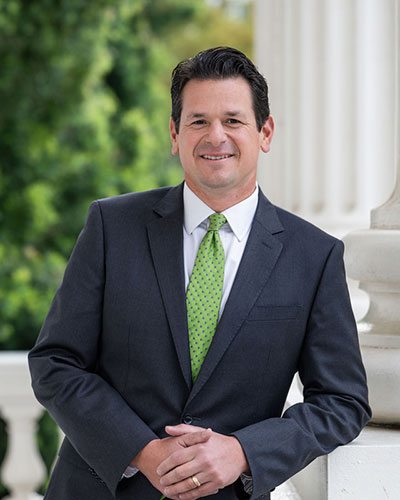
Asm. John Harabedian
Sponsored bills
(1) The Outdoor Advertising Act, a violation of which is a crime, provides for the regulation by the Department of Transportation of advertising displays, as defined, within view of public highways. Existing law exempts from certain provisions of the act advertising displays located in specific geographic areas in the City of Los Angeles if those displays meet prescribed conditions and requirements, including the condition that the advertising display is authorized by, or in accordance with, an ordinance adopted by the City of Los Angeles that regulates advertising displays by identifying the specific displays or establishing regulations that include, at a minimum, specified restrictions, as provided. This bill would authorize the ordinance adopted by the City of Los Angeles to authorize a framework of allowable signage that preserves flexibility in the ultimate placement, sizing, and scope of advertising displays, and define a range or maximum signage capacity, as specified. The bill would also authorize the City of Los Angeles to adopt implementing ordinances that sequence or phase the authorization of advertising displays over time. (2) This bill would declare that it is to take effect immediately as an urgency statute.
Existing law requires each live birth to be registered with the local registrar of births and deaths for the district in which the birth occurred, and prescribes specified information to be listed on a certificate of live birth, including the full name and sex of the child and the full name, birthplace, and date of birth of each parent. Existing law requires, in addition to the information mentioned above, the certificate of live birth to contain specified medical and social information, including, among other things, race and ethnicity of the mother and any other parent, and requires that information to be kept confidential. This bill, commencing July 1, 2027, would instead require the birthplace of each parent to be contained in the medical and social portion of the certificate of live birth and to be kept confidential. Existing constitutional provisions require that a statute that limits the right of access to the meetings of public bodies or the writings of public officials and agencies be adopted with findings demonstrating the interest protected by the limitation and the need for protecting that interest. This bill would make legislative findings to that effect.
(1) Under existing law, a caregiver who is 18 years of age or older and signs a caregiver's authorization affidavit under penalty of perjury for a minor who lives in their home is authorized to enroll the minor in school and consent to school-related medical care on behalf of the minor. Under existing law, a caregiver who is 18 years of age or older, signs the caregiver's authorization affidavit under penalty of perjury, and who is a certain type of relative of the minor who lives in their home, has the same rights to authorize medical care and dental care for the minor that are given to guardians, as specified. Under existing law, a person who acts in good faith reliance on a completed caregiver's authorization affidavit to provide medical or dental care, without actual knowledge of facts contrary to those stated on the affidavit, is not subject to criminal or civil liability or professional disciplinary action for that reliance, but is not relieved from liability for violations of other provisions of law. This bill, the Family Preparedness Plan Act of 2025, would revise the definition of relative to expand the type of relative who is authorized to execute a caregiver's authorization affidavit and grant them the same rights to authorize school-related medical care, as defined, for the minor that are given to guardians, as specified. By expanding who is authorized to sign a caregiver's authorization affidavit for these purposes under penalty of perjury, this bill would expand the crime of perjury, thereby imposing a state-mandated local program. This bill would amend the statutory form for a caregiver's authorization affidavit. (2) Existing law generally provides for the establishment and administration of guardianships. Existing law authorizes a court to appoint joint guardians of a person, an estate, or a person and an estate. Existing law requires a nomination of a guardian to become effective when made, and remain effective, unless stated otherwise in writing, as specified. This bill would authorize a court, in its discretion, to appoint a custodial parent and a person nominated by the custodial parent as joint guardians of the person of the minor, if the custodial parent will be temporarily unavailable due to specified circumstances, including, among other things, an immigration-related administrative action, as specified. The bill would make all records, petitions, orders, and documents related to these proceedings confidential, as specified. The bill would provide that absence is a basis for a delayed effectiveness of a guardianship and that such circumstances would not be a basis for subsequent legal incapacity for the nomination. (3) Existing law prohibits, except as required by state or federal law or as required to administer a state or federally supported educational program, school officials and employees of a local educational agency, as defined, from collecting information or documents regarding citizenship or immigration status of pupils or their family members. Existing law requires the governing board or body of a local educational agency to perform specified actions relating to pupils and immigration status, including, among others, providing information to parents and guardians, as appropriate, regarding their child's right to a free public education, regardless of immigration status or religious beliefs. Existing law requires the Attorney General, by April 1, 2018, in consultation with the appropriate stakeholders, to publish model policies limiting assistance with immigration enforcement at public schools, to the fullest extent possible consistent with federal and state law, as specified. Existing law requires all local educational agencies to adopt the model policies developed by the Attorney General, or equivalent policies, by July 1, 2018. This bill would revise the information disclosure requirements to require the governing board or body of a local educational agency to provide information related to specified guidance on immigration enforcement issued by the Attorney General and would require that information to be revised as necessary to be consistent with any revisions or updates to the Attorney General's guidance. This bill would also require local educational agencies to revise their model policies as necessary to be consistent with any revisions or updates to the model policies developed by the Attorney General, as specified. By imposing additional duties on local educational agencies, the bill would impose a state-mandated local program. (4) Existing law, the California Child Day Care Facilities Act, provides for the licensure and regulation of child daycare facilities, including daycare centers and daycare homes, by the State Department of Social Services. The act exempts certain types of facilities from licensure under its provisions, including California state preschool programs that meet certain requirements, including, among other things, that the programs are operated by local educational agencies in a school building. Similar to the provisions related to local educational agencies described above, this bill would prohibit licensed child daycare facilities, as defined, employees of licensed child daycare facilities, and license-exempt California state preschool program facilities from collecting information or documents regarding citizenship or immigration status of children or their family members, except as required by state or federal law or as required to administer a state or federally supported educational program. The bill would require the licensee or administrator of a licensed child day care facility, as applicable, to report to the department and the Attorney General any requests for information or access to the facility by an officer or employee of a law enforcement agency. The bill would authorize license-exempt California state preschool program facilities to make that report to the State Department of Education and the Attorney General. The bill would require the State Department of Social Services to provide any information on California state preschool programs collected pursuant to those provisions to the Superintendent of Public Instruction. The bill would require a licensed child daycare facility and a license-exempt California state preschool program facility to first exhaust any parental instruction relating to the child's care found in the child's emergency contact information if an employee of the facility is aware that a child's parent or authorized representative is not available to care for the child. The bill would require licensees or administrators of those facilities to request that parents or authorized representatives update their emergency contact information. The bill would require the Attorney General, by April 1, 2026, in consultation with the appropriate stakeholders, to publish model policies limiting assistance with immigration enforcement at child daycare facilities and license-exempt California state preschool program facilities similar to the model policies developed for local educational agencies described above. The bill would require the State Department of Social Services to inform licensed daycare facilities, and the State Department of Education to inform license-exempt California state preschool program facilities, of the model policies. The bill would require all California state preschool programs to adopt the model policies developed by the Attorney General, or equivalent policies, as soon as possible, but in no event later than July 1, 2026. The bill would require California state preschool programs to update these policies to conform with any revisions or updates to the model policies developed by the Attorney General. The bill would require a licensed child daycare facility and license-exempt California state preschool program facilities to provide the parent or authorized representative with information about how to access those model policies. The bill would require the State Department of Social Services to inform licensed child day care facilities, and the State Department of Education to inform license-exempt California state preschool program facilities, of any revisions or updates to the model policies and require any information, policies, or guidance provided by facilities to parents or authorized representatives to be updated to include any revisions or updates to the model policies issued by the Attorney General. The bill would authorize the State Department of Social Services to administer these provisions by interim licensing standards until regulations are adopted. (5) This bill would provide that its provisions are severable. (6) Existing constitutional provisions require a statute that limits the right of access to the meetings of public bodies or the writings of public officials and agencies to be adopted with findings demonstrating the interest protected by the limitation and the need for protecting that interest. This bill would make legislative findings to that effect. (7) The California Constitution requires the state to reimburse local agencies and school districts for certain costs mandated by the state. Statutory provisions establish procedures for making that reimbursement. This bill would provide that with regard to certain mandates no reimbursement is required by this act for a specified reason. With regard to any other mandates, this bill would provide that, if the Commission on State Mandates determines that the bill contains costs so mandated by the state, reimbursement for those costs shall be made pursuant to the statutory provisions noted above. This bill would incorporate additional changes to Section 234.7 of the Education Code proposed by AB 49, AB 419, or both, to be operative only if this bill and AB 49, AB 419, or both, are enacted and this bill is enacted last.
(1) Existing law prescribes the duties of the State Registrar of Vital Statistics (State Registrar) and local registrars of births and deaths with respect to the registration of certificates of live birth, fetal death, or death, and marriage licenses. Existing law requires the State Registrar to prescribe and furnish all record forms for use in carrying out the provisions governing vital records and prohibits the use of any record form or format other than those prescribed by the State Registrar. Existing law requires every live birth, fetal death, death, and marriage that occurs in the state to be registered with the local registrar. Existing law requires certificates of live birth, fetal death, or death, and a marriage license to include specified information, such as the full name of the child on a certificate of live birth and the full names of the parties to be married on a marriage license. Existing law also requires the county clerk to issue a confidential marriage license, as specified, on a form prescribed by the State Registrar. This bill would require, commencing no earlier than 2 years after an appropriation of funds by the Legislature, the State Registrar to require the use of a diacritical mark on an English letter within a name field to be properly recorded, when applicable, on a certificate of live birth, fetal death, death, marriage license and certificate, or confidential marriage license and certificate, and would require the use of a diacritical mark to be deemed an acceptable entry by the State Registrar. The bill would provide that the absence or presence of a diacritical mark on a certificate of live birth, fetal death, or death, or a marriage license and certificate or confidential marriage license and certificate does not render the document invalid nor affect any constructive notice imparted by proper recordation of the document. The bill would authorize the State Registrar to develop a list of acceptable diacritical marks for use on a certificate of live birth, fetal death, or death, or a marriage license and certificate or confidential marriage license and certificate through all-county letters or similar instructions from the State Registrar without taking further regulatory actions. The bill would authorize the State Registrar to remove any diacritical marks on the birth, fetal death, death, and marriage license and certificate data before furnishing the vital statistics to a federal, state, or local government agency. The bill would authorize, beginning July 1, 2026, if a name is not accurately recorded because of the absence of a diacritical mark on an English letter in any certificate of live birth, fetal death, death, or marriage already registered, the person asserting the omission, or the person's conservator, or if a minor, the person's parent or guardian, to make an affidavit under oath, as specified, stating the changes necessary to make the record correct. The bill would require the affidavit to be supported by the affidavit of one other person having knowledge of the facts and be filed with the State Registrar. The bill would require the State Registrar to, review the request and, if the request is accompanied with the payment of a specified fee, to issue an amendment to any certificate of live birth, fetal death, death, or marriage with the accurate name identified in the request. The bill would also authorize, if a name field of either of the parties married or their parents is not accurately recorded because of the absence of a diacritical mark on an English letter on any confidential license and certificate of marriage already registered, the party asserting the omission to make an affidavit, under oath, stating the changes necessary to make the record correct and file it with the county clerk. The bill would authorize the county clerk to charge a fee, not to exceed the amount of the fee for any other amended confidential marriage license and certificate issued by the county clerk and not to exceed the reasonable cost to provide the amended marriage license and certificate. The bill would require the county clerk to review the amendment for acceptance for filing, and if accepted, file the amendment and note the fact of the amendment, with its date, on the otherwise unaltered original confidential license and certificate of marriage. By requiring the affidavit to be under oath, the bill would expand the crime of perjury, thereby imposing a state-mandated local program. By increasing duties on county clerks, the bill would impose a state-mandated local program. (2) Existing law requires the collection of specified fees for certified copies of a fetal death record, death record, a birth certificate, marriage record, or marriage dissolution record. Existing law requires all applicants for certified copies of the above-described records to pay an additional fee of $3 to be collected by the State Registrar, the local registrar, county recorder, or county clerk, as appropriate. This bill would increase the additional fee charged for certified copies of the above-described records to $5. (3) The California Constitution requires the state to reimburse local agencies and school districts for certain costs mandated by the state. Statutory provisions establish procedures for making that reimbursement. This bill would provide that with regard to certain mandates no reimbursement is required by this act for a specified reason. With regard to any other mandates, this bill would provide that, if the Commission on State Mandates determines that the bill contains costs so mandated by the state, reimbursement for those costs shall be made pursuant to the statutory provisions noted above.
Existing law prohibits public funds from being used in connection with any athletic program conducted under the auspices of a school district governing board or any student organization within the district, which does not provide equal opportunity to both sexes for participation and for use of facilities. Existing law prohibits a city, county, city and county, or special district from discriminating against any person on the basis of gender in the operation, conduct, or administration of community youth athletics programs, as defined, or in the allocation of parks and recreation facilities and resources, as defined, that support or enable these programs. Existing law creates an independent right to bring a civil action for a violation of this prohibition for equitable and monetary relief, as specified. This bill would instead prohibit a city, county, city and county, special district, school district, county office of education, or charter school from discriminating against a person on the basis of sex or gender in the operation, conduct, or administration of community youth athletics programs, or in the allocation of parks and recreation facilities and resources or school and recreation facilities and resources that support or enable these programs. The bill would define various terms for these purposes and make related conforming changes. By imposing a new duties on local agencies, the bill would impose a state-mandated local program. The California Constitution requires the state to reimburse local agencies and school districts for certain costs mandated by the state. Statutory provisions establish procedures for making that reimbursement. This bill would provide that, if the Commission on State Mandates determines that the bill contains costs mandated by the state, reimbursement for those costs shall be made pursuant to the statutory provisions noted above.
Existing law creates the Department of Insurance, headed by the Insurance Commissioner, and prescribes the department's powers and duties. Existing law directs the department and commissioner to administer various grant programs that, among other things, defray property retrofitting costs. This bill would establish the California Safe Homes grant program to be developed by the department to reduce local and statewide wildfire losses, among other things. The bill would require the department to prioritize specified needs when awarding grant funds, and would require eligible program applicants, which would include individuals, cities, counties, and special districts, to meet specified criteria. The bill would establish the Sustainable Insurance Account within the Insurance Fund and would make the funds available to the department for the program upon appropriation by the Legislature or upon receipt of federal or other grants or funds. The bill would require the department to collect specified information about the performance of the program and, on or before January 1, 2027, and every 2 years thereafter, to publish a performance report that would be posted to its internet website and submitted to the Legislature.
(1) Existing law establishes the Department of Insurance, headed by the Insurance Commissioner, which regulates insurers and insurance practices. When an insurer obtains reinsurance, existing law requires them to communicate all the representations of the original insured, and also all the knowledge and information they possess, as specified, which are material to the risk. This bill would require, on or before March 1, 2026, and on or before March 1 every year thereafter, an admitted insurer in a group with written premiums in the prior year from specified lines of insurance totaling $50,000,000 to submit a report to the commissioner that includes data and information necessary to understand its reinsurance program placement data and use of probabilistic catastrophic models for the previous year. The bill would require the report to include data from the latest available reinsurance treaty year. The bill would require the insurer to promptly respond to inquiries from the commissioner upon submission of the report. The bill would require the commissioner to post to the department's internet website an aggregated report of the data in the report from insurers. The bill would require all other information submitted to the commissioner under these provisions be confidential, among other things, and exempt from the California Public Records Act. The bill would require an admitted insurer to pay a civil penalty, to be fixed by the commissioner, but not to exceed $5,000 for each 30-day period the insurer is not in compliance with the reporting provisions. The bill would authorize an insurer to request, and the commissioner to grant, a 30-day extension to submit the report if needed due to unintended or unforeseen circumstances. The bill would authorize the commissioner to find that the failure to submit the report on time was willful and to increase the civil penalty to an amount not to exceed $10,000 for each 30-day period, up to a maximum of $100,000. The bill would allow the penalty to be appealed under specified provisions. Existing constitutional provisions require that a statute that limits the right of access to the meetings of public bodies or the writings of public officials and agencies be adopted with findings demonstrating the interest protected by the limitation and the need for protecting that interest. This bill would make legislative findings to that effect. The bill would make related findings and declarations. (2) Existing law defines the measure of indemnity for a loss under an open fire insurance policy and specifies time limits under which an insured must collect the full replacement cost of the loss. For a residential property insurance policy, existing law requires the measure of damages available to a policyholder to use to rebuild or replace the insured home at another location to be the amount that would have been recoverable had the insured dwelling been rebuilt at its original location, as specified. In the event of a total loss of an insured structure, existing law prohibits a policy issued or delivered in this state from containing a provision that limits or denies payment of the building code upgrade cost or the replacement cost on the basis that the insured has decided to rebuild at a new location or to purchase a built home at a new location. Existing law requires the insured to give written notice to the insurer of any loss within 60 days after the loss unless the time is extended in writing by the insurer. The bill would prohibit an insurer from requiring an insured to provide a proof of loss less than 100 days after a loss relating to a state of emergency, as defined. The bill would require the insurer to provide the insured one or more extensions of 3 months for good cause, if the insured, acting in good faith and with reasonable diligence, encounters a delay in providing a proof of loss in specified circumstances beyond the control of the insured. Existing law requires a residential property insurer to allow an insured that has suffered a loss relating to a declared state of emergency to combine the policy limits for primary dwelling and other structures, and to use the combined amount to rebuild or replace the dwelling, as specified. For a total loss of a furnished residence related to a declared state of emergency, existing law requires an insurer to provide an advance partial payment for contents of no less than 30% of the policy limit, as specified, without requiring an itemized claim. The bill would instead require the insurer to provide 60% of the policy limit applicable to the personal property covered under the policy, up to a maximum of $350,000, when the loss is relating to a declared state of emergency, without requiring an itemized claim. The bill would also authorize an insurer to require an insured to sign an attestation form as a condition of receiving the advance payment for personal property loss stating that the insured acknowledges the residence was furnished and that they reasonably believe the personal property damaged or destroyed had a value that equates or exceeded the amount of the advance payment.
Existing law, the Contractors State License Law, establishes the Contractors State License Board to license and regulate contractors and establishes the registrar of contractors as the executive officer and secretary of the board. Existing law requires the registrar, upon receipt of the Labor Commissioner's finding of a willful or deliberate violation of the Labor Code by a licensee or transmission to the board of citations or other actions taken by the Division of Occupational Safety and Health, to initiate disciplinary action against the licensee within 18 months. This bill would authorize the Attorney General to bring a civil action to impose discipline upon, to deny an application for, or to deny continued maintenance of, a contractor's license for failing to pay its workers the full amount of wages the workers are entitled to under state law or because the contractor has not fulfilled a wage judgment or is in violation of an injunction or court order regarding the payment of wages to its workers. The bill would require the Attorney General to notify the registrar before bringing a civil action and would authorize the board to intervene in a proceeding brought pursuant to the bill's provisions. The bill would require a court to issue an order directing the registrar to suspend or revoke, to deny an application for, or to deny the continued maintenance of, a contractor's license under terms specified by the court.
(1) Existing law, the Mobilehome Residency Law, prescribes various terms and conditions of tenancies in mobilehome parks. Existing law, the Planning and Zoning Law, requires a person or entity proposing a change in use of a mobilehome park to file a report on the impact of the conversion, closure, or cessation of use of the mobilehome park that includes a replacement and relocation plan, as specified. Existing law requires the legislative body or advisory agency to review the report before any change of use, as provided. Existing law establishes the Department of Housing and Community Development and requires it to administer various programs intended to promote the development of housing. This bill would require, if a closure, cessation, or change of use is the result of damage or destruction of the mobilehome park by a disaster, as defined, the person or entity proposing that closure, cessation, or change of use to file an impact report, as described in the paragraph above, which also includes a technical service inspection report from the Department of Housing and Community Development that identifies the observed conditions within the park. By placing new requirements on local legislative bodies when approving permits for a change of use for mobilehome parks, this bill would impose a state-mandated local program. Existing law requires the person or entity proposing the change of use of a mobilehome park to pay to the displaced resident the in-place market value of the displaced resident's mobilehome, as provided. This bill would provide that if the proposed closure, cessation, or change of use is related to damage or destruction by a disaster, the person or entity proposing the change of use of a mobilehome park is not required to pay to the displaced resident the in-place market value of the displaced resident's mobilehome. (2) Existing law regulates the terms and conditions of residential tenancies. Existing law requires the lessor of a building intended for human occupation to repair dilapidations, as specified, rendering it untenantable. Existing law requires a dwelling to be deemed untenantable if it substantially lacks certain affirmative standard characteristics. This bill would impose a duty upon the landlord to undertake certain actions, within a reasonable time and according to specified cleaning protocols, as may be necessary to remediate any dilapidations that arise as a result of a disaster. The bill would establish a presumption that the presence at the rental unit of debris from the disaster renders the unit untenantable, until a determination has been made by a local public health agency or official that the debris does not contain toxic substances. This bill would require the landlord to notify the tenant in writing that the landlord has fulfilled its duty to remediate dilapidations and that the tenant may view various reports, if requested. The bill would specify that these provisions do not require a landlord to rebuild a residential real property or any portion thereof that has sustained damage as a result of a disaster, and that, unless lawfully terminated by either party, the tenancy remains in effect and the tenant has the right to return to the rental unit, at the same rental rate in effect immediately prior to the disaster, as soon as it is safe and practicable. (3) Existing law terminates the hiring of a thing by the destruction of the thing hired, or when the greater part of the thing hired perishes from any other cause than the want of ordinary care of the hirer. This bill would require the landlord to return to the tenant any advance rental payments made by the tenant when the hiring of residential real property is terminated due to damage or destruction of the property. The bill would also require management of a mobilehome park to return to the homeowner any advance rental payments made by the homeowner when the mobilehome tenancy is terminated due to damage or the destruction of the mobilehome park or any space as a result of a disaster. The bill would discharge the tenant's or homeowner's obligation to pay rent during any period during which a tenant or homeowner is unable to occupy their rental unit due to a mandatory evacuation order pursuant to a disaster, as provided. (4) Existing law makes the Commissioner of Financial Protection and Innovation the head of the Department of Financial Protection and Innovation, which executes the laws of this state relating to, among other things, residential mortgage lenders and servicers and mortgage loan originators employed or supervised by finance lenders or residential mortgage lenders. This bill would require the commissioner to, upon the declaration of a state of emergency due to wildfire, as specified, coordinate with mortgage lenders and servicers subject to the commissioner's jurisdiction operating in this state to facilitate and monitor the implementation and promotion of mortgage forbearance, foreclosure prevention, and loss mitigation programs available to borrowers who experience a material decrease in household income or a material increase in household expenses due, directly or indirectly, to the wildfire emergency. (5) The California Constitution requires the state to reimburse local agencies and school districts for certain costs mandated by the state. Statutory provisions establish procedures for making that reimbursement. This bill would provide that, if the Commission on State Mandates determines that the bill contains costs mandated by the state, reimbursement for those costs shall be made pursuant to the statutory provisions noted above.