

Existing law, the Knox-Keene Health Care Service Plan Act of 1975, provides for the licensure and regulation of health care service plans by the Department of Managed Health Care, and makes a willful violation of the act a crime. Existing law provides for the regulation of health insurers by the Department of Insurance. Existing law requires a health care service plan contract or health insurance policy issued, amended, or renewed on or after January 1, 2021, to provide coverage for medically necessary treatment of mental health and substance use disorders, as defined, under the same terms and conditions applied to other medical conditions. This bill would generally require a large group health care service plan contract or health insurance policy issued, amended, or renewed on or after January 1, 2026, to reimburse an eligible enrollee or insured for up to 12 visits with a behavioral health provider if the enrollee or insured lives in a county where a local or state emergency has been declared due to wildfires and the enrollee or insured has experienced a loss, trauma, or displacement because of the fire. The bill would prohibit these benefits from being subject to utilization review. The bill would require a health care service plan contract or health insurer to provide notice to all affected enrollees of these provisions, as specified. Because a willful violation of these provisions by a health care service plan would be a crime, the bill would impose a state-mandated local program. The California Constitution requires the state to reimburse local agencies and school districts for certain costs mandated by the state. Statutory provisions establish procedures for making that reimbursement. This bill would provide that no reimbursement is required by this act for a specified reason. This bill would declare that it is to take effect immediately as an urgency statute.
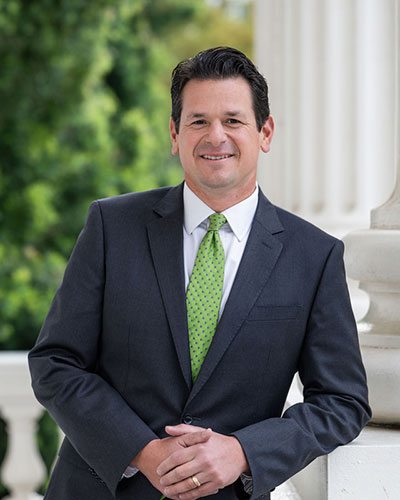
Asm. John Harabedian
Sponsored bills
Existing law, the Knox-Keene Health Care Service Plan Act of 1975, provides for the licensure and regulation of health care service plans by the Department of Managed Health Care and makes a willful violation of the act a crime. Existing law provides for the regulation of disability insurers by the Department of Insurance. Existing law provides for the Medi-Cal program, administered by the State Department of Health Care Services and under which qualified low-income individuals receive health care services, including pursuant to contracts with various types of managed care plans. Existing law generally authorizes a health care service plan, including a Medi-Cal managed care plan, or disability insurer to use utilization review, under which a licensed physician or a licensed health care professional who is competent to evaluate specific clinical issues may approve, modify, delay, or deny requests for health care services based on medical necessity. For a request prior to or concurrent with the provision of health care services, existing law requires utilization review decisions to be made within 5 business days from the plan's or insurer's receipt of the information reasonably necessary and requested by the plan or insurer to make the determination, or within 72 hours if the enrollee or insured faces an imminent and serious threat to their health or the normal timeframe would be detrimental to their life or health, as specified. This bill would change the timeline for prior or concurrent authorization requests to no more than 3 business days from the plan's or insurer's receipt via electronic submission, or 5 business days from receipt via submission that is not electronic, of the information reasonably necessary and requested by the plan or insurer to make the determination. The bill would require a utilization review decision to be made within 24 hours from receipt of a prior or concurrent authorization request via electronic submission, or 48 hours from receipt via submission that is not electronic, if the enrollee or insured faces an imminent and serious threat to their health or the normal timeframe would be detrimental to their life or health. Because a willful violation of this provision by a health care service plan would be a crime, the bill would impose a state-mandated local program. The bill would exclude Medi-Cal managed care plans from the above-described timeline changes. The California Constitution requires the state to reimburse local agencies and school districts for certain costs mandated by the state. Statutory provisions establish procedures for making that reimbursement. This bill would provide that no reimbursement is required by this act for a specified reason.
Existing law requires the State Energy Resources Conservation and Development Commission (Energy Commission) , in consultation with specified entities, to adopt a biennial integrated energy policy report containing certain information, including an overview of major energy trends and issues facing the state. This bill would require the Energy Commission, in the next update to the biennial integrated energy policy report after January 1, 2027, and subject to available funding, to adopt a virtual power plant deployment plan. The bill would require the Energy Commission, in developing the plan, to take certain actions, and would require that the plan meet specified requirements. Existing law requires the Energy Commission, in consultation with the Public Utilities Commission and the Independent System Operator, to adopt a goal for load shifting to reduce net peak electrical demand and adjust this target in each biennial integrated energy policy report thereafter. This bill would require each electrical corporation to annually report to the Energy Commission its contribution towards meeting that load-shift goal.
Existing law establishes the Office of Small Business Advocate (OSBA) within the Governor's Office of Business and Economic Development, also known as GO-Biz, to advocate for causes of small business and to provide small businesses with the information they need to survive in the marketplace. This bill, upon appropriation by the Legislature, would require OSBA to allocate 90% of the moneys appropriated to the Small Business Recovery Fund, which would be created within the State Treasury, for purposes of a small business recovery grant program to provide competitive grants to small businesses, as defined, that are directly impacted by a state of emergency proclaimed by the Governor or other specified emergencies. The bill would require the funds to be used for, among other things, to support recovery and rebuilding efforts, and would require a grantee to match the amount of the grant awarded. The bill would require OSBA to award grants in amounts that range from $2,500 to $100,000, inclusive. This bill would require OSBA to allocate 5% of the moneys appropriated to the fund to the Small Business Technical Assistance Program administered by GO-Biz, for grants to small business technical assistance centers that provide direct service to disaster-affected areas, and 5% to the Capital Infusion Program administered by GO-Biz, to support increased demand for capital-related technical assistance in disaster areas. This bill would require the Director of the Office of Small Business Advocate to prepare and submit a report to the Legislature on the results of grant funds awarded for each state of emergency proclaimed by the Governor, as provided. This bill would repeal the Small Business Recovery Fund Act on January 1, 2032.
Maddy summaryThis bill establishes January as National Human Trafficking Awareness Month in California to raise public awareness about human trafficking. The resolution recognizes the severity of human trafficking as a felony crime and highlights statistics showing its prevalence across the country and specific challenges with identifying male victims and labor trafficking cases. It aims to educate the public and encourage reporting and support for victims during this designated month.
Existing law generally provides protections for minors on the internet, including the California Age-Appropriate Design Code Act that, among other things, requires a business that provides an online service, product, or feature likely to be accessed by children to do certain things, including estimate the age of child users with a reasonable level of certainty appropriate to the risks that arise from the data management practices of the business or apply the privacy and data protections afforded to children to all consumers and prohibits an online service, product, or feature from, among other things, using dark patterns to lead or encourage children to provide personal information beyond what is reasonably expected to provide that online service, product, or feature or to forego privacy protections. This bill, beginning January 1, 2027, would require, among other things related to age verification with respect to software applications, an operating system provider, as defined, to provide an accessible interface at account setup that requires an account holder, as defined, to indicate the birth date, age, or both, of the user of that device for the purpose of providing a signal regarding the user's age bracket to applications available in a covered application store and to provide a developer, as defined, who has requested a signal with respect to a particular user with a digital signal via a reasonably consistent real-time application programming interface regarding whether a user is in any of several age brackets, as prescribed. The bill would require a developer to request a signal with respect to a particular user from an operating system provider or a covered application store when the application is downloaded and launched. This bill would prohibit an operating system provider or a covered application store from using data collected from a third party in an anticompetitive manner, as specified. This bill would punish noncompliance with a civil penalty to be enforced by the Attorney General, as prescribed. This bill would declare its provisions to be severable.
Existing law, commencing January 1, 2019, made various changes to the law governing ignition interlock devices (IID) , including, among other things, requiring a person who has been convicted of driving a motor vehicle under the influence of an alcoholic beverage, as specified, to install for a specified period of time as ordered by the court, an IID on the vehicle they operate, provided however that installation of an IID is discretionary for a first offender, as specified; authorizing a person convicted of driving a motor vehicle under the influence, if all other requirements are satisfied, including the installation of an IID, to apply for a restricted driver's license without completing a period of license suspension or revocation; and requiring ignition interlock device manufacturers to be in compliance with specified provisions relating to payment for the costs of an ignition interlock device. Existing law makes these changes operative until January 1, 2026. On January 1, 2026, existing law, as it relates to these provisions, is generally reinstated to read as it read prior to January 1, 2019. Existing law makes it a crime to violate certain provisions relating to IIDs and motor vehicles equipped with IIDs. This bill would extend the operation of these provisions until January 1, 2033, and would instead reinstate the law to how it read prior to January 1, 2019, on January 1, 2033. By extending the application of a crime, the bill would impose a state-mandated local program. The California Constitution requires the state to reimburse local agencies and school districts for certain costs mandated by the state. Statutory provisions establish procedures for making that reimbursement. This bill would provide that no reimbursement is required by this act for a specified reason.
Existing law provides generally for the regulation of wells, pumping plants, conduits, and streams. Existing law requires the State Fire Marshal to identify areas in the state as moderate, high, and very high fire hazard severity zones based on consistent statewide criteria and based on the severity of fire hazard that is expected to prevail in those areas. This bill would, beginning July 1, 2030, require a water supplier, as defined, to have access to sufficient backup energy sources to operate critical fire suppression infrastructure, as defined, needed to supply water for at least 24 hours for the purpose of fire suppression in high or very high fire hazard severity zones in the County of Ventura, or to have access to alternative sources of water supplied by a different water supplier or agency that can serve this same purpose of supplying backup water to critical wells and water pumps for 24 hours, as provided. The bill would require the water supplier to take various actions, including annually inspecting critical fire suppression infrastructure and backup energy sources and notifying the Ventura County Office of Emergency Services within 3 business days of any reduction in its water delivery capacity that could substantially hinder firefighting operations or significantly delay the replenishment of reservoirs. The bill would require, if any fire damages and makes uninhabitable more than 10 residential dwellings within the service area of a water supplier, a report be made by the Ventura County Fire Department in cooperation with the water supplier, as specified. By levying new requirements on the Ventura County Fire Department, this bill would create a state-mandated local program. This bill would make legislative findings and declarations as to the necessity of a special statute for County of Ventura. The California Constitution requires the state to reimburse local agencies and school districts for certain costs mandated by the state. Statutory provisions establish procedures for making that reimbursement. This bill would provide that, if the Commission on State Mandates determines that the bill contains costs mandated by the state, reimbursement for those costs shall be made pursuant to the statutory provisions noted above.
Existing law governs the adoption of unmarried minors. Existing law grants a court of this state with jurisdiction of adoption proceedings for minors in specified circumstances, including, among others, when the minor and the prospective adoptive parent are physically present in this state and the minor has been abandoned or it is necessary in an emergency to protect the minor because the minor has been subjected to or threatened with mistreatment or abuse or is otherwise neglected. This bill would expand the court's jurisdiction to include adoption proceedings for California-born minors when (1) proceedings to free the minor from the custody and control of one or both parents are not required to make the minor available for adoption and (2) the proceedings to free the minor from the custody and control of one or both parents to make the minor available for adoption are being brought in this state. The bill would clarify that the above provisions do not limit jurisdiction that is otherwise permitted under the Interstate Compact on the Placement of Children. The bill would also require an adoption order issued for unmarried minors to include the names of the adoptive parent or parents and any existing parent or parents who will maintain their parental rights after the finalization of the adoption. Existing law sets forth the procedures for completing an independent adoption, including an investigation and a report by the State Department of Social Services or the delegated county adoption agency on the proposed independent adoption, as specified. For investigations involving petitioners who are residents of a state other than California, existing law requires a review of an updated and current home study report that was conducted and approved by a licensed adoption agency or other authorized resource in the state in which the petitioner resides if the standards and criteria for the home study report in the other state are substantially commensurate with the standards and criteria established in California adoption regulations. This bill would require a petitioner to be responsible for providing any additional documentation or information necessary to complete the investigation described above if the out-of-state home study report is not substantially commensurate with California standards or is otherwise missing required information.
Existing law authorizes, until January 1, 2032, the City of Malibu to establish a speed safety system pilot program for speed enforcement on the Pacific Coast Highway if the system meets specified requirements. Existing law requires the city to administer a public information campaign at least 30 days before implementation of the program, including information relating to when the systems would begin detecting violations. Existing law requires the city to issue warning notices rather than notices of violations for violations detected within the first 60 calendar days of the program. Existing law also requires the city to develop guidelines for, among other things, the processing and storage of confidential information. Existing law requires photographic or administrative records made by a system to be confidential, except as specified, and would only authorize public agencies to use and allow access to these records for specified purposes. This bill would authorize, until January 1, 2032, the Department of Transportation to establish a similar program for speed enforcement that utilizes up to 35 speed safety systems on state highway construction or maintenance areas, as specified. The bill would require the department to adopt written guidelines for the use of speed safety systems before entering into an agreement regarding a speed safety system, purchasing or leasing equipment for a program, or implementing a program, and would require the department, in developing the guidelines, to consult with relevant state agencies and other relevant stakeholder organizations. The bill would only authorize the Department of Transportation to use and allow access to the photograph or administrative records for specified purposes. Existing law requires a violation of a speed law recorded by a speed safety system to be subject only to civil penalties, as specified. Existing law requires, among other things, the issuance of a notice of violation, an initial review, an administrative hearing, and an appeals process, as specified, for a violation under the speed safety pilot program. This bill would require the department to also implement similar provisions if it establishes the state highway work zone speed safety program on state highway construction or maintenance areas. Existing law requires the city to submit a report to evaluate the speed safety system to determine the system's impact on street safety and the economic impact on the communities where the system is utilized. Existing law requires revenues derived from a program to first be used to cover program costs, such as the installation of speed safety systems, the adjudication of violations, and reporting requirements. This bill would require the department to submit a report to the Legislature evaluating the state highway work zone speed safety program and its impact on state highway work zone safety no later than 2 years after the commencement of the program, and annually thereafter. The bill would require moneys generated from the issuance of citations to be deposited in the Safe Highway Work Zone Account, which the bill would create in the State Transportation Fund. The bill would require moneys in the account to be continuously appropriated to the department for administration of the program, and would require any remaining funds to be used by the department for the Construction Zone Enhanced Enforcement Program and the Maintenance Zone Enhanced Enforcement Program. By authorizing moneys to be continuously appropriated to the department for these purposes, the bill would make an appropriation. Existing law establishes a $25 filing fee for specified appeals and petitions. This bill would require a $25 filing fee for an appeal challenging a notice of violation issued as a result of the department's speed safety program until January 1, 2032. Existing constitutional provisions require that a statute that limits the right of access to the meetings of public bodies or the writings of public officials and agencies be adopted with findings demonstrating the interest protected by the limitation and the need for protecting that interest. This bill would make legislative findings to that effect. This bill would incorporate additional changes to Section 70615 of the Government Code proposed by SB 720 to be operative only if this bill and SB 720 are enacted and this bill is enacted last.