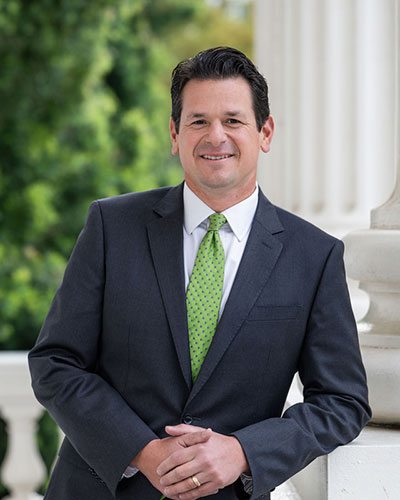
Photo of John Harabedian
D California Assembly · District 41 On the 2026 ballot

Asm. John Harabedian

Compare
Total votes
5,154
all sessions
Attendance
97%
108 missed
Near the chamber average
With party
100%
of cast votes
Near the chamber average
Bipartisan score
0%
crosses aisle rarely
Near the chamber average
Sponsored
455
bills & resolutions
Near the chamber average
Committees
15
assignments
455 bills and resolutions

Sponsored bills

Total
455
Primary
38
Co-sponsor
417
This page
455
matching current filters
Co-sponsor HR 77
Passed · California Assembly · Co-sponsor
Relative to school governance.

Maddy summaryThis House Resolution declares January 2026 as School Board Recognition Month to honor the nearly 5,000 school board members across California's 1,000 school districts and county offices of education. The resolution recognizes these locally elected officials for their work in guiding public education and serving diverse communities, emphasizing their role in ensuring students' academic, social-emotional, and health needs are met. It calls on community members to join in acknowledging the dedication of school board members and collaborate to improve the education system. The bill has no operational effect beyond this symbolic recognition and does not change any laws or policies.

Passed Feb 5, 2026 1 co-sponsor
Co-sponsor HR 76
Passed · California Assembly · Co-sponsor
Relative to affordable homeownership.

Maddy summaryThis House Resolution formally recognizes the importance of affordable homeownership for California families, particularly those with lower incomes, and highlights how nonprofit-led programs help build generational wealth and reduce economic disparities. The document emphasizes that existing state programs like CalHome support the construction and preservation of affordable homes through competitive funding to cities, counties, indigenous communities, and nonprofit builders such as Habitat for Humanity. While the resolution does not create new laws or funding, it serves as an official acknowledgment of homeownership's role in improving educational outcomes, health, civic participation, and neighborhood stability. The text also notes California's significant housing deficit and racial wealth gaps as context for why expanding affordable ownership opportunities is a priority for state policy.

Passed Feb 5, 2026 1 co-sponsor
Primary AB 1475
died · California Assembly · Lead sponsor
Building Homes and Jobs Trust Fund.

The Building Homes and Jobs Act (BHJA) creates in the State Treasury the Building Homes and Jobs Trust Fund and requires the moneys in the fund to be appropriated through the annual Budget Act or as prescribed in the BHJA. This bill would make nonsubstantive changes to that provision.

died Feb 2, 2026 0 co-sponsors
Primary AB 1298
died · California Assembly · Lead sponsor
The Department of Consumer Affairs.

Existing law establishes the Department of Consumer Affairs within the Business, Consumer Services, and Housing Agency. This bill would make nonsubstantive changes to those provisions.

died Feb 2, 2026 0 co-sponsors
Primary AB 1395
Failed · California Assembly · Lead sponsor
Forestry: internal combustion engines: industrial operations: fire toolbox.

Existing law prohibits any person, except as specified, from using or operating any vehicle, machine, tool, or equipment powered by an internal combustion engine operated on hydrocarbon fuels, in any industrial operation located on or near any forest, brush, or grass-covered land between April 1 and December 1 of any year, or at any other time when ground litter and vegetation will sustain combustion permitting the spread of fire, without providing and maintaining, for firefighting purposes only, suitable and serviceable tools, as prescribed. Existing law requires a sealed box of tools, containing specified items, including one backpack pump-type fire extinguisher filled with water, to be located within the operating area and accessible in the event of a fire. This bill would instead require a dedicated set of tools, as specified, including a sufficient number of fire extinguishers, to be located within the operating area and accessible in the event of a fire, so that, when added to any other tools on the industrial operation, each employee at the operation can be equipped to fight fire. The bill would make other nonsubstantive changes to these provisions.

Failed Feb 2, 2026 0 co-sponsors
Co-sponsor AB 1236
Failed · California Assembly · Co-sponsor
Insurance: Climate and Sustainability Insurance and Risk Reduction Grant Program.

Existing law establishes the Department of Insurance, headed by the Insurance Commissioner, and provides for the powers and duties of the commissioner. Existing law requires the commissioner to convene a working group to identify, assess, and recommend risk transfer market mechanisms that promote investment in natural infrastructure to reduce the risks of climate change related to catastrophic events, create incentives for investment in natural infrastructure to reduce risks to communities, and provide mitigation incentives for private investment in natural lands to lessen exposure and reduce climate risks to public safety, property, utilities, and infrastructure. This bill would require the department to establish and administer the Climate and Sustainability Insurance and Risk Reduction Grant Program, to be funded upon appropriation by the Legislature, for the purpose of achieving specified goals, including developing proofs of concept that expand insurance options and testing community-purchased insurance to reduce overall insurance costs, as specified. The bill would require the department to report to the Senate Committee on Insurance and the Assembly Committee on Insurance on program results on or before January 1, 2029, and on or before January 1 every 3 years thereafter. The bill would repeal these provisions on January 1, 2035.

Failed Feb 2, 2026 1 co-sponsor
Primary AB 1024
Failed · California Assembly · Lead sponsor
Department of Fish and Wildlife: San Gabriel Valley Bear Management and Community Safety Act.

Under existing law, the Department of Fish and Wildlife has jurisdiction over the conservation, protection, and management of fish, wildlife, native plants, and habitat necessary for biologically sustainable populations of those species. This bill would establish the San Gabriel Valley Bear Management and Community Safety Act, which would require, on or before January 1, 2027, the department to develop a regional plan specific to the cities located within the San Gabriel Valley in the County of Los Angeles to address issues relating to bears in the community. The bill would require the plan to include various components, including, among other things, an overview of the behaviors of the bears in the San Gabriel Mountains. The bill would require the department to establish measurable performance goals for reducing bear encounters within the cities located in the San Gabriel Valley in the County of Los Angeles, and to report those goals to the Legislature on or before January 1, 2027. The bill would require the department to tag and track any bear that enters a residential neighborhood in a city located within the San Gabriel Valley in the County of Los Angeles using innovative technologies, as specified. This bill would make legislative findings and declarations as to the necessity of a special statute for County of Los Angeles.

Failed Feb 2, 2026 0 co-sponsors
Primary AB 1161
Failed · California Assembly · Lead sponsor
Public social services: state of emergency or health emergency.

Existing law establishes various public social services programs under the jurisdiction of the State Department of Social Services, including, among others, the California Work Opportunity and Responsibility to Kids (CalWORKs) program, the CalFresh program, the California Food Assistance Program (CFAP) , the In-Home Supportive Services (IHSS) program, and the Cash Assistance Program for Immigrants (CAPI) . Existing law establishes the Medi-Cal program, which is administered by the State Department of Health Care Services and under which qualified low-income individuals receive health care services. The Medi-Cal program is, in part, governed and funded by federal Medicaid program provisions. Existing law, the Knox-Keene Health Care Service Plan Act of 1975, requires a health care service plan to provide an enrollee who has been displaced or whose health may otherwise be affected by a state of emergency, as declared by the Governor, or a health emergency, as declared by the State Public Health Officer, with access to medically necessary health care services, as specified. This bill would require the State Department of Social Services, for purposes of CalWORKs, CalFresh, CFAP, IHSS, and CAPI, and the State Department of Health Care Services, for Medi-Cal purposes, to provide continuous eligibility for the applicable programs to a recipient or beneficiary who has been affected by a state of emergency, including through displacement. For Medi-Cal purposes, the bill would specify additional qualifying circumstances, including certain disruptions in providers, infrastructure, or other services, and would also require this continuous eligibility in the case of effect an by a health emergency. The bill would authorize the State Department of Health Care Services to implement these Medi-Cal provisions by providing continuous eligibility to all Medi-Cal beneficiaries within a geographic region where the department finds that multiple Medi-Cal beneficiaries within the geographic region have experienced any of these circumstances due to a state of emergency or health emergency. Under the bill, the continuous eligibility would maintain a recipient's or beneficiary's current scope of benefits under the applicable program for certain timelines. The bill would require the 2 departments to implement the continuous eligibility through automated programming of eligibility systems, with notifications, as specified. The bill would require a county to immediately restore eligibility for the applicable program for any recipient or beneficiary whose eligibility was discontinued and who informs the county that they have been impacted as described above, without requesting any further verifications from the recipient or beneficiary. In the case of CalWORKs, CalFresh, CFAP, IHSS, and CAPI, if a recipient fails to submit a semiannual report or an annual redetermination or recertification of eligibility, if applicable, the bill would require the county to determine that the recipient had good cause for failing to submit that information. The bill would set forth related provisions for the county, the State Department of Social Services, and the Director of Social Services. Under the bill, these provisions would be implemented only to the extent not in conflict with federal law. The bill would authorize the Director of Social Services to waive, subject to receipt of any necessary federal approvals, the enforcement of specific federal requirements, regulations, or standards necessary to implement the above-described applicable provisions. Under the bill, implementation of the Medi-Cal provisions would be conditioned on receipt of any necessary federal approvals and the availability of federal financial participation. The bill would authorize the Director of Social Services or the Director of Health Care Services to issue county directives regarding compliance with the respective provisions. By creating new duties for counties with regard to eligibility for the above-described programs, the bill would impose a state-mandated local program. Existing law continuously appropriates moneys from the General Fund to defray a portion of county costs under the CalWORKs program. This bill would instead provide that the continuous appropriation would not be made for purposes of implementing these provisions. The California Constitution requires the state to reimburse local agencies and school districts for certain costs mandated by the state. Statutory provisions establish procedures for making that reimbursement. This bill would provide that, if the Commission on State Mandates determines that the bill contains costs mandated by the state, reimbursement for those costs shall be made pursuant to the statutory provisions noted above.


Failed Feb 2, 2026 0 co-sponsors
Primary AB 239
Vetoed · California Assembly · Lead sponsor
State-led County of Los Angeles disaster housing task force.

Existing law establishes the Department of Housing and Community Development (HCD) and sets forth its powers and duties, including updating and revising the California Statewide Housing Plan, as provided. Existing law establishes the Office of Emergency Services (OES) , which is responsible for the state's emergency and disaster response services for natural, technological, or human-induced disasters and emergencies, including responsibility for activities necessary to prevent, respond to, recover from, and mitigate the effects of emergencies and disasters on people and property. This bill would require HCD to convene a state-led County of Los Angeles disaster housing task force, as specified, for the purpose of coordinating and streamlining efforts between HCD, the Federal Emergency Management Agency, OES, and local governments to rebuild housing in communities impacted by the wildfires that began on January 7, 2025, in the County of Los Angeles. The bill would require the task force to appoint a state disaster housing coordinator to accelerate the delivery of resources to communities impacted by the wildfires, and report to the Legislature on the status of rebuilding housing in communities impacted by the wildfires on April 1, 2026, and annually thereafter, as specified. The bill would repeal these provisions on June 30, 2028. This bill would make legislative findings and declarations as to the necessity of a special statute for the Counties of Los Angeles and Ventura. This bill would declare that it is to take effect immediately as an urgency statute.

Vetoed Jan 22, 2026 0 co-sponsors
Primary AB 797
Vetoed · California Assembly · Lead sponsor
Community Stabilization Act: Counties of Los Angeles and Ventura.

(1) Existing law, the Bergeson-Peace Infrastructure and Economic Development Bank Act, establishes the California Infrastructure and Economic Development Bank (I-Bank) in the Governor's Office of Business and Economic Development. Existing law, among other things, authorizes the I-Bank to issue bonds, make loans, and provide financial assistance for various types of projects that qualify as economic development or public development facilities. This bill would enact the Community Stabilization Act. The bill would require the I-Bank to develop and administer a program to issue a security, and to cease issuing a security on January 1, 2030. The bill would specify that the purpose of the program is to help stabilize property values in disaster-affected areas by allowing qualified investors, as defined, to purchase tradable securities, with the funding allocated to qualifying investment entities that purchase and manage residential land until it can be resold at fair market value. The bill would require profits from the land investments to be shared among investors and the I-Bank according to certain percentages, with qualifying investment entities being reimbursed for their administrative costs. This bill would establish various requirements for the security, including that it be tradeable, comply with specified municipal bonding requirements, and that it be funded by investments made by qualified investors using funds available pursuant to the federal Community Reinvestment Act of 1977. The bill would require the security to repay the investment upon a liquidity event and within 7 years of the purchase of an investment property, and would describe a liquidity event as the refinance or sale of the investment property. This bill would require funds raised from the purchase of the security to be deposited in the Community Stabilization Fund, which would be created by the bill, and would require all moneys in the fund to be continuously appropriated to the I-Bank. The bill would require the I-Bank to allocate moneys in the fund to qualifying investment entities to be invested in the Counties of Los Angeles and Ventura and in those areas that are covered by a state of disaster declared by the Governor. The bill would require a qualifying investment entity to meet prescribed requirements, including that it be a specified entity, including, among others, a nonprofit organization, as provided. The bill would also impose various requirements on the qualifying investment entity relating to the purchase, maintenance, and sale of the investment property, including, among other things, limiting the purchase of property to residential property that has been damaged or destroyed by the wildfires that began on January 7, 2025, in the Counties of Los Angeles and Ventura, as specified. The bill would require the I-Bank to submit a final report on the program to the Legislature, the Governor, and the Department of Finance no later than January 1, 2034, as specified. By establishing a new continuously appropriated fund, the Community Stabilization Fund, this bill would make an appropriation. (2) This bill would make legislative findings and declarations as to the necessity of a special statute for the Counties of Los Angeles and Ventura. (3) This bill would declare that it is to take effect immediately as an urgency statute.

Vetoed Jan 22, 2026 0 co-sponsors
Showing 261 to 270 of 455 bills
Previous 1 … 26 27 28 … 46 Next