

Existing law defines the crime of burglary as entering specified buildings, places, or vehicles with the intent to commit grand or petty theft or a felony. Existing law clarifies that a structure designed for habitation is being used for dwelling purposes if, at the time of the burglary, it was not occupied solely because a disaster caused the occupants to leave the premises. This bill would specify that neither the fact that the structure entered has been damaged by a natural or other disaster, nor the extent of the damage, shall preclude conviction. Existing law defines looting as the commission of certain offenses during and within an affected county in a state of emergency or local emergency, as specified. Existing law includes any 2nd-degree burglary or grand theft in the definition of looting, and makes looting based on those offenses punishable by either imprisonment in a county jail for one year or as a felony. Existing law also makes the crime of looting based on petty theft punishable as a misdemeanor. Existing regulations define an "evacuation area" as a geographic area from which civilians have been evacuated pursuant to an evacuation order and where movement and entry are controlled by fire and law enforcement personnel having jurisdictional authority. Existing regulations define an "evacuation warning" as alerting community members in a defined area of a potential threat to life or property. This bill would recast the offense of looting to include first degree burglary, 2nd degree burglary, grand theft, trespass, and theft from a vehicle, when those offenses are committed in an evacuation zone, to the crime of looting. The bill would also, for the purposes of the offense of looting, define an evacuation zone to include an evacuation area or an area subject to an evacuation warning, and to include any residential dwelling units in such an area for a period of one year after the evacuation order, or up to 3 years if the property is undergoing construction. The bill would impose increased penalties for these offenses committed within an evacuation zone, as specified. By increasing the punishment of specified crimes, this bill would impose a state-mandated local program. The California Constitution requires the state to reimburse local agencies and school districts for certain costs mandated by the state. Statutory provisions establish procedures for making that reimbursement. This bill would provide that no reimbursement is required by this act for a specified reason. This bill would make the operation of its provisions contingent upon the enactment of Senate Bill 571 of the 2025–26 Regular Session.
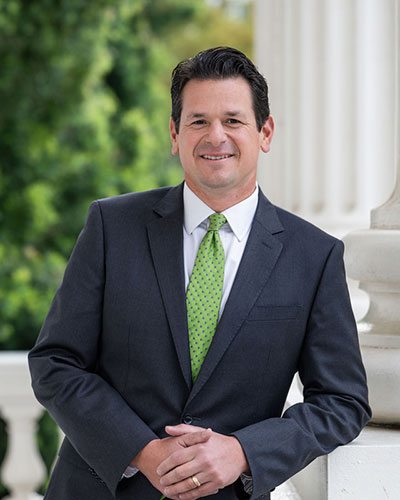
Asm. John Harabedian
Sponsored bills
The California FAIR Plan Association is a joint reinsurance association in which all insurers licensed to write basic property insurance participate in administering a program for the equitable apportionment of basic property insurance for persons who are unable to obtain that coverage through normal channels. Existing law requires the association's plan of operation and any amendment to the plan to be approved by the Insurance Commissioner. Existing law establishes the California Infrastructure and Economic Development Bank and authorizes it to issue bonds to provide funds for the payment of costs of a project for a participating party or upon request by a state entity. This bill would authorize the association, if granted prior approval from the commissioner, to request the California Infrastructure and Economic Development Bank to issue bonds, and would authorize the bank to issue those bonds to finance the costs of claims, to increase liquidity and claims-paying capacity of the association, and to refund bonds previously issued for that purpose. The bill would specify that the association is a participating party and that financing all or any portion of the costs of claims or to increase liquidity and the claims-paying capacity of the association is a project for bond purposes. The bill would authorize the bank to loan the proceeds of issued bonds to the association, and would authorize the association to enter into a loan agreement with the bank and to enter into a line of credit agreement or other agreement This bill would require the association, if the above-described bonds, loan agreements, or lines of credit received the prior approval of the commissioner, and if the association is unable to timely and fully meet its repayment obligation, to assess members in the amounts and at the times necessary to timely pay in full all obligations of the association with respect to those bonds, loan agreements, lines of credit, and other agreements, as specified. The bill would authorize the association to secure those bonds, loan agreements, lines of credit, and other agreements by a statutory lien, as specified. Existing law establishes the California Infrastructure and Economic Development Bank Fund, a continuously appropriated fund, for the purpose of implementing the objectives of the bank. To the extent that the bill would result in additional revenues being deposited into the California Infrastructure and Economic Development Bank Fund, the bill would make an appropriation. This bill would declare that it is to take effect immediately as an urgency statute.
Existing law generally regulates classes of insurance, including property and fire insurance. Existing law creates the Department of Insurance, headed by the Insurance Commissioner, and prescribes the department's powers and duties. Existing department regulations prohibit an insurer from using a rating plan that does not take into account and reflect specified wildfire risk mitigation, including property-level building hardening measures. This bill would require the department, on or before January 1, 2030, and every 5 years thereafter, to consider whether or not to update its regulations to include additional building hardening measures for property-level mitigation efforts and communitywide wildfire mitigation programs. As part of this consideration, the bill would require the department to consult with specified agencies to identify additional building hardening measures to consider, as well as to develop and implement a public participation process during the evaluation.
Existing law establishes the California FAIR Plan Association, a joint reinsurance association in which all insurers licensed to write basic property insurance participate to administer a program for the equitable apportionment of basic property insurance for persons who are unable to obtain that coverage through normal channels. Existing law authorizes cancellation of an insurance policy for nonpayment of premium, and requires an insurer to notify a policyholder at least 10 calendar days before the policy will be canceled for nonpayment. This bill, on or before April 1, 2026, would require the California FAIR Plan Association to create an automatic payment system and accept automatic payments for premiums from policyholders. The bill would prohibit cancellation or nonrenewal of a FAIR Plan policy solely because the policyholder is not enrolled in automatic payments. The bill would provide a period for the policyholder to pay any outstanding installment premium, in accordance with the existing 10-calendar-day notice requirement.
Existing law requires the Department of Transportation to install screening on state freeway overpasses to prevent objects from being dropped or thrown upon vehicles passing underneath, as provided.. This bill would require, beginning on or before July 1, 2028, the Department of Transportation, in consultation with the State Department of Public Health and in collaboration with impacted local governments, to incorporate suicide deterrent considerations in the updates of applicable guidance documents, as provided.
Existing law requires state agencies, boards, and commissions that collect demographic data as to the ancestry or ethnic origin of Californians to use separate collection categories and tabulations for each major Asian and Pacific Islander group and to include that data in every demographic report published on or after July 1, 2012, as specified. This bill would, commencing January 1, 2028, require state and local agencies, as defined, that collect demographic data as to the ancestry or ethnic origin of Californians to use separate collection categories and tabulations for major Middle Eastern or North African groups, as specified, and, with certain exceptions, to include that data in every demographic report published on or after January 1, 2029, and to make the aggregated data available to the public. Existing constitutional provisions require that a statute that limits the right of access to the meetings of public bodies or the writings of public officials and agencies be adopted with findings demonstrating the interest protected by the limitation and the need for protecting that interest. This bill would make legislative findings to that effect. The bill would include findings that changes proposed by this bill address a matter of statewide concern rather than a municipal affair and, therefore, apply to all cities, including charter cities. The California Constitution requires the state to reimburse local agencies and school districts for certain costs mandated by the state. Statutory provisions establish procedures for making that reimbursement. This bill would provide that, if the Commission on State Mandates determines that the bill contains costs mandated by the state, reimbursement for those costs shall be made pursuant to the statutory provisions noted above.
Existing law establishes the Medi-Cal program, which is administered by the State Department of Health Care Services and under which qualified low-income individuals receive health care services. The Medi-Cal program is, in part, governed and funded by federal Medicaid program provisions. Existing law sets forth various provisions for Medi-Cal coverage of community health worker services, enhanced care management, and community supports, subject to any necessary federal approvals. Under existing law, these benefits are designed to, respectively, provide a link between health and social services and the community; address the clinical and nonclinical needs on a whole-person-care basis for certain target populations of Medi-Cal beneficiaries, including individuals experiencing homelessness; and provide housing transition navigation services, among other supports. This bill would set forth provisions regarding field medicine, as defined, under the Medi-Cal program for persons experiencing homelessness, as defined. The bill would state the intent of the Legislature that the field medicine-related provisions coexist with, and not duplicate, other Medi-Cal provisions, including, but not limited to, those regarding community health worker services, enhanced care management, and community supports. The bill would authorize a Medi-Cal managed care plan to elect to offer Medi-Cal covered services through a field medicine provider, as defined. Under the bill, a managed care plan that elects to do so would be required to allow a Medi-Cal member who is experiencing homelessness to receive those services directly from an in-network, contracted field medicine provider, regardless of the member's in-network assignment, as specified. The bill would also require the managed care plan to allow an in-network, contracted field medicine provider enrolled in Medi-Cal to directly refer a member who is experiencing homelessness for covered services within the appropriate network, as specified. The bill would require a managed care plan to have appropriate mechanisms, procedures, or protocols to ensure timely communication between the in-network, contracted field medicine provider, the Medi-Cal member's plan or independent practice association, and the member's primary care provider for purposes of care coordination and to prevent the duplication of services. The bill would require a managed care plan to provide a method for a Medi-Cal member to inform the managed care plan online, in person, or via telephone that the member is experiencing homelessness. The bill would require the department to inform a managed care plan if a member has indicated that they are experiencing homelessness based on information furnished on the Medi-Cal application. In the case of a Medi-Cal beneficiary who is experiencing homelessness and who receives services within the fee-for-service delivery system, the bill would require the department to reimburse a field medicine provider enrolled in Medi-Cal for providing Medi-Cal covered services. The bill would condition implementation of the above-described provisions on receipt of any necessary federal approvals and the availability of federal financial participation. The bill would require, on or before January 1, 2027, that the standard application form for insurance affordability programs include an optional question for an applicant to identify whether they are experiencing homelessness. The bill would make conforming changes to related provisions under existing law regarding the application process. The bill would also remove obsolete references within related provisions. To the extent that the bill would create new duties for counties with regard to data sharing under Medi-Cal, the bill would impose a state-mandated local program. The California Constitution requires the state to reimburse local agencies and school districts for certain costs mandated by the state. Statutory provisions establish procedures for making that reimbursement. This bill would provide that, if the Commission on State Mandates determines that the bill contains costs mandated by the state, reimbursement for those costs shall be made pursuant to the statutory provisions noted above.
The California Occupational Safety and Health Act of 1973 provides the Division of Occupational Safety and Health within the Department of Industrial Relations with the power, jurisdiction, and supervision over all employment and places of employment necessary to enforce and administer all occupational health and safety laws and to protect employees. The act grants to the Occupational Safety and Health Standards Board, an independent entity within the department, exclusive authority to adopt occupational safety and health standards within the state. Beginning July 1, 2018, and every 5 years thereafter, the act requires the board, in consultation with the department, to complete a comprehensive review of all revisions to National Fire Protection Association standards pertaining to certain personal protective equipment (PPE) and requires the board to consider modifying existing safety orders and to render a decision regarding the adoption of necessary changes to safety orders, or other applicable standards and regulations, no later than July 1 of the subsequent year, if the review finds that the revisions to applicable National Fire Protection Association standards provide a greater degree of personal protection than the safety orders. This bill would, in addition to the above-described requirement, require the board to consider modifying its existing safety order regarding firefighter personal protective equipment by January 1, 2028, to address National Fire Protection Association performance standards for PPE that are not relevant or applicable to how firefighters utilize their PPE and that result in the use of perfluoroalkyl and polyfluoroalkyl substances, fluoropolymers, flame retardants, and other hazardous substances in firefighting personal protective garments and auxiliary firefighting PPE, as provided. The bill would also require, by July 1, 2026, the Division of Occupational Safety and Health to report on progress toward implementation of the modified PPE safety standards, as provided. The bill would also make related findings and declarations.
(1) Existing law establishes the Department of Industrial Relations within the Labor and Workforce Development Agency and sets forth the functions of the department, which include, among others, fostering, promoting, and developing the welfare of the wage earners of California and improving their working conditions. Existing law establishes within the department the Division of Labor Standards Enforcement, headed by the Labor Commissioner, for the purposes of enforcing labor laws. Existing law requires the Labor Commissioner to enforce and administer a program to register and supervise foreign labor contractors who perform foreign labor contracting activities to recruit or solicit foreign workers. Existing law defines foreign workers for purposes of these provisions to mean any person seeking employment who is not a United States citizen or permanent resident but who is authorized by the federal government to work in the United States, including a person who engages in temporary nonagricultural labor, as specified. Existing law requires foreign labor contractors to register under the program, as prescribed. Existing law requires an applicant for registration as a foreign labor contractor to execute a written application in a form prescribed by the commissioner, as specified, that includes, among other things, the names and addresses of all persons financially interested in the proposed operation as a foreign labor contractor, as provided. Existing law imposes specific requirements on foreign labor contractors relating to recruitment or solicitation for employment and relating to work contracts. Existing law authorizes the commissioner to adopt regulations or policies and procedures to implement these provisions. Existing law authorizes the commissioner, or a person aggrieved by a violation of these provisions, to bring certain actions against the violator, including an action for injunctive relief, as provided. A violation of these provisions is a crime. Existing law makes these provisions applicable only to nonagricultural workers, and exempts persons licensed as farm labor contractors, specified persons exempt from farm labor contractor licensing requirements, and employers of agricultural workers. This bill would, beginning July 1, 2027, expand the above-described provisions to agricultural workers under the federal H-2A visa program. The bill would make related conforming changes and findings and declarations. The bill would additionally require, beginning July 1, 2027, the above-described application to contain a listing of each federal visa program under which the person will be performing foreign labor contracting activities. The bill would authorize the commissioner to enforce the above-described foreign labor contractor registration provisions through specified procedures, including the issuance of a citation or filing of a civil action against a person who violates those provisions. (2) Existing law requires farm labor contractors to be licensed by the commissioner and to comply with specified employment laws applicable to farm labor contractors. Existing law prohibits the commissioner from issuing to any person, or renewing, a license to act as a farm labor contractor unless certain conditions are satisfied, including a requirement that the person has executed a written application in a form prescribed by the commissioner as a foreign labor contractor, as prescribed. This bill would require, beginning July 1, 2027, a person who is licensed or acting as a farm labor contractor and who performs foreign labor contracting activities to register with the commissioner as a foreign labor contractor, as prescribed. The bill would authorize the commissioner to eliminate duplicative application information requirements for information previously obtained from the farm labor contractor's license application, as specified. By expanding the application of the foreign labor contractor registration provisions, the bill would expand an existing crime, thereby imposing a state-mandated local program. This bill would require the Department of Industrial Relations to submit to the Legislature, by January 1, 2028, a study on how to extend foreign labor contractor registration requirements to certain foreign labor contractors, as specified. (3) The California Constitution requires the state to reimburse local agencies and school districts for certain costs mandated by the state. Statutory provisions establish procedures for making that reimbursement. This bill would provide that no reimbursement is required by this act for a specified reason.
Existing law prohibits a person or business, as defined, from collecting, using, disclosing, or retaining the personal information of a person who is physically located at, or within a precise geolocation of, a family planning center, as defined, except as necessary to perform the services or provide the goods requested and prohibits a person or business from selling or sharing this personal information. Existing law authorizes an aggrieved person or entity to institute and prosecute a civil action against a person or business for a violation of these provisions and specifies the damages and costs authorized to be recovered. This bill would recast the above-described provisions, and instead prohibit the collection, use, disclosure, sale, sharing, or retention of the personal information of a natural person who is physically located at, or within a precise geolocation of, a family planning center, except under certain circumstances, including, among others, for the collection or use as necessary to perform the services or provide the goods requested. The bill would also provide that these provisions do not alter applicable law regarding use by a law enforcement agency, as defined, of personal information generated by an electronic monitoring device. The bill would authorize an aggrieved person to institute and prosecute a civil action against a natural person, association, proprietorship, corporation, trust, foundation, partnership, or any other organization or group of people acting in concert for a violation of these provisions. The bill would also make other nonsubstantive changes. This bill would, subject to specified exceptions, prohibit geofencing, or selling or sharing personal information with a third party to geofence, as defined, an entity that provides in-person health care services in California for specified purposes, and would prohibit the use of personal information obtained in violation of this provision. The bill would provide that violators are subject to an injunction and liable for a civil penalty assessed and recovered in a civil action brought by the Attorney General, and deposited in the California Reproductive Justice and Freedom Fund. The bill would require those penalties to be awarded by the State Department of Public Health for grants to implement a program or to fund an existing program that provides and promotes medically accurate and comprehensive reproductive and sexual health education, as provided. The bill would also provide that a statement signed under penalty of perjury, as specified, that the personal information will not be used for selling or sharing personal information in violation of these geofencing provisions is prima facie evidence that the personal information was not sold or shared in violation of these geofencing provisions. By expanding the crime of perjury, this bill would impose a state-mandated local program. Existing law, the Confidentiality of Medical Information Act (CMIA) , generally prohibits a provider of health care, a health care service plan, or a contractor from disclosing medical information regarding a patient, enrollee, or subscriber without first obtaining an authorization, unless a specified exception applies. The CMIA prohibits a provider of health care, a health care service plan, a contractor, or an employer from releasing medical information that would identify an individual or related to an individual seeking or obtaining an abortion in response to a subpoena or a request or to law enforcement if that subpoena, request, or the purpose of law enforcement for the medical information is based on, or for the purpose of enforcement of, either another state's laws that interfere with a person's rights to choose or obtain an abortion or a foreign penal civil action. This bill would, similar to the provisions of the CMIA, prohibit the release of research records, in a personally identifying form, developed or acquired by a person in the course of conducting research relating to anyone seeking or obtaining health care services, or relating to personal information, in response to a subpoena or a request or to law enforcement if that subpoena, request, or the purpose of law enforcement for the medical information is based on, or for the purpose of enforcement of, either another state's laws that interfere with a person's rights to choose or obtain an abortion or a foreign penal civil action. The California Constitution requires the state to reimburse local agencies and school districts for certain costs mandated by the state. Statutory provisions establish procedures for making that reimbursement. This bill would provide that no reimbursement is required by this act for a specified reason.