

Existing law, the California Child Day Care Facilities Act, provides for the licensure and regulation of child daycare facilities, including daycare centers and family daycare homes, by the State Department of Social Services. Existing law imposes various training requirements on child daycare facilities, including, among others, at least 15 hours of specified health and safety training that includes pediatric first aid, pediatric CPR, and preventive health practices, and mandated reporter training. A person who willfully or repeatedly violates any provision of the act or any rule or regulation promulgated under the act is guilty of a crime. Existing law prohibits licensed child daycare facilities, employees of licensed child daycare facilities, and license-exempt California state preschool program facilities from collecting information or documents regarding citizenship or immigration status of children or their family members. Existing law also requires the Attorney General, by April 1, 2026, in consultation with the appropriate stakeholders, to publish model policies limiting assistance with immigration enforcement at child daycare facilities, as specified, and requires the State Department of Social Services to inform licensed daycare facilities of the model policies. This bill would require the State Department of Social Services to notify all licensed and license-exempt family daycare home providers of a person's rights under the Fourth Amendment to the United States Constitution, as specified, and would also require the department to designate a statewide entity to develop and provide a training program about those rights. The bill would require the designated statewide entity to offer the training program commencing 60 days after the effective date of the bill, and would require licensed family daycare home providers to complete the training within specified timeframes. The bill would specify that a violation of these requirements is not subject to criminal, civil, or administrative penalties, and does not subject a licensee to citation under the act. This bill would declare that it is to take effect immediately as an urgency statute.
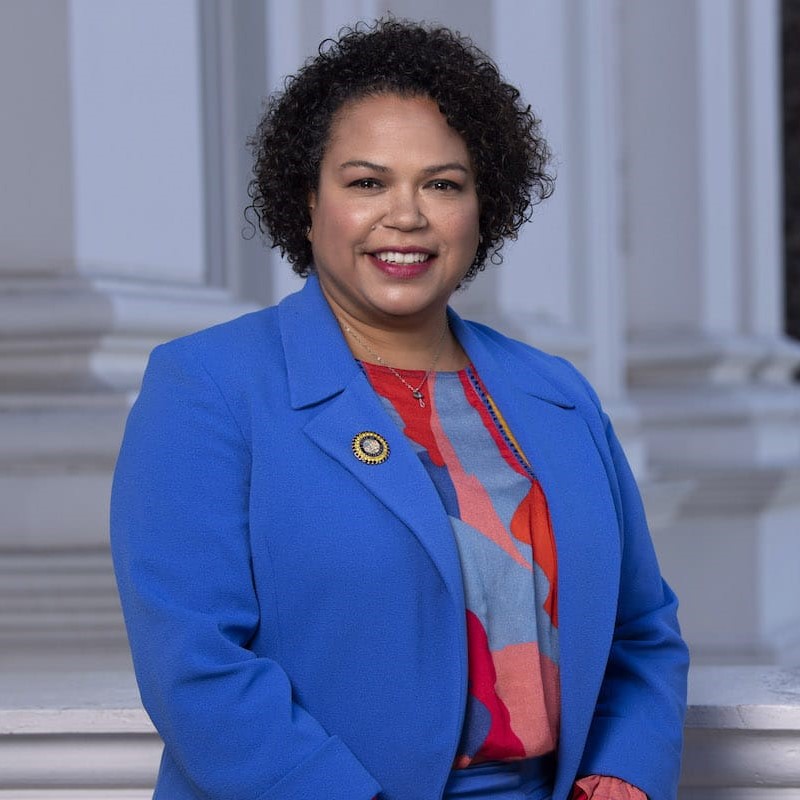
Rep. Mia Bonta
Sponsored bills
Existing law makes void and unenforceable any covenant, restriction, or condition contained in any deed, contract, security instrument, or other instrument affecting the transfer or sale of any interest in real property that effectively prohibits or restricts certain land uses, including the installation or use of a solar energy system or construction or use of an accessory dwelling unit or junior accessory dwelling unit on certain lots. Existing law authorizes a person who holds or is acquiring an ownership interest of record in property that the person believes is the subject of an unlawfully restrictive covenant, as specified, to record a restrictive covenant modification document. Before recording the document, existing law requires the county recorder to submit the modification document and the original document to the county counsel, who is required to determine whether the original document contains an unlawful restriction. This bill would make void and unenforceable against an interested party any covenant, restriction, or condition contained in any deed, contract, security instrument, lease, or other recorded or unrecorded instrument affecting the transfer or sale of any interest in real property that effectively prohibits or restricts the use of that property as a grocery store or supermarket, as defined, if a grocery store or supermarket either previously operated on the property and has ceased operations or is no longer in actual operation within a commercial project or shopping center and an approved restrictive covenant modification document has been recorded in the public record. The bill would entitle an interested party, as defined, to establish that an existing restrictive covenant is unenforceable by submitting a restrictive covenant modification document to the county recorder, in accordance with certain procedures, to allow the grocery store or supermarket development to proceed. The bill would prohibit a person or entity, beginning on January 1, 2027, from creating or recording any covenant, restriction, or condition contained in any deed, contract, security instrument, lease, or other recorded or unrecorded instrument affecting the transfer or sale of any interest in real property that effectively prohibits or restricts the use of that property as a grocery store or supermarket if a grocery store or supermarket either previously operated on the property and has ceased operations or is no longer in actual operation within a commercial project or shopping center, except as prescribed. By imposing additional duties on county officials, this bill would impose a state-mandated local program. The bill would include findings and declarations relating to these provisions. The California Constitution requires the state to reimburse local agencies and school districts for certain costs mandated by the state. Statutory provisions establish procedures for making that reimbursement. This bill would provide that no reimbursement is required by this act for a specified reason.
Existing law requires the State Department of Public Health to license and regulate various health facilities, including general acute care hospitals. Existing law requires the department to issue a special permit, in addition to a license, to a health facility to offer one or more special services, such as an emergency center, if specified requirements are met, including that the department finds that the standards of care and services are adequate and appropriate. Existing law requires the department to issue a special permit to allow a general acute care hospital to offer emergency stabilization services at a location that is neither inside nor contiguous to the applicant hospital if the hospital provides satisfactory evidence to the department that, among other things, the hospital has a written transfer agreement with the hospital closest to the location where emergency stabilization services will be provided and satisfactory evidence to the department that this location meets certain requirements, including that the location is in the town of Paradise within the County of Butte and serves the same area previously served by Feather River Hospital. This bill would require the department to issue a waiver, as specified, to a publicly owned and operated general acute care hospital, in collaboration with Del Puerto Health Care District, to operate one rural emergency stabilization care unit and waive designated general acute care hospital licensure requirements if specified conditions are met. The bill would limit the term of the waiver based on prescribed factors, including the completion of a hospital build within a 5-mile radius of the emergency stabilization care unit or within 10 years from the initial issuance of the waiver, except as specified. This bill would make legislative findings and declarations as to the necessity of a special statute for Del Puerto Health Care District.
(1) The Confidentiality of Medical Information Act (CMIA) prohibits a provider of health care, a health care service plan, a contractor, or a corporation and its subsidiaries and affiliates from intentionally sharing, selling, using for marketing, or otherwise using any medical information, as defined, for any purpose not necessary to provide health care services to a patient, except as provided. Existing law makes a violation of these provisions that results in economic loss or personal injury punishable as a misdemeanor. Existing law deems a business that offers a mental health digital service or reproductive or sexual health digital service to a consumer for the purpose of allowing the individual to manage the individual's information, or for the diagnosis, treatment, or management of a medical condition of the individual, to be a provider of health care subject to the requirements of the CMIA. The bill would additionally deem a business that offers a health care chatbot, as defined, to a consumer for the above-described purposes to be a provider of health care subject to the requirements of the CMIA. Because the bill would expand the scope of a crime, it would impose a state-mandated local program. (2) Existing law requires a health facility, clinic, physician's office, or office of a group practice that uses generative artificial intelligence to generate written or verbal patient communications pertaining to patient clinical information, as defined, to ensure that those communications include both a disclaimer that indicates to the patient that a communication was generated by generative artificial intelligence, as specified, and clear instructions describing how a patient may contact a human health care provider, employee, or other appropriate person, except as specified. This bill would require a health facility, clinic, physician's office, or office of a group practice to take reasonable steps to ensure that a licensed health care professional, acting within their scope of practice, retains the ability to exercise independent professional judgment in their care of a patient whenever that care is informed by the output of a clinical decision support system, as defined. The bill would prohibit a health facility, clinic, physician's office, or office of a group practice from using or deploying a tool, system, or device that includes artificial intelligence to independently perform any clinical function that is required by law to be performed by a person with a professional license. The bill would make a violation of these provisions by a physician subject to the jurisdiction of the Medical Board of California or the Osteopathic Medical Board of California. The bill would also authorize the appropriate professional licensing board to pursue an injunction or restraining order to enforce these provisions to the extent that a violation constitutes the practice of a health care profession without a license. The bill would specify that these provisions do not apply to the use of automated decision systems for documentation and communication that does not involve the application of professional judgment, including automated messages to inform patients of updates to their health records. (3) The California Constitution requires the state to reimburse local agencies and school districts for certain costs mandated by the state. Statutory provisions establish procedures for making that reimbursement. This bill would provide that no reimbursement is required by this act for a specified reason.
Existing law requires each school district that has one or more pupils who are English learners, and, to the extent required by federal law, each county office of education and each charter school, to assess the English language development of each pupil in order to determine the pupil's level of proficiency, as specified. Existing law requires the assessment for initial identification to be conducted upon the initial enrollment of a pupil, as provided. Existing law requires the State Department of Education, with the approval of the State Board of Education, to establish procedures for conducting the assessment and for the reclassification of a pupil from English learner to English proficient. Existing law requires those reclassification procedures to use multiple criteria in determining whether to reclassify a pupil as proficient in English, including, (1) an assessment of language proficiency using an objective assessment instrument, including the English language development test that is developed or acquired by the Superintendent of Public Instruction, (2) teacher evaluation, (3) parental opinion and consultation, and (4) a comparison of the performance of the pupil in basic skills against an empirically established range of performance in basic skills based upon the performance of English proficient pupils of the same age that demonstrates whether the pupil is sufficiently proficient in English to participate effectively in a curriculum designed for pupils of the same age whose native language is English. Existing law provides that parents and guardians of children enrolled in public schools have the right and should have the opportunity, as mutually supportive and respectful partners in the education of their children within the public schools, to be informed by the school, and to participate in the education of their children, as specified, including by, among other things, meeting with their child's teacher or teachers and the principal of the school in which their child is enrolled within a reasonable time of their request. This bill would make the provisions related to reclassification procedures inoperative on July 1, 2027, and would repeal them as of January 1, 2028. Commencing July 1, 2027, this bill would require a school district, county office of education, or charter school to communicate to the parent or guardian of a pupil who is determined to be an English learner in a clear, concise, and comprehensible manner specified information regarding the pupil, including, among other things, that the pupil has been classified as an English learner, that the parent or guardian is encouraged to engage as a partner with the school, as provided, and that the pupil will take an assessment each year to measure the pupil's progress toward becoming proficient in English. The bill would instead require that an English learner pupil who, in the 2025–26 school year or any school year thereafter, meets the score established by the state board for purposes of reclassification on an assessment of English language proficiency identified or developed pursuant to specified provisions, or, if applicable, the pupil meets the score established by the state board for purposes of reclassification on the statewide alternate assessment for English language proficiency, as provided, be reclassified as English proficient, as specified. Commencing July 1, 2027, the bill would require the department, as those pupil scores become available, to record the pupils who meet the scores established by the state board as reclassified in the appropriate data system. After a pupil is reclassified, the bill would require a local educational agency to ensure that the pupil's instructional program and placement reflects that the pupil is a reclassified pupil and communicate to the pupil's parent or guardian that their child has been reclassified, as provided. Commencing July 1, 2028, and subject to the availability of rubrics and sample alternate pupil work and performance tasks described below, the bill would require a pupil who (1) is an English learner, (2) has an individualized education program (IEP) , (3) received English language development instruction but has not achieved the proficiency level required for purposes of reclassification, (4) has used all designated supports and accommodations and any domain exemptions required by the pupil's IEP, and (5) either scored an overall performance level that is one level below the level established by the state board for purposes of reclassification, or, as applicable, received any score on the statewide alternate assessment for English language proficiency, and whose local educational agency determines that the pupil has demonstrated, through the use of specified alternate coursework and performance tasks, that the pupil has reached a level of proficiency that is comparable to the threshold for reclassification on the assessment of English language proficiency or the statewide alternate assessment for English language proficiency, to be reported to the department by the local educational agency as reclassified as English proficient. The bill would require a local educational agency, for a pupil who has been reclassified as English proficient, to monitor the pupil's progress to ensure, among other things, that English proficiency is not a barrier to the pupil's academic success, as provided. By imposing additional duties on local educational agencies, the bill would impose a state-mandated local program. This bill would provide that, commencing January 1, 2027, parents or guardians of children enrolled in public schools also have the right to, among other things, meet with their child's teacher or teachers to discuss their child's progress toward reaching proficiency in English, as provided. By imposing new duties on public schools, the bill would impose a state-mandated local program. This bill would require the state board, on or before January 1, 2028, to identify (1) means of monitoring reclassified pupils for 4 years after reclassification and (2) an appropriate instrument to be used for purposes of monitoring the progress of reclassified English learners, as provided. The bill would require the department, on or before January 1, 2028, to identify appropriate interventions for pupils who have been determined as needing additional support for their English language, as provided. Commencing with the 2027–28 school year, and subject to state and federal law regarding the privacy of pupil information, the bill would require the department to annually post on its internet website the reclassification rates of each local educational agency and charter school, statewide reclassification rates, and outcomes of reclassified pupils, as provided. Existing law requires the Sacramento County Office of Education to utilize specified funding appropriated in the Budget Act of 2026 to develop resources and provide technical assistance to support the implementation of alternative pathways and means to a diploma, as provided. This bill would require the Sacramento County Office of Education to utilize the same funding described above to (1) develop rubrics and sample alternate pupil work and performance tasks to enable pupils who are English learners and have IEPs to demonstrate proficiency for purposes of reclassification, and (2) submit the completed rubrics and sample alternate pupil work and performance tasks to the department on or before January 1, 2028. By expanding the purposes for which previously appropriated funds may be used, this bill would make an appropriation. The bill would require the department to (1) post the completed rubrics and sample alternate pupil work and performance tasks submitted by the Sacramento County Office of Education on its internet website on or before June 30, 2028, and (2) , subject to an appropriation for these purposes, contract for an evaluation of the effects of the changes to the reclassification criteria and process required by the bill to be completed and sent to the appropriate policy and fiscal committees of the Legislature on or before January 1, 2032, as provided. This bill would delete obsolete provisions. This bill would incorporate additional changes to Section 51101 of the Education Code proposed by SB 1412 to be operative only if this bill and SB 1412 are enacted and this bill is enacted last. The California Constitution requires the state to reimburse local agencies and school districts for certain costs mandated by the state. Statutory provisions establish procedures for making that reimbursement. This bill would provide that, if the Commission on State Mandates determines that the bill contains costs mandated by the state, reimbursement for those costs shall be made pursuant to the statutory provisions noted above. This bill would declare that it is to take effect immediately as an urgency statute.
(1) Existing law establishes procedures by which a person may petition the court for certain protective or restraining orders, including civil harassment restraining orders, domestic violence restraining orders, elder or dependent adult abuse restraining orders, gun violence restraining orders, postsecondary school restraining orders, and workplace violence restraining orders, to enjoin a restrained person from taking specified actions. Before a hearing on the issuance or denial of a domestic violence restraining order or gun violence restraining order, existing law requires the court to ensure that a search has been conducted to determine, among other things, if the subject of the proposed order owns or possesses a firearm as reflected in the Department of Justice Automated Firearms System. If after the search, the court finds that the subject of the proposed order owns or possesses a firearm, existing law requires the court to make a written record as to whether the subject has relinquished the firearm and provided proof of the required storage, sale, or relinquishment of the firearm. Upon a court's issuance of such a protective order, existing law requires the restrained person to relinquish any firearm and ammunition in that person's immediate possession or control, according to specified procedures. Existing law prescribes procedures by which the restrained person must certify compliance with the court, and for the court to determine, by a preponderance of the evidence, whether the person has a firearm in violation of the order. This bill would make clarifying and conforming changes to the procedures relating to the protective or restraining orders described above by explicitly requiring the restrained person to relinquish, in addition to any firearm, any ammunition in that person's immediate possession or control. The bill, commencing January 1, 2028, would require courts to permit a party or witness to appear remotely at a hearing for a postsecondary educational institution or workplace violence restraining order at no cost. This bill would also require courts to develop rules and instructions for such remote appearances and to post them on their internet websites. The bill would also, commencing on January 1, 2028, require courts to allow filings related to those protective orders to be submitted electronically, as specified. (2) Existing law prohibits court from granting a temporary restraining order without notice to the respondent, except as specified. Existing law requires a peace officer, upon the request of a petitioner, to serve any civil harassment restraining order, domestic violence restraining order, elder or dependent adult abuse restraining order, gun violence restraining order, postsecondary school restraining order, or workplace violence restraining order on the respondent, whether or not the respondent has been taken into custody. Existing law prescribes procedures that a sheriff or marshal must follow when serving a writ, warrant, summons, order, or other process issued by a superior court in a civil action or proceeding. Existing law requires the Judicial Council, on or before January 1, 2024, to create a statewide form or forms to be used by litigants in civil actions or proceedings to request service of process or notice by a marshal or sheriff. This bill, commencing January 1, 2028, would prohibit a court from requiring notice to be provided to the party to be restrained in advance of accepting a filing for, or deciding, an application for an ex parte restraining order, as specified, if the applicant or the applicant's attorney certifies to the court under oath that providing notice to the party to be restrained in advance of filing the petition would likely endanger the safety of the petitioner or other persons. The bill, commencing January 1, 2028, would require a peace officer, as defined, to follow the procedures that apply to a sheriff or marshal when serving a writ, warrant, summons, order, or other process issued by a superior court, as described above. The bill would require the Judicial Council, on or before January 1, 2028, to create a statewide form or forms to be used by litigants in civil actions or proceedings to request service of process or notice by a marshal or sheriff, or by a peace officer serving any of the restraining or protective orders described above. By expanding the duties of peace officers, which include officers of local law enforcement agencies, and expanding the crime of perjury, this bill would impose a state-mandated local program. (3) Existing law requires, on any charge involving acts of domestic violence, that the district attorney or prosecuting city attorney conduct a search of certain databases for protective or restraining orders, as specified. This bill would additionally require the district attorney or prosecuting city attorney to conduct a search of the Department of Justice Automated Firearms System. By expanding the duties of the district attorney or prosecuting city attorney, this bill would impose a state-mandated local program. Under existing law, before a hearing on the issuance or denial of a domestic violence restraining order, the court must ensure that a search is or has been conducted to determine if the subject of the proposed order has, among other things, a prior criminal conviction for a violent or serious felony, owns or possesses a firearm, as reflected in the Department of Justice Automated Firearms System, or has a prior restraining order or violation thereof. Existing law requires this search to be conducted of specified records and databases readily available and reasonably accessible to the court. Existing law requires the court, after issuing its ruling, to advise the parties that they may request the information upon which the court relied to conduct the search and information obtained as a result of the search to be maintained in a confidential case file, except as specified. This bill would authorize a court to order any of the searches described above to be conducted before a hearing on the issuance or denial of a civil harassment restraining order, elder or dependent adult abuse restraining order, gun violence restraining order, postsecondary school restraining order, or workplace violence restraining order. The bill would require the court, after issuing its ruling, to provide the advisement to the parties described above, and to keep the information obtained as a result of any search to be maintained in a confidential case file, except as specified. (4) Existing law requires a court, when issuing a gun violence restraining order, to notify the Department of Justice regarding the order. Existing law requires the court, when issuing protective orders and firearm or ammunition relinquishment orders, to notify the prosecuting agency and law enforcement officials, as specified, in order, to enable the prosecuting agency and law enforcement officials to take necessary actions to obtain any firearms or ammunition owned, possessed, or controlled by the subject of the order. This bill would require local law enforcement agencies and prosecuting agencies, as defined, to designate a person responsible for accessing or receiving notifications from the superior court indicating that a person has violated a protective or restraining orders' firearm relinquishment requirement and to regularly ensure that the clerk of the court has updated contact information for the person designated to receive those notifications on behalf of the agency. This bill would also require each prosecuting agency to ensure that a protected person or protected people named in the order are notified about the issuance, terms, and duration of the protective order, except as specified. The bill would require each prosecuting agency to develop, adopt, and implement written policies and standards regarding notification to protected parties on or before January 1, 2028, as specified. By placing new requirements on local law enforcement agencies and prosecuting agencies, this bill would impose a state-mandated local program. This bill, commencing January 1, 2028, would authorize a law enforcement agency or officer to seek enforcement of a valid extreme risk protection order issued by another state or jurisdiction. The bill would define an extreme risk protection order as an injunction, restraining order, or other civil or criminal court order issued by another state or jurisdiction that does not name a protected individual, but prohibits the subject of the order from possessing, owning, controlling, purchasing, or receiving firearms for the duration of the order based on evidence that the subject of the order poses a danger to themselves or others. The bill would require a valid extreme risk protection order to be registered with a court in this state if requested by a law enforcement officer or other petitioner. (5) Existing law requires each county to electronically transmit data regarding protective orders through the California Law Enforcement Telecommunications System of the Department of Justice, as specified. Existing law requires the Department of Justice to maintain the California Restraining and Protective Order System that contains detailed information regarding protective and restraining orders and injunctions, as specified, and to make that information available to court clerks and law enforcement personnel. This bill would extend these reporting requirements to include any protective order or restraining orders issued pursuant to specified sections, including a gun violence restraining order or an extreme risk protection order. (6) Existing law, the Uniform Interstate Enforcement of Domestic Violence Protection Orders Act, authorizes the enforcement of a valid foreign protection order in a tribunal of this state under certain conditions. The bill would expand the definition of a protection order to include any injunction or order under the federal Violence Against Women Act and would extend these provisions to orders issued by any state or other jurisdiction. The bill would make conforming changes. (7) Existing law authorizes the Department of Justice, subject to an appropriation by the Legislature, to establish or contract with a vendor to establish an automated protected person information and notification system, as specified. This bill would authorize the department to establish or contract with a vendor to create the above-described notification system through the availability of necessary funding through grants or other sources. (8) Existing law, subject to exceptions, provides that any person who has been convicted of certain misdemeanors may not, within 10 years of the conviction, own, purchase, receive, possess or have under their custody or control, any firearm and makes a violation of that prohibition punishable as a misdemeanor or a felony. This bill would prohibit a person, who is convicted on or after January 1, 2027, of specified offenses, including misdemeanor violations of a gun violence restraining order or other protective orders, or violations that constitute a hate crime, from owning, purchasing, receiving, or having in their possession or under their custody or control any firearm within 10 years of the conviction, and would make conforming changes. By expanding the scope of an existing crime, the bill would create a state-mandated local program. (9) Existing law requires a peace officer who is at the scene of a domestic violence incident or enforcing a domestic violence restraining order or gun violence restraining order to take temporary custody of any firearm or other deadly weapon in plain sight or discovered pursuant to a consensual or otherwise lawful search, as specified. This bill would additionally require a peace officer to take temporary custody of any ammunition in plain sight or discovered pursuant to such a search. By expanding the duties of local law enforcement agencies, this bill would impose a state-mandated local program. (10) This bill would provide that its provisions are severable. (11) This bill would provide that if AB 2179 is enacted, then the changes made to Section 527.8 of the Code of Civil Procedure by this bill would not be operative. This bill would incorporate additional changes to Section 527.8 of the Code of Civil Procedure proposed by AB 1961 to be operative only if this bill and AB 1961 are enacted and this bill is enacted last. This bill would incorporate additional changes to Section 527.85 of the Code of Civil Procedure proposed by SB 1374 to be operative only if this bill and SB 1374 are enacted and this bill is enacted last. This bill would incorporate additional changes to Section 6383 of the Family Code proposed by SB 99 and SB 1395, to be operative only if this bill and either or both of those bills are enacted and this bill is enacted last. This bill would incorporate additional changes to Section 29805 of the Penal Code proposed by SB 1220 to be operative only if this bill and SB 1220 are enacted and this bill is enacted last. (12) The California Constitution requires the state to reimburse local agencies and school districts for certain costs mandated by the state. Statutory provisions establish procedures for making that reimbursement. This bill would provide that with regard to certain mandates no reimbursement is required by this act for a specified reason. With regard to any other mandates, this bill would provide that, if the Commission on State Mandates determines that the bill contains costs so mandated by the state, reimbursement for those costs shall be made pursuant to the statutory provisions noted above.
Existing law establishes the State Seal of Civic Engagement to recognize pupils who have demonstrated excellence in civics education and participation and have demonstrated an understanding of the United States Constitution, the California Constitution, and the democratic system of government, as provided, and establishes the State Seal of Biliteracy to recognize high school graduates who have attained a high level of proficiency in speaking, reading, and writing in one or more languages in addition to English. Commencing January 1, 2027, existing law vests all executive and administrative functions of the State Department of Education in an Education Commissioner. This bill would establish the State Seal of Climate Literacy for the purpose of giving high school pupils personal agency to help them and their communities understand and adapt to the effects of climate change. The bill would require the Education Commissioner, on or before December 31, 2027, to recommend to the State Board of Education criteria for awarding a State Seal of Climate Literacy to pupils who have demonstrated mastery in climate literacy disciplines, green skills or technical green skills, as defined, and any and all other best practices for climate literacy. The bill would require the Commissioner, in developing the criteria, to consider including (1) the successful completion of at least 2 approved courses in the area of climate literacy and (2) the successful completion and presentation of a climate literacy final experiential learning project, as provided. The bill would require the state board, on or before January 31, 2029, to adopt, or adopt with modifications, the criteria recommended by the Commissioner. The bill would require the Commissioner to, among other things, prepare and deliver to participating local educational agencies an appropriate insignia to be affixed to the diploma or transcript of the pupil indicating that the pupil has been awarded a State Seal of Climate Literacy by the Commissioner. The bill would make a local educational agency's participation in awarding the State Seal of Climate Literacy voluntary. For a local educational agency that chooses to participate, the bill would require the local educational agency, on or after the date that the state board adopts criteria, to, among other things, establish a process for determining if a pupil has met the criteria necessary to earn a State Seal of Climate Literacy.
Existing law requires the State Board of Education, on or before January 31, 2024, to appoint an independent panel of experts for the purpose of creating an approved list of evidence-based, culturally, linguistically, and developmentally appropriate screening instruments for pupils in kindergarten and grades 1 and 2 to assess pupils for risk of reading difficulties, including possible neurological disorders such as dyslexia, as specified. Existing law requires the governing board or body of a school district, county office of education, or charter school serving pupils in kindergarten or grades 1 or 2 to adopt, on or before June 30, 2025, one or more screening instruments from the approved list to assess pupils for risk of reading difficulties, as specified, and commencing no later than the 2025–26 school year, requires those local educational agencies to assess each pupil in kindergarten and grades 1 and 2 for risk of reading difficulties using the screening instrument or instruments adopted by the governing board or body of the local educational agency, as specified. This bill would, on or before July 31, 2027, require the state board to approve and the State Department of Education to post on its internet website criteria and guidance for selecting evidence-based, culturally, linguistically, and developmentally appropriate mathematics diagnostic assessments for pupils in kindergarten and grades 1 and 2 to assess pupils' mathematics knowledge and learning needs and identify pupils in need of additional support. The bill would require the department, on or before January 31, 2028, to (1) publish on its internet website a list of approved diagnostic assessments that meet the criteria, and (2) post on its internet website additional guidance to assist local educational agencies in selecting diagnostic assessments from the approved list, as provided. The bill would require the list to include diagnostic assessments that are developed for both English learners and non-English learners, as provided. The bill would require the state board and the department to solicit stakeholder input when developing the criteria, guidance, and list of diagnostic assessments pursuant to these provisions and to allow for public comment. The bill would authorize the department to periodically update the list of approved assessments. The bill would require the governing board or body of a school district, county office of education, or charter school serving pupils in kindergarten or grades 1 or 2 to adopt, on or before June 30, 2028, one or more diagnostic assessments from the published list of approved diagnostic assessments to assess pupils' mathematics knowledge and learning needs. The bill would authorize a local educational agency to satisfy this requirement by using a diagnostic assessment that is not on the published list if the governing board or body self-certifies that the assessment tool meets the above-described criteria. The bill, commencing no later than the 2028–29 school year, would require those local educational agencies to assess each pupil in kindergarten and grades 1 and 2 for mathematics knowledge using the diagnostic assessment or assessments adopted by the governing board or body of the local educational agency. The bill would require a local educational agency to provide parents or guardians of pupils eligible for assessment with information about the assessment and to make pupil results available to parents or guardians, as required by the state board, as provided. By imposing additional duties on local educational agencies, the bill would impose a state-mandated local program. The bill would require the department, by April 30, 2028, to curate and maintain on its internet website guidance and resources on evidence-based support, intervention, and instructional strategies aligned with the Mathematics Framework for California Public Schools: Kindergarten Through Grade Twelve. The California Constitution requires the state to reimburse local agencies and school districts for certain costs mandated by the state. Statutory provisions establish procedures for making that reimbursement. This bill would provide that, if the Commission on State Mandates determines that the bill contains costs mandated by the state, reimbursement for those costs shall be made pursuant to the statutory provisions noted above.
Existing law authorizes the finder of fact in a criminal prosecution to find the defendant guilty of an offense that is necessarily included in the charged offense. Case law requires the trial court to instruct the jury that it must find the defendant guilty of a necessarily included offense if there is substantial evidence that the defendant is guilty of the necessarily included offense. This bill would require the court, if requested by a defendant, to instruct the jury on a lesser offense, which is closely related to the offense charged, if the court finds that the defendant has relied on a theory of defense consistent with a conviction for the lesser offense, the evidence of the lesser offense is relevant to and admitted for the purpose of establishing guilt of the charged offense, and a basis exists on which the jury could find the offense to be less than charged. The bill would also authorize the judge to find the defendant guilty of the lesser offense if there is no jury. The bill would require the defendant to provide notice to the prosecution of the intent to seek the above-described jury instruction, as specified.
The Donahoe Higher Education Act sets forth the missions and functions of California's public segments of higher education and their respective institutions of higher education. The California Community Colleges, the California State University, and the University of California are the 3 public segments of postsecondary education in the state. Provisions of the act apply to the University of California only to the extent that the Regents of the University of California act, by appropriate resolution, to make them applicable. This bill would establish the Cal-Bridge Program as a fully intersegmental partnership program between the California Community Colleges, the California State University, and the University of California to create a pathway that promotes the advancement of California's diverse undergraduate public postsecondary student population who major in science, technology, engineering, and mathematics (STEM) disciplines to pursue STEM doctors of philosophy (PhDs) and become members of California's professorate or leaders in California's technology industry. The bill would specify the goals of the Cal-Bridge Program, including, among others, preparing students to apply to PhD programs in STEM disciplines, as specified. The bill would include 5 Cal-Bridge subprograms to provide resources, research opportunities, and financial support to qualifying public postsecondary undergraduate, PhD, and postdoctoral STEM scholars. The bill would also establish the ENLACE Program as an operationally independent program that works in collaboration with the Cal-Bridge Program to create pathways that prepare California's high school and college students for all levels of postsecondary STEM education and the state's STEM workforce, as specified. The bill would require the ENLACE Program to consist of the ENLACE High School and Undergraduate Program to provide support to qualifying students in high school and undergraduate studies across all STEM disciplines at public postsecondary educational institutions, as specified. The bill would authorize funding appropriated for purposes of the Cal-Bridge Program or the ENLACE Program to be used for specified activities. The bill would require the Cal-Bridge Program to submit an annual programmatic progress report to the office of the President of the University of California that includes data on implementation of the Cal-Bridge Program's activities and the allocation of funding for those activities, as specified. The bill would apply to the University of California only to the extent that the Regents of the University of California, by appropriate resolution, make it applicable.