

English learners: reclassification.
Summary
Existing law requires each school district that has one or more pupils who are English learners, and, to the extent required by federal law, each county office of education and each charter school, to assess the English language development of each pupil in order to determine the pupil's level of proficiency, as specified. Existing law requires the assessment for initial identification to be conducted upon the initial enrollment of a pupil, as provided. Existing law requires the State Department of Education, with the approval of the State Board of Education, to establish procedures for conducting the assessment and for the reclassification of a pupil from English learner to English proficient. Existing law requires those reclassification procedures to use multiple criteria in determining whether to reclassify a pupil as proficient in English, including, (1) an assessment of language proficiency using an objective assessment instrument, including the English language development test that is developed or acquired by the Superintendent of Public Instruction, (2) teacher evaluation, (3) parental opinion and consultation, and (4) a comparison of the performance of the pupil in basic skills against an empirically established range of performance in basic skills based upon the performance of English proficient pupils of the same age that demonstrates whether the pupil is sufficiently proficient in English to participate effectively in a curriculum designed for pupils of the same age whose native language is English. Existing law provides that parents and guardians of children enrolled in public schools have the right and should have the opportunity, as mutually supportive and respectful partners in the education of their children within the public schools, to be informed by the school, and to participate in the education of their children, as specified, including by, among other things, meeting with their child's teacher or teachers and the principal of the school in which their child is enrolled within a reasonable time of their request. This bill would make the provisions related to reclassification procedures inoperative on July 1, 2027, and would repeal them as of January 1, 2028. Commencing July 1, 2027, this bill would require a school district, county office of education, or charter school to communicate to the parent or guardian of a pupil who is determined to be an English learner in a clear, concise, and comprehensible manner specified information regarding the pupil, including, among other things, that the pupil has been classified as an English learner, that the parent or guardian is encouraged to engage as a partner with the school, as provided, and that the pupil will take an assessment each year to measure the pupil's progress toward becoming proficient in English. The bill would instead require that an English learner pupil who, in the 2025–26 school year or any school year thereafter, meets the score established by the state board for purposes of reclassification on an assessment of English language proficiency identified or developed pursuant to specified provisions, or, if applicable, the pupil meets the score established by the state board for purposes of reclassification on the statewide alternate assessment for English language proficiency, as provided, be reclassified as English proficient, as specified. Commencing July 1, 2027, the bill would require the department, as those pupil scores become available, to record the pupils who meet the scores established by the state board as reclassified in the appropriate data system. After a pupil is reclassified, the bill would require a local educational agency to ensure that the pupil's instructional program and placement reflects that the pupil is a reclassified pupil and communicate to the pupil's parent or guardian that their child has been reclassified, as provided. Commencing July 1, 2028, and subject to the availability of rubrics and sample alternate pupil work and performance tasks described below, the bill would require a pupil who (1) is an English learner, (2) has an individualized education program (IEP) , (3) received English language development instruction but has not achieved the proficiency level required for purposes of reclassification, (4) has used all designated supports and accommodations and any domain exemptions required by the pupil's IEP, and (5) either scored an overall performance level that is one level below the level established by the state board for purposes of reclassification, or, as applicable, received any score on the statewide alternate assessment for English language proficiency, and whose local educational agency determines that the pupil has demonstrated, through the use of specified alternate coursework and performance tasks, that the pupil has reached a level of proficiency that is comparable to the threshold for reclassification on the assessment of English language proficiency or the statewide alternate assessment for English language proficiency, to be reported to the department by the local educational agency as reclassified as English proficient. The bill would require a local educational agency, for a pupil who has been reclassified as English proficient, to monitor the pupil's progress to ensure, among other things, that English proficiency is not a barrier to the pupil's academic success, as provided. By imposing additional duties on local educational agencies, the bill would impose a state-mandated local program. This bill would provide that, commencing January 1, 2027, parents or guardians of children enrolled in public schools also have the right to, among other things, meet with their child's teacher or teachers to discuss their child's progress toward reaching proficiency in English, as provided. By imposing new duties on public schools, the bill would impose a state-mandated local program. This bill would require the state board, on or before January 1, 2028, to identify (1) means of monitoring reclassified pupils for 4 years after reclassification and (2) an appropriate instrument to be used for purposes of monitoring the progress of reclassified English learners, as provided. The bill would require the department, on or before January 1, 2028, to identify appropriate interventions for pupils who have been determined as needing additional support for their English language, as provided. Commencing with the 2027–28 school year, and subject to state and federal law regarding the privacy of pupil information, the bill would require the department to annually post on its internet website the reclassification rates of each local educational agency and charter school, statewide reclassification rates, and outcomes of reclassified pupils, as provided. Existing law requires the Sacramento County Office of Education to utilize specified funding appropriated in the Budget Act of 2026 to develop resources and provide technical assistance to support the implementation of alternative pathways and means to a diploma, as provided. This bill would require the Sacramento County Office of Education to utilize the same funding described above to (1) develop rubrics and sample alternate pupil work and performance tasks to enable pupils who are English learners and have IEPs to demonstrate proficiency for purposes of reclassification, and (2) submit the completed rubrics and sample alternate pupil work and performance tasks to the department on or before January 1, 2028. By expanding the purposes for which previously appropriated funds may be used, this bill would make an appropriation. The bill would require the department to (1) post the completed rubrics and sample alternate pupil work and performance tasks submitted by the Sacramento County Office of Education on its internet website on or before June 30, 2028, and (2) , subject to an appropriation for these purposes, contract for an evaluation of the effects of the changes to the reclassification criteria and process required by the bill to be completed and sent to the appropriate policy and fiscal committees of the Legislature on or before January 1, 2032, as provided. This bill would delete obsolete provisions. This bill would incorporate additional changes to Section 51101 of the Education Code proposed by SB 1412 to be operative only if this bill and SB 1412 are enacted and this bill is enacted last. The California Constitution requires the state to reimburse local agencies and school districts for certain costs mandated by the state. Statutory provisions establish procedures for making that reimbursement. This bill would provide that, if the Commission on State Mandates determines that the bill contains costs mandated by the state, reimbursement for those costs shall be made pursuant to the statutory provisions noted above. This bill would declare that it is to take effect immediately as an urgency statute.
Bill status
passed both
4 of 5 stages cleared
Introduction
Feb 2026
Committee Review
Aug 2026
Assembly Passage
Aug 2026
Senate Passage
Aug 2026
Governor
Introduced Feb 20, 2026
Last action Aug 27, 2026
Maddy AI version diff · 6 comparisons
What changed between versions
08/20/26 - Amended Senate
→
AB2555
·
2 edits
MINOR
This diff reflects the transition of AB 2555 from its Amended Senate version (08/20/26) to its enrolled version (09/01/26). The changes are primarily technical and presentational: the plain-text legislative document format was replaced with a web page layout including navigation elements, metadata, and status information. No substantive policy language was added or removed between these two versions.
TECHNICAL
The bill's presentation changed from a plain-text legislative document (with line numbers, page headers, and Legislative Counsel's Digest) to a web page format with navigation menus, search tools, version history, and status indicators.
Website metadata was added showing the bill's enrolled status (September 1, 2026), passage in Senate (August 26, 2026) and Assembly (August 27, 2026), and a list of all prior amendment versions.
Floor votes · Senate Aug 26, 2026 · Assembly May 26, 2026
How they voted
40–0
Passed
Total votes 40
Aug 26, 2026
D
Democratic30
100% Yea
R
Republican10
100% Yea
Vote distribution
All Yea
All Nay
Mixed
No data
Full legislative history
Actions timeline
Total actions
29
Key actions
11
Committee
10
Amendments
10
Aug 27, 2026
Lower · Passed
Urgency clause adopted. Senate amendments concurred in. To Engrossing and Enrolling. (Ayes 77. Noes 0.).
lower
Aug 27, 2026
Introduced
In Assembly. Concurrence in Senate amendments pending.
lower
Aug 26, 2026
Senate · Passed
Senate Vote: pass (40-0)
senate
Aug 26, 2026
Upper · Passed
Read third time. Urgency clause adopted. Passed. Ordered to the Assembly. (Ayes 39. Noes 0.).
upper
Aug 20, 2026
Upper · Passed
Read third time and amended. Ordered to second reading.
upper
Aug 13, 2026
Upper · Passed
Read second time and amended. Ordered returned to second reading.
upper
Aug 13, 2026
Introduced
From committee: Amend, and do pass as amended. (Ayes 7. Noes 0.) (August 13).
upper
Aug 3, 2026
Committee
In committee: Referred to APPR. suspense file.
upper
Jun 25, 2026
Upper · Passed
From committee: Do pass and re-refer to Com. on APPR. (Ayes 7. Noes 0.) (June 24). Re-referred to Com. on APPR.
upper
Jun 10, 2026
Introduced
From committee chair, with author's amendments: Amend, and re-refer to committee. Read second time, amended, and re-referred to Com. on ED.
upper
Jun 10, 2026
Committee
Referred to Com. on ED.
upper
May 26, 2026
Lower · Passed
Read third time. Passed. Ordered to the Senate. (Ayes 78. Noes 0.)
lower
May 14, 2026
Lower · Passed
From committee: Do pass. (Ayes 15. Noes 0.) (May 14).
lower
May 13, 2026
Committee
In committee: Set, first hearing. Referred to APPR. suspense file.
lower
May 6, 2026
Lower · Passed
In committee: Hearing postponed by committee.
lower
Apr 16, 2026
Committee
Re-referred to Com. on APPR.
lower
Apr 15, 2026
Lower · Passed
Read second time and amended.
lower
Apr 14, 2026
Introduced
From committee: Amend, and do pass as amended and re-refer to Com. on APPR. (Ayes 9. Noes 0.) (April 8).
lower
Mar 17, 2026
Committee
Re-referred to Com. on ED.
lower
Mar 16, 2026
Introduced
From committee chair, with author's amendments: Amend, and re-refer to Com. on ED. Read second time and amended.
lower
Mar 9, 2026
Committee
Referred to Com. on ED.
lower
Feb 21, 2026
Lower · Passed
From printer. May be heard in committee March 23.
lower
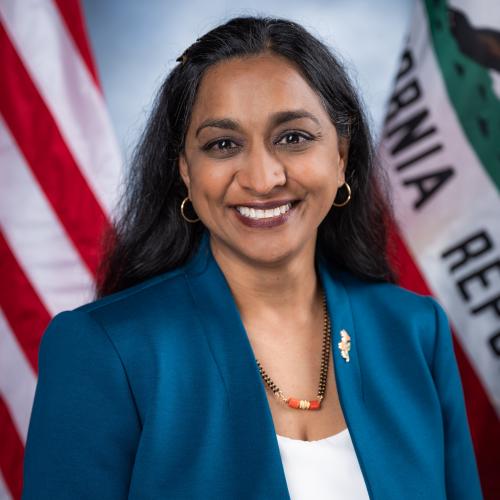
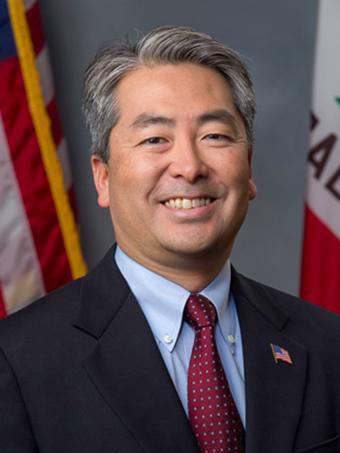
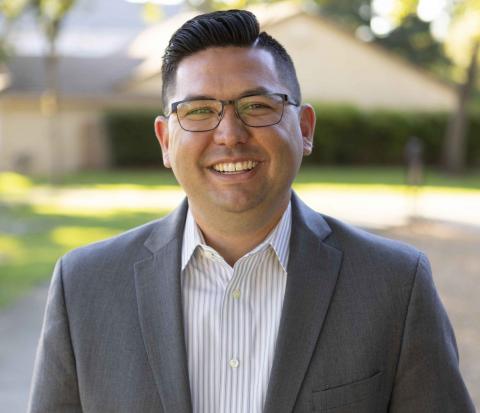
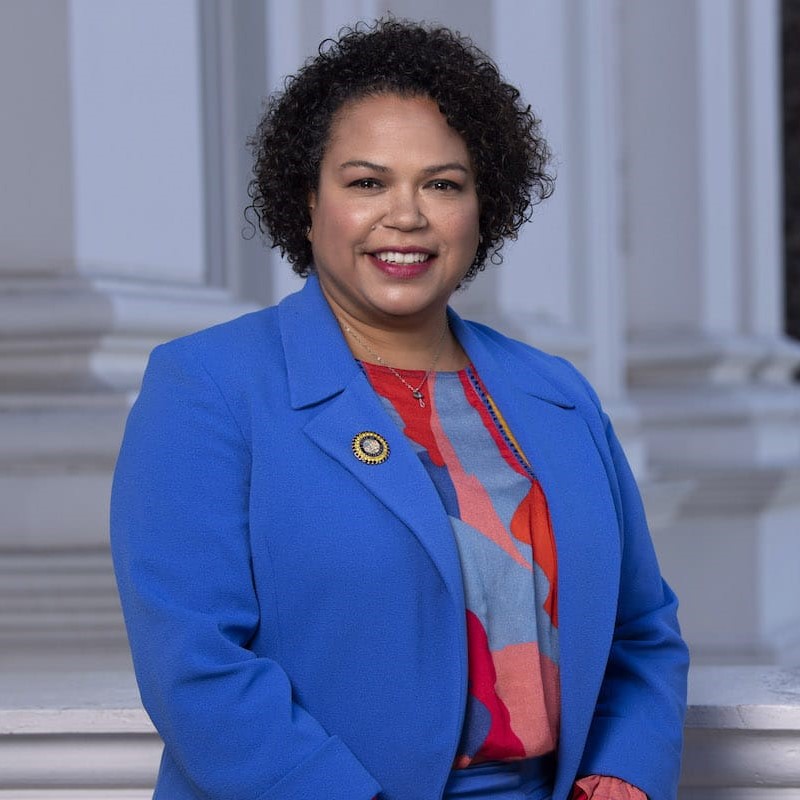
1 primary · 8 co-sponsors
Sponsors





Ask Maddy
·
AI policy assistant
Ask Maddy about AB 2555
Scope: CA
Hi! I can help you understand AB 2555. What would you like to know?
Try one of these
i
Maddy answers using official bill text and legislative records. Always verify before sharing.
Sources cited inline