

Existing law establishes the Medi-Cal program, which is administered by the State Department of Health Care Services and under which qualified low-income individuals receive health care services. The Medi-Cal program is in part governed by, and funded pursuant to, federal Medicaid program provisions. Existing law sets forth a schedule of benefits covered under the Medi-Cal program, including acupuncture, but only to the extent that federal matching funds are provided for acupuncture. Under this bill, acupuncture would instead be a covered Medi-Cal benefit subject to utilization controls and the availability of federal financial participation. The bill would, if federal financial participation is not available for coverage of acupuncture services, make acupuncture a covered benefit subject to an appropriation and utilization controls. This bill would incorporate additional changes to Section 14132 of the Welfare and Institutions Code proposed by AB 1949 and AB 350 to be operative only if this bill and either or both AB 1949 and AB 350 are enacted and this bill is enacted last.
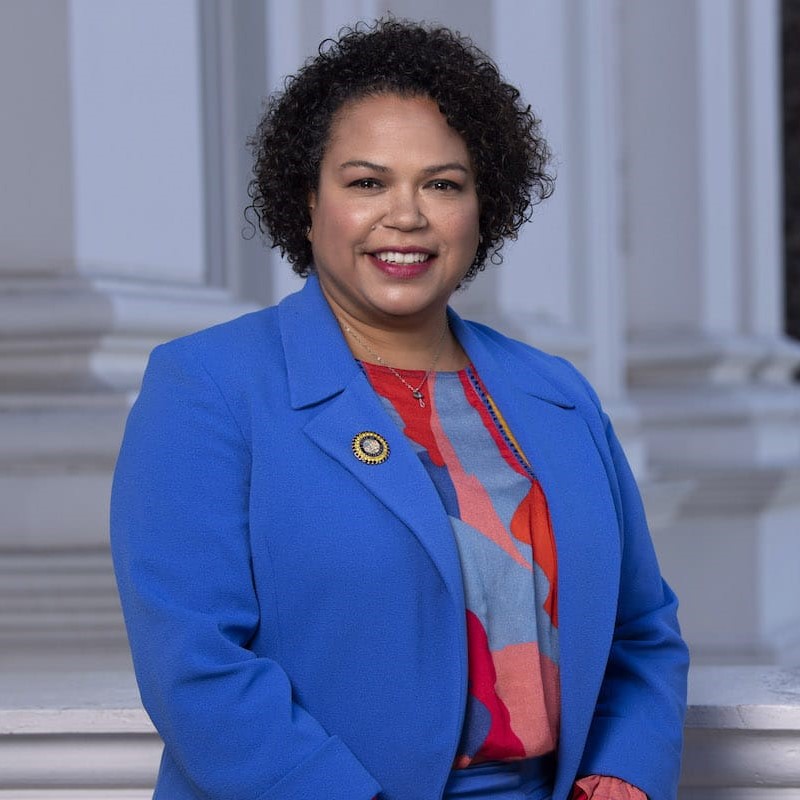
Rep. Mia Bonta
Sponsored bills
Existing law, the Licensed Midwifery Practice Act of 1993, provides for the licensure of midwives by the Medical Board of California. Existing law requires specified boards, including the Medical Board of California, to request certain workforce data from their licensees, including midwives, for future workforce planning at least biennially or at the time of electronic license renewal, as applicable. Existing law establishes the Department of Health Care Access and Information, and requires the board to provide the individual licensee and registrant data it collects to the department, as specified. This bill would additionally require the board to request certain information from a licensed midwife related to their availability to serve as a clinical preceptor for student midwives enrolled in a midwifery education program, as specified. The bill would require the board to quarterly provide that information to the department for the purpose of statewide midwifery workforce planning, analysis, and public reporting. The bill would require the department to submit a report to the Legislature, on or before June 30, 2029, detailing the department's findings based on that information. The bill would require the board and department to maintain the confidentiality of information collected or provided, as specified. The bill would make these provisions inoperative on June 30, 2029, and would repeal them as of January 1, 2030. Existing constitutional provisions require that a statute that limits the right of access to the meetings of public bodies or the writings of public officials and agencies be adopted with findings demonstrating the interest protected by the limitation and the need for protecting that interest. This bill would make legislative findings to that effect. This bill would incorporate additional changes to Section 502 of the Business and Professions Code proposed by AB 1811 to be operative only if this bill and AB 1811 are enacted and this bill is enacted last.
Existing law creates the California Health Benefit Exchange (Exchange) , also known as Covered California, to facilitate the enrollment of qualified individuals and qualified small employers in qualified health plans as required under the federal Patient Protection and Affordable Care Act. Existing law requires the Exchange to enroll an individual in the lowest cost silver plan or another plan, as specified, upon receiving the individual's electronic account from an insurance affordability program. Existing law requires enrollment to occur before coverage through the insurance affordability program is terminated and prohibits the premium due date from being sooner than the last day of the first month of enrollment. This bill would, commencing July 1, 2027, additionally authorize the Exchange to enroll an individual in the plan in which other members of the individual's household are enrolled, as specified, or the lowest cost plan available to an Indian who is eligible for specified reduced cost sharing, as determined by the Exchange, and would require the Exchange to enroll an individual in any of the plans described above upon receipt of a complete application for an insurance affordability program submitted through the Statewide Automated Welfare System. The bill would require the Exchange to enroll the individual either before coverage through the insurance affordability program is terminated as described above or upon the receipt of a complete application for an insurance affordability program through the Statewide Automated Welfare System as described above. Existing law requires the Exchange to provide an individual who is enrolled in a plan described above with a notice that includes specified information, including a statement that services received during the first month of enrollment will only be covered by the plan if the premium is paid by the due date. This bill would require the Exchange to provide the notice described above prior to the individual's effective date of coverage, and to provide, instead of the statement described above, instructions on how to effectuate coverage in the selected plan, including by paying the premium on or before the due date, or, if there is no premium due, instructions on how to opt into the selected plan. Existing law, the Knox-Keene Health Care Service Plan Act of 1975, provides for the licensure and regulation of health care service plans by the Department of Managed Health Care, and makes a willful violation of the act a crime. Existing law provides for the regulation of health insurers by the Department of Insurance. Existing law requires a health care service plan or health insurer to provide an annual enrollment period for individual health benefit plans offered through the Exchange from November 1 of the preceding calendar year to January 31 of the benefit year, inclusive. Existing law specifies that the effective date of coverage for individual health benefit plans offered outside and through the Exchange be no later than January 1 of the benefit year for plan selection made from November 1 to December 31 of the preceding calendar year, inclusive, and be no later than February 1 of the benefit year for plan selection made from January 1 to January 31 of the benefit year, inclusive. This bill would require a health care service plan or health insurer to provide the annual enrollment period and effective dates of coverage described above, except to the extent that those provisions are inconsistent with federal law, as specified. If inconsistent, the bill would require the plan or insurer to provide the annual enrollment period and effective dates of coverage required by federal law. Because a willful violation of these provisions by a health care service plan would be a crime, the bill would impose a state-mandated local program. The California Constitution requires the state to reimburse local agencies and school districts for certain costs mandated by the state. Statutory provisions establish procedures for making that reimbursement. This bill would provide that no reimbursement is required by this act for a specified reason.
Existing law establishes the Medi-Cal program, which is administered by the State Department of Health Care Services and under which qualified low-income individuals receive health care services. The Medi-Cal program is in part governed by, and funded pursuant to, federal Medicaid program provisions. Under existing law, home- and community-based services (HCBS) approved by the United States Department of Health and Human Services are covered for eligible individuals to the extent that federal financial participation is available for those services under the state plan or waivers granted in accordance with certain federal provisions. Existing law authorizes the Director of Health Care Services to seek waivers for any or all approvable HCBS. Existing law sets forth provisions for the implementation of the Nursing Facility/Acute Hospital Transition and Diversion Waiver, which is the predecessor of the Home and Community-Based Alternatives (HCBA) Waiver, for purposes of providing care management services to individuals who are at risk of nursing facility or institutional placement, subject to federal cost neutrality. Existing law authorizes the director to propose that the waiver provide for achievement of annual cost neutrality in the aggregate to allow enrollment and authorization of waiver services based on medical necessity, and to require care management contractors to enroll at least 60% of all total annual enrollments from certain health care settings or populations. Existing law additionally sets forth provisions authorizing the director to expand the number of waiver slots up to 5,000 additional slots. This bill would recast the above-described waiver provisions to refer to the HCBA Waiver. The bill would authorize the director, beginning January 1, 2027, to semiannually evaluate the populations receiving the priority enrollment described above, and to designate additional populations to receive priority enrollment based on this evaluation, subject to applicable cost-neutrality requirements. The bill would delete the provision relating to the 5,000 slots. The bill would instead require the department, beginning in 2027, and for the HCBA Waiver period, to increase the total number of waiver slots by 5,000, in addition to any planned expansion of waiver slots federally approved as of January 1, 2026, as specified, consistent with the above-described requirements.
Existing law establishes the California Health and Human Services Agency, headed by the Secretary of California Health and Human Services. Existing law further establishes, within the agency, a number of departments and other entities, including the State Department of Social Services. Under existing law, these departments oversee the provision of various services to children and a number of programs serving children including, among others, the provision of family preservation services. This bill would establish, within the State Department of Social Services, the California Child Poverty Reduction Advisory Council. The bill would require the State Department of Social Services to staff and administer the council. The bill would require the council to be cochaired by the Secretary of the California Health and Human Services Agency and the Director of Social Services, or their designees, and would specify the membership of the council, which would include 19 members, as specified. The bill would establish the duties of the council, including, among other things, the duty to determine considerations to evaluate whether a policy proposal, budget provisions, or pending legislation increases or decreases child poverty. The bill would also require the council to submit various reports to the Legislature, including, among others, a progress report by January 1, 2030. This bill would make these provisions inoperative on July 1, 2030, and would repeal them as of January 1, 2031.
Existing law creates, in the State Department of Education, the American Indian Education Unit to provide technical support to, and proper administrative oversight of, American Indian education programs established by the state in order to ensure that American Indian pupils attending California public schools are able to meet specified challenging academic standards. Existing law establishes the California Longitudinal Pupil Achievement Data System (CALPADS) , which is maintained by the State Department of Education and consists of pupil data from elementary and secondary schools, as specified, relating to demographic, program participation, enrollment, and statewide assessments, among other things. Existing law requires the system to be used to accomplish specified goals, including to provide school districts and the department access to data, including demographic data, necessary to comply with federal reporting requirements. This bill would require the department to, on or before July 1, 2028, and each July 1 thereafter, post, on the department's internet website, statewide aggregate educational outcome data for the prior school year for pupils who identify as American Indian or Alaska Native, as specified.
Existing law imposes taxes upon income and real property, and taxes upon certain transactions and excise taxes. The Fee Collection Procedures Law provides procedures for the collection of certain fees and surcharges and is administered by the California Department of Tax and Fee Administration (CDTFA) . Under existing law, a violation of the Fee Collection Procedures Law is a crime. This bill would, beginning July 1, 2028, establish the Private Detention Facility Tax Law, which would impose an annual tax on each private detention facility operator, as defined, equal to 25% of the operator's gross income, as defined, for the prior fiscal year, as defined. The bill would establish the Due Process for All Fund in the State Treasury, except as provided, and would require all revenues collected, less refunds and reimbursement to the CDTFA, be deposited into the fund. In the event that Assembly Bill 2465 is enacted, the bill would instead require all revenues be deposited into the Due Process for All Fund as established by that bill. The bill would direct moneys in the fund, upon appropriation by the Legislature, be used for immigration-related services. The bill would require the CDTFA to administer and collect the tax pursuant to the Fee Collection Procedures Law. By expanding the application of the crimes associated with the Fee Collection Procedures Law, the bill would impose a state-mandated local program. This bill would include a change in state statute that would result in a taxpayer paying a higher tax within the meaning of Section 3 of Article XIIIA of the California Constitution, and thus would require for passage the approval of 23 of the membership of each house of the Legislature. The California Constitution requires the state to reimburse local agencies and school districts for certain costs mandated by the state. Statutory provisions establish procedures for making that reimbursement. This bill would provide that no reimbursement is required by this act for a specified reason. This bill would take effect immediately as a tax levy.
The California Integrated Waste Management Act of 1989, which is administered by the Department of Resources Recycling and Recovery, establishes an integrated waste management program. The act requires the department to initiate a program for the cleanup of solid waste disposal sites and for cleanup of solid waste at codisposal sites where no responsible party is available to pay for timely remediation, and where cleanup is needed to protect public health and safety or the environment. This bill would authorize the department, upon appropriation by the Legislature, to develop regulations and expend funds to remove and dispose of recreational vehicles, as defined, to develop enforcement strategies, and to develop local enforcement teams and illegal dumping enforcement officers, as specified.
Existing law, the Knox-Keene Health Care Service Plan Act of 1975, provides for the licensure and regulation of health care service plans by the Department of Managed Health Care and makes a willful violation of the act a crime. Existing law also provides for the regulation of health insurers by the Department of Insurance. Existing law requires an individual or small group health care service plan contract or health insurance policy to include, at a minimum, coverage for essential health benefits, as specified. Commencing January 1, 2027, if the United States Department of Health and Human Services approves a new essential health benefits benchmark plan for the state, existing law requires essential health benefits to include an annual hearing exam and one hearing aid per ear every three years. This bill, the Let California Kids Hear Act, would require a large group health care service plan contract or health insurance policy issued, amended, or renewed on or after January 1, 2028, to include coverage for hearing aids, as defined, and related services for enrollees and insureds under 21 years of age, if medically necessary. The bill would authorize a large group health care service plan contract or health insurance policy to limit the dollar coverage for each individual hearing aid device to $3,000, as specified. Because a willful violation of these requirements by a health care service plan would be a crime, the bill would impose a state-mandated local program. The California Constitution requires the state to reimburse local agencies and school districts for certain costs mandated by the state. Statutory provisions establish procedures for making that reimbursement. This bill would provide that no reimbursement is required by this act for a specified reason.
The California Environmental Quality Act (CEQA) requires a lead agency, as defined, to prepare, or cause to be prepared, and certify the completion of, an environmental impact report (EIR) on a project that it proposes to carry out or approve that may have a significant effect on the environment or to adopt a negative declaration if it finds that the project will not have that effect. CEQA also requires a lead agency to prepare a mitigated negative declaration for a project that may have a significant effect on the environment if revisions in the project would avoid or mitigate that effect and there is no substantial evidence that the project, as revised, would have a significant effect on the environment. CEQA provides that when an EIR has been prepared for a project, no subsequent or supplemental EIR shall be required by a lead agency or responsible agency, unless specified events occur. This bill would require a lead agency, before issuing the initial discretionary approval for a large-volume bulk coal facility, defined as a facility with a design capacity exceeding 5,000,000 short tons per year of coal handling, storage, or export to prepare or cause to be prepared an EIR. The bill would prohibit a lead agency, air pollution control district, or air quality management district from relying on an existing EIR to issue a discretionary approval for, or to, a large-volume bulk coal facility, and would require a subsequent or new EIR to be prepared, if any of a list of specified conditions are met, including that there is an increase in design capacity of a project that did not previously meet the definition of a large-volume bulk coal facility, as provided; there is a change in the type of coal handled, stored, or exported, or the EIR did not explicitly address the type of coal handled, stored, or exported; or there is a significant increase in the quantity of coal handled, stored, or exported, or the EIR did not explicitly disclose the quantity of coal to be handled, stored, or exported. The bill would require an EIR or subsequent EIR prepared pursuant to these provisions to, among other things, evaluate the large-volume bulk coal facility's potential to generate PM2.5 and PM10 fugitive dust emissions during construction and operations, and to require mitigation measures, as provided. The bill would apply these provisions to a discretionary approval that is pending or made after June 4, 2026, as specified. Because the bill would create new duties for a lead agency, the bill would impose a state-mandated local program. The California Constitution requires the state to reimburse local agencies and school districts for certain costs mandated by the state. Statutory provisions establish procedures for making that reimbursement. This bill would provide that no reimbursement is required by this act for a specified reason.