

Existing law provides that every executive or ministerial officer, employee, or appointee of the State of California, or any county or city therein, or any political subdivision thereof, who knowingly asks, receives, or agrees to receive any emolument, gratuity, or reward, or any promise thereof excepting such as may be authorized by law for doing an official act, is guilty of a misdemeanor. Existing law exempts from that offense certain employment by a peace officer while off duty, as specified. Existing law also provides that a peace officer shall not be prohibited from engaging in other employment while off duty, as specified. This bill would, notwithstanding those provisions, prohibit certain peace officers from engaging in any form of secondary employment, including contract based or as an individual contractor, that involves engaging in arresting, detaining, transporting, or deporting individuals pursuant to federal or out-of-state immigration laws. The bill would provide that failure to comply with this provision may constitute, for certain purposes, an act of serious misconduct and that it is grounds for decertification as a peace officer. The bill would require certain peace officers to report to their employing law enforcement agency any conditional offer of secondary employment relating to immigration enforcement. The bill would require the law enforcement agency to maintain specified records related to secondary employment. By imposing additional duties on local law enforcement agencies, this bill would impose a state-mandated local program. The bill would also explicitly state that these records related to secondary employment of certain peace officers are public records for the purposes of the California Public Records Act. The California Constitution requires the state to reimburse local agencies and school districts for certain costs mandated by the state. Statutory provisions establish procedures for making that reimbursement. This bill would provide that, if the Commission on State Mandates determines that the bill contains costs mandated by the state, reimbursement for those costs shall be made pursuant to the statutory provisions noted above.
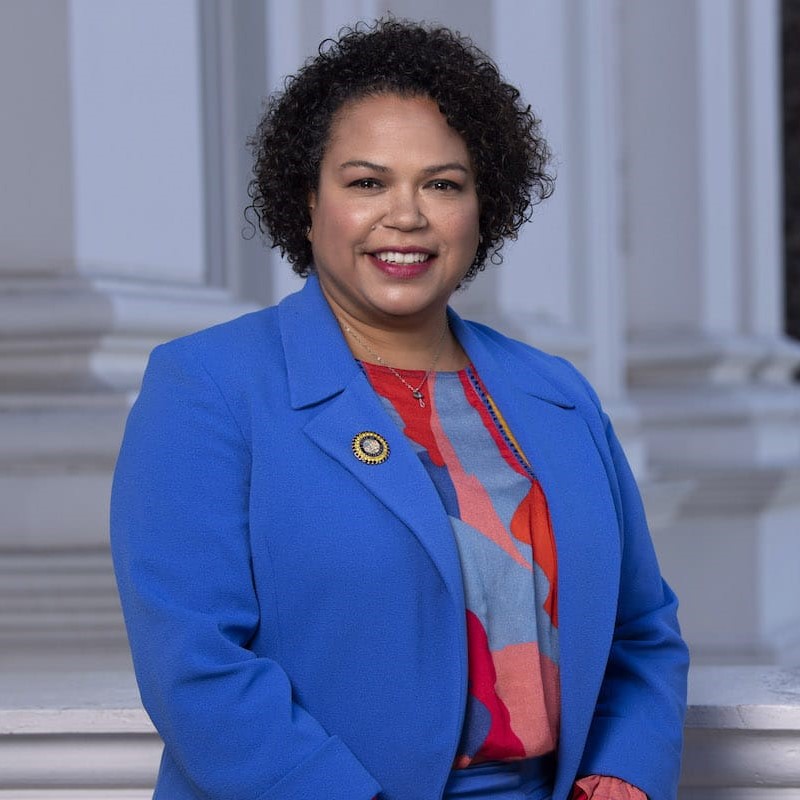
Rep. Mia Bonta
Sponsored bills
Existing federal law, the National Suicide Hotline Designation Act of 2020, designates the 3-digit telephone number "988" as the universal number within the United States for the purpose of the national suicide prevention and mental health crisis hotline system operating through the 988 Suicide and Crisis Lifeline. Existing law, the Miles Hall Lifeline and Suicide Prevention Act, requires, among other things, the Office of Emergency Services (OES) to verify that technology that allows for transfers between 988 centers, as well as between 988 centers and 911 public safety answering points, is available to 988 centers and 911 public safety answering points throughout the state, to appoint a 988 system director, and to verify interoperability between and across 911 and 988. Existing law establishes the 988 State Suicide and Behavioral Health Crisis Services Fund and provides that 988 surcharge revenue in the fund is available, upon appropriation by the Legislature, for purposes of the act. This bill would require the California Health and Human Services Agency (agency) to annually determine whether an adequate specialized LGBTQ+ suicide prevention hotline is activated by the federal government under 988. When making this determination, the bill would require the agency to consider specified factors, including, among other things, any factor the agency considers relevant to evaluating the adequacy of press 3 operations. The bill would authorize the agency to, no later than 6 months after its determination, request the federal Substance Abuse and Mental Health Services Administration (SAMHSA) to allow the state to implement the press 3 function at the state level for calls originating in the State of California, which would allow callers to dial "988" and press "3" to be automatically routed to a specialized 988 center. The bill would require OES and the agency to, no later than 12 months following the approval by SAMHSA, ensure that press 3 function technologies are available. This bill would require, no later than 12 months following approval by SAMHSA, the agency to identify and contract with a qualified entity or entities that specialize in LGBTQ+ suicide prevention services. The bill would require the agency to determine the eligibility criteria, establish an application process, and administer funds to the qualified entity, as specified. The bill would require a qualified entity to comply with various requirements, including having a primary objective of reducing suicide rates or addressing mental health crises. The bill would make its implementation subject to an appropriation by the Legislature, as specified. This bill would declare that it is to take effect immediately as an urgency statute.
Existing law establishes the Youth Bill of Rights for all youth confined in a juvenile facility, which includes the right to maintain frequent and continuing contact with parents, guardians, siblings, children, and extended family members, through in-person visits, among others. Existing law regulates the provision of these rights. This bill, the Hug Act, would require that all youth confined in a juvenile facility have the right to engage in certain types of consensual physical contact with visitors during in-person visits, as specified. The bill would require that limitations to this physical contact only be implemented when a significant safety and security concern is present, as described, and would require that all significant safety and security concerns and subsequent contact limitations be documented, as described. The bill would require all juvenile facilities to establish regulations and procedures consistent with these provisions. The bill would make related findings and declarations. To the extent that this bill would impose a higher level of service on local facilities, it would impose a state-mandated local program. The California Constitution requires the state to reimburse local agencies and school districts for certain costs mandated by the state. Statutory provisions establish procedures for making that reimbursement. This bill would provide that, if the Commission on State Mandates determines that the bill contains costs mandated by the state, reimbursement for those costs shall be made pursuant to the statutory provisions noted above.
Existing law requires a health facility, clinic, physician's office, or office of a group practice that uses generative artificial intelligence to generate written or verbal patient communications pertaining to patient clinical information, as defined, to ensure that those communications include both (1) a disclaimer that indicates to the patient that a communication was generated by generative artificial intelligence, as specified, and (2) clear instructions describing how a patient may contact a human health care provider, employee, or other appropriate person. Existing law exempts from this requirement a communication read and reviewed by a human licensed or certified health care provider. This bill would require developers and deployers, as defined, of an artificial intelligence system that produces a prediction, classification, recommendation, evaluation, or analysis that aids decisionmaking related to diagnosis or treatment, known as a clinical decision support system, to make reasonable efforts to identify clinical decision support systems developed for use by deployers that are known or have a reasonably foreseeable risk for biased impacts resulting from deployment of the system in health programs or activities. The bill would require developers to make a statement describing the intended uses and known or reasonably foreseeable risks associated with the use of the clinical decision support system and certain documentation available to deployers, as specified. The bill would require developers to make reasonable efforts to mitigate known or reasonably foreseeable risk for biased impacts resulting from use of the clinical decision support system in health programs or activities. The bill would require deployers to regularly monitor clinical decision support systems and take reasonable and proportionate steps to mitigate known or reasonably foreseeable risk of biased impacts. The bill would specify that a person, partnership, state or local governmental agency, or corporation may be both a developer and a deployer.
Existing law sets forth provisions, under the California Constitution, regarding the fundamental right to choose to have an abortion. Existing law, the Reproductive Privacy Act, prohibits the state from denying or interfering with a pregnant person's right to choose or obtain an abortion prior to viability of the fetus, or when the abortion is necessary to protect the life or health of the pregnant person. This bill, the Access to Safe Abortion Care Act, would make legislative findings about medication abortion, with a focus on use of the drugs mifepristone and misoprostol. Under the bill, the Legislature would reaffirm that it has been, and would continue to be, lawful to cause the delivery of, or mail, ship, take, receive, or otherwise transport, any drug, medicine, or instrument that can be designed or adapted to produce an abortion that is lawful in the State of California. The bill would set forth provisions regarding the lack of civil or criminal liability, or professional disciplinary action, for accessing or administering brand name or generic mifepristone or any drug used for medication abortion that is lawful under the laws of the state, on or after January 1, 2020, with this provision applied retroactively, as specified. The bill would make its provisions severable.
(1) The California Integrated Waste Management Act of 1989, administered by the Department of Resources Recycling and Recovery (CalRecycle) , generally regulates the disposal, management, and recycling of solid waste, as defined. The act authorizes CalRecycle to certify a local enforcement agency and requires CalRecycle and certified local enforcement agencies to perform specified functions with regard to the regulation of solid waste management, including issuing and enforcing solid waste facility permits. The act prohibits a person from operating a solid waste facility without a solid waste facilities permit, as provided. The California Global Warming Solutions Act of 2006 charges the State Air Resources Board with monitoring and regulating sources of emissions of greenhouse gases that cause global warming in order to reduce emission of greenhouse gases. The act requires the state board to adopt rules and regulations to achieve the maximum technologically feasible and cost-effective greenhouse gas emissions reductions, as provided. This bill would require the owner or operator of a solid waste landfill, as defined, to, among other things, notify the Department of Resources Recycling and Recovery if a subsurface elevated temperature event occurs. The bill would define "subsurface elevated temperature event" to mean an event where subsurface gas or waste temperatures at a solid waste landfill persistently exceed 131 degrees Fahrenheit over a substantial area and meets other performance criteria, as determined by the department. The bill would authorize the department to require the owner or operator of a solid waste landfill experiencing a subsurface elevated temperature event to create a corrective action plan that includes, but is not limited to, a cost assessment for fully implementing the corrective action plan. The bill would authorize the department or a local enforcement agency to impose an administrative civil penalty of $100,000 per day for failing to comply with these requirements, as provided. The bill would require all penalties collected to be deposited into the Landfill Subsurface Fire Mitigation Community Fund, which the bill would create in the State Treasury. The bill would continuously appropriate moneys in the fund to the California Alternative Energy and Advanced Transportation Financing Authority, to be paid to counties in which a subsurface elevated temperature event occurred to mitigate harm to a person or community affected by a subsurface elevated temperature event and to be paid to the authority for its costs of implementation. The bill would require the authority to develop guidelines for dispersing these funds, as specified. The bill would authorize the department to become the enforcement agency for a solid waste landfill experiencing a subsurface elevated temperature event, as specified. This bill would authorize the Secretary for Environmental Protection to select and coordinate a multiagency coordination group to investigate and provide recommendations on how to achieve resolution of a subsurface elevated temperature event, as specified. The bill would require a local health department to initiate community health needs assessments to identify and collect information regarding the effects of a subsurface elevated temperature event on an affected community and to share the findings, as provided. By requiring a local health department and a local air pollution control district to perform additional duties, the bill would impose a state-mandated local program. The bill would, upon request by a multiagency coordination group, require the owner or operator of a solid waste landfill that experiences a subsurface elevated temperature event to implement an air monitoring and sampling plan, as specified. The bill would require the owner and operator of a solid waste landfill that experiences a subsurface elevated temperature event to reimburse the members of a multiagency coordination group and the local health department for all reasonable and necessary expenses incurred, as specified. The bill would authorize the department to adopt regulations to implement and enforce them as emergency regulations, as specified. (2) This bill would declare its provisions to be severable. (3) The California Constitution requires the state to reimburse local agencies and school districts for certain costs mandated by the state. Statutory provisions establish procedures for making that reimbursement. This bill would provide that no reimbursement is required by this act for a specified reason.
Existing law creates within the Department of Corrections and Rehabilitation, under the Undersecretary for Operations, the Division of Adult Institutions, among others, and requires each division to be headed by a director, who is appointed by the Governor, as specified. Existing law also requires the Governor to appoint 4 subordinate officers to the division, as specified. Existing law requires each subordinate officer appointed to oversee an identified category of adult institutions, one of which oversees female offender facilities. This bill would instead require the Governor to appoint 3 subordinate officers, as specified, who would oversee an identified category of male adult institutions, and one subordinate officer, as specified, who would oversee female adult institutions. The bill would create within the department, and under the Undersecretary for Operations, the Division of Female Programs and Services. The bill would require the director of this division to be responsible solely for female adult institutions and community facilities housing female offenders. The bill would require the director to report to the undersecretary and to have a minimum of 5 years of experience serving a female correctional population in a custody setting. The bill would also require this new division to manage and provide oversight of adult female programs, including prisons, conservation camps, and parole and community programs and to develop gender-responsive, trauma-informed, culturally sensitive approaches to program and policy development. Existing law requires the department to create a Female Offender Reform Master Plan and present it to the Legislature by a specified date. Existing law requires the department to, among other things, create policies and operational practices that are designed to ensure a safe and productive institutional environment for female offenders. This bill would require the department to provide a report to the Legislature on the implementation of the plan, and update statistics contained in the plan, by March 1, 2027, and every 3 years thereafter. The bill would require the department to maintain the plan, including subsequent updates and reports, in consultation with the commission and others, as specified. The bill would also require the department to post the plan, any reports, and any updates to the plan to the department's internet website. This bill would require the department to establish the Gender Responsive Strategies Commission (GRSC) to develop active partnerships and to support successful implementation of gender responsive practices and rehabilitation programs for incarcerated individuals. The bill would require the GRSC to be composed of 19 representatives, as specified, and would require the department, by June 1, 2027, and annually thereafter, to provide a written report to the Legislature on appointments to the GRSC and the department's response and progress toward implementing the GRSC's recommendations. Existing law also requires the department to contract with nationally recognized gender-responsive experts in prison operational practices, staffing, classification, substance abuse, trauma treatment services, mental health services, transitional services, and community corrections to, among other things, conduct a staffing analysis of all current job classifications assigned to each prison that houses only females, as specified, and develop programs and training for department staff in correctional facilities. This bill would require the department, through this contract, no later than March 1, 2027, and every 3 years thereafter, to prepare and submit to the Legislature an updated staffing analysis and would require a comprehensive review of the office's policies and practices and other aspects of women-centered corrections developed to enhance safety and rehabilitative efforts, as specified. The bill would also require the training program to include training at the academy and, for those working in a female prison, 40 hours of initial training with a curriculum specifically focused on working with the population within female institutions and an 8-hour annual training thereafter. Existing law requires the secretary of the department to expand the existing prison ombudsperson program to ensure the comprehensive deployment of ombudspersons throughout the state prison system with specific focus on the maximum security institutions. This bill would instead require the Undersecretary for Operations to perform this duty and would require the undersecretary to appoint an ombudsperson solely assigned to adult female institutions.
Existing law authorizes the Board of Governors of the California Community Colleges, in consultation with the California State University and the University of California, to authorize the establishment of community college district baccalaureate degree programs, as provided. Existing law requires a governing board of a community college district that is seeking authorization to offer a baccalaureate degree program to submit specified information for review by the Chancellor of the California Community Colleges and approval by the Board of Governors of the California Community Colleges. Beginning January 1, 2028, this bill would additionally require, among other things, a community college district to submit information relating to a determination of unmet current or future projected workforce need and consultation with the California State University and the University of California regarding collaborative approaches to meeting regional workforce needs. The bill would require this information to be submitted for review by the Chancellor of the California Community Colleges and the Chancellor of the California State University, and approval by the Board of Governors of the California Community Colleges. Existing law requires the Chancellor of Community Colleges to ensure, for the application and review process for community college districts to participate in the baccalaureate degree program, that only 15 baccalaureate degree programs are approved during each application period and that the total number of baccalaureate degree programs offered by a community college district, at any time, does not exceed 25% of the total number of associate degree programs offered, among other things. This bill would instead prohibit a community college district from submitting more than 3 applications during an academic year and would require a community college district offering a baccalaureate degree program to not displace enrollment opportunities for students seeking associate degrees, associate degrees for transfer, certificates, or noncredit instruction, and maintain access to lower division instructional offerings. Existing law requires the Chancellor of the California Community Colleges to consult with and seek feedback from the Chancellor of the California State University, the President of the University of California, and the President of the Association of Independent California Colleges and Universities on proposed baccalaureate degree programs, as specified. Existing law authorizes the California State University and the University of California to assess whether proposed baccalaureate degree programs are duplicative of existing baccalaureate programs offered by state universities. If the California State University or the University of California believes there is program duplication, existing law requires them to submit written objections with supporting evidence to the Chancellor of the California Community Colleges within 30 working days of receipt of the proposal, and requires the Chancellor of the California Community Colleges, within 30 working days after receiving the written objections, to convene with the applicant and the segment or segments that raised an objection to collaborate and establish a written agreement before the program is approved. This bill would instead require written objections with supporting evidence to be submitted to the Chancellor of the California Community Colleges within 45 working days of receipt of the proposal, except as provided, and would require the Chancellor of the California Community Colleges to provide the application to the Secretary of Labor and Workforce Development within 30 working days, as specified. Upon receipt of a written objection filed by the California State University, the bill would instead require the Secretary of Labor and Workforce Development to determine if the proposed baccalaureate degree program addresses an unmet current or projected future workforce need and if the capacity of the substantially similar academic program of the California State University is sufficient to meet the regional workforce needs, as specified. This bill would require the Chancellor of the California Community Colleges to report annually to the Legislature, no later than March 1, on the status of all baccalaureate degree programs approved under these provisions, as provided. This bill would incorporate additional changes to Section 78042 of the Education Code proposed by SB 960 to be operative only if this bill and SB 960 are enacted and this bill is enacted last. This bill would make the operation of its provisions contingent upon the enactment of SB 960 of the 2025–26 Regular Session.
Existing law allows an individual taxpayer to contribute amounts in excess of their personal income tax liability for the support of specified funds and accounts, including, among others, to the Native California Wildlife Rehabilitation Voluntary Tax Contribution Fund. This bill would allow, for taxable years beginning on or after January 1, 2026, and before January 1, 2033, an individual to designate on their tax return that a specified amount in excess of their tax liability be transferred to the continuously appropriated Black Cultural District Voluntary Tax Contribution Fund (fund) , which would be created by this bill. The bill would allocate moneys in the fund to, among other entities, the Arts Council for allocation for the construction and maintenance of the Black Cultural District designated in south City of Los Angeles. The bill would require the Franchise Tax Board to revise the tax return form to include a space for the designation of contributions to the fund. By establishing a new continuously appropriated fund, the bill would make an appropriation. This bill would provide that these provisions would remain in effect only until January 1, 2034, but would further provide for an earlier repeal if the Franchise Tax Board determines that the amount of contributions estimated to be received by September 1, 2028, and later calendar years will not at least equal the minimum contribution amount, in which case these provisions would be repealed on January 1 of the following year.
Existing law, including, but not limited to, property tax law, the Sales and Use Tax Law, the Personal Income Tax Law, the Corporation Tax Law, the Motor Vehicle Fuel Tax Law, the law governing the taxation of insurers, the Use Fuel Tax Law, and the Diesel Fuel Tax Law, provides for tax expenditures, including exemptions, deductions, exclusions, and credits against the taxes imposed by those laws. The bill would require the Legislative Analyst's Office (LAO) to comprehensively assess the major tax expenditures, as defined, of the state, write and publish a report on each major tax expenditure, and make a recommendation to the Legislature based on each report. In this regard, the bill would require LAO, as part of the comprehensive assessments, to identify any savings that the Legislature can realize by reducing or limiting the major tax expenditures, and require them to consider certain criteria when finalizing each report, including the extent to which the major tax expenditure is a cost-effective use of resources compared to other options to address the same purpose, intent, or goal. The bill would require LAO to complete and publish on its internet website its first report on a major tax expenditure by January 1, 2028, and to complete and publish on its internet website each subsequent report on a major tax expenditure annually in a sequence determined by the office thereafter until the fifth and final report is submitted on January 1, 2032. The bill would require the Senate Committee on Revenue and Taxation and the Assembly Committee on Revenue and Taxation, to hold a joint public hearing on these reports by each August 15 of the second year of the legislative session, as specified. To the extent that LAO needs access to taxpayer data and information, the bill would require the Franchise Tax Board, the California Department of Tax and Fee Administration, and the Employment Development Department to ensure that relevant anonymized taxpayer data is made available and ensure that appropriate levels of data security and privacy protections are in place for transferred or sensitive data. The bill would repeal its provisions on January 1, 2033. The bill would make findings and declarations relating to these provisions.