

(1) Existing law establishes various grant and loan programs for research, including, among others, the California Institute for Regenerative Medicine, California Firefighter Cancer Prevention and Research Program, and the Public Interest Research, Development, and Demonstration Program. This bill would establish the California Foundation for Science and Health Research within the Government Operations Agency. The bill would require the Secretary of Government Operations to oversee the process of appointing the director of the foundation, and would authorize the Secretary of Government Operations to delegate the task of hiring and determining the salaries, bonuses, and benefits of additional personnel to the director, as specified. The bill would require the director and personnel of the foundation to be responsible for implementing the strategic objectives of the California Foundation for Science and Health Research Council, as described below, administering grants, loans, and contracts awarded by the council, and all other duties as deemed necessary for the operation of the foundation. This bill would create the California Foundation for Science and Health Research and Innovation Acceleration Fund and require the moneys in the fund to be used by the foundation to award grants and make loans to, and enter into contracts with, public or private research companies, universities, academic medical centers, institutes, and organizations for scientific research and development and for certain economic sectors, as specified, in specific areas of research, including, but not limited to, biomedical, behavioral health, and climate research. The bill would also create the California Foundation for Science and Health Research and Innovation Acceleration Benefit Fund, to consist solely of private donations. The bill would make the moneys in the benefit fund available for the same purposes as the California Foundation for Science and Health Research and Innovation Acceleration Fund. This bill would require that, prior to the first grant from the foundation and no later than one year from the date the bill takes effect, the council develop various provisions and requirements to facilitate the foundation's goals of affordability and equitable access. The foundation shall impose various requirements on the grantees, loan recipients, and contractors, as specified, including, among other things, developing strategies to promote equitable access to the subject invention in various specified communities and making the data resulting from the bond-funded research available to the broader scientific community, except in cases involving national security interests. The council shall also establish standards requiring that all grants, awards, and contracts be subject to intellectual property agreements that balance the opportunity for the State of California to benefit from the inventions, technologies, patents, royalties, and licenses that result from research funded by certain public and private grants, as specified. This bill would create the California Foundation for Science and Health Research Council, as specified, which shall be vested with full power, authority, and jurisdiction over the foundation. The bill would require the council to, among other things, develop the strategic objectives and priorities of the foundation and provide the opportunity for public comment on the foundation's priorities, as specified, determine the research projects that will be funded by the California Foundation for Science and Health Research and Innovation Acceleration Fund, develop objectives and opportunities that offer support to early career researchers, and adopt certain regulations and standards, as specified. The bill would also require the council to consider how the foundation's research priorities relate to or support various economic and industry considerations, as specified. The bill would provide that a majority of the members of the council constitutes a quorum for the transaction of any business, for the performance of any duty, or for the exercise of any power of the council, except as otherwise provided. The bill would authorize the council to establish one or more scientific peer review panels consisting of experts in specified fields of research for the purposes of reviewing and prioritizing proposals on the basis of the scientific merit of the proposal, the potential benefit to the health and well-being of the population, natural resources, and environment of the state, and the demonstrated background, training, and expertise of the researchers and investigators to conduct the proposed work. This bill would require all research and development funded by the California Foundation for Science and Health Research and Innovation Acceleration Fund to be conducted under established standards of open scientific exchange, peer review, and public oversight. The bill would require the funds and contracts to be awarded on the basis of the research priorities established for the foundation by the council and the scientific merit of the proposed research, as determined by an open, competitive, scientific peer review process that ensures objectivity, consistency, and high quality. This bill would enact the California Science and Health Research Bond Act, which, if approved by the voters, would authorize the issuance of bonds in the amount of $7,500,000,000, pursuant to the State General Obligation Bond Law, to finance grants and loans to fund research and operate and maintain facilities for research. The bill would provide for the submission of the bond act to the voters at the March 7, 2028, statewide primary election. (2) Existing law establishes prohibitions and penalties with respect to ethical obligations and conflicts of interest for public officials, including a prohibition on engaging in activities that are incompatible with their official duties and a prohibition on being financially interested in a contract made by them in their official capacity or the board of which they are a part. This bill would authorize a council member to participate in a decision to approve or award a grant, loan, or contract for the purpose of research into a disease in which the member or their immediate family member has a personal interest, as specified. The bill would provide that service with specified educational institutions and organizations is not incompatible with a council member's duties. The bill would provide that the prohibition on being financially interested in a contract, as specified, does not apply if the council member recuses themself from a decision to award or approve a grant, loan, or contract that would otherwise be subject to the prohibition. The bill would provide that council members are subject to certain disclosure requirements relating to personal investments and potential conflicts of interest, as specified. (3) Existing law, the Bagley-Keene Open Meeting Act, requires that all meetings of a state body be open and public and all persons be permitted to attend any meeting of a state body, with specified exceptions for authorized closed sessions. This bill would require the Bagley-Keene Open Meeting Act to apply to all meetings of the council and scientific peer review panels, except as specified for when the council or scientific peer review panels meet to consider or discuss specified matters in closed sessions, including matters involving information relating to patients or medical or scientific research subjects, the disclosure of which would constitute an unwarranted invasion of personal privacy. Existing constitutional provisions require that a statute that limits the right of access to the meetings of public bodies or the writings of public officials and agencies be adopted with findings demonstrating the interest protected by the limitation and the need for protecting that interest. This bill would make legislative findings to that effect. (4) This bill would declare that it is to take effect immediately as an urgency statute.
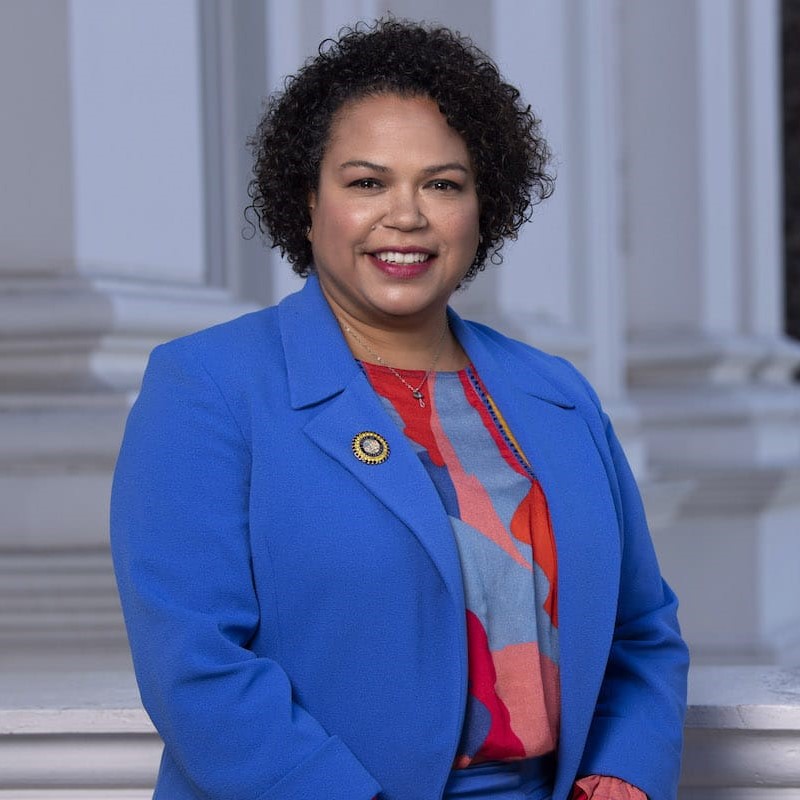
Rep. Mia Bonta
Sponsored bills
Existing law defines a safe-surrender site to mean a location designated by the board of supervisors of a county or by a local fire agency, or a location within a public or private hospital that is designated by that hospital, to be responsible for accepting physical custody of a minor child who is 72 hours old or younger from a parent or individual who has lawful custody of that child and who surrenders the child. Existing law requires personnel on duty at a safe-surrender site to accept physical custody of the minor child, and to notify child protective services or a county agency providing child welfare services as soon as possible, but no later than 48 hours after accepting custody of the child. Under existing law, a parent or other individual with lawful custody of a minor child 72 hours old or younger who voluntarily surrenders physical custody of the child to personnel on duty at a safe-surrender site cannot be prosecuted for child abandonment. This bill, the Keeping Infants from Danger (KID) Act, would expand the scope of these provisions to apply to children who are 30 days of age or younger. By imposing new duties on local officials, the bill would impose a state-mandated local program. This bill would also make a conforming change. The California Constitution requires the state to reimburse local agencies and school districts for certain costs mandated by the state. Statutory provisions establish procedures for making that reimbursement. This bill would provide that, if the Commission on State Mandates determines that the bill contains costs mandated by the state, reimbursement for those costs shall be made pursuant to the statutory provisions noted above.
Existing law makes it a misdemeanor to possess nitrous oxide with the intent of inhaling it for specified purposes, including to cause intoxication. Existing law also makes it a misdemeanor to sell nitrous oxide to any person under 18 years of age. Existing law makes it a misdemeanor to dispense nitrous oxide to a person and knowing that the person will use it for specified prohibited purposes, if that person then causes death or great bodily injury to themselves or another person. Under existing law, the Cigarette and Tobacco Products Licensing Act of 2003, the California Department of Tax and Fee Administration (CDTFA) administers and enforces a statewide program to license manufacturers, importers, distributors, wholesalers, and retailers of cigarettes and tobacco products. Existing law specifically requires a retailer, distributor, or wholesaler, as defined, to hold a license from the CDTFA to engage in the sale of cigarettes or tobacco products. Existing law subjects these licenses to suspension or revocation for violations of existing law. Existing law imposes specified noticing and posting requirements for retailer licenses that are revoked. A violation of these provisions is a misdemeanor. This bill would, except as specifically exempted, prohibit the sale and distribution of a nitrous oxide container that is capable of holding more than 8 grams of nitrous oxide or from which an individual may directly inhale nitrous oxide. The bill would also prohibit the sale and distribution of a nitrous oxide that has, or is marketed as having, the taste or smell of any food. The bill would prohibit knowingly selling or distributing a device that allows an individual to inhale nitrous oxide from the container or hold nitrous oxide for the purposes of inhalation. The bill would punish a violation of these provisions as an infraction, as specified. The bill would also authorize a court to suspend a business license if the business has a prior conviction for violating these prohibitions, and to revoke a license to sell tobacco products if the business has 2 prior convictions for violating these prohibitions. The bill would make any person, distributor, or business found to have violated these prohibitions liable for all reasonable costs incurred by a public agency in the investigation, inspection, seizure, storage, transportation, handling, venting, abatement, disposal, or destruction of nitrous oxide products, nitrous oxide containers, inhalation devices, or related materials involved in the violation, as specified. This bill would prohibit a person that is engaged in the business of selling cigarettes or tobacco products in this state from possessing, storing, owning, or selling nitrous oxide, in violation of the criminal provisions outlined above, at any site where cigarettes and tobacco products are stored or sold. The bill would authorize the CDTFA to seize nitrous oxide products, as prescribed. The bill would subject a violator to civil penalties in amounts depending on the aggregate retail value of the seized nitrous oxide and the number of violations within 5 years of the first violation. The bill would require the deposit of collected civil penalties in the Cigarette and Tobacco Products Compliance Fund. The bill would also subject a violator who commits a 2nd violation to license suspension and who commits a 3rd violation to license revocation, as prescribed. This bill would establish procedures for the CDTFA to follow for a court-ordered revocation. The bill would require the CDTFA to assess a $250 civil penalty for each revoked license and to deposit collected civil penalties into the fund, to be made available to the department, upon appropriation by the Legislature, for purposes of administering the bill. The bill would authorize a licensee to apply for a new license at the previously revoked location 6 months after the date of revocation and would authorize the CDTFA, at its discretion, to issue a new license. The bill would apply these noticing and posting requirements to a retailer subject to a court-ordered revocation pursuant to the bill. The California Constitution provides for the establishment of the State Board of Equalization, which, before July 1, 2017, had primary responsibility for most of the state's duties, powers, and responsibilities regarding the administration of taxes and fees. Existing law, on July 1, 2017, transferred to the CDTFA various duties, powers, and responsibilities of the State Board of Equalization, including administration of the Cigarette and Tobacco Products Licensing Act of 2003, as specified. This bill would change references in the provisions of the Cigarette and Tobacco Products Licensing Act of 2003 amended by this bill from the "State Board of Equalization" to the "California Department of Tax and Fee Administration" to reflect the transfer of the board's duties, powers, and responsibilities to the CDTFA. Because this bill would create new crimes, it would impose a state-mandated local program. The California Constitution requires the state to reimburse local agencies and school districts for certain costs mandated by the state. Statutory provisions establish procedures for making that reimbursement. This bill would provide that no reimbursement is required by this act for a specified reason.
Existing law defines "sexual orientation change efforts" as practices by mental health providers that seek to change an individual's sexual orientation, as specified. Existing law prohibits a mental health provider, as defined, from engaging in sexual orientation change efforts with a patient under 18 years of age, and provides that such efforts attempted by a mental health provider are considered unprofessional conduct and must subject the mental health provider to discipline by that provider's licensing entity. This bill would define "sexual orientation or gender identity change efforts" as any practices of a licensed mental health provider that seek, during the provision of mental health services, to direct a patient toward a predetermined sexual orientation or gender identity, as specified, and would apply the prohibitions described above to such efforts. The bill would exclude specified practices, including age-appropriate interventions to address unlawful conduct or unsafe practices that do not seek to direct the patient toward a particular sexual orientation or gender identity, from this definition.
Existing law generally regulates the business of renting passenger vehicles to the public. The law prohibits a rental company from taking various actions, including requiring the purchase of a damage waiver, optional insurance, or another optional good or service, and using electronic surveillance technology to track a renter in order to impose fines or surcharges relating to the renter's use of a rental vehicle. This bill would require any privately owned vehicle rented by, or furnished to, any federal, state, or local law enforcement agency for the use of detaining, arresting, or transporting persons who have violated, or are suspected of having violated, any law, to display a temporary decal displaying the agency name and logo, as specified. The bill would authorize certain attorneys, including the Attorney General, to pursue a civil action against the entity renting the vehicle from the private owner for failure to comply with these provisions. The bill would require the rental car contract to include a term that compliance with state law is mandatory. The bill would exempt privately owned vehicles rented or otherwise furnished or loaned to a law enforcement agency for specified purposes and rental car contracts entered into prior to January 1, 2027, from these provisions. The bill would make related findings and declarations.
(1) Existing law tolls the periods of limitation to bring specific civil actions for up to 2 years, if during that time that the claimant is imprisoned on a criminal charge, as specified. However, under existing law these tolling provisions do not apply to an action brought against a public entity or public employee, as specified. This bill would, notwithstanding any other law, provide that the period for bringing an action for sexual assault against a public entity or public employee that is alleged to have occurred while the claimant was imprisoned on a criminal charge, or in execution under the sentence of a criminal court, is tolled during the entire period of the claimant's imprisonment or sentence. Under the bill, any claim for sexual assault against a public entity or public employee subject to that provision is exempt from all state and local government claim presentation requirements. (2) Existing law establishes the Office of the Sexual Abuse in Detention Elimination Ombudsperson with the authority to inspect all of the Department of Corrections and Rehabilitation institutions and to interview all inmates and wards. Under existing law, if an investigation confirms that any employee of the department has sexually abused an inmate or ward, that employee is required to be terminated. Existing law prohibits retaliation against an inmate or ward for making an allegation of sexual abuse. Existing law requires the department to keep statistics on the sexual abuse of inmates and wards and make that data available to the Office of the Sexual Abuse in Detention Elimination Ombudsperson. This bill would prohibit an employee who has been terminated after an investigation confirms that the employee has sexually abused an incarcerated person or ward from future employment with the department. This bill would require the department to monitor for 90 days an incarcerated person who reports sexual assault, and the incarcerated person reported to have suffered the sexual assault, by a staff member for possible retaliation. The bill would require the department to make specific notifications and reporting after an incarcerated person is reported to have suffered a sexual assault. The bill would require the department, on or before January 1, 2028, to develop and implement procedures for notifications of an incarcerated person's contact person, as defined. The bill would require the department to minimize the transfer of an incarcerated person who is reported to have suffered a sexual assault by a staff member for 90 days following the report, unless there is an operational need to do so or there are safety, security, or health concerns. The bill would define terms for its purposes and declare these provisions are severable.
Existing law, as added by Proposition 9, the Victims' Bill of Rights Act of 2008: Marsy's Law (Marsy's Law) , at the November 4, 2008, statewide general election, requires a law enforcement agency investigating a criminal act and an agency prosecuting a criminal act to, at the time of initial contact with a crime victim, during followup investigation, or as soon thereafter as deemed appropriate, provide or make available to the victim a "Marsy Rights" card that contains the constitutional rights of crime victims without charge or cost to the victim. Marsy's Law provides that its provisions shall not be amended by the Legislature except by a statute passed in each house by rollcall vote entered in the journal, 34 of the membership of each house concurring. Marsy's Law also provides that the Legislature may amend its provisions to expand the scope of its application, to recognize additional rights of victims of crime, or to further the rights of victims of crime by a statute passed by a majority vote of the membership of each house. Existing law requires a law enforcement agency investigating a criminal act and an agency prosecuting a criminal act to, at the time of initial contact with a crime victim, during followup investigation, or as soon thereafter as deemed appropriate by investigating officers or prosecuting attorneys, inform each victim of the rights they have under applicable law relating to the victimization and provide each victim without charge or cost a "Victim Protections and Resources" card. Existing law requires the Attorney General to design and make available in PDF or other imaging format this card with specified information on the card, including information about federal immigration relief available to certain victims of crime. Commencing no later than January 1, 2028, this bill, the Defending Immigrant Victims Act, would require a law enforcement agency investigating a criminal act and an agency prosecuting a criminal act, at the time of initial contact with a crime victim, during followup investigation, or as soon thereafter as deemed appropriate by investigating officers or prosecuting attorneys, to inform each victim, the victim's next of kin if the victim is deceased, or the victim's parent or guardian if the victim is a minor of the rights they may have under applicable law relating to immigration relief. The bill would require a law enforcement agency and a prosecuting agency to provide a victim an "Immigrant Victims Rights and Resources" card that would provide specified information pertaining to the victim's rights, including a statement explaining how to consult an immigration attorney to help determine eligibility for immigration relief. The bill would require the Attorney General, by January 1, 2028, to design the card and make it available in English, Spanish, and any other language in which the "Marsy Rights" card is currently translated, and in a PDF or other imaging format, to law enforcement agencies and agencies prosecuting crimes, as specified. Because this bill would result in additional duties on local law enforcement and prosecuting agencies in informing victims, this bill would impose a state-mandated local program. This bill would make a conforming change. The California Constitution requires the state to reimburse local agencies and school districts for certain costs mandated by the state. Statutory provisions establish procedures for making that reimbursement. This bill would provide that, if the Commission on State Mandates determines that the bill contains costs mandated by the state, reimbursement for those costs shall be made pursuant to the statutory provisions noted above.
Existing law generally provides for the compensation of victims and derivative victims of specified types of crimes by the California Victim Compensation Board from the Restitution Fund, a continuously appropriated fund, for specified losses suffered as a result of those crimes. Existing law sets forth eligibility requirements and limits on the amount of compensation that the board may award, and requires the application for compensation to be verified under penalty of perjury. This bill would create a pilot program, the Trauma Healing and Resilience Investment for Victimized and Exposed Youth Act (T.H.R.I.V.E.) , to be administered by the State Department of Health Care Services, upon appropriation by the Legislature, for the administration of grants to the County of Los Angeles to establish and administer a program to pay for mental health and counseling services for youth survivors of gun violence, as defined, who request those services and who reside in that county. The bill would require policies and procedures for distributing funds to meet certain requirements, including, among other things, allowing youth survivors of gun violence, or their parents or guardians for survivors who are minors, to attest to their experiences of gun violence without requiring external documentation of the gun violence incident. The bill would create the Trauma Healing and Resilience Investment for Victimized and Exposed Youth Fund to be used by the department for the purposes of this program, upon appropriation by the Legislature. The bill would make client information and records of mental health services provided to these provisions confidential. The bill would make implementation of these provisions contingent upon appropriation by the Legislature. The bill would repeal these provisions on January 1, 2032. Existing constitutional provisions require that a statute that limits the right of access to the meetings of public bodies or the writings of public officials and agencies be adopted with findings demonstrating the interest protected by the limitation and the need for protecting that interest. This bill would make legislative findings to that effect.
Existing law, the Knox-Keene Health Care Service Plan Act of 1975, provides for the licensure and regulation of health care service plans by the Department of Managed Health Care and makes a willful violation of the act a crime. Existing law provides for the regulation of disability insurers by the Department of Insurance. Existing law requires a health care service plan or disability insurer to allow an individual to enroll in or change their health benefit plan as a result of a specified triggering event. This bill would make pregnancy a triggering event for purposes of enrollment or changing a health benefit plan. Because a willful violation of this provision by a health care service plan would be a crime, the bill would impose a state-mandated local program. The California Constitution requires the state to reimburse local agencies and school districts for certain costs mandated by the state. Statutory provisions establish procedures for making that reimbursement. This bill would provide that no reimbursement is required by this act for a specified reason.
Existing law establishes the Medi-Cal program, which is administered by the State Department of Health Care Services and under which qualified low-income individuals receive health care services. The Medi-Cal program is in part governed by, and funded pursuant to, federal Medicaid program provisions. Existing federal law generally requires, commencing in 2027, Medicaid beneficiaries between 19 and 64 years of age, inclusive, with income up to 138% of the federal poverty level, commonly known as Medicaid expansion adults, to demonstrate community engagement as a condition of Medicaid eligibility. Existing state law sets forth various provisions to conform to that federal requirement. Existing law requires, no sooner than January 1, 2027, as specified, an applicable individual to demonstrate work or community engagement. Existing law sets forth the mechanisms for an applicable individual to comply with that requirement on a monthly basis, including, among others, a minimum of 80 hours of work, community service, or participation in a work program, or a minimum of half-time enrollment in an educational program. This bill would make changes to the definitions of "applicable individual," "work program," and "educational program," and to some of the compliance mechanisms regarding monthly income, for purposes of the above-described provisions. When there is a conflict in reliable data sources that adversely impacts the eligibility of an applicant or beneficiary, the bill would require the county to request the applicant or beneficiary to confirm information before taking any adverse action on the application or renewal. Existing law requires a county, if it is unable to verify that an applicable individual either has met the requirement to demonstrate work or community engagement or was deemed to have demonstrated work or community engagement, to provide the individual with a notice of noncompliance, as specified, and to continue to provide the individual with Medi-Cal services during a 30-calendar-day period if the individual is enrolled in the Medi-Cal program. This bill would require the county to notify applicable individuals enrolled in the Medi-Cal program of the requirement to demonstrate work or community engagement based on certain delivery formats. For an applicable individual renewing their Medi-Cal enrollment during a 6-month redetermination period and who otherwise meets all other eligibility criteria, the bill would require the county to maintain active eligibility pending verification of work or community engagement until at least the last day of the month of the 30-calendar-day period. Under the bill, an applicable individual would be deemed to have received the notice of noncompliance 5 days after the date on the notice. Under the bill, self-attestation that the individual did not receive a timely notice would constitute good cause for not providing a satisfactory showing within the 30-calendar-day period. If no satisfactory showing is made after the 30-calendar-day period, the bill would require the department to consider all other bases of eligibility for medical assistance under the Medi-Cal state plan prior to denying coverage at application or determining that an individual is ineligible. The bill would authorize the department to defer implementation of any of the above-described changes if the change would result in a fiscal impact that would require an additional appropriation and that additional appropriation has not been made, as specified. By creating new duties for counties relating to Medi-Cal eligibility determinations with regard to work or community engagement, the bill would impose a state-mandated local program. The California Constitution requires the state to reimburse local agencies and school districts for certain costs mandated by the state. Statutory provisions establish procedures for making that reimbursement. This bill would provide that, if the Commission on State Mandates determines that the bill contains costs mandated by the state, reimbursement for those costs shall be made pursuant to the statutory provisions noted above.