

Existing law requires every retail seller and manufacturer doing business in this state and having annual worldwide gross receipts that exceed $100,000,000 to disclose, as specified, its efforts to eradicate slavery and human trafficking from its direct supply chain for tangible goods offered for sale. Existing law also requires a person that submits a bid or proposal to, or otherwise proposes to enter into or renew a contract with, a state agency with respect to any contract in the amount of $100,000 or more to certify, under penalty of perjury, at the time the bid or proposal is submitted or the contract is renewed that they have complied with the Unruh Civil Rights Act and the California Fair Employment and Housing Act, and that any policy that they have adopted against any sovereign nation or peoples recognized by the government of the United States is not used as a pretext for discrimination in violation of the Unruh Civil Rights Act or the California Fair Employment and Housing Act. This bill, upon appropriation by the Legislature, would require any business or enterprise that is doing business in the state that was in existence or whose predecessor company was in existence on or before December 31, 1964 and has annual worldwide gross receipts that exceed $100,000,000 to complete an affidavit, under penalty of perjury, verifying that it has searched through any and all records in its and its related entities', as defined, possession, control, and knowledge for records that the covered entity or its related entities bought or sold persons subjected to slavery, used persons subjected to slavery as collateral, provided loans to purchase persons subjected to slavery, insured such transactions or the persons subjected to slavery, or provided related or other services to aid or otherwise facilitate those transactions. The bill would set forth the contents of the affidavit, the timeline and manner of submission, and reporting requirements. This bill would require the Civil Rights Department to create a public, digital platform within one year after an appropriation is made, that would make available affidavits and records made pursuant to the bill and disaggregated data, as described. The bill would additionally require the above-described business or entity, that submits a bid or proposal to, or otherwise proposes to enter into or renew a contract with, a state agency, as described above, to additionally certify, under penalty of perjury, that they have submitted the affidavit in compliance with the above-described provisions. By requiring an affidavit and to certify under penalty of perjury regarding compliance with the above-described affidavit requirements, and thus expanding the crime of perjury, the bill would impose a state-mandated local program. The California Constitution requires the state to reimburse local agencies and school districts for certain costs mandated by the state. Statutory provisions establish procedures for making that reimbursement. This bill would provide that no reimbursement is required by this act for a specified reason.
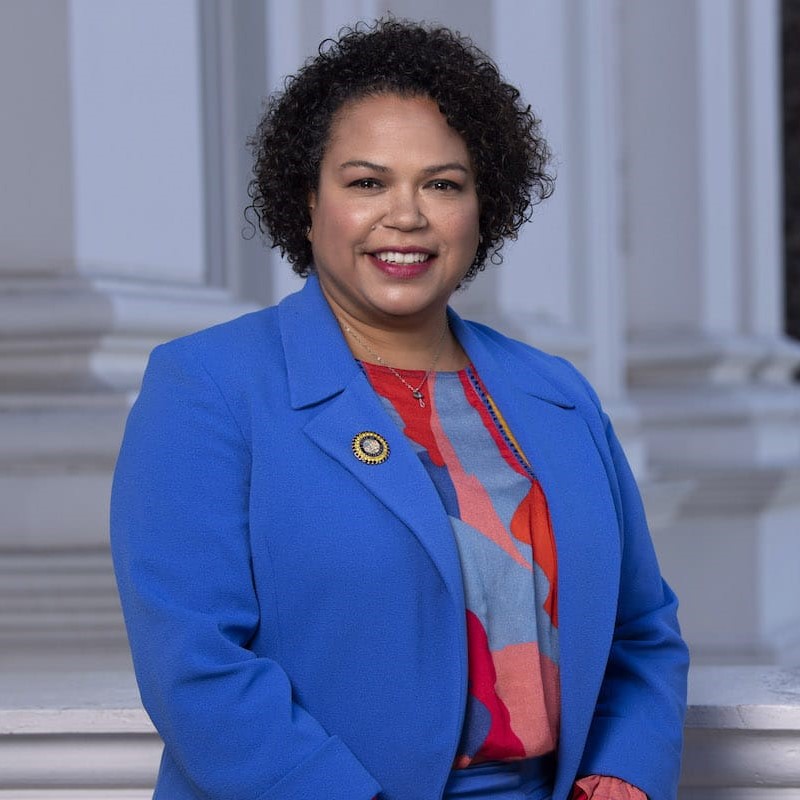
Asm. Mia Bonta
Sponsored bills
Existing law authorizes an unmarried person who is under 18 years of age to marry upon obtaining a court order granting permission and the written consent of at least one of the parents or the guardian of each underage party to the marriage, as specified. Existing law requires the court, if it considers it necessary, as part of the court order granting permission to marry, to require the parties to the prospective marriage of a minor to participate in premarital counseling, as specified. Existing law provides that 2 unmarried, unrelated adults who have chosen to share one another's lives in an intimate and committed relationship of mutual caring may establish a domestic partnership by filing a declaration with the Secretary of State, if certain requirements are met. Existing law provides that a person under 18 years of age who, together with the person with whom the person proposes to establish a domestic partnership, meets the requirements for a domestic partnership other than the requirement of being at least 18 years of age, is capable of consenting to and establishing a domestic partnership upon obtaining a court order granting permission to the underage person or persons to establish a domestic partnership. Under existing law, registered domestic partners have the same rights, protections, and benefits as spouses. This bill would repeal the authorization for a person under 18 years of age to be issued a marriage license or to establish a domestic partnership, thereby prohibiting a person under 18 years of age from being issued a marriage license or from establishing a domestic partnership. The bill would make conforming changes. Existing law requires the State Registrar to create a document, no later than March 1, 2020, concerning marriage certificates in which one or both of the parties were minors at the time of solemnization of the marriage. Existing law requires the State Registrar to update that document annually, as specified. Existing law requires the local registrar to submit specified information for the purposes of that report. This bill would repeal those provisions.
Existing law, the Knox-Keene Health Care Service Plan Act of 1975, provides for the licensure and regulation of health care service plans by the Department of Managed Health Care and makes a willful violation of the act's requirements a crime. Existing law provides for the regulation of health insurers by the Department of Insurance. Existing law sets forth specified coverage requirements for health care service plan contracts and health insurance policies. Existing law requires an individual or small group health care service plan contract or health insurance policy issued, amended, or renewed on or after January 1, 2017, to include, at a minimum, coverage for essential health benefits pursuant to the federal Patient Protection and Affordable Care Act. Existing law requires an essential health benefit to be provided only to the extent that federal law does not require the state to defray the costs of the benefit. This bill would require a health care service plan contract or health insurance policy issued, amended, or renewed on or after January 1, 2027, that provides coverage for the application of fluoride varnish as a pediatric oral care benefit to provide coverage without cost sharing for the application of fluoride varnish as medically necessary regardless of whether the service is billed as a dental benefit or as a medical benefit, except as specified. If this coverage requirement creates an obligation for the state to defray costs for an individual, the bill would not require coverage unless there is an appropriation for this purpose, as specified. Because a willful violation of this provision by a health care service plan would be a crime, the bill would impose a state-mandated local program. Existing law provides for the Medi-Cal program, administered by the State Department of Health Care Services and under which health care services are provided to low-income individuals. The Medi-Cal program is, in part, governed and funded by federal Medicaid program provisions. Existing law establishes a schedule of benefits under the Medi-Cal program and provides for various services, including certain dental services, that are rendered by Medi-Cal enrolled providers. Under existing law, silver diamine fluoride treatments are a covered benefit for eligible children 0 to 6 years of age, inclusive, as specified, and application of fluoride or other appropriate fluoride treatment is covered for children 17 years of age and under. This bill would make the application of fluoride or other appropriate fluoride treatment, as defined by the department, a covered benefit under the Medi-Cal program for children under 21 years of age. The bill would require the State Department of Health Care Services, no later than July 1, 2027, to issue billing guidance and make any necessary updates to ensure the coverage policy for Medi-Cal beneficiaries under 21 years of age is consistent with certain federal benefits and would require that policy to allow the application of fluoride varnish, as specified. The California Constitution requires the state to reimburse local agencies and school districts for certain costs mandated by the state. Statutory provisions establish procedures for making that reimbursement. This bill would provide that no reimbursement is required by this act for a specified reason. This bill would incorporate additional changes to Section 14132 of the Welfare and Institutions Code proposed by AB 1949 and SB 944 to be operative only if this bill and either or both AB 1949 and SB 944 are enacted and this bill is enacted last.
Existing law establishes the Department of Financial Protection and Innovation under the direction of the Commissioner of Financial Protection and Innovation. Existing law makes the department responsible for administering various laws relating to financial institutions, including the Banking Law, the California Credit Union Law (CCUL) , and the California Residential Mortgage Lending Act (CRMLA) , a willful violation of which is punishable as a misdemeanor. The CRMLA requires, as often as the commissioner deems necessary and appropriate, but at least once every 48 months, the commissioner to examine the affairs of each residential mortgage lender and servicer licensee for compliance with the CRMLA. The CRMLA authorizes the commissioner to examine the licensee's officers, directors, employees, or agents under oath regarding the licensee's operations. The CRMLA requires the commissioner to provide a written statement, the disclosure of which is subject to certain restrictions, of the findings of the examination, issue a copy of that statement to each licensee's principals, officers, or directors, and take appropriate steps to ensure correction of any violations of the CRMLA. This bill, the California Fair Lending Examination Act, would require, under the Banking Law and the CCUL, the commissioner to, at least once every 4 years, examine, as prescribed, the books and records of certain entities subject to the commissioner's examination authority under those laws for compliance with any nondiscrimination law applicable to mortgage lending, as specified, and would require the commissioner to provide a written statement of the findings of that examination, issue a copy of that statement to the subject's principals, officers, or directors, and take appropriate steps to ensure correction of any violations of applicable nondiscrimination laws. The bill would prohibit disclosure of that statement to anyone other than the subject entity, law enforcement officials, or other state or federal regulatory agencies for further investigation and enforcement. This bill would, as part of the above-described examination required by the CRMLA, require the commissioner to additionally examine the licensee for compliance with any nondiscrimination law applicable to mortgage lending, as prescribed. This bill would make a violation of an applicable nondiscrimination law a violation of the Banking Law, the CCUL, or the CRMLA, as applicable, and would authorize, under the Banking Law and the CCUL, the commissioner to examine the applicable entity's officers, directors, employees, or agents under oath regarding the entity's operations. By expanding the scope of the crimes of perjury and of violating the CRMLA, this bill would impose a state-mandated local program. Existing constitutional provisions require that a statute that limits the right of access to the meetings of public bodies or the writings of public officials and agencies be adopted with findings demonstrating the interest protected by the limitation and the need for protecting that interest. This bill would make legislative findings to that effect. The California Constitution requires the state to reimburse local agencies and school districts for certain costs mandated by the state. Statutory provisions establish procedures for making that reimbursement. This bill would provide that no reimbursement is required by this act for a specified reason.
Existing law establishes the Instructional Quality Commission and requires the commission to, among other things, recommend curriculum frameworks to the State Board of Education. This bill would require the commission, during the next revision of the publication "Health Framework for California Public Schools," to consider including, and recommending for adoption by the state board, specific content related to sexual health instruction to educate pupils about dating abuse and digital violence, as described.
Existing law, the Reproductive Privacy Act, declares as contrary to the public policy of this state a law of another state that authorizes a person to bring a civil action against a person or entity that engages in certain activities relating to obtaining or performing an abortion. Existing law prohibits the state from applying an out-of-state law to a case or controversy in state court or enforcing or satisfying a civil judgment under the out-of-state law. This bill would specify that the protections applicable to persons who engage in legally protected health care activity, as defined, apply to a person who previously has undertaken one or more acts or omissions while in another United States jurisdiction to aid or encourage, or attempt to aid or encourage, any person in the exercise and enjoyment, or attempted exercise and enjoyment, of rights to reproductive health care services or gender affirming health care services if the acts or omissions were permissible under the laws of the jurisdiction in which the person was located at the time of the acts or omissions. Existing law prohibits a state or local law enforcement agency or officer from knowingly arresting or knowingly participating in the arrest of any person for performing, supporting, or aiding in the performance of legally protected health care activity, if the health care activity is lawful in this state. Existing law prohibits a state or local public agency from cooperating with or providing information to an individual or agency from another state or a federal law enforcement agency, as specified, regarding a legally protected health care activity that is lawful in this state. Under existing law, the Governor may surrender, on demand of executive authority of any other state, any person in this state charged in the other state, as specified, with committing an act in this state, or in a 3rd state, intentionally resulting in a crime in the state whose executive authority is making the demand. This bill would prohibit the Governor from recognizing a request for extradition of a person subject to criminal liability based on the alleged provision or receipt of, assistance in the provision or receipt of, material support for, or in any theory of vicarious, joint, several, or conspiracy liability for any legally protected health care activity, except as specified.
Existing law, the Knox-Keene Health Care Service Plan Act of 1975, provides for the licensure and regulation of health care service plans by the Department of Managed Health Care and makes a willful violation of the act's requirements a crime. Existing law provides for the regulation of health insurers by the Department of Insurance. Existing law requires health care service plans and health insurers, as specified, within 6 months after the relevant department issues specified guidance, or no later than March 1, 2025, to require all of their staff who are in direct contact with enrollees or insureds in the delivery of care or enrollee or insured services to complete evidence-based cultural competency training for the purpose of providing trans-inclusive health care for individuals who identify as transgender, gender diverse, or intersex. This bill would prohibit a subscriber, enrollee, policyholder, or insured from being excluded from enrollment or participation in, being denied the benefits of, or being subjected to discrimination by, any health care service plan or health insurer licensed in this state, on the basis of race, color, national origin, age, disability, or sex. The bill would define discrimination on the basis of sex for those purposes to include, among other things, sex characteristics, including intersex traits, pregnancy, and gender identity. The bill would prohibit a health care service plan or health insurer from taking specified actions relating to providing access to health programs and activities, including, but not limited to, denying or limiting health care services to an individual based upon the individual's sex assigned at birth, gender identity, or gender otherwise recorded. The bill would prohibit a health care service plan or health insurer, in specified circumstances, from taking various actions, including, but not limited to, denying, canceling, limiting, or refusing to issue or renew health care service plan enrollment, health insurance coverage, or other health-related coverage, or denying or limiting coverage of a claim, or imposing additional cost sharing or other limitations or restrictions on coverage, on the basis of race, color, national origin, sex, age, disability, as specified. Because a violation of the bill's requirements by a health care service plan would be a crime, the bill would impose a state-mandated local program. The California Constitution requires the state to reimburse local agencies and school districts for certain costs mandated by the state. Statutory provisions establish procedures for making that reimbursement. This bill would provide that no reimbursement is required by this act for a specified reason.
Existing law governs the dissolution of marriage and legal separation. Existing law prohibits a judgment of dissolution of marriage from being made final until 6 months have expired from the date of service of a copy of the summons and petition or the date of appearance of the respondent, whichever occurs first. Existing law authorizes a court to extend the 6-month period for good cause shown. Existing law also requires a court to enter a judgment dissolving a marriage when 6 months have expired from the date of the filing of a joint petition for summary dissolution, unless a revocation has been filed. This bill would additionally authorize the court to reduce or waive the 6-month period described above for good cause shown, as specified, provided that the parties have resolved all material issues related to the dissolution.
Existing law establishes the Medi-Cal program, which is administered by the State Department of Health Care Services and under which qualified low-income individuals receive health care services. The Medi-Cal program is in part governed by, and funded pursuant to, federal Medicaid program provisions. Existing law, subject to implementation of the California Advancing and Innovating Medi-Cal (CalAIM) initiative, requires the department to implement an enhanced care management (ECM) benefit designed to address the clinical and nonclinical needs on a whole-person-care basis for certain target populations of Medi-Cal beneficiaries enrolled in Medi-Cal managed care plans. Under existing law, target populations include, among others, high utilizers with frequent hospital admissions, short-term skilled nursing facility stays, or emergency room visits, and individuals experiencing homelessness. This bill would recast the definition of ECM, referring to community-based, high-touch coordination and comprehensive care management services, as specified. The bill would delete certain provisions that designate 2022 or 2023 timelines for commencing ECM coverage, depending on whether or not a Medi-Cal managed care plan operates in a county in which the Whole Person Care pilot program or the Health Home Program was implemented. Existing law, subject to CalAIM implementation, authorizes a Medi-Cal managed care plan to elect to cover community supports. Under existing law, community supports that the department is authorized to approve include, among others, housing transition navigation services and medically supportive food and nutrition services. This bill would require the department to publish and maintain policy guides and all-plan letters on its internet website that define model coverage standards and policy for each community support, to engage stakeholders, to provide ongoing technical assistance, and to establish a standard timeline and process for regular updates to community supports policy guides, as specified. The bill would require a Medi-Cal managed care plan to adopt community supports policies, and to educate its in-network community support providers, as specified. The bill would require the department to publish certain information on ECM and community supports utilization data on the department's internet website on a quarterly basis, to the extent feasible, until January 1, 2032. The bill would require the department, by March 31, 2029, to provide to the legislative committees specified information in writing necessary to inform legislative consideration of transitioning community supports to benefits that are required to be covered under the Medi-Cal program. The bill would make other technical changes to the ECM and community support provisions.
Existing law prohibits law enforcement officers from employing threats, physical harm, deception, or psychologically manipulative interrogation tactics, as specified, during a custodial interrogation of a person 17 years of age or younger. This bill would prohibit a law enforcement officer from seeking statements or information while working undercover, or by individuals working in collaboration with, or acting as agents of, law enforcement, from a person who was 17 years of age or younger during the commission of crime and who is under 26 years of age while in custody. The bill would direct a court to consider any willful failure of a law enforcement officer in violation of these provisions in determining the credibility of that law enforcement officer. The bill would specify that these provisions do not apply to the admissibility of statements or information provided to an officer or individuals working in collaboration with law enforcement that were sought to protect against an imminent threat to life.