

Existing law requires workers employed on public works to be paid not less than the general prevailing rate of per diem wages for work of a similar character in the locality that the public work is performed, as prescribed, unless an exception applies. Existing law requires the Director of the Department of Industrial Relations to determine the general prevailing rate of per diem wages for work of a similar character in the locality in which the public work is to be performed. Under existing law, per diem wages include certain employer payments made pursuant to a collective bargaining agreement or for a program or committee established under the federal Labor Management Cooperation Act of 1978, as specified. Existing law provides that these payments are a credit against the obligation to pay the general prevailing rate of per diem wages. Existing law requires the credit for employer payments to be computed on an annualized basis where the employer seeks credit for employer payments that are higher for public works projects than for private construction performed by the same employer, except under certain circumstances, including a determination by the director that annualization would not serve the purposes of the provisions relating to public works projects. This bill would remove that exception and revoke annualization exemptions authorized by the director prior to January 1, 2026. The bill would authorize an employer to take full credit for the hourly amounts contributed to defined contribution pension plans that provide for both immediate participation and essentially immediate vesting even if the employer contributes at a lower rate or does not make contributions to private construction. The bill would require the employer to prove that the credit for employer payments was calculated properly. The bill would authorize the Labor Commissioner to deny the employer credit for employment payments if the employer does not produce payment records. The bill would make related findings and declarations.
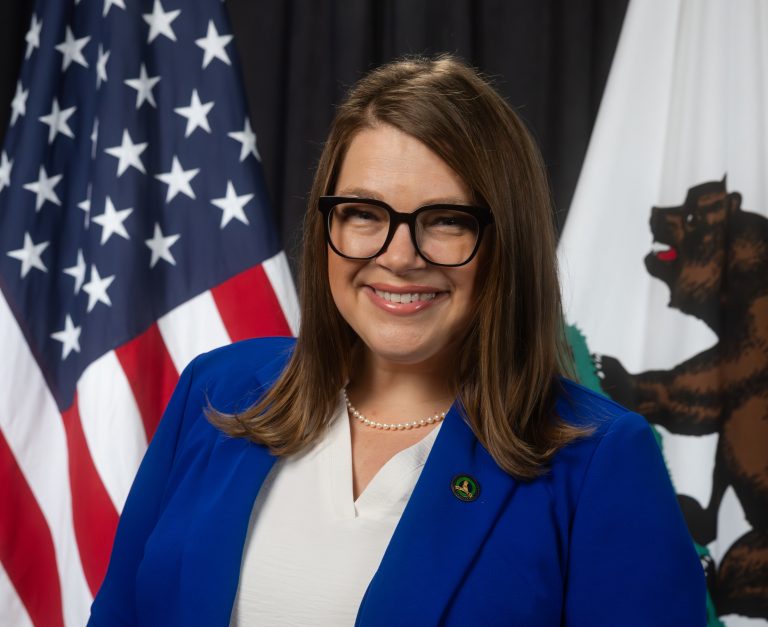
Asm. Heather Hadwick
Sponsored bills
Existing law creates the Department of Insurance, headed by the Insurance Commissioner, and prescribes the department's powers and duties. Existing law directs the department and commissioner to administer various grant programs that, among other things, defray property retrofitting costs. This bill would establish the California Safe Homes grant program to be developed by the department to reduce local and statewide wildfire losses, among other things. The bill would require the department to prioritize specified needs when awarding grant funds, and would require eligible program applicants, which would include individuals, cities, counties, and special districts, to meet specified criteria. The bill would establish the Sustainable Insurance Account within the Insurance Fund and would make the funds available to the department for the program upon appropriation by the Legislature or upon receipt of federal or other grants or funds. The bill would require the department to collect specified information about the performance of the program and, on or before January 1, 2027, and every 2 years thereafter, to publish a performance report that would be posted to its internet website and submitted to the Legislature.
Existing law defines the crime of burglary as entering specified buildings, places, or vehicles with the intent to commit grand or petty theft or a felony. Existing law clarifies that a structure designed for habitation is being used for dwelling purposes if, at the time of the burglary, it was not occupied solely because a disaster caused the occupants to leave the premises. This bill would specify that neither the fact that the structure entered has been damaged by a natural or other disaster, nor the extent of the damage, shall preclude conviction. Existing law defines looting as the commission of certain offenses during and within an affected county in a state of emergency or local emergency, as specified. Existing law includes any 2nd-degree burglary or grand theft in the definition of looting, and makes looting based on those offenses punishable by either imprisonment in a county jail for one year or as a felony. Existing law also makes the crime of looting based on petty theft punishable as a misdemeanor. Existing regulations define an "evacuation area" as a geographic area from which civilians have been evacuated pursuant to an evacuation order and where movement and entry are controlled by fire and law enforcement personnel having jurisdictional authority. Existing regulations define an "evacuation warning" as alerting community members in a defined area of a potential threat to life or property. This bill would recast the offense of looting to include first degree burglary, 2nd degree burglary, grand theft, trespass, and theft from a vehicle, when those offenses are committed in an evacuation zone, to the crime of looting. The bill would also, for the purposes of the offense of looting, define an evacuation zone to include an evacuation area or an area subject to an evacuation warning, and to include any residential dwelling units in such an area for a period of one year after the evacuation order, or up to 3 years if the property is undergoing construction. The bill would impose increased penalties for these offenses committed within an evacuation zone, as specified. By increasing the punishment of specified crimes, this bill would impose a state-mandated local program. The California Constitution requires the state to reimburse local agencies and school districts for certain costs mandated by the state. Statutory provisions establish procedures for making that reimbursement. This bill would provide that no reimbursement is required by this act for a specified reason. This bill would make the operation of its provisions contingent upon the enactment of Senate Bill 571 of the 2025–26 Regular Session.
Existing law generally regulates classes of insurance, including property and fire insurance. Existing law creates the Department of Insurance, headed by the Insurance Commissioner, and prescribes the department's powers and duties. Existing department regulations prohibit an insurer from using a rating plan that does not take into account and reflect specified wildfire risk mitigation, including property-level building hardening measures. This bill would require the department, on or before January 1, 2030, and every 5 years thereafter, to consider whether or not to update its regulations to include additional building hardening measures for property-level mitigation efforts and communitywide wildfire mitigation programs. As part of this consideration, the bill would require the department to consult with specified agencies to identify additional building hardening measures to consider, as well as to develop and implement a public participation process during the evaluation.
Existing law establishes the California FAIR Plan Association, a joint reinsurance association in which all insurers licensed to write basic property insurance participate to administer a program for the equitable apportionment of basic property insurance for persons who are unable to obtain that coverage through normal channels. Existing law authorizes cancellation of an insurance policy for nonpayment of premium, and requires an insurer to notify a policyholder at least 10 calendar days before the policy will be canceled for nonpayment. This bill, on or before April 1, 2026, would require the California FAIR Plan Association to create an automatic payment system and accept automatic payments for premiums from policyholders. The bill would prohibit cancellation or nonrenewal of a FAIR Plan policy solely because the policyholder is not enrolled in automatic payments. The bill would provide a period for the policyholder to pay any outstanding installment premium, in accordance with the existing 10-calendar-day notice requirement.
(1) Existing law, the California Nutrition Monitoring Development Act of 1986, requires the State Department of Public Health to assess the availability and adequacy of existing state and local food and nutrition data systems. The act requires different state departments, including the State Department of Education, to provide to the State Department of Public Health, upon request, nutrition-related data collection forms, documentation, and reports of various programs. This bill would define "ultraprocessed food" for certain school-related purposes and would require the State Department of Public Health to adopt regulations, on or before June 1, 2028, to define "ultraprocessed foods of concern" and "restricted school foods," as specified. The bill would require the department, when defining ultraprocessed foods of concern and restricted school foods, to consider specified factors, including, among others, whether, based on reputable peer-reviewed scientific evidence, a substance or group of substances are linked to health harms or adverse health consequences, as specified. The bill would require schools, as defined, to begin to phase out restricted school foods and ultraprocessed foods of concern by no later than July 1, 2029. Beginning July 1, 2032, the bill would prohibit a vendor from offering restricted school foods and ultraprocessed foods of concern to a school. This bill, on or before February 1, 2028, and on or before February 1 of each year thereafter through February 1, 2032, would require a vendor to report specified information to the State Department of Public Health for each food product sold to a school in the past calendar year, including, among others, the total quantity of food product sold to schools and whether that food product is an ultraprocessed food, a restricted school food, or an ultraprocessed food of concern. The bill, on or before July 1, 2028, and on or before July 1 of each year thereafter through July 1, 2032, would require the State Department of Public Health, in consultation with the State Department of Education, to submit to the Legislature and the Governor a report that contains, among other things, a summary and analysis of the information reported to the State Department of Public Health by vendors and recommendations for state and local legislative actions that could reduce the consumption of ultraprocessed foods, restricted school foods, and ultraprocessed foods of concern in schools. The bill would require the State Department of Public Health to consult with the State Department of Education regarding compliance training and technical assistance for school food service and procurement staff for these purposes and would require the State Department of Public Health to establish a structure to deliver training and technical assistance to local educational agencies. (2) Existing law requires the State Department of Education to develop and maintain nutrition guidelines for school lunches and breakfasts, and for all food and beverages sold on public school campuses, consistent with the requirements for a nutritionally adequate breakfast and a nutritionally adequate lunch. Existing law defines a nutritionally adequate breakfast and a nutritionally adequate lunch for these purposes to mean those that qualify for reimbursement under the most current meal pattern for the federal School Breakfast Program and the federal National School Lunch Program, respectively. Existing law requires a school district, county superintendent of schools, or charter school maintaining kindergarten or any of grades 1 to 12, inclusive, to make available a nutritionally adequate breakfast and a nutritionally adequate lunch, free of charge, during each schoolday to any pupil who requests a meal without consideration of the pupil's eligibility for a federally funded free or reduced-price meal. Existing law authorizes a school operated and maintained by a school district or county office of education, from the midnight before to 30 minutes after the end of the official schoolday, to sell food and beverages other than meals reimbursed by specified federal nutrition programs, only if the food or beverages meet dietary guidelines, as specified, depending on grade level. This bill, beginning July 1, 2035, would prohibit a school district, county superintendent of schools, or charter school maintaining kindergarten or any of grades 1 to 12, inclusive, from offering a nutritionally adequate breakfast or lunch that includes restricted school foods or ultraprocessed foods of concern, as provided, and would prohibit a school operated and maintained by a school district or county office of education from selling food or beverages, except for food items sold as part of a school fundraising event, containing those restricted school foods or ultraprocessed foods of concern, as provided. (3) To the extent this bill would impose additional requirements on public schools, the bill would impose a state-mandated local program. (4) The California Constitution requires the state to reimburse local agencies and school districts for certain costs mandated by the state. Statutory provisions establish procedures for making that reimbursement. This bill would provide that, if the Commission on State Mandates determines that the bill contains costs mandated by the state, reimbursement for those costs shall be made pursuant to the statutory provisions noted above.
Existing law authorizes the Commissioner of the California Highway Patrol to issue authorized emergency vehicle permits for certain vehicles, including any vehicle owned and operated by a public utility and any vehicle owned and operated by a fire company, as specified, upon a finding that the vehicle is used in responding to emergency calls for fire or law enforcement, the immediate preservation of life or property, or the apprehension of law violators. This bill would authorize the commissioner to issue an emergency vehicle permit to any vehicle owned by a county, city, or city and county office of emergency services only while that vehicle is being used by a public employee who is employed by the office in responding to any disaster.
Existing sales and use tax laws, among other things, impose a tax on retailers measured by the gross receipts from their sales of tangible personal property sold at retail in this state. The Sales and Use Tax Law makes certain sellers of tangible personal property consumers, and not retailers, of the tangible personal property they sell, including, until January 1, 2026, an all-volunteer fire department, as defined, if the profits are used solely and exclusively in furtherance of the purposes of the all-volunteer fire department, as prescribed. This bill would extend the sunset described above until January 1, 2031. Existing law requires any bill authorizing a new tax expenditure to contain, among other things, specific goals, purposes, and objectives that the tax expenditure will achieve, detailed performance indicators, and data collection requirements. The bill also would include additional information required for any bill authorizing a new tax expenditure. The Bradley-Burns Uniform Local Sales and Use Tax Law authorizes counties and cities to impose local sales and use taxes in conformity with the Sales and Use Tax Law, and existing laws authorize districts, as specified, to impose transactions and use taxes in accordance with the Transactions and Use Tax Law, which generally conforms to the Sales and Use Tax Law. Amendments to the Sales and Use Tax Law are automatically incorporated into the local tax laws. Existing law requires the state to reimburse counties and cities for revenue losses caused by the enactment of sales and use tax exemptions. This bill would provide that, notwithstanding Section 2230 of the Revenue and Taxation Code, no appropriation is made and the state shall not reimburse any local agencies for sales and use tax revenues lost by them pursuant to this bill. This bill would take effect immediately as a tax levy.
Existing law requires the Secretary for Environmental Protection to adopt regulations and implement a unified hazardous waste and hazardous materials management regulatory program. A city or local agency that meets specified requirements is authorized to apply to the secretary to implement the unified program, and every county is required to apply to the secretary to be certified to implement the unified program as a Certified Unified Program Agency (CUPA) . Existing law establishes the Rural CUPA Reimbursement Account in the General Fund, and requires the Secretary for Environmental Protection to allocate funds to counties with populations of less than 150,000 persons for which a CUPA has not been certified on or before January 1, 2000, and in which the unified program has been implemented by a CUPA designated by the secretary, as specified, in amounts not to exceed designated percentages of budgeted costs. This bill, contingent on an appropriation for its purposes, would make every county with a population of less than 150,000 persons eligible for these funds without regard to the date of certification or the qualification regarding CUPA implementation of the unified program.
Existing law establishes the California Children's Services (CCS) Program, administered by the State Department of Health Care Services and counties, to provide medically necessary services, based on financial eligibility, for persons under 21 years of age who have any of specified medical conditions, including, among others, cystic fibrosis or hemophilia. Existing law requires the board of supervisors of each county to designate the county department of public health or the county department of social welfare as the designated agency to administer the program. Existing law authorizes counties with a total population under 200,000 persons to administer the county program independently or jointly with the department. Existing law requires counties with a total population in excess of 200,000 persons to administer the county program independently. This bill would authorize counties with a total population under 2,000 persons to designate another county to administer the program, if the other county agrees to the designation and otherwise meets certain CCS standards established by the Director of Health Care Services and if neither county is a Whole Child Model county under certain provisions of the Medi-Cal program. The bill would require the department to adopt regulations necessary to implement these provisions.