

Existing law provides for the regulation of underground storage tanks by the State Water Resources Control Board. Existing law requires underground storage tanks that are used to store hazardous substances and that are installed after January 1, 1984, to meet certain requirements, including that the primary containment be product tight and that the tank's secondary containment meet specified standards. Existing law provides that single-walled containers do not fulfill the requirement of an underground storage tank (UST) providing both a primary and a secondary containment, except under a specified circumstance. Existing law imposes various monitoring, inspection, replacement, and upgrading requirements on USTs installed on or before January 1, 1984, and used for the storage of hazardous substances. Existing law requires, by December 31, 2025, the owner or operator of a UST to permanently close that UST if the UST meets specified conditions. This bill would exempt an operator from the tank closure requirement, described above, if the operator of a single-walled UST is acting in good faith to comply with the requirement to upgrade to a double-walled UST by September 30, 2025, and the operator meets specified conditions. The bill would require an operator seeking this exemption to submit a written request to the local enforcement agency, before September 30, 2025, and would require the local enforcement agency to review the request and issue a determination within 60 days of receipt. The bill would require the local agency to provide the determination to both the tank operator and the state board. By imposing additional duties on local officers, the bill would impose a state-mandated local program. The California Constitution requires the state to reimburse local agencies and school districts for certain costs mandated by the state. Statutory provisions establish procedures for making that reimbursement. This bill would provide that, if the Commission on State Mandates determines that the bill contains costs mandated by the state, reimbursement for those costs shall be made pursuant to the statutory provisions noted above. This bill would declare that it is to take effect immediately as an urgency statute.
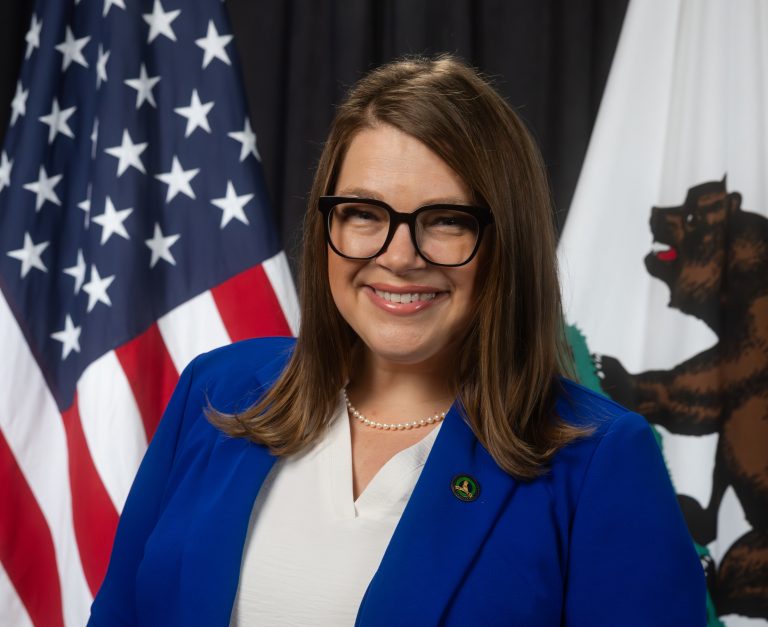
Asm. Heather Hadwick
Sponsored bills
The Personal Income Tax Law, in conformity with federal income tax law, generally defines "gross income" as income from whatever source derived, except as specifically excluded, and provides various exclusions from gross income. Existing law, known as the Golden State Scholarshare Trust Act, establishes the Golden State Scholarshare College Savings Trust (Scholarshare trust) , under the administration of the Scholarshare Investment Board, to provide financial aid for postsecondary education costs of participating students. Existing state and federal law generally includes in gross income distributions from a qualified tuition program, as defined to include the Scholarshare trust, except as provided. Existing federal law, the Consolidated Appropriations Act, 2023, excludes from gross income, for federal income tax purposes, distributions from a qualified tuition program that are made after December 31, 2023, and are paid in a direct trustee-to-trustee transfer to a Roth IRA, as described. This bill would exempt from gross income distribution made from a long-term qualified tuition program during the taxable years beginning on or after January 1, 2025, and before January 1, 2030, that are paid in a direct trustee-to-trustee transfer to a Roth IRA, and would conform state tax law to those changes relating to federal law, as described above. Existing law requires a bill authorizing a new tax expenditure to contain, among other things, specific goals, purposes, and objectives the tax expenditure will achieve, detailed performance indicators, and data collection requirements. This bill would include additional information required for any bill authorizing a new tax expenditure. This bill would take effect immediately as a tax levy.
The California Constitution provides that all property is taxable, and requires that it be assessed at the same percentage of fair market value, unless otherwise provided by the California Constitution or federal law. The California Constitution and existing property tax law provide various exemptions from taxation, including, among others, a disabled veterans' exemption and a veterans' organization exemption. This bill would exempt from taxation, property owned by, and that constitutes the principal place of residence of, a veteran, the veteran's spouse, or the veteran and the veteran's spouse jointly, if the veteran is 100% disabled. The bill would provide an unmarried surviving spouse a property exemption in the same amount that they would have been entitled to if the veteran was alive and if certain conditions are met. The bill would require certain documentation to be provided to the county assessor to receive the exemption and would prohibit any other real property tax exemption from being granted to the claimant if receiving the exemption provided by the provisions of this bill. The bill would make these exemptions applicable for property tax lien dates occurring on or after January 1, 2025, but occurring before January 1, 2035. By imposing additional duties on local tax officials, the bill would impose a state-mandated local program. Existing law requires any bill authorizing a new tax expenditure to contain, among other things, specific goals, purposes, and objectives that the tax expenditure will achieve, detailed performance indicators, and data collection requirements. This bill would state that it is the intent of the Legislature to apply those requirements to the bill and would set forth specified information relating to those requirements. The California Constitution requires the state to reimburse local agencies and school districts for certain costs mandated by the state. Statutory provisions establish procedures for making that reimbursement. This bill would provide that, if the Commission on State Mandates determines that the bill contains costs mandated by the state, reimbursement for those costs shall be made pursuant to the statutory provisions noted above. Existing law requires the state to reimburse local agencies annually for certain property tax revenues lost as a result of any exemption or classification of property for purposes of ad valorem property taxation. This bill would provide that, notwithstanding those provisions, no appropriation is made and the state shall not reimburse local agencies for property tax revenues lost by them pursuant to the bill. This bill would take effect immediately as a tax levy.
Maddy summarySCR 103 designates the week of July 20-26, 2025, as "Probation Services Week" in California. This concurrent resolution recognizes the work of probation services professionals across the state. It is a symbolic observance with no new laws, regulations, or direct impact on individuals or policies. The bill does not alter existing statutes or create obligations for any entity.
The Cannella Environmental Farming Act of 1995 requires the Department of Food and Agriculture to establish and oversee various programs, including an environmental farming program and the Healthy Soils Program, and requires the Secretary of Food and Agriculture to convene a 9-member Scientific Advisory Panel on Environmental Farming to advise the secretary on the implementation of the Healthy Soils Program and the State Water Efficiency and Enhancement Program and to assist federal, state, and local government agencies, as appropriate or necessary, on issues relating to the impact of agricultural practices on air, water, and wildlife habitat, as specified. Existing law creates the Climate Smart Agriculture Account in the Department of Food and Agriculture Fund, consisting of moneys made available from federal, state, industry, philanthropic, and private sources, and continuously appropriates the moneys in the account to the department for purposes of the act. This bill would, as part of the act, authorize the department, in consultation with the panel, to establish and oversee the Managed Honeybee Health Program for the purpose of enhancing the health and well-being of managed honeybees in California, which are necessary to support the economic viability of California agriculture. The bill would authorize the department, to the extent that moneys are available, to provide grants to eligible recipients for health intervention projects that directly enhance the health and well-being of managed honeybees used in pollination services and for projects that indirectly support health interventions through research, extension, and technical assistance. The bill would authorize the department to determine priorities for the program and to consider, when awarding grants, whether a project applicant or project meets specified criteria, in addition to criteria developed to address the program priorities. The bill would authorize the department to collect nonstate, federal, and private funds for the purpose of the program, require those funds to be deposited into the Managed Honeybee Health Special Fund Subaccount, which this bill would create within the Climate Smart Agriculture Account, and continuously appropriate moneys in the subaccount to the department for the purpose of the program. The bill would make operation of these provisions contingent upon an appropriation by the Legislature for the program in the annual Budget Act or another statute.
Existing law requires, upon an Indian tribe's request, the State Department of Social Services to enter into an agreement with a tribe, consortium of tribes, or tribal organization regarding the care and custody of Indian children and jurisdiction over Indian child custody proceedings, and requires the department to negotiate in good faith with the Indian tribe, organization, or consortium in the state that requests development of an agreement with the state to administer all or part of the programs under Title IV-E of the Social Security Act on behalf of the Indian children who are under the authority of the tribe, organization, or consortium. Existing law makes an Indian tribe, tribal organization, or tribal consortium that is a party to an agreement eligible to receive allocations of child welfare services funds, in accordance with the agreement. Existing federal law, the Family First Prevention Services Act of 2018, among other things, provides states with an option to use federal funds under Title IV of the federal Social Security Act to provide mental health and substance abuse prevention and treatment services and in-home parent skill-based programs to a child who is a candidate for foster care or a child in foster care who is a pregnant or parenting foster youth, as specified. Existing law establishes the Family First Prevention Services program, and requires the department to have oversight of the program. Existing law authorizes a county or Indian tribe, consortium of tribes, or tribal organization that has entered into the above-described agreement with the state that elects to provide prevention services to provide those services for certain individuals for a certain period. This bill would provide that agreements between the department and a tribe, consortium of tribes, or tribal organization regarding the care and custody of Indian children and jurisdiction over Indian child custody proceedings include agreements that prevent entry into foster care, and would authorize such an agreement to be made for the sole purpose of the administration of prevention programs under the Family First Prevention Services program. The bill would also, subject to an appropriation for these purposes, require the department to provide funding to tribes, tribal organizations, or tribal consortiums to support the cost of independent legal representation provided by an attorney for a child and the child's parent, guardian, and Indian custodian pursuant to an agreement under the above-described provisions. The bill would require the department, by March 31, 2026, and in consultation with Indian tribes, to develop a cost allocation plan to allow specified funds to support the costs of independent legal representation.
Existing law, the California Farmland Conservancy Program Act, establishes within the Department of Conservation the California Farmland Conservancy Program. Existing law authorizes the program to offer financial assistance, including grants or contracts, for projects and activities on agricultural lands, as defined, that support agricultural conservation and sustainable land management. This bill would require the department, in collaboration with the California Agricultural Land Equity Task Force, to establish the Farmland Access and Conservation for Thriving Communities Program in the department to provide financial and technical assistance to support agricultural land acquisition and protection. The bill would require the department, subject to specified requirements, to provide financial assistance under the program to qualified entities for the purpose of acquiring agricultural lands to transfer or provide long-term leases to qualified farmer participants, as specified. The bill would establish the Farmland Access Fund in the State Treasury and would make moneys in the fund available, upon appropriation by the Legislature, to the department for program expenditures. The bill would authorize the department to contract with one or more nonprofit organizations to administer the program. The bill would make the operation of the program contingent upon the Legislature making an appropriation for purposes of the program.
Maddy summaryThis bill establishes January as National Human Trafficking Awareness Month in California to raise public awareness about human trafficking. The resolution recognizes the severity of human trafficking as a felony crime and highlights statistics showing its prevalence across the country and specific challenges with identifying male victims and labor trafficking cases. It aims to educate the public and encourage reporting and support for victims during this designated month.
Existing law requires a tax return filed with the California Department of Tax and Fee Administration (CDTFA) that reports gross receipts for sales and use tax purposes to segregate the gross receipts of the seller and the sales price of the property on a line or a separate form when the place of sale in this state or for use in this state is on or within the real property of a fair, as defined, or any real property of a fair that is leased to another party. Existing law requires, on or before November 1 of each year, the CDTFA to report to the Department of Finance the amount of the total gross receipts segregated on these tax returns for the prior fiscal year, and that 34 of 1% of the total gross receipts be included in the next annual Governor's Budget for use by the Department of Food and Agriculture for allocation to fairs and that those funds be transferred by the Controller to the Fair and Exposition Fund, which is continuously appropriated, as prescribed. This bill would increase the amount of the total gross receipts required to be included in the next annual Governor's Budget for use by the Department of Food and Agriculture and transferred to the Fair and Exposition Fund, as specified, from 34 of 1% to 2%.
Existing law, the Knox-Keene Health Care Service Plan Act of 1975, provides for the licensure and regulation of health care service plans by the Department of Managed Health Care, and makes a willful violation of the act a crime. Existing law provides for the regulation of health insurers by the Department of Insurance. Existing law requires a pharmacy benefit manager engaging in business with a health care service plan or health insurer to secure a license from the Department of Managed Health Care on or after January 1, 2027, or the date on which the department has established the licensure process, whichever is later. This bill would prohibit a pharmacy benefit manager from, among other things, requiring use of only an affiliated pharmacy, as specified, and from imposing requirements, conditions, or exclusions that discriminate against a nonaffiliated pharmacy in connection with dispensing drugs. The bill would limit a pharmacy benefit manager's income to that derived from a pharmacy benefit management fee for pharmacy benefit management services provided, and would require a pharmacy benefit manager to use a passthrough pricing model. The bill would authorize the Attorney General to recover specified civil penalties and receive equitable relief for violations of the pharmacy benefit manager licensing provisions. Because a violation of these provisions would be a crime, the bill would impose a state-mandated local program. The bill would also require a contract between a health insurer and a pharmacy benefit manager issued, amended, or renewed on or after January 1, 2027, or the date on which the Department of Managed Health Care has established the pharmacy benefit manager licensure process, whichever is later, to require the pharmacy benefit manager to be licensed and in good standing with the Department of Managed Health Care. Existing law requires a health care service plan contract or health insurance policy that provides coverage for outpatient prescription drugs to cover medically necessary prescription drugs and subjects those policies to certain limitations on cost sharing and the placement of drugs on formularies. Existing law limits the maximum amount an enrollee or insured may be required to pay at the point of sale for a covered prescription drug to the lesser of the applicable cost-sharing amount or the retail price, and requires that payment apply to the applicable deductible. This bill would prohibit a health care service plan contract or health insurance policy issued, amended, or renewed on or after January 1, 2026, that provides prescription drug coverage from calculating an enrollee's or insured's cost sharing at an amount that exceeds the actual rate paid by the plan or insurer for the prescription drug, except as specified, and would require the contract or policy to include specified cost-sharing provisions. The bill would prohibit a contract between a pharmacy benefit manager and a health care service plan or health insurer that is executed, amended, or renewed on or after January 1, 2026, from authorizing spread pricing. Because a willful violation of the bill's requirements relative to health care service plans would be a crime, the bill would impose a state-mandated local program. This bill would declare that it does not narrow, abrogate, or otherwise alter the authority of the Attorney General to maintain or restore competitive, fair, and honest markets and prosecute violations of law, and would declare that the provisions of this bill are severable. Existing constitutional provisions require that a statute that limits the right of access to the meetings of public bodies or the writings of public officials and agencies be adopted with findings demonstrating the interest protected by the limitation and the need for protecting that interest. This bill would make legislative findings to that effect. The California Constitution requires the state to reimburse local agencies and school districts for certain costs mandated by the state. Statutory provisions establish procedures for making that reimbursement. This bill would provide that no reimbursement is required by this act for a specified reason.