

Existing law delegates to the Fish and Game Commission the power to regulate the taking or possession of birds, mammals, fish, amphibians, and reptiles in accordance with prescribed laws. Existing law authorizes the commission to establish, extend, shorten, or abolish open seasons and closed seasons for the taking of game mammals, including bears. Existing law makes it unlawful to take any bear with a firearm, trap, or bow and arrow without first procuring a tag authorizing the taking of that bear, as specified. Existing law makes it unlawful to permit or allow a dog to pursue a bear at any time. Existing law establishes various exceptions to that prohibition including the use of dogs to pursue a bear pursuant to a depredation permit if certain conditions are met. This bill would require the commission to establish seasons during which a person would be authorized to allow dogs to pursue a bear if the person does not injure or kill the bear or allow the bear to be injured or killed while engaging in the activity, as specified. The bill, after the Department of Fish and Wildlife finalizes the update to its 1998 Bear Management Plan, would authorize the commission to establish a bear hunting season during which a person, pursuant to a bear tag, would be authorized to allow dogs to pursue a bear in any area determined by the commission.
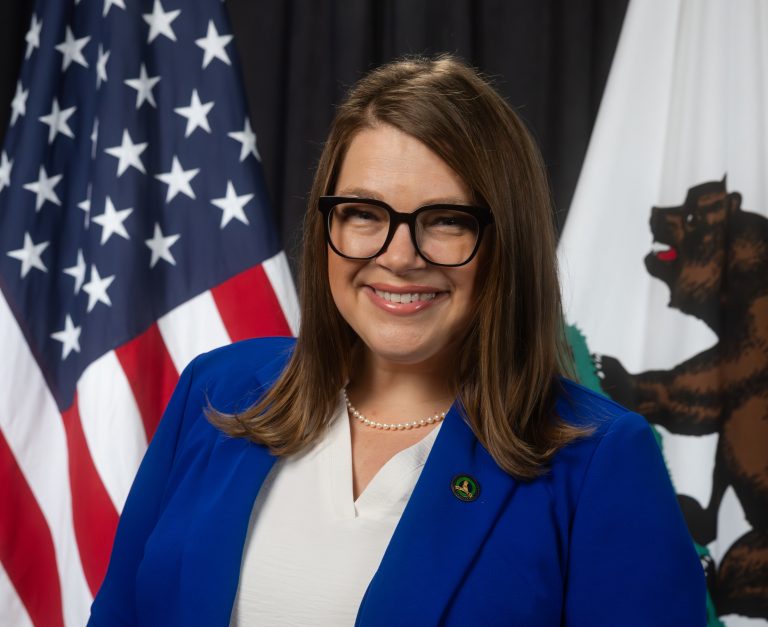
Asm. Heather Hadwick
Sponsored bills
Existing law defines the crime of burglary, which consists of entering specified buildings, places, or vehicles with the intent to commit grand or petty theft or a felony. Existing law defines burglary of the first degree as any burglary of an inhabited building and makes burglary of the first degree punishable by imprisonment in the state prison for 2, 4, or 6 years. Existing law defines all other burglary as burglary of the 2nd degree and makes it punishable by imprisonment in the county jail for one year or as a felony. Existing law makes the theft of money, labor, or property petty theft punishable as a misdemeanor, whenever the value of the property taken does not exceed $950. Under existing law, if the value of the property taken exceeds $950, the theft is grand theft, punishable as a misdemeanor or a felony. Existing law defines any 2nd-degree burglary or grand theft, during and within an affected county in a state of emergency or local emergency, as specified, as looting, punishable by either imprisonment in a county jail for one year or as a felony. Existing law makes petty theft committed during and within an affected county in a state of emergency or local emergency a misdemeanor and requires a minimum jail term of 90 days. Existing law prohibits credibly impersonating a peace officer, firefighter, or employee of a state or local government agency, or a search and rescue team, as specified. A violation of these prohibitions is punishable as a misdemeanor. This bill would make looting by the means of a 2nd-degree burglary or grand theft punishable instead as a felony. The bill would define a petty theft committed during and within an affected county in a state of emergency or local emergency as looting and make it punishable by imprisonment in the county jail for one year or as a felony. The bill would require any person who in the course of committing or attempting to commit the crime of looting impersonated a peace officer, firefighter, or employee of a state or local government agency, or a search and rescue team, subject to a penalty enhancement. By increasing the punishment of a crime, this bill would impose a state-mandated local program. The California Constitution requires the state to reimburse local agencies and school districts for certain costs mandated by the state. Statutory provisions establish procedures for making that reimbursement. This bill would provide that no reimbursement is required by this act for a specified reason.
Existing law establishes in the Business, Consumer Services, and Housing Agency a Department of Financial Protection and Innovation under the direction of the Commissioner of Financial Protection and Innovation. Under existing law, the department has charge of the execution of specified laws relating to various financial institutions and financial products and services. This bill would enact the California Elder Financial Abuse Prevention Act, which would authorize a depository institution, as defined, to take specified actions when, based on their own observations or information received from a governmental or law enforcement agency, the institution believes that an eligible adult, as defined, is the victim or target of financial abuse, including delaying or refusing a transaction involving the eligible adult and preventing the transfer of funds from the eligible adult's account. The bill would authorize a depository institution to notify an associated third party, as defined, if the depository institution believes an eligible adult may be the victim of financial abuse, and would exempt that disclosure from state privacy laws or requirements.
The Personal Income Tax Law, in general conformity with federal tax law, allows various deductions from gross income in calculating adjusted gross income. The Personal Income Tax Law generally applies the federal definition of adjusted gross income, but excepts the deduction allowed for certain expenses of elementary and secondary school teachers. This bill would conform with federal law for purposes of the deduction allowed for certain expenses of elementary and secondary school teachers for taxable years beginning on or after January 1, 2026, and before January 1, 2031. Existing law requires any bill authorizing a new tax expenditure, as defined, to include tax credits, deductions, exclusions, or exemptions, to contain, among other things, specific goals, purposes, and objectives that the tax credit will achieve, detailed performance indicators, and data collection requirements. This bill would include findings and collection requirements in compliance with this requirement. This bill would take effect immediately as a tax levy.
The Personal Income Tax Law allows various credits against the taxes imposed by that law. This bill would allow a credit against those taxes for each taxable year beginning on or after January 1, 2025, and before January 1, 2030, to a qualified taxpayer, as defined, in an amount equal to 40% of the taxpayer's qualified expenses, as defined, not to exceed $400 per taxable year, or $2,000 cumulatively. Existing law requires any bill authorizing a new tax credit to contain, among other things, specific goals, purposes, and objectives that the tax credit will achieve, detailed performance indicators, and data collection requirements. The bill would also include additional information required for any bill authorizing a new tax expenditure. This bill would take effect immediately as a tax levy.
Existing law, the Cigarette and Tobacco Products Licensing Act of 2003, requires the California Department of Tax and Fee Administration to issue a license to a retailer to engage in the sale of cigarettes or tobacco products upon receipt of a completed application and payment of certain fees unless any of certain exceptions apply. Existing law subjects licenses issued by the act to suspension or revocation for specified violations. Existing law prohibits a person from dispensing or distributing nitrous oxide to a person if the distributor knows or should know that the person is going to use the nitrous oxide for certain unlawful purposes and that person proximately causes great bodily injury or death to that person or another person. Existing law also requires a person who dispenses or distributes nitrous oxide to record each transaction involving the dispensing or distribution of nitrous oxide in a written or electronic document, as specified. Existing law makes a violation of either of these provisions a misdemeanor. This bill would require a court to order the suspension, for up to one year, of the business license of a person who knowingly violates either of those provisions after having been previously convicted of a violation of the respective provision, except as specified. This bill would specify violations subjecting licenses to suspension or revocation include, among others, the crimes above, as specified. The bill would exempt from the license issuance requirement the issuance of a license to a retailer who has been convicted of specified crimes relating to the distribution of nitrous oxide, including the misdemeanors described above.
Existing law establishes the California College Promise, under the administration of the Chancellor of the California Community Colleges, to provide funding, upon appropriation by the Legislature, to each community college meeting prescribed requirements. Existing law authorizes a community college to use that funding to waive some or all of the fees for 2 academic years for first-time community college students and returning community college students, as defined, who are enrolled in 12 or more semester units or the equivalent, or less for students certified as "full time," as specified, and who complete and submit either a Free Application for Federal Student Aid or a California Dream Act application, except as provided. This bill would authorize extending the term of eligibility of the California College Promise for an additional 2 academic years for first-time community college students and returning community college students who matriculate into upper division coursework of a community college baccalaureate degree program, as specified.
Existing law authorizes the sheriff to remove a prisoner to any California state prison for safekeeping when there are reasonable grounds to believe that the prisoner may be forcibly removed from a county jail, as specified. Existing law also authorizes a judge of the superior court to, on the request of the county sheriff and with the consent of the Secretary of the Department of Corrections and Rehabilitation, designate by written order the nearest state prison or correctional facility which would be able to secure confinement of a prisoner, subject to space available, when there are reasonable grounds to believe that the prisoner in a county jail is likely to be a threat to other persons in the facility or is likely to cause substantial damage to the facility. This bill would authorize a person currently committed to a state prison and who is alleged to have committed a new offense, to petition the court, after consultation with counsel, to allow any pretrial confinement pending disposition of charges for the new offense that would otherwise be served in the county jail to be served at the state prison at which the prisoner is currently confined, unless the person is otherwise eligible for and obtains pretrial release.
Existing law establishes the California State Library, which includes the California Research Bureau, under the control of an executive known as the "State Librarian." Existing law authorizes the California State Library to serve as the central reference and research library for the departments of state government and to, among other things, maintain adequate legislative reference and research library services for the Legislature. Existing law declares as legislative policy that all of the territory of the state shall be included within a community college district, except that territory located within a county where the county residents accounted for fewer than 350 units of average daily attendance in the state's community colleges during the preceding fiscal year, and that territory located within such a county may be included within a community college district pursuant to prescribed procedures. This bill instead would declare as legislative policy that all of the territory of the state shall be included within a community college district or otherwise provided with equivalent opportunities for residents to participate in both in-person and online community college programs and courses. This bill would require the California Research Bureau to conduct a study and prepare a report evaluating the provision of community college services and opportunities to residents of the underserved Counties of Amador, Alpine, Mariposa, Modoc, and Sierra that are not fully included within the territory of a community college district, and would require the report to include policy recommendations regarding how the state can ensure that residents of those 5 counties have opportunities to participate in both in-person and online community college programs and courses equivalent to those of similarly sized communities that are fully included within the territory of a community college district, as provided. To assist with and inform the development of the report and recommendations, the bill would require the California Research bureau to convene and consult a working group that includes specified voluntary representatives, and would authorize the bureau to request and receive information from specified entities. The bill would require the California Research bureau to submit the report and recommendations to the Assembly Committee on Higher Education, the Senate Committee on Education, and the Governor on or before December 31, 2027. The bill would repeal these provisions as of January 1, 2032. This bill would make legislative findings and declarations as to the necessity of a special statute for the Counties of Amador, Alpine, Mariposa, Modoc, and Sierra.
Existing law creates the Commission on State Mandates and establishes procedures for implementing the requirement in the California Constitution that the state reimburse local agencies and school districts for certain costs mandated by the state. Existing law makes a reimbursement claim for actual costs filed by a local agency or school district subject to the initiation of an audit by the Controller, and authorizes the Controller to make a field review of a claim after it has been submitted but before it has been reimbursed. Existing law requires the Controller to notify the claimant in writing within 30 days after issuance of a remittance advice of any adjustment to a claim for reimbursement that results from an audit or review. This bill would, instead, require the Controller to notify the claimant in writing within 30 days of any adjustment that results from an audit or review. The bill would also require the Controller to allow a local agency or school district, at the sole discretion of the local agency or school district, to offset any reduced reimbursement, as prescribed, or to remit funds to the Controller.