

Existing law entitles state employees to a paid holiday on specific days, including the 3rd Monday in February, except as specified. Existing law, in addition, authorizes state employees to elect to use 8 hours of vacation, annual leave, compensating time off, or personal holiday credit corresponding with specific dates, including the 4th Friday in September, known as "Native American Day," as specified. This bill would, upon appropriation by the Legislature, entitle state employees to a holiday on the 4th Friday in September, known as "Native American Day," as specified, in lieu of the above-described election. The bill would authorize any state bargaining unit to negotiate for a paid holiday on Native American Day, as specified. This bill would incorporate additional changes to Sections 19853 and 19853.1 of the Government Code proposed by AB 2017 and SB 1394 to be operative only if this bill and either or both of those bills are enacted and this bill is enacted last.
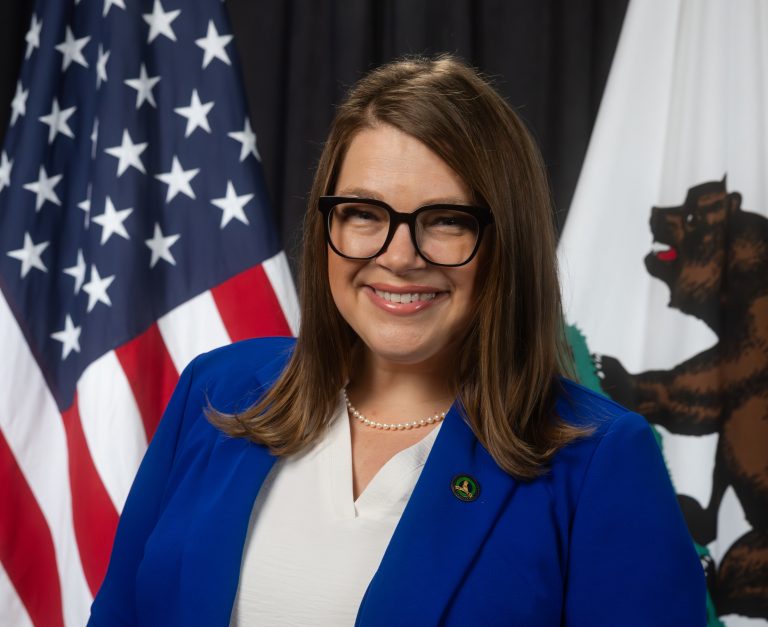
Rep. Heather Hadwick
Sponsored bills
The California Constitution establishes the Fish and Game Commission and provides for the delegation to the commission of powers relating to the protection and propagation of fish and game. Existing law places the Fish and Game Commission in the Natural Resources Agency. Under existing law, a hunting license grants the privilege to take birds and mammals. Existing law provides for the issuance by the Department of Fish and Wildlife of tags that are required in addition to a hunting license to take specified animals, including antelope, elk, deer, bears, and bighorn rams. Existing law prohibits the transfer of a tag issued by the department. This bill would require the commission to establish a hunting tag transfer program that authorizes a person to transfer a tag issued for the take of one of those species to their child or grandchild, subject to specified conditions. The bill would require the department to collect a fee to cover the reasonable costs of transferring a tag and would require the department to deposit the revenues from the fee into the Big Game Management Account. The bill would repeal these provisions on January 1, 2033.
Existing law establishes, until January 1, 2028, the Prescribed Fire Liability Pilot Program, to be administered by the Department of Forestry and Fire Protection, to increase the pace and scale of the use of prescribed fire and cultural burning and to reduce barriers for conducting prescribed fires and cultural burning. Existing law creates the Prescribed Fire Claims Fund in the State Treasury to support coverage for losses from prescribed fires and cultural burning by nonpublic entities, such as cultural fire practitioners, private landowners, and nongovernmental entities. Under existing law, moneys in the fund are under the control of the department, and the department or a contracted third-party administrator is authorized to direct payments for claims from the fund, consistent with specified guidelines adopted by the department. These guidelines include, among other things, (1) a requirement that an eligible claim relate to either a prescribed fire conducted or supervised by a burn boss, as defined, or a cultural burn conducted or supervised by a cultural fire practitioner, and (2) a requirement that a claim shall not be paid from the fund unless the department reviewed and approved a burn plan before the prescribed fire or cultural burning. Existing law requires, upon order of the Department of Finance, the $20,000,000 appropriated to the Department of Forestry and Fire Protection by the Legislature in the Budget Act of 2021 be transferred into the fund, and provides that all moneys deposited or transferred into the fund be continuously appropriated to the department for these purposes. By Executive Order N-35-25, Governor Gavin Newsom suspended the limitation on public and governmental agencies enrolling in the Prescribed Fire Liability Pilot Program to the extent that the limitation would prohibit resource conservation districts and volunteer fire departments or districts from such enrollment. This bill would establish the Good Fire Act, which would indefinitely extend the Prescribed Fire Liability Program. The bill would explicitly state that the Prescribed Fire Claims Fund shall support coverage for losses from prescribed fires and cultural burning on any lands within the state. The bill would also expand program eligibility by changing the entities who may receive coverage for losses from prescribed fires and cultural burning from nonpublic entities to individuals and entities other than the department or the federal government, as provided. By extending the term of a continuous appropriation and authorizing the expenditure of continuously appropriated funds for new purposes, the bill would make an appropriation. This bill would eliminate the requirement for department approval for a plan reviewed and approved by a burn boss, and would require a burn plan to be submitted to the claims fund portal before ignition. The bill would also require the guidelines to include methods for prioritizing broadcast burns and burns by non-public individuals or entities or California Native American tribes in the event the fund is oversubscribed. Within one year of a claim being paid from the fund, the bill would require the department to submit a report to the Legislature regarding the claim process and propose statutory changes related to the fund, as provided. Existing law requires the State Fire Marshal, with the involvement of the Statewide Training and Education Advisory Committee, to develop a curriculum for, or amend into an existing curriculum, a certification program for burn bosses who possess authority to engage in a prescribed burning operation and to enter into the necessary contracts related to a prescribed burning operation. Existing law requires this curriculum to provide for the initial certification as well as the continuing education of burn bosses. Under existing law, specified civil liability protections and eligibility for claims from the Prescribed Fire Claims Fund extend to prescribed burns that, among other things, are reviewed and approved by a burn boss certified pursuant to these provisions, as provided. This bill would require, as part of the continuing education of burn bosses, the State Fire Marshal to require recertification no sooner than every 3 years. The bill would also require the department to consider methods to increase the pool of available instructors for the certification program, including the use of non-department instructors. The bill would require the department, in consultation with the Statewide Training and Education Advisory Committee, to develop a mechanism to allow specified individuals to be designated as a burn boss. The bill would authorize these individuals certified pursuant to this process to use the above-described recertification process to maintain currency. Existing law authorizes an entity that owns or controls brush-covered land, forest lands, woodland, grassland, shrubland, or a combination of those types of land within a state responsibility area to apply to the Department of Forestry and Fire Protection for permission to use prescribed burning for certain public purposes. Existing law requires the department, upon receipt of an application, to inspect the land in company with the applicant to determine whether a permit shall be granted, as provided. By Executive Order N-35-25, Governor Gavin Newsom suspended the above-described requirement that the department conduct a site visit or inspection before issuing a state burn permit for projects undertaken by burn bosses or cultural fire practitioners. This bill would authorize the department to waive the inspection requirement or modify the standard precautions for an application submitted by specified individuals. The California Environmental Quality Act (CEQA) requires a lead agency, as defined, to prepare, or cause to be prepared, and certify the completion of an environmental impact report on a project that it proposes to carry out or approve that may have a significant effect on the environment or to adopt a negative declaration if it finds that the project will not have that effect. CEQA also requires a lead agency to prepare a mitigated negative declaration for a project that may have a significant effect on the environment if revisions in the project would avoid or mitigate that effect and there is no substantial evidence that the project, as revised, would have a significant effect on the environment. Existing law exempts from CEQA specified wildfire risk reduction projects, including, among other projects, projects consisting of a prescribed fire or fuel reduction to reduce wildfire risk by reestablishing the fire return interval appropriate to the ecosystem for biodiversity or other benefits, excluding projects located on coastal sage scrub habitat or any other sensitive habitat. By Executive Order N-35-25, Governor Gavin Newsom suspended the requirements of CEQA as applied to the Department of Forestry and Fire Protection to the extent necessary for the department to assist local agencies and beneficial fire practitioners to complete beneficial fire projects that limit dangerous wildfire conditions to the greatest extent feasible. This bill would exempt from CEQA those actions taken by the department to assist in the implementation of prescribed fire or cultural burning projects that do not otherwise require compliance with CEQA. Existing law establishes various grant programs for purposes of wildfire prevention. This bill would require a state agency, department, board, or commission that has awarded grant funds for a project that includes the preparation for, or implementation of, a beneficial fire project to include as an allowable expense of the grant the payment of overtime or double rates of pay to employees or contractors who prepare for or implement the beneficial fire project when such expenses are necessary for the implementation of the beneficial fire project. Existing law authorizes the Director of Forestry and Fire Protection to provide grants to, or enter contracts or other cooperative agreements with, specified entities for the implementation and administration of projects and programs to improve forest health and reduce greenhouse gas emissions. Existing law authorizes the director to authorize advance payments and requires grantees who receive advance payments to file an accountability report with the department 4 months from the date of receiving the funds and every 4 months thereafter. This bill would instead require grantees who receive advance payments to file an accountability report within 6 months from the date of receiving the funds and every 6 months thereafter. This bill would incorporate additional changes to Section 4799.05 of the Public Resources Code proposed by AB 2513 to be operative only if this bill and AB 2513 are enacted and this bill is enacted last. This bill would declare that it is to take effect immediately as an urgency statute.
(1) Existing law authorizes certain entities to operate household hazardous waste collection facilities, as defined, including permanent and temporary household hazardous waste collection facilities, under permits issued by the Department of Toxic Substances Control. Existing law requires hazardous waste transported to a household hazardous waste collection facility to be transported by specified entities, and imposes conditions on the acceptance of hazardous waste by a household hazardous waste collection facility, including, among others, that the hazardous waste not exceed certain weight requirements. Existing law requires a person engaged in the transportation of hazardous waste to be registered with the department and to have a manifest while transporting the hazardous waste, except if the transport is from specified facilities or programs. A violation of the hazardous waste control laws is a crime. This bill would require, until January 1, 2030, the department to evaluate opportunities to increase safety and convenience related to the management and disposal of vape pens confiscated from students by a school, as provided, and identify any recommendations that require future legislative action. The bill would authorize a permanent household hazardous waste collection facility to mechanically disassemble vape pens and devices in a manner that does not result in the unauthorized release of hazardous materials, as specified. The bill would exempt from the above-described registration and manifest provisions a school transporting vape pens and devices confiscated from students. The bill would also impose the above-described conditions relating to the transport of hazardous waste on a public agency, contractor of a public agency, or a registered hazardous waste transporter, transporting vape pens and devices from schools, as provided. The bill would require any vape pens and devices to be transported in containers bearing the school's Environmental Protection Agency identification number. The bill would specify conditions that apply for purposes of determining how many vape pens and devices may be accepted by a household hazardous waste collection facility without exceeding the specified weight limits. Because a violation of these provisions would be a crime, the bill would impose a state-mandated local program. (2) Existing law requires all cartridges for electronic cigarettes and solutions for filling or refilling an electronic cigarette to be in child-resistant packaging. This bill would prohibit a person from marketing, promoting, labeling, branding, advertising, distributing, offering for sale, or selling a vape product in this state by (A) imitating a product that is not a vape product to conceal the nature of the vape product from parents, teachers, or other adults, or (B) including interactive videogame capabilities within a vape product, as provided. This bill would authorize a city, a county, a city and county, or the state to enforce the above-described prohibitions and to impose civil liability on a person or entity, or distributor, in violation of the prohibitions in specified fine amounts, including $1,000 for the first violation, or for a distributor, $50,000 per violation. The bill would require any civil penalties collected to be paid to whichever office brought the action, and would authorize the Attorney General to expend any penalties it collects, upon appropriation by the Legislature, to enforce the prohibitions. The bill would specify that any remedies provided pursuant to these provisions are not exclusive and are in addition to the remedies that may be available pursuant to specified provisions relating to unfair competition. The bill would make any person who violates the prohibitions guilty of an infraction punishable by a fine of not more than $500. By creating a new crime, the bill would impose a state-mandated local program. (3) Existing law, the Cigarette and Tobacco Products Licensing Act of 2003, provides for the licensure and regulation of manufacturers, distributors, wholesalers, importers, and retailers of cigarette or tobacco products. Existing law, except as specified, prohibits a tobacco retailer, or any of the tobacco retailer's agents or employees, from selling, offering for sale, or possessing with the intent to sell or offer for sale, a flavored tobacco product or a tobacco product flavor enhancer. Existing law authorizes the California Department of Tax and Fee Administration or a law enforcement agency, upon discovery that a retailer possesses, stores, owns, or has made a retail sale of flavored tobacco products or tobacco product flavor enhancers in violation of that prohibition to seize the flavored tobacco products or tobacco product flavor enhancers at the retail location or any other person's location. Existing law deems those seized flavored tobacco products or tobacco product flavor enhancers as forfeited to the state, and requires the department to issue a civil penalty against the retailer, as provided. Existing law also requires the department to suspend or revoke the license of a retailer upon a 2nd or 3rd seizure and forfeiture, as provided. This bill would apply those same seizure, forfeiture, and civil penalty provisions to a retailer who possesses, stores, owns, or has made a retail sale of vape products, as defined, in violation of the prohibitions related to a vape product described in paragraph (2) , above. Existing law authorizes a peace officer or department employee granted limited peace officer status, as provided, upon presenting appropriate credentials, to enter any place at which cigarettes or tobacco products are sold, produced, or stored or at any site where evidence of a violation of specified laws relating to cigarette or tobacco products may be discovered, and to conduct inspections in accordance with specified requirements. This bill would also authorize those inspections at any place where there is evidence of a violation of the prohibitions related to a vape product described in paragraph (2) , above. (4) This bill would incorporate additional changes to Section 22974.2 of the Business and Professions Code proposed by AB 762 to be operative only if this bill and AB 762 are enacted and this bill is enacted last. (5) The California Constitution requires the state to reimburse local agencies and school districts for certain costs mandated by the state. Statutory provisions establish procedures for making that reimbursement. This bill would provide that no reimbursement is required by this act for a specified reason.
Existing law divides the state into agricultural districts, and provides for the management of these districts by district agricultural associations. Existing law requires the officers of the association to consist of a board of directors of 9 members, establishes a 4-year term of office for the directors, and requires the directors to be appointed by the Governor, as specified. This bill would, if the Governor has not filled a vacancy on the board of directors within 90 days and the board of directors has insufficient membership to establish a quorum, authorize the board of directors to temporarily appoint a director to fill the vacancy and to establish a quorum, as provided. The bill would authorize the Governor to appoint a different director to fill the vacancy for the unexpired term who would replace the temporary director on the board of directors, as specified.
Existing law requires the Department of Motor Vehicles to immediately revoke the driving privilege of a person upon receipt of a duly certified abstract of the record of a court showing that the person has been convicted of, among other things, gross vehicular manslaughter while intoxicated. Existing law requires a person who has been convicted of driving a motor vehicle while intoxicated, as specified, to install an interlock ignition device on the vehicle they operate for a mandatory period of time as ordered by the court. This bill, Irene's Law, would require the department, commencing on January 1, 2031, to revoke the driving privilege of a person upon a showing that the person has been convicted of a violation of driving while intoxicated that proximately causes bodily injury to any person other than the driver and has 4 or more prior convictions within a 10-year period for, among other things, driving while under the influence of an alcoholic beverage. The bill would additionally prohibit the department from reinstating that person's driving privileges until the expiration of 72 months after the date of revocation, subject to certain requirements, including, among others, agreeing to maintain a functioning, certified ignition interlock device, for a mandatory term of 72 months.
Existing law, the Protecting Our Kids from Social Media Addiction Act, prohibits an operator of an addictive internet-based service or application from providing an addictive feed, as defined, to a user unless the operator does not have actual knowledge that the user is a minor, as specified, or the operator has obtained verifiable parental consent to provide an addictive feed to the user who is a minor. Existing law, the Digital Age Assurance Act, beginning January 1, 2027, requires a person who owns, maintains, or controls a software application, as defined, to request age bracket data sent by a real-time secure application programming interface or operating system with respect to a particular user from an operating system provider or a covered application store when the application is downloaded and launched. This bill would prohibit a covered platform, as defined, from providing an addictive feature, as defined, to a user who is under 16 years of age and would require a covered platform to implement reasonable measures to ensure that users under 16 years of age are not offered or provided any addictive feature on the covered platform. The bill would also authorize the Attorney General to adopt regulations to implement and enforce the bill in order to further the purpose of protecting minors online, including by altering the scope of "covered platform" if the Attorney General determines that doing so is necessary to ensure that "covered platform" applies to internet websites, online services, online applications, or mobile applications that make addictive features, as defined, available to users under 16 years of age. This bill would impose a civil penalty upon a noncompliant platform and would require its provisions to be enforced by a civil action brought only by the Attorney General or a local public prosecutor, as specified. This bill would also establish the e-Safety Advisory Commission within the Department of Justice as an independent advisory body that is only for administrative purposes to advise state government on certain matters related to online safety and would require the commission to, on or before January 1 of each year, report to the Legislature and the Governor on, among other things, its activities under the bill.
Existing law authorizes the governing board of a community college district to enter into a College and Career Access Pathways (CCAP) partnership with the governing board of a school district, a county office of education, or the governing body of a charter school for the purpose of offering or expanding dual enrollment opportunities for pupils who may not already be college bound or who are underrepresented in higher education, as provided. Existing law requires the partnership agreement to outline the terms of the partnership, as specified, and to establish protocols for information sharing, joint facilities use, and parental consent for high school pupils to enroll in community college courses. Existing law requires the protocols to only require a high school pupil participating in a CCAP partnership to submit one parental consent form and principal recommendation for the duration of the pupil's participation in the CCAP partnership. This bill would revise the CCAP partnership provisions to eliminate the requirement that the protocols require principal recommendation. Existing law requires the Chancellor of the California Community Colleges to revise the special part-time student application process to allow a pupil to complete one application for the duration of the pupil's attendance at a community college as a special part-time student participating in a CCAP partnership agreement. This bill would require a CCAP partnership agreement to also establish protocols that authorize a pupil to complete one application for the duration of the pupil's attendance at a community college as a special part-time student participating in a CCAP partnership agreement. Existing law authorizes a community college district to allow a special part-time student participating in a CCAP partnership agreement to enroll in up to a maximum of 15 units per term in courses offered at the community college campus or the participating high school campus if certain circumstances are satisfied, including that the units constitute no more than 4 community college courses per term. This bill would eliminate the 4 community college courses per term limit for a special part-time student enrolling in up to 15 units under a CCAP partnership agreement. Existing law requires, for each CCAP partnership agreement, the affected community college district and school district, county office of education, or charter school to annually report specified information to the office of the Chancellor of the California Community Colleges, including the total number of community college courses, by course category and type and by schoolsite, enrolled in by CCAP partnership participants. This bill instead would require the affected community college district and school district, county office of education, or charter school to annually report the total number of high school pupils who successfully completed 12 or more units of college coursework by graduation, completed a certificate, or completed the courses required for an associate degree or an associate degree for transfer.
The California Environmental Quality Act (CEQA) requires a lead agency, as defined, to prepare, or cause to be prepared, and certify the completion of, an environmental impact report (EIR) on a project that it proposes to carry out or approve that may have a significant effect on the environment or to adopt a negative declaration if it finds that the project will not have that effect. CEQA also requires a lead agency to prepare a mitigated negative declaration for a project that may have a significant effect on the environment if revisions in the project would avoid or mitigate that effect and there is no substantial evidence that the project, as revised, would have a significant effect on the environment. Existing law authorizes the Governor to certify projects meeting certain requirements as infrastructure projects and provide those certified projects with certain streamlining benefits, including requiring the lead agency to prepare the record of proceedings concurrently with the environmental review process and requiring the resolution of an action or proceeding challenging the certification of an EIR for certified projects or the granting of any project approvals, to the extent feasible, within 270 days of the filing of the record of proceedings with the court, as specified. Existing law requires the lead agency, within 10 days of the certification of an infrastructure project, to provide a public notice of the certification, as provided. If a lead agency fails to approve a project certified as an infrastructure project before January 1, 2033, existing law specifies that the certification is no longer valid. Existing law requires the Office of Land Use and Climate Innovation to make evidence and materials submitted for the certification of a project available to the public on its internet website at least 15 days before the certification of the project. This bill would also authorize the Governor to certify an essential local fire station project for streamlining as an infrastructure project if the Governor ensures that the project meets specified requirements, including, among others, that the applicant agrees to pay the costs of the trial court and the court of appeal in hearing and deciding any case challenging a lead agency's action on the project, and the applicant agrees to pay the costs of preparing the record of proceedings for the project, as specified. The bill would require a project to meet specified requirements to be eligible for certification as an essential local fire station project, including, among other things, (1) that the project is being undertaken by a city, county, city and county, or local fire agency, as provided, (2) that the project is not located on specified sensitive or hazardous sites, as described, and (3) that the project will employ best practices to avoid or mitigate significant environmental effects, as provided. The bill would require the Office of Land Use and Climate Innovation, for an essential local fire station project, to provide the Governor's office with evidence and materials to support consideration of the application no later than 45 days after the Office of Land Use and Climate Innovation posts the evidence and materials submitted for certification on its internet website.
(1) Existing law establishes the California Community Colleges, under the administration of the Board of Governors of the California Community Colleges, as one of the segments of public postsecondary education in this state. Existing law establishes community college districts throughout the state and authorizes them to operate campuses and provide instruction to students. Existing law authorizes community college districts to admit nonresident students, and requires that nonresident students be charged a nonresident tuition fee unless an exemption applies. Existing law authorizes a community college district to exempt a student who attends Lake Tahoe Community College and who has residence in one of several designated communities in Nevada, as specified. This bill would additionally authorize a community college district to exempt from the nonresident tuition fee a student who attends College of the Siskiyous and who has residence in one of several designated counties in Oregon. The bill would require the governing board of the Siskiyou Joint Community College District to adopt rules and regulations for determining a student's residence classification and for establishing procedures for an appeal and review of the residence classification. By imposing new duties on the Siskiyou Joint Community College District, the bill would create a state-mandated local program. The bill would, in any academic year, prohibit more than 200 students from being exempted from payment of the nonresident tuition fee pursuant to this exemption. (2) This bill would make legislative findings and declarations as to the necessity of a special statute for College of the Siskiyous with respect to students who reside in nearby counties located in Oregon. (3) The California Constitution requires the state to reimburse local agencies and school districts for certain costs mandated by the state. Statutory provisions establish procedures for making that reimbursement. This bill would provide that no reimbursement is required by this act for a specified reason.