

Maddy summaryHB 4927 would abolish West Virginia's personal income tax for all individuals, estates, trusts, and pass-through entities, effective for tax years beginning after December 31, 2026. The bill amends §11-21-3 of the West Virginia Code to eliminate the tax imposition described in the section, removing the requirement for taxpayers to pay income tax under current law. This change directly affects all West Virginia residents and nonresidents with taxable income subject to the state's personal income tax. The policy change is a complete repeal of the tax, not a reduction or modification of rates.
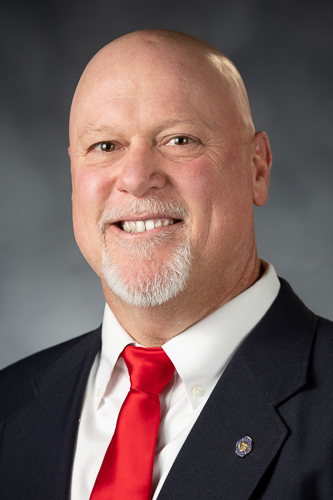
Del. Dave Foggin
Sponsored bills
Maddy summaryHJR 28 is a constitutional amendment proposal (not a bill) that would require voter approval to allow West Virginia's legislature to later create a law exempting owner-occupied primary residences from property tax once the mortgage is paid off. It does not create the exemption itself but would permit future legislation to do so for homes with no outstanding mortgage. This would directly affect homeowners who pay off their mortgages and occupy the property as their primary residence. The amendment must be approved by voters in the 2026 general election to take effect.
Maddy summaryHJR 30 is a proposed constitutional amendment that would eliminate all property taxes on primary residences (homestead real property) in West Virginia starting July 1, 2027. It directly affects homeowners who currently pay these taxes and counties that rely on homestead tax revenue for funding. The amendment requires the state legislature to create a new funding mechanism to replace the lost revenue for counties before the tax repeal takes effect. This resolution must be approved by voters in the 2026 general election to become part of the state constitution. The bill is currently in committee referral after its January 29, 2026, introduction.
Maddy summaryHB 4925, the West Virginia PRIME Act, allows West Virginia producers and retailers to sell custom-slaughtered meat (beef, pork, lamb, goat) within the state without requiring USDA or state inspection. It applies to producers (farmers, ranchers) selling directly to consumers or retailers (restaurants, grocery stores), with meat labeled "Processed in a custom-exempt facility. Not for interstate commerce." The bill prohibits local governments from restricting such sales and limits the West Virginia Department of Agriculture from imposing additional regulations beyond minimal facility registration. All transactions must stay strictly within West Virginia borders, and the law explicitly exempts these sales from federal inspection requirements.
Maddy summaryHB 4922 would exempt all West Virginia residents aged 65 and older from both personal property taxes and real estate property taxes starting January 1, 2027. The bill amends existing tax exemption laws (§11-3-9 and §11-6B-3) to add this new category for seniors, directly affecting older residents who own property in the state. It clarifies that this exemption applies to all real estate and personal property, not just primary residences. The policy change takes effect on a specific date (January 1, 2027), with no mention of income limits or other qualifying conditions in the bill text. This is a direct tax relief measure for senior citizens, not a procedural or commemorative bill.
Maddy summaryHB 4931 prohibits West Virginia from creating or maintaining any registry of firearm owners or firearms within the state. It bans state agencies, federal entities operating in West Virginia (like ATF contractors), and private actors from compiling or storing such records - both physical and electronic. Violators face civil penalties of $10,000 to $100,000 per violation, with funds directed to a Second Amendment Defense Fund for legal challenges. The law applies immediately upon passage and targets registry systems, not firearm ownership or sales.
Maddy summaryHB 4926, the "Second Amendment Reaffirmation and Protection Act," ensures that if federal gun laws like the National Firearms Act (1934) or Gun Control Act (1968) are repealed or struck down, West Virginia automatically restores full firearm rights without new state restrictions. The bill prohibits West Virginia or local governments from enacting, enforcing, or funding any laws that mimic or replace repealed federal regulations, and protects individuals and businesses from penalties for exercising restored rights. It also creates a private right for citizens to sue officials who enforce illegal restrictions and bans state law enforcement from assisting federal agencies in enforcing repealed laws. The act takes effect immediately upon federal repeal or judicial nullification of covered laws.
Maddy summaryHB 4887 would amend West Virginia's retirement law to allow sheriffs who are members of the public retirement system to retire at age 62 with eight years of service, rather than the 10 years required for other new members under current rules. This provision applies specifically to sheriffs not participating in another retirement system administered by the retirement board. The bill adds a new subsection to the retirement law creating this exception for sheriffs. It directly affects sheriffs who meet the age and service requirements under this revised provision.
Maddy summaryHB 4883 would exempt overtime pay from West Virginia's personal income tax. Currently, workers pay state income tax on overtime earnings, but this bill would remove that tax obligation. The provision applies directly to all West Virginia employees who earn overtime pay under state labor laws. This change would increase take-home pay for affected workers by eliminating the tax on overtime hours.
Maddy summaryHB 4884 changes how West Virginia calculates child support payments by shifting from using parents' adjusted gross income to their net pay (after mandatory deductions like taxes). The bill allows parents to deduct up to 25% of their net pay for student loans used for their own education, with strict disclosure requirements for any changes to loan payments. This directly affects parents legally responsible for child support payments in the state. The bill modifies multiple sections of child support law to implement this net pay calculation method and student loan deduction provision.