

Maddy summaryHB 5323 amends West Virginia law to require that future increases to wildlife license and stamp fees (e.g., hunting or fishing permits) be tied to the Consumer Price Index (CPI) for "All Items" published by the U.S. Department of Labor. The bill specifies that any fee adjustments must be rounded down to the nearest dollar, and explicitly prohibits fee increases based on CPI after January 1, 2021. This directly affects individuals and businesses purchasing wildlife licenses or stamps in West Virginia. The change ensures fee adjustments automatically reflect inflation but limits the mechanism to apply only to fees set before 2021.

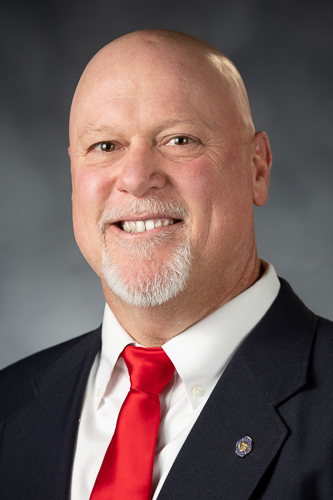
Rep. Dave Foggin
Sponsored bills
Maddy summaryHB 5582 extends the expiration date of West Virginia's program requiring drug screening for adult applicants seeking Temporary Assistance for Needy Families (TANF) benefits. The program, originally set to end December 31, 2026, will now operate until December 31, 2030. Under this program, applicants who test positive for drugs must complete substance abuse treatment and job skills programs to continue receiving TANF benefits, though they may keep benefits while participating. The bill does not change existing screening requirements or treatment rules - it only extends the program's authorization period.
Maddy summaryHB 4404 increases the annual funding allowance for volunteer and part-volunteer fire departments in West Virginia from $500 to $5,000 specifically for educational/training supplies and fire prevention promotional materials. This change directly affects local fire companies that rely on state funds for operational needs, allowing them to better support firefighter training and community safety outreach. The bill amends Section 8-15-8b of West Virginia Code to adjust this specific budget line item, maintaining all other authorized uses of funds unchanged. The proposed increase aims to provide greater flexibility for fire departments to invest in critical safety education resources. The bill was introduced on January 16, 2026, and referred to the House Finance Committee.
Maddy summaryHB 4008 establishes West Virginia's Business Ready Sites Program, which certifies properties for economic development readiness. Local governments and economic development entities (like counties, cities, or economic development authorities) can apply to have their sites evaluated for readiness, including access to utilities, transportation, and environmental status. The program provides two funding mechanisms: matching grants (up to 50% of improvement costs) and micro grants (up to $100,000 for sites ≥5 acres, $250,000 for sites >20 acres), both requiring repayment if the site is sold or leased for development within 12 months. All funds must be used directly to fix site deficiencies identified in the evaluation, with re-evaluations and recertification required after improvements.
Maddy summaryHB 4089, known as "Jessica Huffman's Law," requires health insurers in West Virginia to cover scalp cooling systems for patients undergoing cancer chemotherapy starting January 1, 2027. The bill mandates that any insurance policy covering chemotherapy must include coverage for these devices - described as tools to prevent hair loss during treatment - as defined by Medicare and Medicaid. This applies to policies issued or renewed after 2026, with coverage subject to standard deductibles and coinsurance like other medical benefits. The law directly affects cancer patients seeking hair preservation and insurers offering chemotherapy coverage.
Maddy summaryHB 4999 expands legal protections for both athletic officials (like referees) and participants (players) in West Virginia by making assault or battery against them a misdemeanor. It increases penalties: assault fines of $250-$500 with up to six months in jail, and battery fines of $500-$1,000 with up to one year in jail. The bill also allows school boards to ban convicted offenders from all school sports events for at least one year, with violating this ban treated as trespassing. However, it explicitly exempts normal sports actions - such as hard fouls within game rules - from prosecution.
Maddy summaryHB 4198, the E-Verify Requirement Act, requires all employers in West Virginia - including businesses, government entities, and public agencies - to use the federal E-Verify system to confirm employees' work authorization. It replaces criminal penalties with fines for knowingly employing unauthorized workers ($100-$10,000 per violation depending on offense count) and allows license suspension or revocation for repeat violations. The bill also creates a "safe harbor" for employers who use E-Verify, shielding them from penalties for failure to verify status. It repeals a provision denying business expense deductions for non-compliance but maintains financial penalties and licensing consequences for violations.
Maddy summaryHB 4793 would lower the minimum age for barber and cosmetology apprentices in West Virginia from 16 to 14 years old. Apprentices must work under direct supervision of a licensed professional and meet requirements like being enrolled in school or having a high school credential. Sponsors (licensed professionals who supervise apprentices) must have at least five years of experience in a shop. This change adjusts the existing apprenticeship program to permit younger participants while maintaining oversight and safety standards.
Maddy summaryHB 4573 requires West Virginia high schools to provide foster youth (current or former foster care) with information about post-secondary education, job training, housing, healthcare, and independent-living support before graduation. The bill mandates school counselors and graduation coaches receive training on these resources and directs the state Department of Education to create and maintain a Foster Youth Resource Guide. County school districts must ensure eligible students receive this pre-graduation information. The law aims to improve transition planning for foster youth entering adulthood, without requiring disclosure of a student’s foster care status.
Maddy summaryThis House resolution formally recognizes President Donald J. Trump for various policies and actions that the West Virginia House of Delegates claims have benefited the state. The document highlights specific initiatives including regulatory reforms in the energy sector, tax relief measures, funding for rural healthcare, and programs aimed at reducing prescription drug costs and establishing investment accounts for newborns. It also cites border security improvements and drug control efforts as contributing factors to public safety and economic well-being. The resolution expresses appreciation for these actions and requests that the formal recognition be sent to the President.