

Maddy summaryHR 9 is a ceremonial resolution honoring the late West Virginia House Delegate Douglas John Skaff Jr. It expresses the House of Delegates' condolences to his family and commemorates his service, including his roles as a delegate representing multiple districts and as Minority Leader. The resolution has no policy impact - it is purely symbolic, acknowledging his career in public service, business, and community leadership. It was unanimously adopted by the House on February 5, 2026, the same day it was introduced.
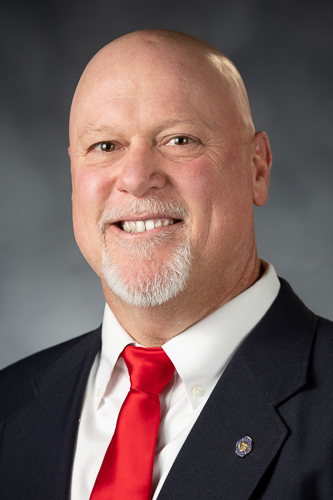
Del. Dave Foggin
Sponsored bills
Maddy summaryThis resolution (HR 10) proposes approval of federal legislation (H.R. 5966), the Ohio River Restoration Program Act, which would establish a program to improve the Ohio River. The program would fund specific actions like cleaning polluted water, restoring fish habitats, controlling invasive species, and improving public access to the river. West Virginia directly benefits as 28% of the river’s length borders the state, providing drinking water for 700,000 residents and supporting local economies. The resolution itself does not create funding but formally supports the federal bill’s implementation. This is a procedural resolution endorsing the broader federal restoration effort.
Maddy summaryHB 5111 prohibits all public and private higher education institutions in West Virginia from requiring vaccines as a condition for student enrollment, faculty or staff employment, or participation in campus activities. The bill bans institutions from offering rewards for vaccinations and requires that any free vaccines provided on campus must include informed consent. It also ensures students, faculty, and staff cannot be denied access to educational programs or jobs solely due to declining vaccination. The law applies immediately upon passage and does not prevent institutions from offering free vaccines with consent.
Maddy summaryThis is a symbolic House Resolution (not a bill), introduced by multiple West Virginia delegates. It designates the month of June as "Fidelity Month" to promote the values of faith, family, and patriotism across the state. The resolution cites declining support for these values in polling and research, and calls for the state to "rededicate" itself to them during June. It has no binding policy requirements or direct impact on specific groups; it is purely a commemorative gesture.
Maddy summaryThis West Virginia House resolution states that the U.S. national debt (over $38 trillion in 2026) poses a national security threat, citing foreign debt ownership, projected Social Security/Medicare shortfalls, and warnings from military/intelligence leaders. It urges Congress to establish regular budgeting procedures but does not create new laws or alter federal spending. As a symbolic resolution, it has no direct legal effect on national debt policy or federal budgets. The resolution focuses on raising awareness rather than implementing concrete changes.
Maddy summaryHB 5098 creates West Virginia's "Mobile ID Act," establishing a program to provide in-home and long-term care facility visits for state-issued identification cards and driver licenses. It directly affects West Virginia residents with medical conditions or disabilities preventing travel to DMV offices, as verified by a licensed medical provider, and those residing in licensed long-term care facilities. The bill requires the DMV to offer these services with two-person visits for safety, schedule appointments within 30 days of request, and maintain medical certification standards. It does not waive existing ID verification or Real ID requirements but mandates rulemaking for application processes, staffing, fees, and annual reporting starting in 2027.
Maddy summaryHB 5020 prohibits individuals on the state sex offender registry, convicted of sexual assault, or convicted of juvenile abuse from entering public school property or attending school events. It directly affects these individuals and requires schools to hold parent-teacher conferences with them via phone or virtual meeting instead of on-site. Violating this ban is a misdemeanor for a first offense (up to six months in jail) and a felony for repeat offenses (one to five years in prison). The bill also allows the State Board of Education to create implementing rules.
Maddy summaryHB 5036 prohibits West Virginia courts and agencies from enforcing any legal system not created through the state legislature, Congress, or recognized common law. It makes contracts, arbitration agreements, or private adjudication unenforceable if they violate constitutional rights, deny court access, or restrict due process. The bill specifically bars recognition of family law decisions (like custody or inheritance) based on unauthorized legal systems and creates a private legal remedy for people harmed by such enforcement. It explicitly preserves private religious practices and compliant arbitration while targeting "parallel legal systems" that bypass democratic legislative processes.
Maddy summaryHB 4928 prohibits counties and municipalities from taxing residential rental properties at higher rates than owner-occupied homes. It requires all property taxes on rental properties to match the rate for owner-occupied housing and bans additional taxes based on zoning. The bill directly affects landlords who own rental properties and aims to reduce their tax burden, potentially helping keep rents stable. It does not change sales or service taxes for rental businesses. The legislation focuses on changing property tax assessment rules, not on broader rent control or other housing policies.
Maddy summaryHB 4924 prohibits municipalities participating in West Virginia's Municipal Home Rule Program from creating local anti-discrimination ordinances that include protected classes beyond those listed in state law. This means cities and towns in the program cannot add categories like sexual orientation or gender identity to their local non-discrimination protections if state law doesn't already cover them. The bill amends §8-1-5a of West Virginia Code to enforce this restriction, directly affecting participating municipalities' ability to expand local civil rights protections. It does not change existing state protections but limits local governments from adding new ones.