

Maddy summarySB 452 raises North Carolina's minimum marriage age to 18 for all individuals, eliminating exceptions that previously allowed 16- and 17-year-olds to marry with court approval or parental consent. The bill repeals existing provisions (G.S. 51-2(a1) and G.S. 51-2.1) that permitted judicial authorization for marriages involving minors under 18, including requirements for court orders, guardian ad litem appointments, and best-interest determinations. This change directly affects minors under 18 who would have sought marriage under the previous law, removing all pathways for underage marriage except for those 18 or older. The policy shift standardizes the marriage age without exceptions, aligning North Carolina with states that prohibit marriage for individuals under 18.
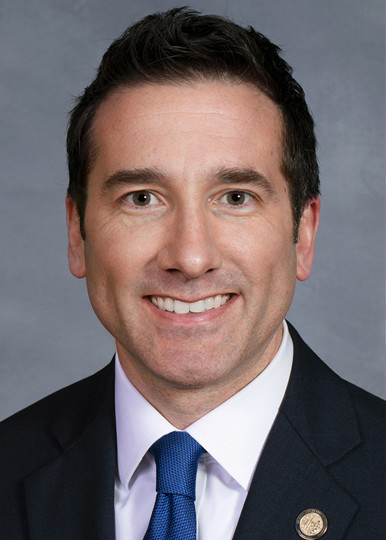
Sen. Terence Everitt
Sponsored bills
Maddy summarySB 453 limits nonrefundable "due diligence" fees in home sales to 1% of the purchase price, preventing sellers from requiring higher amounts as a condition of accepting offers. Any contract clause exceeding this amount is void, and sellers who enforce it may face legal costs and attorney fees. The bill also allocates $10 million to the North Carolina Housing Coalition to fund homebuyer education programs statewide. These provisions directly affect homebuyers and sellers in residential transactions, aiming to reduce upfront financial barriers and improve buyer preparedness. The law takes effect for new offers on or after October 1, 2025, with the funding provision beginning July 1, 2025.
Maddy summarySB 435 restores education-based salary supplements for North Carolina teachers and instructional support personnel (ISP) that were previously eliminated. It directs the State Board of Education to use the 2013 policy (TCP-A-006) to determine eligibility for the "M" salary schedule and degree-based pay increases (e.g., for master's or doctoral degrees). The bill appropriates $8 million from the General Fund for the 2025-2026 fiscal year to fund these reinstated supplements. The law takes effect on July 1, 2025, directly affecting eligible educators' pay through revised salary calculations.
Maddy summarySB 454, the Community Safety Act, allocates $5.5 million in state funds for North Carolina law enforcement agencies over the 2025-2026 fiscal year. It provides grants for community policing programs ($1 million), officer incentives for exemplary service or diversity efforts ($1.5 million), and additional detective funding for severe crimes ($2 million). The bill also revises use-of-force policies to ban strangleholds and neck restraints as acceptable tactics, requiring officers to use minimum force and prioritize de-escalation. Additionally, it sets a minimum hiring age of 21 for officers and allows denial of certification based on certain felony or misdemeanor convictions, regardless of expungement. These provisions directly affect all law enforcement agencies and officers in North Carolina.
Maddy summarySB 383, titled "Right to IVF," protects patients' access to assisted reproductive technology (ART) like in vitro fertilization (IVF), gamete intrafallopian transfer, and zygote intrafallopian transfer. It prohibits North Carolina or its subdivisions from restricting or interfering with patients' access to ART or healthcare providers' ability to offer or perform these services. The bill also clarifies that fertilized eggs or embryos outside the uterus are not legally considered "human beings" under state law. Additionally, it allocates $500,000 annually from 2025-2027 to expand Medicaid maternal support services (the Baby Love Program), matching federal funds for this purpose. The bill directly affects patients seeking ART and healthcare providers offering these services in North Carolina.
Maddy summarySB 331 clarifies that documents created by legislative staff at a lawmaker's request (such as draft bills, analyses, or committee materials) are not public records until specific conditions are met, including being introduced as a bill, distributed at a public committee meeting, or otherwise formally shared through legislative processes. The bill explicitly states that these documents remain confidential until they meet one of these conditions, reversing prior exceptions that allowed broader confidentiality. This change directly affects public access to legislative staff work products by defining clear circumstances under which such materials must become available. It does not require immediate public release but sets concrete criteria for when documents transition from confidential to public records.
Maddy summarySB 338, the NC Farmland and Military Protection Act, prohibits adversarial foreign governments (as designated by the U.S. Department of Commerce) from purchasing, leasing, or holding interests in agricultural land or land within 25 miles of military installations in North Carolina. The bill defines agricultural land as land used for farming (excluding up to 250 acres leased for research) and lists specific military bases like Fort Bragg and Camp Lejeune. Transfers violating the law are void, with compliance responsibility resting solely on the foreign government and the state - not other parties. The bill also allocates $50,000 for a farmland inventory starting July 1, 2025, and takes full effect for new land acquisitions on January 1, 2026.
Maddy summarySB 339 reinstates the State Bar Council’s authority to appoint four judges to North Carolina’s Judicial Standards Commission (replacing direct appointments by the General Assembly). It also restores previous disciplinary procedures for judges, including clearer definitions of "public reprimand" and updated steps for handling complaints about judicial conduct. The bill specifies that disciplinary records - such as complaints, hearings, and recommendations - will no longer be confidential, increasing transparency in judicial discipline cases. This directly affects judges facing conduct complaints, the State Bar Council (which now appoints commission members), and the public, as it makes judicial discipline processes more open.
Maddy summarySB 324, the 2025 Safe Drinking Water Act, requires North Carolina's Commission for Public Health to establish safe limits for harmful chemicals in drinking water by October 2025. It directly affects all North Carolina residents by mandating maximum contaminant levels (MCLs) for specific toxins like PFAS, PFOA, PFOS, hexavalent chromium, and 1,4-Dioxane - chemicals linked to cancer or serious health risks. The bill directs the Commission to base these limits on scientific evidence from other states and federal agencies, ensuring protections for vulnerable groups like children and pregnant people, while aligning with U.S. Environmental Protection Agency standards. The law also requires annual reviews to update these limits as new health science becomes available.
Maddy summaryThis bill requires North Carolina schools to continue providing appropriate educational services for academically or intellectually gifted students if they are placed in an alternative learning program or school. It directly affects gifted students who transition to alternative educational settings, such as specialized programs or schools outside their home district. The key provision amends state law to add a specific procedure ensuring these services are maintained during such placements. The bill focuses on preserving access to tailored educational support without altering existing program structures.