

Maddy summarySB 320 creates an additional retirement allowance for North Carolina state and local law enforcement officers who retire after meeting specific service and age requirements. Eligible officers with at least 30 years of service (or 55+ with 5+ years) under age 62 can choose between two calculation methods for their annual allowance: one based on their current pay rate and service, or one based on their pay rate at 30 years of service. The allowance, paid monthly from state funds, stops upon the officer’s death, reaching age 62 (for the first method), or meeting a time-based condition (for the second method). This change supplements retirement income without affecting other retirement benefits or salary increases.
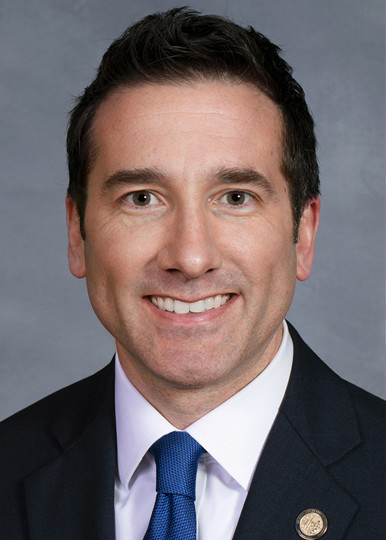
Sen. Terence Everitt
Sponsored bills
Maddy summarySB 242, the H.A.L.L. Accountability Act, repeals a previous law (S.L. 2023-134, Section 27.7(d)) that kept redistricting documents private. It requires all redistricting documents to be treated as public records, making them accessible to the public. This directly affects North Carolina legislators, state agencies, and local governments involved in redistricting by mandating transparency in their process. The bill changes the legal status of these documents from non-public to public records upon enactment.
Maddy summaryThis bill makes it a Class F felony in North Carolina to participate in a riot where someone attempts to overthrow the U.S. government, North Carolina government, or a local government (like a city or county). It also makes it a felony to incite such a riot if the incitement directly contributes to an attempt to overthrow government. The law applies only to offenses committed on or after December 1, 2025, and amends existing riot statutes to add this specific government-overthrow element as a felony trigger. It does not address past events, including the January 6, 2021, Capitol incident.
Maddy summarySB 212 restores local government authority to initiate down-zoning in Granville and Wake Counties without requiring written consent from affected property owners. Down-zoning refers to changes that reduce development density or limit permitted land uses (e.g., from commercial to residential). The bill specifically applies to properties within these two counties and their municipalities, reversing a prior requirement that down-zoning amendments needed owner consent. It takes effect immediately upon enactment but applies retroactively to December 11, 2024, to restore pre-existing zoning ordinances affected by a previous law. This policy change directly impacts property owners in Granville and Wake Counties by altering how local governments can modify zoning regulations.
Maddy summaryThis bill creates a new tax deduction for North Carolina taxpayers who pay labor organization membership dues. It allows individuals to deduct dues, fees, or assessments required for membership in a labor organization (as defined by state law) from their state taxable income. The deduction applies to payments made during taxable years beginning on or after January 1, 2026. This directly affects workers who are members of labor organizations and pay dues as a condition of membership.
Maddy summarySB 134 allows North Carolina local governments to require new residential developments to include affordable housing units through inclusionary zoning policies. It directly affects local zoning authorities, developers building new housing, and low-to-moderate income residents who would benefit from increased affordable housing options. The bill also appropriates $10 million in recurring funds to the North Carolina Housing Finance Agency for its Workforce Housing Loan Program starting in 2025. These provisions aim to supplement affordable housing availability by giving local governments tools to mandate inclusionary requirements and providing dedicated funding for housing loans. The bill takes effect on July 1, 2025.
Maddy summarySB 119 adds specific parcels of land (identified by tax parcel numbers) to the city limits of Creedmoor, North Carolina, and removes one parcel (180603417847) from the city limits. This change affects property owners in the added parcels, who will become subject to Creedmoor city taxes starting July 1, 2025, and owners in the removed parcel, who will no longer pay city taxes after that date. The bill specifies that existing tax liens on the removed property remain enforceable. The changes take effect on June 30, 2025.
Maddy summarySB 120 removes legal barriers to labor organizing in North Carolina by prohibiting employers from requiring union membership or dues as a condition of employment or continued work. It invalidates agreements that tie agricultural product purchases or settlement terms to union status and strengthens protections for workers denied jobs due to union affiliation. The bill directly affects all workers and employers in the state, including agricultural producers covered under federal labor laws. Key provisions repeal restrictions on labor agreements and clarify that union membership or dues cannot be mandated for employment under North Carolina law. The law applies to new agreements entered into after its effective date.
Maddy summarySB 103 allows North Carolina local school boards more flexibility in setting public school opening and closing dates. It permits schools to open as early as August 19 (instead of August 26) if they demonstrate "good cause" - defined as having closed for 8+ days annually due to emergencies like weather over 4 of the last 10 years. The bill also lets boards adjust closing dates to meet required instructional days. This applies to all schools except those already operating under modified calendars since 2003-2004, and takes effect for the 2025-2026 school year.
Maddy summarySB 102 is a procedural local act that solely defines the scope of North Carolina's 18th Senatorial District. It does not create new policies or affect residents, businesses, or government programs. The bill simply states that its provisions apply exclusively to the 18th Senatorial District and takes effect upon becoming law. This is a routine administrative measure with no substantive policy changes.