

Maddy summaryThis North Carolina bill requires that the salaries of state legislators be held in escrow if the General Assembly does not pass a budget by June 30, 2026. If the Senate and House do not ratify a state budget for the 2026-2027 fiscal year by that deadline, the pay earned by legislators from July 1, 2026, forward will be withheld. The withheld funds will be released only after the legislature ratifies a budget or adjourns for the year. The legislation also sets aside ten thousand dollars to cover the administrative costs of managing the escrow account.

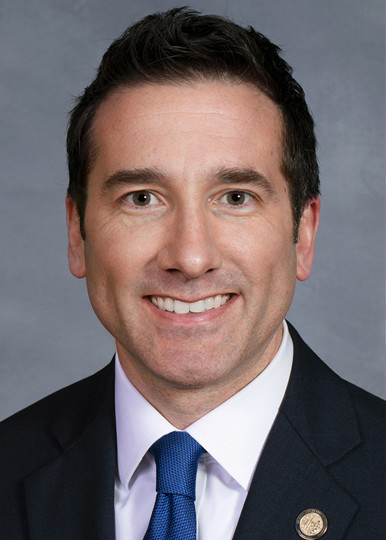
Sen. Terence Everitt
Sponsored bills
Maddy summarySB 487 requires that every spending item in North Carolina's Current Operations Appropriations Act must be sponsored by a specific legislator, with the sponsor's name included directly in the appropriation text. This applies only to funding measures within the annual operating budget bill, not to other types of legislation. The bill mandates that appropriations become legally invalid if they lack a named sponsor, aiming to clarify accountability for each spending decision. It does not change how funding is allocated or impact public services directly, but affects how budget language is drafted and approved.
Maddy summarySB 539, the North Carolina Utility Worker Protection Act, increases criminal penalties for assaulting utility workers while they perform their duties. It upgrades such assaults to a Class A1 misdemeanor (from lower-level offenses) and adds specific felony charges if deadly weapons are used. The bill defines "utility worker" broadly to include employees providing gas, electricity, water, internet, cable, telecommunications, sewer, or railroad services, covering both public and private sector workers. The law applies to offenses occurring on or after December 1, 2025, and does not affect prosecutions for acts before that date.
Maddy summarySB 482, the "Don't Tread on Me: An Individual Freedoms Act," creates new legal protections for North Carolinians by limiting state agency actions across multiple areas. It directly affects all residents by prohibiting warrantless government surveillance, requiring agencies to stop demanding private medical, religious, or political information for services, banning ideological restrictions on reproductive care, and protecting parental rights in education and healthcare decisions. Key provisions mandate that schools provide fact-based education without political manipulation, prevent discrimination in employment or housing based on private beliefs, and ensure government benefits are not denied due to personal health choices or political views. The bill establishes these rights as enforceable standards for all state agencies, requiring actions to be "narrowly tailored" to a compelling state interest.
Maddy summarySB 544 requires the North Carolina State Auditor to conduct regular audits of crisis pregnancy centers that receive state funding. This directly affects crisis pregnancy centers (which typically offer pregnancy-related support services but do not provide abortion care) that accept state money. The bill amends state law to add this audit responsibility to the Auditor’s duties, ensuring financial oversight of these centers. The law would take effect upon enactment but is still pending in the legislative process.
Maddy summarySB 545 requires the North Carolina State Auditor to regularly review the financial operations of the state legislature (General Assembly). This procedural bill directly affects the General Assembly by mandating periodic financial audits of its own spending and administration. The key provision amends state law to explicitly add "auditing the General Assembly" to the Auditor's responsibilities under G.S. 147-64.6(c). It does not change laws for citizens or create new policies, only establishing a routine financial review process for the legislature itself. The bill is currently pending in the Senate Rules committee.
Maddy summarySB 543 requires the North Carolina State Auditor to periodically audit private schools that enroll students receiving state-funded scholarship grants under specific education programs. This bill directly affects nonpublic schools participating in state scholarship initiatives, mandating regular financial reviews of their use of public funds. The key provision adds this audit responsibility to the State Auditor's duties under existing law, ensuring transparency for taxpayer dollars spent on private education. The bill focuses on concrete financial oversight without altering scholarship eligibility or program structure. (Note: The bill is currently in early legislative stages as of March 2025.)
Maddy summarySB 541, the Train Infrastructure Acceleration Act, allocates $1 million in additional state funding for each of seven specific train routes in North Carolina to support engineering studies and feasibility work. The bill directly affects the North Carolina Department of Transportation (NCDOT), which must use these funds for projects like the Asheville-Salisbury line and the Charlotte-Washington, D.C. corridor, alongside existing routes. Key provisions include requiring annual reports on fund usage and progress by December 1 each year, and appropriating $7 million total from the General Fund. The act focuses on advancing preliminary planning, not construction, to strengthen federal partnerships and secure future rail development. It becomes effective July 1, 2025.
Maddy summarySB 633 prohibits individuals convicted of a misdemeanor domestic violence offense from buying or owning firearms. It requires universal background checks for all firearm sales (including private transactions) and mandates that parents/guardians certify safe firearm storage for students in public schools. The bill also reinstates North Carolina’s pistol permit law. These provisions directly affect firearm sellers, private sellers, and people with domestic violence misdemeanor convictions, aiming to restrict firearm access for specific high-risk groups. The law takes effect December 1, 2025, for new offenses.
Maddy summarySB 537 defines the scope of practice for Advanced Practice Registered Nurses (APRNs) in North Carolina, specifically for nurse practitioners (NPs), certified nurse midwives (CNMs), certified registered nurse anesthetists (CRNAs), and clinical nurse specialists (CNSs). The bill provides statutory definitions for each role, detailing permitted activities like diagnosing conditions, prescribing medications, ordering diagnostic tests, and managing patient care within their specialized focus areas. By codifying these definitions in state law, the bill removes longstanding ambiguity about APRN practice that has persisted for decades, as noted by North Carolina courts and the executive branch. This change directly affects over 20,000 APRNs in the state by legally clarifying their scope of practice.