

Maddy summarySB 620, the STRONG Act of 2025, targets North Carolina's fentanyl crisis through several key measures. It significantly increases prison terms and fines for drug trafficking, especially for fentanyl, heroin, or carfentanil (e.g., 28+ grams carries a minimum 225-month sentence), and adds 60 months to sentences for offenses near schools or parks (Section 3.3). The bill appropriates $10 million for the State Bureau of Investigation's Drug Task Force (Section 4.1) and expands the Controlled Substances Reporting System. It also funds opioid prevention/treatment programs and creates a tax credit for businesses hiring staff trained in substance use disorder (Section 4.2). These provisions directly affect traffickers, law enforcement, healthcare providers, and eligible businesses.
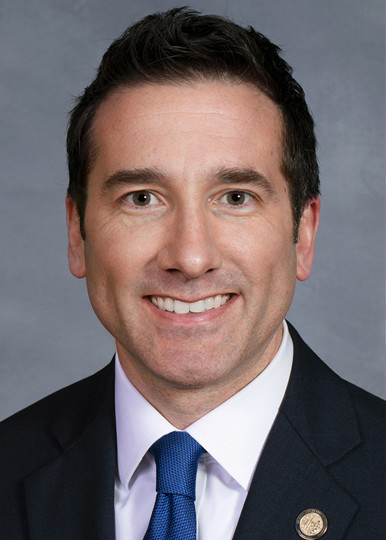
Sen. Terence Everitt
Sponsored bills
Maddy summarySB 638, the "Fair Maps Act," proposes a constitutional amendment to replace North Carolina’s current legislative redistricting process with an independent commission. It would establish the North Carolina Citizens Redistricting Commission to draw congressional and state legislative districts after each federal census, removing direct control from the General Assembly and governor. The law requires districts to have equal population, remain contiguous, avoid splitting counties, and preserve communities of interest (like shared cultural or geographic ties). If approved by voters in 2026, this change would take effect for the 2030 census-based redistricting cycle.
Maddy summarySB 628, the Safe Schools Transparency Act, requires North Carolina public schools to immediately notify parents or guardians about credible threats targeting their child, the school campus, weapons, or requiring law enforcement action. Schools must provide notifications via multiple methods (text, email, phone, or website) within one hour of law enforcement confirmation, including threat details and response actions. Failure to notify can result in school funding reductions ($5,000 per violation), administrative penalties, or termination for responsible staff, with repeated failures triggering corrective plans or additional training. Additionally, schools must publish annual safety reports online detailing threats, lockdowns, security measures, and safety policies for parent review.
Maddy summarySB 627 allows North Carolina small businesses with annual gross receipts under $10 million to reduce their state income tax by deducting funds deposited into a special capital improvement account. Businesses can deduct up to 5% of their adjusted gross income (capped at $1 million), 2% (up to $2 million), or 1% (up to $3 million) for qualifying property improvements like upgrades that add value, extend property life by 10+ years, or adapt property for new business uses. Funds must be deposited into a federally insured bank account and used solely for these improvements; unused funds must be added back to taxable income. The bill takes effect for tax years beginning January 1, 2025, and directly affects small businesses making eligible capital investments.
Maddy summarySB 636, the School Psychologist Omnibus, increases compensation for North Carolina school psychologists and creates programs to boost recruitment and training. It provides a $650 monthly salary supplement for all school psychologists, plus a 12% supplement for those with a nationally certified credential, funded by $8.1 million. The bill also allocates $1.7 million for grants to school districts offering up to $5,000 signing bonuses to recruit psychologists, $5 million for internship stipends, and $5 million for a virtual training program at Appalachian State University, plus $1.6 million to expand university training programs at five UNC schools. These changes, effective July 2025, directly affect school psychologists, public school districts, and university training programs to address staffing shortages.
Maddy summarySB 632 ("Homes for Heroes") creates a homebuyers' assistance program for North Carolina public servants (including teachers, firefighters, law enforcement, and emergency medical personnel) who are first-time homebuyers. It provides up to $25,000 or 10% of a home's purchase price - covering down payments, mortgage insurance, and closing costs - using $200 million in state funds, with mortgage assistance limited to 60 months. Separately, it establishes a tax credit for volunteer firefighters and rescue workers who incur unreimbursed work expenses, capping the credit at $5,000 or the taxpayer's annual income tax liability, requiring 36 hours of annual training. The program begins July 1, 2025, and the tax credit applies to taxable years starting January 1, 2025.
Maddy summarySB 630, the School Mental Health Support Act, creates two programs to improve student mental health services in North Carolina public schools. It appropriates $50 million for a grant program to help schools hire mental health support personnel (like counselors and psychologists), prioritizing schools serving students without insurance or with disabilities. Additionally, it allocates $50 million for a loan repayment program covering 20% of student debt annually for mental health workers (e.g., counselors, psychologists) who graduated from UNC schools and work in high-need areas. Both programs require annual reporting to legislative committees on funding distribution and outcomes. The bill directly affects public school units and mental health professionals in North Carolina.
Maddy summarySB 641 reenacts North Carolina's refundable child tax credit, providing financial support to low- and moderate-income families with children. It offers $1,900 annually for each child under age 6 and $1,600 for older qualifying children, with credit amounts phasing out based on income (e.g., married couples filing jointly receive full credit up to $40,000 AGI, reduced to $100 between $40,000-$100,000, and none above $100,000). The credit is refundable, meaning families may receive a cash payment if the credit exceeds their state tax liability. This policy directly affects North Carolina households with children who meet income thresholds, aiming to reduce child poverty by supplementing family income. The bill takes effect for tax years beginning January 1, 2025.
Maddy summarySB 645, "The Protect Our Schools Act," requires North Carolina's Department of Transportation to identify "school walk zones" near schools with high pedestrian traffic and set lower speed limits (minimum 20 mph) in those areas during school hours. It increases penalties for speeding in school zones (a $250 fine) or causing injury to a minor (a misdemeanor charge), applying to both public and private schools. The bill creates a $10 million Pedestrian Safety Enhancement Fund to support zone assessments, crosswalk guard training, and public awareness campaigns about school zone safety. These changes directly affect drivers, students, and school communities by strengthening traffic safety measures around schools. The law takes effect on December 1, 2025, with fund allocations beginning July 1, 2025.
Maddy summarySB 647, the Child Promise Act, allocates $90.25 million to expand North Carolina's Pre-K program to 10,000 new slots by 2027, serving 4-year-olds from families earning up to 300% of the federal poverty level (FPL). It provides $6.8 million annually in grants for childcare facilities in underserved areas (where child-to-provider ratios exceed 3:1), with funding levels based on facility size (up to $500,000 for large centers) and requiring a 15% match and 5-year service commitment. The bill also funds after-school programs in high-need public schools (over 50% free/reduced lunch students) for 3 hours daily, adjusts childcare subsidies to cover up to 300% FPL for children under 5, and creates a $1,500 tax deduction per child for families earning 300-400% FPL.