

Maddy summarySB 440, the "Current Operations Appropriations Act of 2025," allocates base budget funding for North Carolina's state departments, agencies, and universities for the 2025-2027 fiscal biennium. It specifies exact funding amounts for all state operations, including $12.94 billion for public instruction, $8.83 billion for health and human services, and $4.24 billion for the University of North Carolina system. The bill directs all state entities to spend within these allocated amounts, with unused funds reverting to the appropriate fund at year-end. As a routine budget measure, it does not create new policies or affect specific groups beyond funding existing state services.
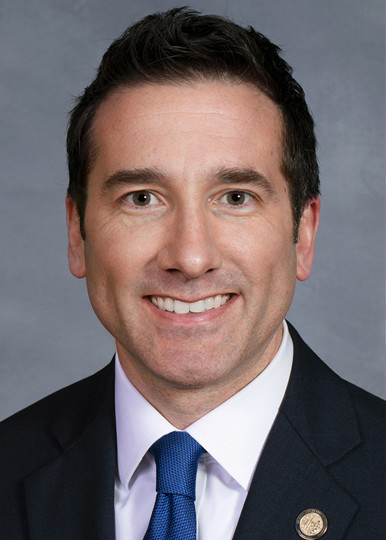
Sen. Terence Everitt
Sponsored bills
Maddy summarySB 438, titled "NC Adopt ERA," is a bill to formally ratify the Equal Rights Amendment (ERA) to the U.S. Constitution. The ERA, proposed by Congress in 1972, was ratified by 38 states (including Virginia in 2020), meeting the constitutional requirement for three-fourths of states. This bill directs North Carolina to send a certified copy of its ratification to the U.S. Archivist and Congress, completing the state's role in the federal amendment process. If enacted, North Carolina would join the 38 states that have ratified the ERA, which the bill states is now the 28th Amendment to the U.S. Constitution.
Maddy summarySB 455, the Main Street Resilience Act, provides North Carolina small businesses with a new income tax deduction starting in 2026. It allows eligible small businesses to deduct up to $75,000 of their net business income from taxable income each year, with married couples filing jointly able to deduct up to $150,000 total. To qualify, a business must have fewer than 50 total employees (including related entities) and annual revenue under $5 million, excluding passive income. This deduction directly reduces tax liability for qualifying small businesses operating in North Carolina.
Maddy summarySB 434, the School Workers Fair Pay Act, requires North Carolina public schools to pay all noncertified employees (such as cafeteria workers, custodians, and administrative staff) a minimum hourly wage of $17.00, effective July 1, 2025. The bill mandates the State Board of Education to adjust salary schedules to meet this rate and allocates $144.7 million from the General Fund to the Department of Public Instruction for the 2025-2026 fiscal year to support this change. Funds must supplement existing salaries without replacing current state or local funding. This policy directly affects thousands of non-teaching school staff across all North Carolina public school districts.
Maddy summarySB 432 prohibits large business entities from purchasing 100 or more single-family homes in qualifying counties (population over 150,000) for rental use. It directly affects real estate investment firms and corporations that buy homes solely as rentals, aiming to prevent artificial inflation of home prices by limiting excessive bulk acquisitions. The law defines "single-family home" as detached, semi-detached, or townhomes meeting specific separation criteria and imposes civil penalties of up to $100 per day per home for violations. Enforcement is handled by the Attorney General or individuals through civil lawsuits, with remedies including damages, attorney fees, and joint liability for affiliated entities. The bill applies to home purchases occurring on or after its effective date.
Maddy summarySB 436, the Age with Dignity Act, creates a new tax credit for North Carolina taxpayers who care for adult dependents. It provides a $15,000 credit for caregivers supporting a veteran relative and $12,000 for others, directly affecting families claiming dependent adults as tax exemptions. To qualify, taxpayers must earn below specific income thresholds ($75,000 single, $112,500 head of household, $150,000 married filing jointly) and have adjusted gross income under these limits. The credit reduces state tax liability for qualifying taxpayers and takes effect for 2025 tax years.
Maddy summarySB 447 establishes the Sewer Repair Task Force to assess North Carolina's wastewater infrastructure needs, develop implementation strategies, and identify funding sources. The bill appropriates $50 million from the General Fund specifically to the South Granville Water and Sewer Authority for four concrete projects: expanding facilities in Creedmoor and Butner ($20M), upgrading treatment for PFAS compliance ($15M), modernizing water meters ($10M), and replacing lead pipes ($5M). The Task Force, composed of 18 members including legislators, agency directors, county commissioners, and wastewater entity representatives, must submit a final report by December 2026. This bill directly affects South Granville's service area and addresses state-identified infrastructure gaps, particularly in rural and developing communities.
Maddy summarySB 437, the "Middle Class Momentum Act," increases North Carolina's standard income tax deduction for individual filers starting in 2026. It raises the standard deduction to $26,000 for married couples filing jointly (from $25,500), $19,500 for heads of household (from $19,125), and $13,000 for single filers (from $12,750). This change directly affects most North Carolina individual taxpayers who claim the standard deduction instead of itemizing deductions. The bill takes effect for taxable years beginning January 1, 2026.
Maddy summarySB 431 protects law enforcement officers (including criminal justice and justice officers) who report excessive force or misconduct by colleagues. It requires officers to report such incidents within 72 hours to a supervisor not involved, and prohibits retaliation like termination or discipline for making a good-faith report. The bill explicitly allows agencies to still discipline officers for misconduct that occurred *before* the report was made. It also allocates $50,000 each to two training commissions for implementing these changes, effective December 2025.
Maddy summarySB 433 reinstates longevity pay for North Carolina educators, directly affecting teachers, instructional support staff, principals, and assistant principals in public schools. It sets specific annual payment rates based on years of state service: 1.5% for 10-14 years, 2.25% for 15-19 years, 3.25% for 20-24 years, and 4.5% for 25+ years, paid as a lump sum each year. The bill appropriates $140.3 million from the General Fund for the 2025-2026 fiscal year to fund these payments. It becomes effective July 1, 2025, restoring previously cut longevity benefits.