

Maddy summaryThis bill requires that regular municipal elections for the Towns of Brookford and Catawba, as well as the Cities of Claremont and Conover in Catawba County, be held in even-numbered years instead of their current odd-numbered schedule. To implement this change, the legislation extends the current terms of local officials whose offices would otherwise expire in 2027 and 2029, ensuring a seamless transition to the new election cycle. Municipal elections in these four communities will be paused in 2027 and are scheduled to resume in 2028, at which point they will align with the state's general election held in November of even-numbered years. The bill updates the specific charters of these municipalities to reflect this new timing while maintaining the existing four-year staggered terms for local officeholders.
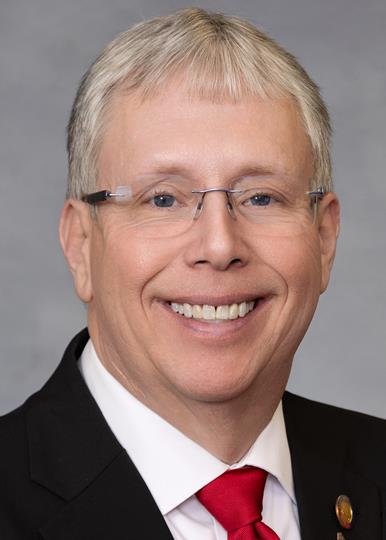
Rep. Mitchell Setzer
Sponsored bills
Maddy summaryHB 434, titled "Lower Healthcare Costs," is a procedural bill focused on updating definitions related to health insurance utilization review in North Carolina. It rewrites statutory definitions (e.g., "medical necessity," "clinical peer," "closely related service") within existing insurance regulations but does not introduce new cost-saving mechanisms or policy changes. The bill directly affects insurers, healthcare providers, and covered individuals by standardizing terminology used in prior authorization processes. As a definition-only update, it has no concrete policy impact on healthcare costs or patient access, and the title does not align with its actual scope.
Maddy summaryHB 358 allocates $65.5 million from North Carolina's State Emergency Response Fund to support recovery from Tropical Storm Chantal, primarily benefiting Alamance, Caswell, Chatham, Durham, Granville, Moore, Orange, Person, and Wake counties. The funds cover state matching for federal disaster aid ($55 million), direct assistance to individuals ($6 million), a public dashboard tracking spending ($2 million), and repairs to Warren Wilson College and UNC Asheville ($2.5 million) following Hurricane Helene. It requires quarterly reports on fund usage and mandates unspent funds to revert to the Savings Reserve by June 30, 2031. The bill focuses on concrete disaster recovery funding without changing existing policies or creating new programs.
Maddy summaryHB 402 requires North Carolina state agencies to assess the financial impact of proposed permanent rules. If a rule would cost affected individuals or businesses $20 million or more over five years, it must be approved by the General Assembly before taking effect. For rules with a $1 million or more annual cost impact, agencies must prepare a fiscal note for review by the Office of State Budget and Management. The bill also mandates a two-thirds vote by agency boards to adopt rules exceeding the $1 million cost threshold. This directly affects state agencies creating regulations and the businesses or residents who would bear the costs of those rules.
Maddy summaryHB 318 requires North Carolina county jails and detention facilities to check the immigration status of individuals charged with specific offenses (including certain felonies, misdemeanors, and impaired driving) and to notify U.S. Immigration and Customs Enforcement (ICE) if a detainer is issued. If ICE issues a detainer, facilities must hold the person for up to 48 hours (or until ICE takes custody) and notify ICE 2 hours before the person would otherwise be released. For pretrial defendants facing similar charges, the bill mandates a two-hour hold to allow ICE to issue a detainer; if none is received, the defendant must be released. The law also shields state officials from liability when following these procedures.
Maddy summaryHB 549 clarifies the State Auditor's authority by exempting the Office of the State Auditor from certain financial oversight laws and IT procurement rules. It specifies that the Auditor can access all state agency records (including digital data), investigate misuse of public funds, and refer certain cases to other agencies like the State Ethics Commission. The bill directly affects the State Auditor’s office, state agencies, and publicly funded entities that handle state or federal funds. These changes streamline the Auditor’s ability to conduct audits and investigations while maintaining clear boundaries for their oversight role.
Maddy summaryHB 850 imposes a moratorium on approving new or expanded surface water transfers exceeding 15 million gallons per day between river basins until March 1, 2027. This directly affects water utilities, developers, or entities seeking large-scale water transfers that would move significant volumes between river systems. The bill requires the UNC Collaboratory to study and recommend updates to the current approval process, focusing on environmental equity, climate impacts on water flows, economic fairness for affected communities, and incentives for drought-resilient infrastructure. The study must address how transfers impact downstream users, river ecosystems, and potential financial burdens on lower-income areas or alternative infrastructure costs.
Maddy summaryHB 23 transfers 11 acres of state-owned land in Pender County to the Town of Burgaw for $1, with a reversion clause if the land is no longer used for public purposes. It designates the South Fork Passage Trail (a 60-mile hiking and paddling route across Catawba, Lincoln, and Gaston Counties) as part of North Carolina's State Parks System, authorizing the Department of Natural and Cultural Resources to manage it without requiring new appropriations for land acquisition. The bill also codifies the Lake Norman Marine Commission into state law and authorizes the state to support the Gullah Geechee Heritage Trail in Brunswick County. These provisions directly affect local governments (Burgaw, trail jurisdictions), state land management, and recreational planning.
Maddy summaryHB 559 modifies fees for elevator and amusement device inspections in North Carolina to address a backlog of over 3,000 overdue inspections and staffing shortages. It establishes new, capped fee schedules for routine elevator inspections ($200-$300 depending on building size), amusement rides, and related services, effective July 2025. Fees will automatically adjust annually based on the Consumer Price Index (CPI) starting in 2026, with increases published 60 days in advance. The bill ensures all fees are collected directly from building owners/operators and used exclusively to fund inspections, permitting, and training - without new taxpayer costs or fee reversions.
Maddy summaryHB 357 establishes licensing and regulatory requirements for continuing care retirement communities (CCRCs) in North Carolina. All providers (both for-profit and nonprofit) must obtain a license from the North Carolina Department of Insurance and undergo annual actuarial reviews to verify financial stability. The law directly affects CCRCs operating in the state and their residents, who often pay large upfront fees for long-term care. Key provisions include mandatory actuarial studies to ensure providers can sustain services, protecting residents from financial harm if a provider becomes insolvent.