

Maddy summaryThis bill allows school districts in New Jersey to count days of virtual or remote instruction toward the mandatory 180-day school year requirement when schools are closed due to emergencies or public health directives. It applies to public schools, charter schools, and private schools serving students with disabilities, ensuring that remote learning can fulfill attendance and graduation requirements if approved by the state commissioner. Under the new rules, districts must submit their remote instruction plans for approval within 30 days of a closure, or the commissioner may grant retroactive approval if the district cannot meet the initial deadline. The legislation also requires the commissioner to provide guidance on technical access for students without internet, the length of remote learning days, and how these changes affect school meals and standardized testing. Additionally, the superintendent gains the authority to implement remote instruction plans during emergencies after consulting with the school board.
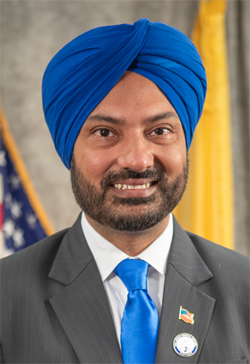
Asm. Balvir Singh
Sponsored bills
Maddy summaryThis bill creates a new fund within the New Jersey Department of Education to help public schools support students impacted by immigration enforcement activities. The fund will be financed through annual state appropriations, federal grants, and other available monies, and it will remain in place without expiring. Schools receiving money from this fund can use it to provide trauma-informed mental health services, address the effects of parental separation, and hire or train staff to deliver these supports. To ensure accountability, the Department of Education will determine how to distribute the money, and schools must report on how they use the funds.
Maddy summaryThis bill expands New Jersey's Brownfields Redevelopment Incentive Program to offer tax credits specifically for developers creating residential projects on cleaned-up brownfield sites. The legislation amends existing state laws to formally define key terms such as 'affordable housing' and 'developer,' ensuring clarity for those seeking financial incentives. By clarifying these definitions and extending the program's scope, the bill aims to encourage the reuse of contaminated land for housing development.
Maddy summaryThis bill requires New Jersey public schools to adopt a policy that restricts their interaction with federal immigration authorities. Specifically, it prohibits schools from sharing student records regarding immigration status, allowing federal agents on school property, or assisting in civil immigration investigations. The law distinguishes between civil warrants, which schools must not honor, and judicial warrants issued by a judge, which schools may still comply with. School districts have 180 days to implement these rules, which aim to prevent the use of school resources for immigration enforcement.
Maddy summaryThis bill designates February 22 of each year as "Peter Still Day" in New Jersey to honor the life of Peter Still, a formerly enslaved man who became a prominent figure in the abolitionist movement. The resolution requires the Governor to issue an annual proclamation encouraging public officials, organizations, and citizens to observe the day with appropriate events and activities. By establishing this commemorative day, the bill aims to recognize Peter Still's contributions to ending slavery and his significant role in New Jersey's history.
Maddy summaryThis bill requires public schools in New Jersey to start a breakfast program if at least five percent of their students qualify for free or reduced-price meals. School districts must submit implementation plans to the Department of Agriculture by specific deadlines, or they must follow a standard model plan provided by the state if they fail to submit their own. The law includes a waiver process for schools that lack the necessary staff, facilities, or funding to operate the program immediately, allowing them to request an exemption if they outline a plan to address these gaps in the future.
Maddy summaryThis bill requires New Jersey's Motor Vehicle Commission (MVC) to issue special windshield stickers for qualifying electric vehicles. Owners of eligible EVs would display these stickers to prove exemption from annual emission inspections. The bill defines "electric vehicle" as one powered solely by electricity without hydrocarbon fuel (excluding plug-in hybrids). It directly affects EV owners by eliminating a required inspection for their vehicles under the new sticker system.
Maddy summaryThis bill designates the historic "John Bull" steam locomotive as New Jersey's official state steam locomotive. The "John Bull" was shipped from England to Bordentown, New Jersey, in 1831, assembled by Isaac Dripps, and used in early railway demonstrations to showcase steam transport to the state legislature. It is now preserved at the Smithsonian Institution and recognized as the first locomotive set aside as a historic relic in the U.S. The designation is purely symbolic, honoring the locomotive's historical role in New Jersey's transportation development without creating new laws or affecting any regulations.
Maddy summaryThis bill codifies New Jersey's Attorney General's "Strengthening Trust Between Law Enforcement and Immigrant Communities" directive into law. It directly affects all New Jersey state, county, and municipal law enforcement agencies and officers by prohibiting them from: (1) stopping or detaining people based solely on immigration status, (2) asking about immigration status except during specific criminal investigations, and (3) sharing personal information with federal immigration authorities for immigration enforcement purposes. The law clarifies that officers' primary duty is enforcing state criminal laws, not federal immigration law, and emphasizes that this does not prevent enforcing state criminal laws. The goal is to build trust in immigrant communities and ensure law enforcement resources focus on public safety rather than immigration enforcement.
Maddy summaryThis New Jersey bill establishes the "Privacy Protection Act" to limit how government agencies and healthcare facilities collect and share certain personal information. It prohibits them from requesting details like immigration status, citizenship, social security numbers, or tax IDs unless necessary for specific public services, benefits, or healthcare delivery (with healthcare exceptions for patient safety). The bill requires written consent in the person's preferred language for sharing any collected data, detailing exactly what will be shared, why, and confirming consent is voluntary without retaliation. It also bans selling or sharing vehicle license plate data except under court orders, subpoenas, or with explicit written consent, and mandates government entities to update privacy policies within one year.