

Maddy summaryHB 5406 would prohibit Michigan health insurers from covering organ transplants if the procedure occurs in China or another country designated by the Michigan Department of Health and Human Services as engaging in forced organ harvesting, or if the organ originated from such a country. It applies to all health insurance policies issued or renewed in Michigan and requires the health department director to designate which countries fall under this prohibition. The bill defines "forced organ harvesting" as organ removal through coercion, abduction, deception, or abuse of power. This policy change would directly affect patients seeking transplants involving organs from designated countries and insurers offering coverage for such procedures.
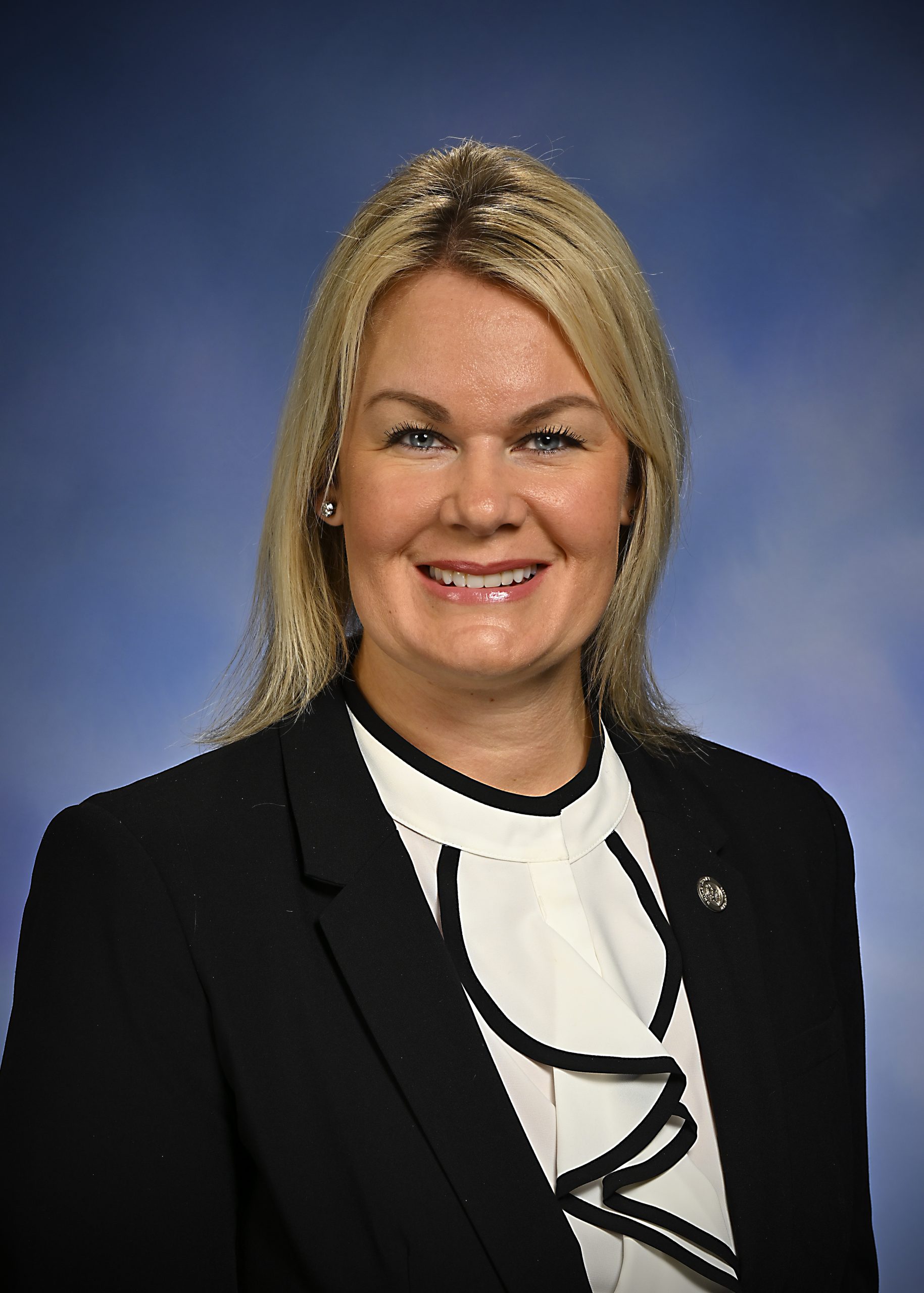
Rep. Rachelle Smit
Sponsored bills
Maddy summaryHB 5206 creates a new "limited cosmetologist license" under Michigan's cosmetology law, allowing individuals to perform specific services like natural hair cultivation, manicuring, or skin care without needing a full cosmetologist license. This change streamlines licensing for professionals who specialize in these areas, eliminating the need for separate licenses (e.g., for manicuring or esthetics) while requiring them to limit their practice to the licensed services. The bill updates definitions to clarify terms like "natural hair cultivation" (techniques such as braiding or twisting without chemicals) and ensures license holders cannot perform unlicensed services like electrology. It directly affects cosmetology practitioners seeking to offer these focused services more efficiently.
Maddy summaryHB 4917 removes a requirement that only state-approved graders may grade butter under Michigan's Manufacturing Milk Law. This change directly affects butter graders who previously needed state licensing to perform grading services. The bill deletes Section 157(1) of the law, which mandated department approval for graders, while keeping existing grading standards (based on federal regulations) intact. Dairy businesses and graders will no longer need to comply with the state licensing rule for butter grading.
Maddy summaryHB 5201 requires healthcare professionals performing abortions in Michigan to submit detailed, anonymized reports to the state health department within 7 days. The reports must include specific data points like patient age, gestation period, reason for the abortion (e.g., health risks, rape, economic factors), facility details, and medical method, but exclude all personal identifiers. Strict confidentiality rules prohibit disclosing any information that could identify individuals or facilities, with reports destroyed after 5 years and only aggregated statistical data published annually. This policy applies directly to abortion providers and the state health department, focusing solely on data collection for public health monitoring, not individual records or enforcement.
Maddy summaryHB 5203 amends Michigan's sentencing guidelines (MCL 777.13k) to establish specific penalties for disclosing private medical information related to abortions. It directly affects healthcare providers, clinics, or others who share confidential abortion-related details without authorization. The bill creates new sentencing parameters for such disclosures within the criminal code, requiring judges to consider these guidelines when determining penalties. The legislation is currently under review by the Health Policy Committee after its November 2025 introduction.
Maddy summaryHB 5202 requires healthcare professionals to submit written reports to Michigan's Department of Health for any patient experiencing a physical complication or death directly linked to an abortion. The reports must be anonymized (removing patient identifiers), aggregated into the state's annual abortion statistics, and destroyed after five years. The bill mandates the department to create a standardized reporting form for urgent care facilities and emergency departments, which must be distributed and posted online. This bill, tied to companion legislation HB 5201, focuses solely on data collection requirements without changing abortion access or medical standards.
Maddy summaryHR 196 is a resolution demanding Michigan's Secretary of State comply with a federal request for an unredacted copy of the state's voter registration list, as required by the Civil Rights Act of 1960 and the National Voter Registration Act of 1993. It directly affects the Michigan Secretary of State's office by mandating disclosure of voter data within legal limits. The bill does not create new law but compels adherence to existing federal requirements for voter list transparency. This procedural resolution focuses solely on directing state compliance with federal mandates, not altering election policies.
Maddy summaryHR 195 is a resolution opposing Michigan's proposed Health Education Standards Framework. It urges the Michigan Department of Education to redraft the standards or the Michigan State Board of Education to reject them, specifically requesting the exclusion of content related to gender identity, gender expression, and sexual orientation from health education standards. The resolution cites parental rights and existing law requiring local control and opt-out provisions for sex education as justification. It directly targets state education officials, not students or schools, and serves as a non-binding request for policy revision.
Maddy summaryHB 4642 amends Michigan's campaign finance law to require the secretary of state to refer violations involving themselves, their immediate family, or a connected campaign to the attorney general for resolution. This change ensures that cases where the secretary of state is a party are handled by an independent office, avoiding potential conflicts of interest. The bill does not alter the secretary of state's authority over other campaign finance matters. It specifically clarifies the process for referring such cases to the attorney general under the existing law.
Maddy summaryThis bill removes a requirement for Michigan school board members to formally accept their positions within 10 business days of election or appointment. Previously, newly elected or appointed members had to file acceptance with the school board secretary after being notified by the election coordinator. The change eliminates this step under Section 309 of the Michigan Election Law (MCL 168.309), simplifying the onboarding process. It directly affects all school board members elected or appointed across Michigan school districts.