

Maddy summaryMichigan House Bill 6302 amends the state's school code to require public school districts to display a United States flag in every classroom or instructional site where students recite the pledge of allegiance. The bill specifies that this flag must be prominently placed using a stand, post, or by being draped or hoisted within the room. This requirement supplements existing rules that mandate a larger flag be displayed on the exterior of school buildings during school hours, except in inclement weather when it must be moved indoors.

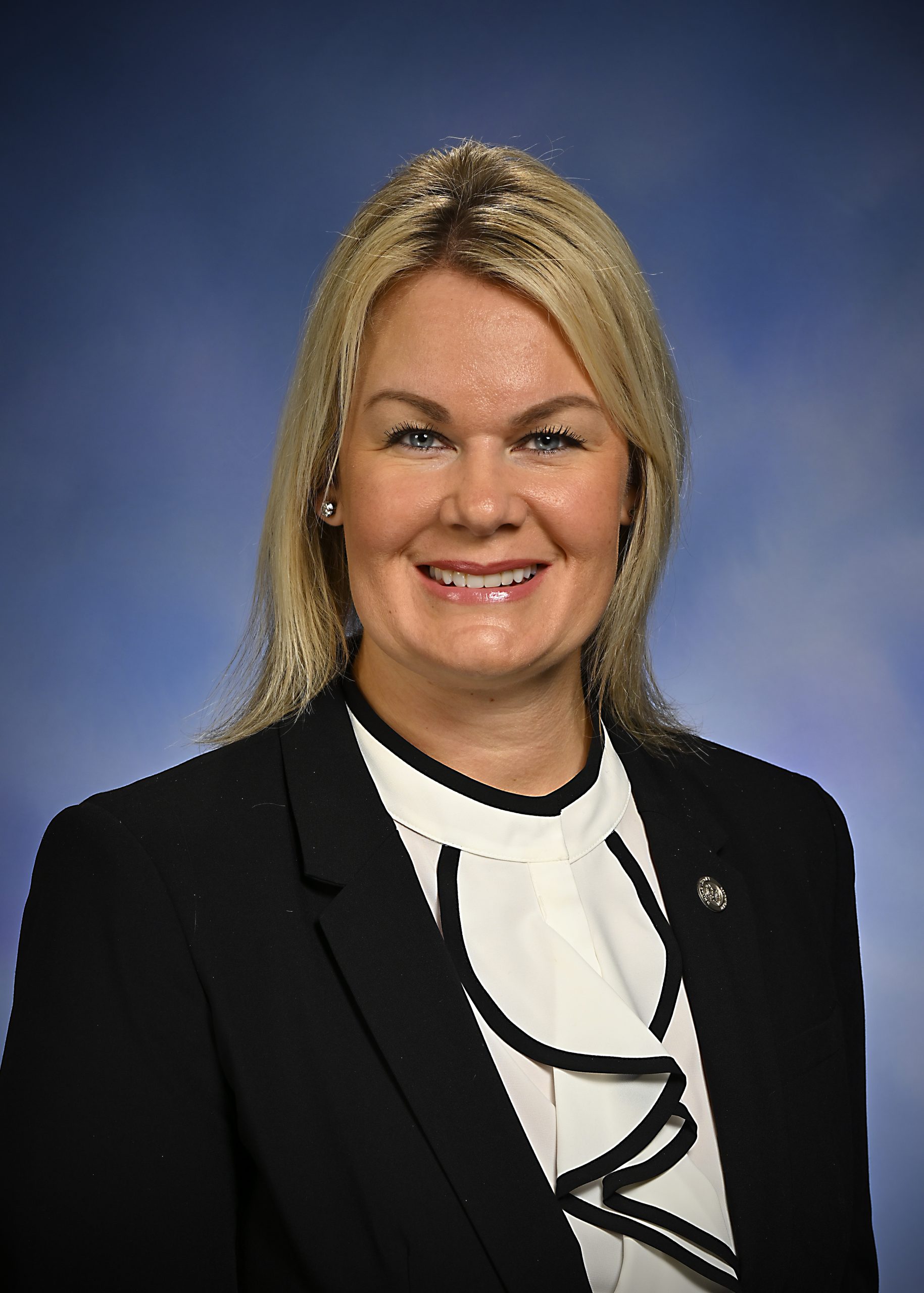
Rep. Rachelle Smit
Sponsored bills
Maddy summaryMichigan House Bill 6286 creates a new legal standard that allows injured parties to sue freight brokers and carriers for damages caused by commercial motor vehicles. The bill holds these companies liable if they hire, retain, supervise, or train an employee or independent contractor who has a specific unfitness that poses a danger to others. To be held responsible, the broker or carrier must have known or should have known about this particular unfitness at the time of hiring or supervision, and that unfitness must have directly caused the injury. The law defines "particular unfitness" as a specific trait or prior conduct indicating unsuitability for a task, explicitly excluding general incompetence from liability.
Maddy summaryHB 4189 names a specific bridge on South Grand Avenue over I-96 in Fowlerville as the "LCpl Michael W. Hanks Memorial Bridge" to commemorate a fallen Marine. The bill requires the state transportation department and Livingston County road commission to install signs at both approaches of the bridge designating its new name. This is a purely commemorative measure with no policy changes or financial impact, directly affecting the bridge location and signage in Fowlerville. It amends Michigan's Memorial Highway Act to add this designation without altering transportation policies or funding.
Maddy summaryHB 4350 amends Michigan's Natural Resources and Environmental Protection Act to allow individuals to feed wild birds and other wildlife under specific conditions. This bill permits such feeding if it occurs within 300 feet of a residence and the total amount of feed does not exceed two gallons. It clarifies that this allowance does not apply to activities like baiting for hunting, normal agricultural practices, or feeding conducted in a way that excludes deer and elk. This aims to create limited exceptions for recreational or preventative feeding of wildlife by residents.
Maddy summaryThis bill amends Michigan's Natural Resources and Environmental Protection Act to streamline the permitting process for wetland development and clarify the roles of state and local governments. It requires the state department to post pending applications and public notices online while establishing a 60-day timeline for holding public hearings after receiving a complete permit application. The legislation also grants local units of government the authority to adopt their own wetland ordinances, provided they follow specific rules regarding wetland definitions and permit requirements. Additionally, the bill sets a 90-day deadline for local governments to review applications in areas with local ordinances, after which the application is automatically approved if no decision is made. Finally, it introduces a process allowing permit holders to request changes without restarting the entire application process, limiting the department's ability to add unrelated requirements.
Maddy summaryThis bill amends Michigan's Natural Resources and Environmental Protection Act to establish a refund system for permit applicants if the state department fails to approve or deny their applications within the statutory deadline. Under the new provisions, the department must pay applicants 15% of the application fee or the first periodic charge if processing delays occur, except in specific cases where the application is automatically treated as approved. The legislation also clarifies rules for extending processing times, requires written decisions based on specific evidence and scientific principles, and mandates that the department notify legislative committees if it repeatedly misses processing deadlines. Additionally, the bill ensures that applicants facing delays due to departmental inaction cannot be discriminated against and must have their applications processed in the correct sequence.
Maddy summaryThis bill modifies the Michigan Natural Resources and Environmental Protection Act to establish specific time limits for state agencies to review and approve various environmental permits. It directly affects businesses and individuals applying for permits related to activities such as oil and gas drilling, mining, waste disposal, water use, and construction. The legislation defines a "processing period" with varying deadlines - ranging from 20 to 150 days depending on the permit type - and requires agencies to declare an application administratively complete within 30 days of receipt. By setting these clear timelines, the bill aims to create a more predictable and efficient approval process for environmental permits issued by the Department of Environment, Great Lakes, and Energy.
Maddy summaryHB 4703 requires health insurers in Michigan to cover group prenatal care services for policyholders. This directly affects health insurers offering coverage in the state and pregnant individuals seeking prenatal care. The bill defines "group prenatal care services" as evidence-based, group-based visits that include health assessments, social support, education, and peer interaction in a family-centered setting. Insurers must now provide this coverage for group prenatal care under their health insurance policies.
Maddy summaryThis bill extends the state of energy emergency in Michigan by an additional 77 days, effective July 1, 2026. The measure allows the sale of E15 fuel in several counties where current regulations previously restricted it to lower vapor pressure gasoline. By suspending these fuel requirements, the extension aims to increase fuel supply options and help manage rising gas prices for consumers and businesses. The resolution requires approval from both the House and Senate before being sent to the Governor.
Maddy summaryHB 4704 requires Michigan's medical assistance program (like Medicaid) to cover group prenatal care services starting from its effective date. This directly affects pregnant individuals enrolled in Michigan's medical assistance program by making evidence-based group prenatal care available at no extra cost. The bill defines "group prenatal care" as a series of visits in a group setting that includes health assessments, social support, education, and peer interaction in a family-centered environment. The Michigan Department of Health and Human Services must add this coverage to the program under Section 109t of the Social Welfare Act.