

Maddy summaryHB 5197 bans contributions and expenditures to Michigan political campaigns from foreign governments, political parties, and businesses organized under foreign law. It defines "foreign national" broadly to include foreign entities, foreign-owned U.S. businesses (unless operating solely on domestic funds with U.S. decision-makers), and foreign governments. The bill amends Michigan’s Campaign Finance Act (1976 PA 388) by adding a prohibition in Section 34a and updating definitions in Sections 7 and 15. This directly affects political campaigns receiving funds and foreign entities seeking to influence Michigan elections.
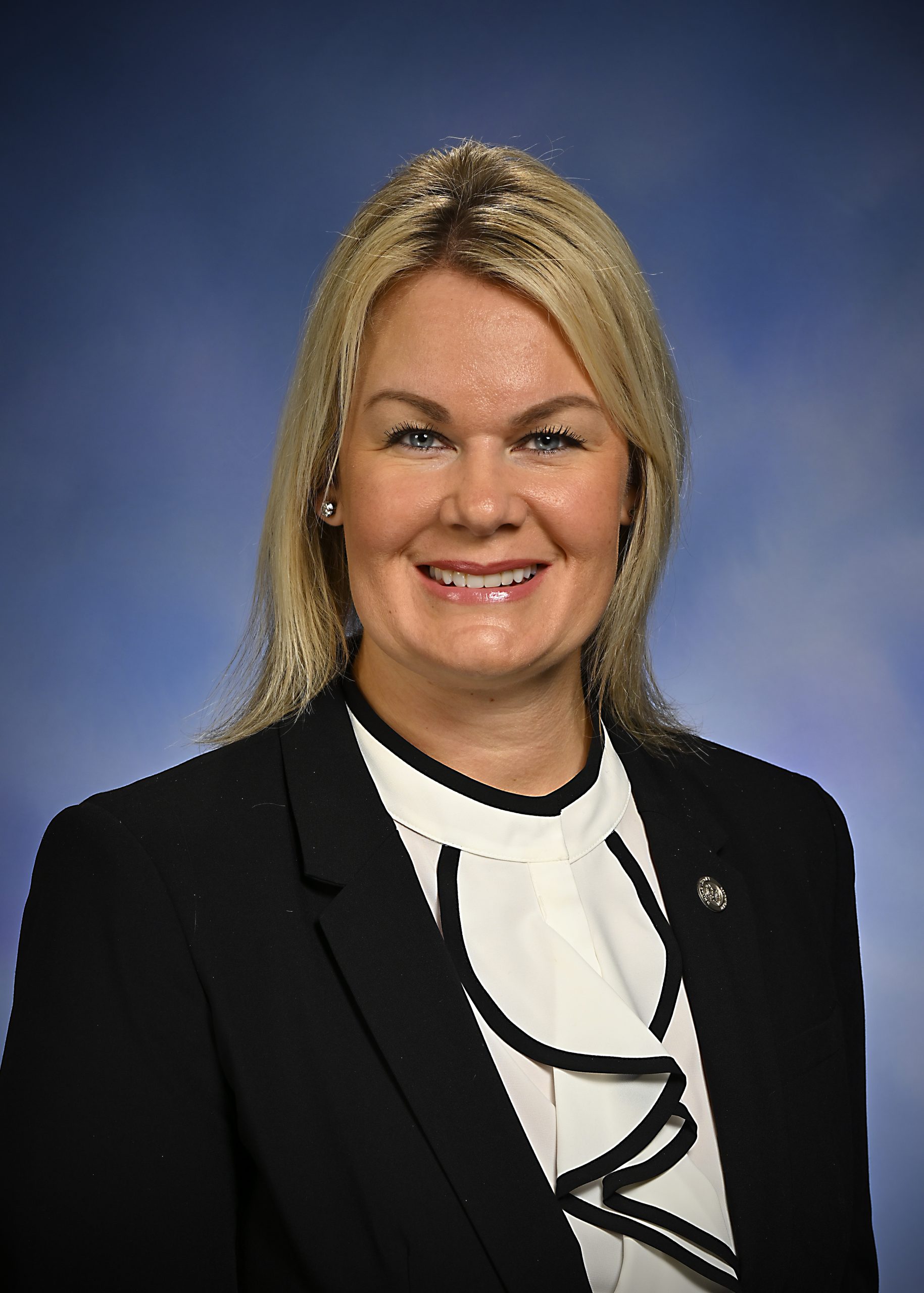
Rep. Rachelle Smit
Sponsored bills
Maddy summaryHB 5516, the "Foreign Law Limitation Act," prohibits Michigan courts, arbitrators, and administrative bodies from applying or enforcing foreign or religious laws in contracts or legal agreements if doing so would violate a resident's constitutional rights under U.S. or Michigan law. It requires these entities to block, modify, or void offending provisions when they conflict with constitutional rights, and to consider whether parties knowingly agreed to foreign law without duress. The law specifically excludes enforcement of federal or U.S. state laws and does not affect agreements made before the law's effective date. It directly affects courts handling disputes involving foreign legal provisions and protects Michigan residents from potential rights violations under external legal systems.
Maddy summaryHR 244 is a House resolution urging Congress to pass the SAVE Act (H.R. 22), which would require states to verify U.S. citizenship for federal election voter registration. The resolution references the SAVE Act’s key provision: requiring documentary proof of citizenship - such as a passport, birth certificate, or REAL ID-compliant ID - during registration, including through driver’s license offices or mail-in forms. It also mandates states to use DHS data to remove non-citizens from voter rolls and establish processes for resolving citizenship disputes. As a resolution, HR 244 itself does not change law but formally advocates for the SAVE Act’s adoption.
Maddy summaryHB 5481 lowers the population threshold for municipal civic centers to obtain liquor licenses from 5,500 to 5,000 residents. It affects cities/towns with populations of 5,000 or more that own and operate civic centers or auditoriums, allowing their concessionaires to apply for licenses if authorized by the local government. Licenses issued under this bill are non-transferable, cannot be used by educational institutions, and only permit alcohol sales during scheduled events at the venue. The bill amends Section 509 of Michigan's Liquor Control Code to make this change.
Maddy summaryHB 5154 requires public middle schools (grades 6-8) and high schools (grades 9-12) to accept cash as a payment option for admission fees to interscholastic athletic events. It directly affects school districts and public school academies that charge such fees. The bill amends Michigan’s School Code to mandate that school boards ensure cash is accepted, alongside other payment methods. This change applies only to schools charging admission fees for athletic activities, with no other policy changes specified.
Maddy summaryHB 5459 clarifies how utility companies collect the 2% additional sales tax on residential electricity, gas, and heating fuels in Michigan. It directly affects utility companies serving residential customers, requiring them to calculate the tax based on specific rules depending on their customer size. Companies with 100,000+ Michigan customers must prorate the tax starting from May 1, 1994, based on days after April 30, 1994. Smaller companies (under 100,000 customers) can either use this proration method or apply the tax starting with the first bill after April 30, 1994. The bill amends existing tax collection rules to provide clear, practical guidelines for utilities.
Maddy summaryHB 5460 prohibits Michigan state agencies from purchasing electric motor vehicles or components unless manufacturers provide a sworn declaration confirming no forced labor or oppressive child labor was used in their production, mining, or sourcing. This applies directly to all state agencies acquiring such vehicles, requiring verification of supply chain labor practices before contracts are signed. The bill defines "forced labor" broadly to include coercion, threats, abuse of legal processes, and child labor exploitation. It amends existing procurement laws to enforce this requirement, with no exceptions for state agencies under the transportation department's jurisdiction.
Maddy summaryThis resolution declares January 18-24, 2026, as "Sanctity of Human Life Week" in Michigan. It encourages citizens to reflect on the value of human life, support women and families, and strengthen a "culture of life" through symbolic recognition. The bill does not create new laws, alter policies, or directly affect any specific group or program. It is a ceremonial declaration with no binding requirements or funding mechanisms.
Maddy summaryThis bill amends Michigan's 2001 Manufacturing Milk Law to explicitly permit the sale of raw milk and raw milk products under the existing regulatory framework. It directly affects dairy producers and sellers who currently cannot legally sell these items under the law's current restrictions. The key change adds new Section 70a and revises Sections 111 and 136 to allow such sales while maintaining the law's overall structure. The bill updates the legal language to align with current market practices without creating new safety standards or requirements.
Maddy summaryHB 5207 updates licensing requirements for barber and cosmetology instructors in Michigan. It increases the required instructor training hours from 500 to 600 for cosmetology instructors (effective July 1, 2024) and from 600 to 900 hours for barber instructors. The bill also clarifies that prior experience cannot waive requirements like high school diplomas or exams. These changes directly affect individuals seeking to become licensed instructors in these fields.