

Maddy summaryHB 4795 removes a requirement for intermediate school board members to file paperwork accepting their position. It amends Michigan's school code (MCL 380.861) to eliminate this administrative step. The bill directly affects individuals serving on intermediate school districts' governing boards. This change simplifies a procedural obligation without altering voting rights or substantive school governance.
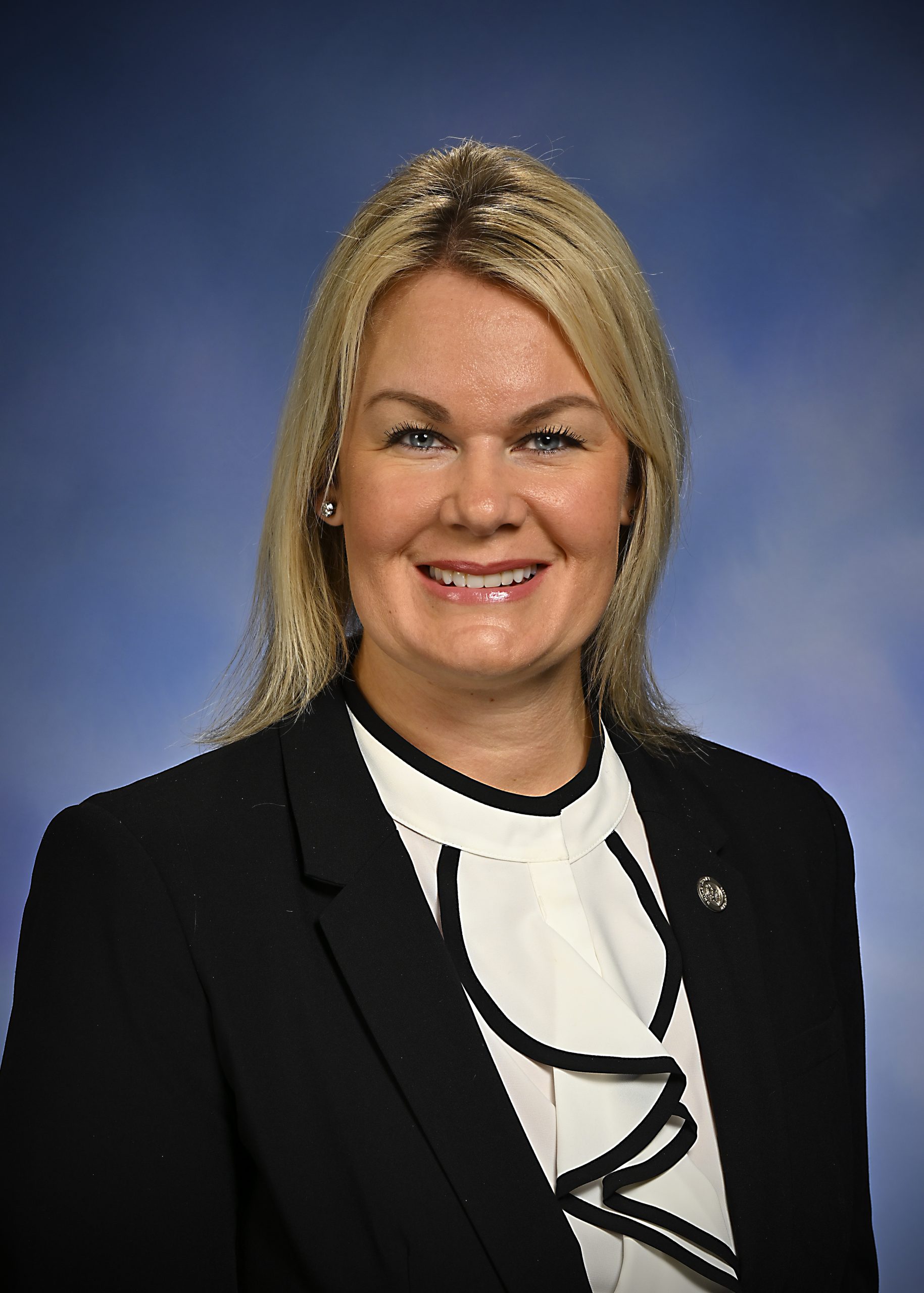
Rep. Rachelle Smit
Sponsored bills
Maddy summaryHB 4794 eliminates a requirement for community college board of trustee members to file an acceptance of office document. This change directly affects current and future members of community college boards across Michigan. The bill amends specific sections of state law (MCL 389.156 and 389.157) to remove the filing obligation, simplifying administrative processes for these boards. The legislation passed unanimously in the House with immediate effect.
Maddy summaryHB 5114 designates October 14 of each year as "Charlie Kirk Day" in Michigan. This ceremonial bill creates no new policies, funding, or obligations - it simply names a day for recognition. It directly affects the public by establishing a symbolic observance date, with no specific groups or programs impacted. The bill is purely commemorative and has no substantive provisions beyond the designation.
Maddy summaryHB 4787 would exempt utility companies' replacement electric distribution infrastructure from general property taxes after December 31, 2025, if the infrastructure replaces older systems. To qualify, owners must apply annually by March 1 to local assessors and submit detailed reports by March 31 each year, including location, description of the replaced infrastructure, and safety/reliability improvements. The exemption depends on another bill (HB 4788) being enacted first. This directly affects electric utilities upgrading their aging infrastructure.
Maddy summaryHB 4788 exempts qualified replacement electric distribution infrastructure (like poles, wires, and switches) from regular property taxes after 2025, while creating a new annual "replacement electric distribution infrastructure specific tax" on that same infrastructure. This tax, calculated at 30 mills of the replaced infrastructure’s taxable value (adjusted yearly by the Consumer Price Index), applies to electric utilities and cooperatives replacing depreciated infrastructure within their existing service areas. The tax revenue is distributed to local taxing units (cities, schools, counties) in the same way as regular property tax revenue. The bill affects electric utilities making qualifying infrastructure upgrades, shifting their tax burden from property taxes to this specific annual levy.
Maddy summaryHB 4526 amends Michigan's condemnation law to clarify how courts review the "public necessity" of utility projects (like power lines) when property owners challenge them. It requires courts to hold hearings within 30 days of a challenge and decide within 60 days, prioritizing transmission line routes near public land, existing rights-of-way, or property boundaries. For private utility projects, courts must determine necessity based on evidence, while certificates from the Public Service Commission create a "prima facie" case for necessity. The bill also limits appeals of court rulings on necessity to require court permission, streamlining the process for utility companies and property owners.
Maddy summaryHB 4709 prohibits the construction of commercial wind turbines for electricity production in the Great Lakes or their connecting waters, and bans operating any such turbines built in violation of this rule. It directly affects commercial wind energy developers planning projects in these waters, preventing new installations. The bill also states that renewable energy credits cannot be issued for electricity generated by prohibited turbines, and allows the attorney general to seek court injunctions to stop violations. This amendment adds a specific environmental protection measure to Michigan's Clean Energy Act.
Maddy summaryThis is a ceremonial resolution, not a law with policy changes. It declares October 2025 as "Pastor Appreciation Month" in Michigan to recognize pastors' contributions to their congregations and communities. The resolution expresses support for pastors' work through "wise counsel" and spiritual leadership, based on religious references in the text. It has no legal effect or direct impact on any specific group beyond symbolic recognition.
Maddy summaryHB 4736 clarifies procedures for replacing a candidate who dies before a county commissioner election. It amends Michigan election law (MCL 168.194 et seq.) to establish a clear process for selecting a replacement candidate from the same political party. This directly affects county election officials and candidates running for county commissioner positions. The bill ensures elections can proceed without delay when a candidate passes away, providing specific steps for replacement nominations. It does not change voting rules or create new election requirements.
Maddy summaryHB 4664 prohibits blocking state highways during assemblies of individuals, amending Michigan's existing traffic law (MCL 257.676b). It directly affects protesters or assembly participants who obstruct highway traffic, making such obstruction a misdemeanor offense. The key provision adds a specific penalty for blocking highways while engaging in group assemblies, moving beyond general traffic violations. This law clarifies that highway obstruction during protests is a criminal act, not merely a traffic infraction.