Issue · Labor & Employment

Labor & Employment

Every labor & employment bill, vote, and legislator stance in Maryland, automatically classified by Maddy, our AI policy reader.

Total bills
181
2026 Regular Session
Top supporter
Nick Charles
100% support rate
Top opponent
William Folden
0% support rate
Ranked legislators
10
5 support · 5 oppose
Key legislators

Who's moving labor & employment in Maryland

Legislators moving labor & employment in Maryland
Legislator Party Stance Support rate Votes
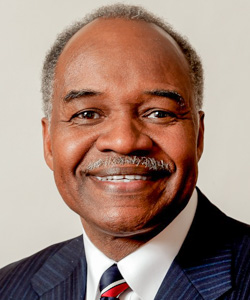
Nick Charles
Nick Charles Senate · District 25
D
Strong +
100% 83
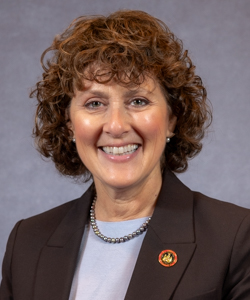
Shelly Hettleman
Shelly Hettleman Senate · District 11
D
Strong +
100% 100
Dalya Attar
Dalya Attar Senate · District 41
D
Strong +
100% 70
Ben Brooks
Ben Brooks Senate · District 10
D
Strong +
100% 99
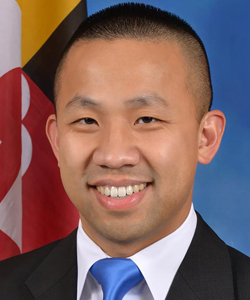
Clarence Lam
Clarence Lam Senate · District 12
D
Strong +
100% 97
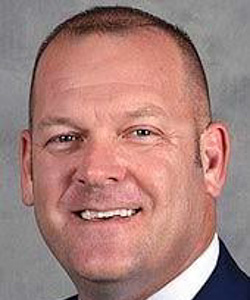
William Folden
William Folden Senate · District 4
R
Strong −
0% 81
Jason Gallion
Jason Gallion Senate · District 35
R
Strong −
0% 100
Steve Hershey
Steve Hershey Senate · District 36
R
Strong −
0% 97
Johnny Mautz
Johnny Mautz Senate · District 37
R
Strong −
0% 100
J.B. Jennings
J.B. Jennings Senate · District 7
R
Strong −
0% 100
Showing 71–80 of 181 bills

All labor & employment bills

died · Maryland · House of Delegates Mar 16, 2026

HB 1579: State Personnel - Family and Medical Leave - Limits and Use

HB 1579 modifies Maryland state employee leave policies for family and medical care. It allows employees to take up to 30 days of paid leave without medical certification for childcare following a birth or adoption placement, and up to 60 days total for two employees jointly caring for a child. The bill also ensures state units cannot limit federal Family and Medical Leave Act (FMLA) coverage below 24 weeks for Executive Branch employees caring for a newborn, adopted child, or a child with a serious health condition. These changes apply specifically to employees in the State Personnel Management System within Maryland's Executive Branch, effective July 1, 2026.
signed · Maryland · House of Delegates May 26, 2026

HB 742: Growing Family Child Care Opportunities Program - Funding

HB 742 requires the Governor to include $450,000 annually in Maryland's budget for the Growing Family Child Care Opportunities Program during fiscal years 2023, 2024, 2026, and 2028-2030. This funding supports grants to help local counties and child care resource centers establish and operate family child care programs. The program directly benefits family child care providers by providing start-up assistance for materials, curriculum, and renovations. Administered through partnerships between counties and child care resource centers, the bill mandates specific annual appropriations to expand access to licensed family child care services.
Sub-Topics Curriculum
signed · Maryland · Senate May 26, 2026

SB 509: Higher Education - Workforce Pell Grant Program - Implementation

This bill establishes Maryland's framework for implementing the federal Workforce Pell Grant Program. It requires the Governor, after consulting with workforce and education entities, to approve short-term education programs (150-600 hours, 8-15 weeks) that align with high-skill occupations and employer hiring needs. Approved programs must offer stackable credentials, provide academic credit transferability toward further education, and prepare students for in-demand careers. Institutions cannot disburse funds or advertise these programs to Maryland students without state approval, with biennial compliance reviews mandated for ongoing eligibility.
signed · Maryland · House of Delegates May 12, 2026

HB 1248: Workgroup for an Inclusive State Workplace - Established

HB 1248 establishes a 3-year pilot program (2026-2029) requiring five selected Maryland state agencies to convert eligible full-time positions into two part-time roles with prorated benefits. The bill mandates agencies to evaluate full-time vacancies for potential conversion to part-time roles and document reasons if conversion isn’t possible. It directly affects participating state agencies and future job seekers by increasing part-time employment options with benefits in state government. Agencies must report annually on conversion status and new part-time hires to the Governor and General Assembly. The program aims to improve workforce inclusivity by expanding flexible work opportunities without altering existing part-time employment rules.
Sub-Topics Public Employees
died · Maryland · House of Delegates Mar 9, 2026

HB 1524: Labor and Employment - Paid Leave - Attendance at School Functions

HB 1524 requires employers with 15 or more employees in Maryland to provide parent employees with 20 hours of paid leave annually to attend school functions for their child enrolled in public or nonpublic elementary or secondary school. This includes events like parent-teacher conferences or school performances, with employees needing to submit proof within 48 hours after the event. Employers must pay at the employee’s regular rate and cannot force parents to use existing sick or vacation leave instead. The law applies to all qualifying employers, including government entities, and takes effect October 1, 2026.
signed · Maryland · Senate May 26, 2026

SB 467: Maryland Child Care Credential Program - Extension of Funding

SB 467 extends annual funding for Maryland's Child Care Credential Program, directly affecting child care workers pursuing or holding approved credentials (like child development associate or administrator credentials). It revises funding requirements by mandating the Governor appropriate $4 million for fiscal year 2021, with 10% annual increases through 2024. Crucially, starting in fiscal year 2028, funding must be at least equal to the 2024 level, creating a fixed funding floor. The bill ensures ongoing support for credential holders through achievement bonuses, training reimbursements, or vouchers without altering the program's core eligibility or benefits.
died · Maryland · House of Delegates Apr 2, 2026

HB 1479: Labor and Employment - Minimum Wage - Increase (Maryland Raise the Wage Act)

HB 1479 (Maryland Raise the Wage Act) increases Maryland's minimum wage for most employers to $15 per hour starting January 1, 2024, rising to $18 per hour beginning January 1, 2028, with future increases tied to the Washington-Arlington-Alexandria Consumer Price Index (CPI). Small businesses (with 49 or fewer employees) receive a phased transition: $15 per hour from January 2024 through December 2028, then $18 per hour starting January 2029. The law automatically adjusts the wage annually based on CPI growth (capped at 5% per year), preventing freezes during periods of no CPI increase. The bill takes effect October 1, 2026, directly affecting all Maryland employers and their hourly workers.
in committee · Maryland · House of Delegates Feb 20, 2026

HB 1543: Labor and Employment - Temporary Workers

HB 1543 establishes a Temporary Worker Oversight Unit within Maryland’s Department of Labor to protect H-2A and H-2B visa holders working temporarily in the state. It requires recruiters to register annually and post a $10,000 bond, prohibits charging workers fees or retaliating for complaints, and mandates employers to file an affidavit confirming no fee violations before hiring. The bill ensures temporary workers can file complaints, access forms in English/Spanish, and receive Spanish interpretation during investigations. It also allows representatives from worker advocacy, legal, health, or labor organizations to enter employer-provided housing to offer assistance, support, and education.
Sub-Topics Labor Standards
signed · Maryland · Senate Apr 28, 2026

SB 647: Law Enforcement Officers' Pension System and State Police Retirement System - Line-of-Duty Catastrophic Injury Disability

SB 647 updates Maryland's Law Enforcement Officers' Pension System and State Police Retirement System to expand eligibility for line-of-duty disability benefits. It changes the qualifying standard from being "incapacitated for duty" to requiring members to be "totally and permanently unable to engage in any substantial gainful activity" due to a duty-related injury. This change affects current and future members of these systems who suffer catastrophic injuries while on duty, as defined in amended sections 24-401.1(k) and 26-401.1(k) of the Maryland Annotated Code. The bill modifies how the disability allowance is calculated and applied, focusing on the member's inability to work rather than just duty performance.
in committee · Maryland · House of Delegates Feb 16, 2026

HB 1358: Labor and Employment - Workforce Development and Local Workforce Development Boards (Local Workforce Solutions Investment Act

HB 1358 requires Maryland's Department of Labor to allocate funds from the Hospital Employees Retraining Fund to local workforce development boards when hospitals close, downsize, or merge. It also mandates that these local boards provide grants to employers through the Apprenticeship Career Training in Our Neighborhoods Program. Additionally, the bill requires the Department to fund local workforce boards for direct worker services under the State's quick response program when job losses occur due to business reductions. This bill directly affects local workforce development boards, hospitals facing operational changes, and workers impacted by layoffs or closures.
Showing 71 to 80 of 181 bills
Previous 1 7 8 9 19 Next