Issue · Healthcare

Healthcare

Every healthcare bill, vote, and legislator stance in Maryland, automatically classified by Maddy, our AI policy reader.

Total bills
376
2026 Regular Session
Top supporter
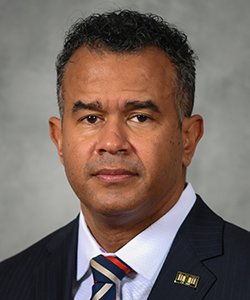
Alonzo Washington
100% support rate
Top opponent
Jason Gallion
0% support rate
Ranked legislators
10
5 support · 5 oppose
Key legislators

Who's moving healthcare in Maryland

Legislators moving healthcare in Maryland
Legislator Party Stance Support rate Votes
Alonzo Washington
Alonzo Washington Senate · District 22
D
Strong +
100% 68
Brian Feldman
Brian Feldman Senate · District 15
D
Strong +
100% 70
C.T. Wilson
C.T. Wilson House · District 28
D
Strong +
100% 98
Kevin Harris
Kevin Harris Senate · District 27
D
Strong +
100% 70
Pam Beidle
Pam Beidle Senate · District 32
D
Strong +
100% 71
Jason Gallion
Jason Gallion Senate · District 35
R
Strong −
0% 71
Jack Bailey
Jack Bailey Senate · District 29
R
Strong −
0% 69
Johnny Salling
Johnny Salling Senate · District 6
R
Strong −
4% 71
J.B. Jennings
J.B. Jennings Senate · District 7
R
Strong −
4% 71
Mary Beth Carozza
Mary Beth Carozza Senate · District 38
R
Strong −
5% 70
Showing 321–330 of 376 bills

All healthcare bills

in committee · Maryland · House of Delegates Feb 5, 2026

HB 615: Health Facilities - Confidentiality of Medical Records - Crisis Pregnancy Clinics

HB 615 adds crisis pregnancy clinics to Maryland's definition of "health care provider" for medical record confidentiality purposes. This means clinics offering pregnancy-related health care (including mobile facilities) must now follow the same state laws protecting patient records as hospitals and other medical providers. The bill specifically clarifies these clinics are not covered under federal HIPAA rules but must comply with Maryland's existing confidentiality standards. It directly affects crisis pregnancy clinics by requiring them to handle patient records under the same legal protections as other healthcare facilities. The law takes effect October 1, 2026.
signed · Maryland · House of Delegates May 26, 2026

HB 546: Primary and Secondary Education - Educator Professional Development - Course on Well-Being and Flourishing

HB 546 requires Maryland's State Department of Education to provide a free, mandatory professional development course on educator well-being and flourishing to all school personnel and administrators by July 1, 2027. The course must cover eight key areas of well-being identified by the federal Substance Abuse and Mental Health Services Administration, including social connections, physical health, emotional resilience, and financial literacy. Schools may use synchronous or asynchronous instruction, and the department can develop the course itself or adapt existing third-party materials. The bill ensures this course is offered at the same rate as other required professional development courses for licensed educators.
in committee · Maryland · Senate Jan 21, 2026

SB 78: Public Health – Prostate–Specific Antigen Testing (Protect Our Prostate Act)

SB 78, the "Protect Our Prostate Act," requires healthcare providers and clinical laboratories to provide standardized information to patients receiving prostate-specific antigen (PSA) tests. It mandates that providers give written preparation instructions before testing, while labs must use FDA-approved tests, calibrate using WHO standards, report results in nanograms per milliliter with reference ranges, and disclose test details to ordering doctors. The law directly affects patients undergoing PSA testing, healthcare providers ordering tests, and clinical laboratories administering the tests. It aims to improve transparency and accuracy of PSA results to help patients understand potential risks like false positives, without changing treatment protocols.
Sub-Topics Public Health
signed · Maryland · House of Delegates Apr 14, 2026

HB 393: Health Insurance - Scalp Cooling Systems - Required Coverage

HB 393 requires health insurers, nonprofit health plans, HMOs, and managed care organizations in Maryland to cover scalp cooling systems when they provide coverage for chemotherapy treatments for cancer. This applies directly to cancer patients undergoing chemotherapy who use scalp cooling to prevent hair loss, and to the insurers that must now include this coverage. The bill defines scalp cooling systems as medical devices designed for repeated use to preserve hair during cancer treatment. Coverage must be provided for these systems as part of chemotherapy treatment plans, effective January 1, 2027. The law amends Maryland’s Insurance Article (Section 15-864) to mandate this coverage for qualifying health plans.
Sub-Topics Insurance
signed · Maryland · Senate May 26, 2026

SB 140: Criminal Law - Benefits Exploitation

SB 140 prohibits individuals from knowingly recruiting, harboring, transporting, or obtaining another person specifically to appropriate their government benefits for personal gain or another's benefit. It directly affects vulnerable populations receiving benefits like Medicare, Medicaid, SNAP, Social Security, or veterans' aid, and targets those exploiting them through coercion (e.g., threats, financial control) or deception. The law defines "exploitation" as illegally using benefits via undue influence, false promises, or isolation, and bans profiting from such exploitation or aiding violations. Violations are felonies punishable by up to 25 years in prison, a $15,000 fine, or both, with each violation treated as a separate offense.
signed · Maryland · Senate May 26, 2026

SB 420: Public Institutions of Higher Education - Pregnant and Parenting Students - Plan and Reporting

SB 420 requires all public institutions of higher education in Maryland (excluding specific exceptions like University of Maryland Global Campus) to collect demographic data on students' parental status, including whether they are parents, legal guardians, or have caregiving responsibilities. It mandates these institutions to adopt a formal support plan for pregnant and parenting students, including referrals to government assistance programs like WIC, child care scholarships, Medicaid, and parenting resources. The Maryland Higher Education Commission must collect this data annually, compile it into reports, and submit summaries to legislative committees starting September 1, 2027. This bill directly affects pregnant and parenting students by requiring colleges to provide structured support services and track demographic needs.
in committee · Maryland · House of Delegates Mar 19, 2026

HB 49: Public Health - Abortion (Heartbeat Bill)

HB 49 restricts abortion access by requiring physicians (not other providers) to perform abortions and banning procedures before a detectable fetal heartbeat is confirmed. It defines "fetal heartbeat" as cardiac activity visible via ultrasound and mandates physicians use specific medical methods to detect it, including documenting gestational age and test results. Exceptions apply for medical emergencies, requiring written documentation certifying the necessity. The bill repeals prior abortion regulations and shifts enforcement to private civil lawsuits, not government action. It directly affects physicians performing abortions, pregnant patients seeking care, and healthcare facilities.
signed · Maryland · House of Delegates Apr 28, 2026

HB 624: Hospitals - Clinical Staffing Committees and Plans - Establishment (Safe Staffing Act of 2026)

HB 624 (Safe Staffing Act of 2026) requires most Maryland hospitals to establish clinical staffing committees with equal management and employee representation, including specific frontline staff like nursing assistants and dietary aides. These committees must develop annual staffing plans considering patient acuity, staffing gaps, and evidence-based standards, then post the plans publicly and update them yearly. Hospitals must implement these plans starting in 2028, allow staff to file complaints about violations, and report annually to the Maryland Health Care Commission beginning in 2030. The law directly affects licensed hospitals and frontline healthcare workers by mandating structured, transparent staffing processes to address patient care needs.
signed · Maryland · House of Delegates Apr 14, 2026

HB 276: State Emergency Medical Services Board - Public Access Automated External Defibrillator Program - Revisions

HB 276 revises Maryland's Public Access Automated External Defibrillator (AED) Program to clarify requirements for entities using AEDs. It establishes a mandatory "AED Coordinator" role to maintain AED functionality and reporting, repeals outdated requirements for regional council AED committees, and exempts law enforcement agencies from needing a certificate for AEDs deployed in patrol vehicles. The bill affects businesses, organizations, and government entities that operate public AEDs, requiring them to maintain written AED plans and coordinate with emergency services. Key changes streamline oversight while ensuring AEDs remain accessible and properly maintained for public use during cardiac emergencies.
passed both · Maryland · Senate Apr 13, 2026

SB 489: Health Occupations - Physicians Trained in Foreign Countries - Exemption From Educational Requirements and Limited License

SB 489 modifies Maryland's licensing rules for physicians trained at international medical schools. It exempts applicants who provide evidence of completing two years of postgraduate training accredited by ACGME-I or another board-recognized body from standard educational requirements. These physicians would be permitted to practice medicine only during their initial license term under mandatory supervision, as specified by the Board. The bill takes effect October 1, 2026, directly affecting international medical graduates meeting these specific training criteria.
Sub-Topics Medical Licensing
Showing 321 to 330 of 376 bills
Previous 1 32 33 34 38 Next