

Under existing law, the Public Utilities Commission has regulatory authority over public utilities, including telephone corporations. Existing law establishes the California High-Cost Fund-A Administrative Committee Fund, the California High-Cost Fund-B Administrative Committee Fund, the Universal Lifeline Telephone Service Trust Administrative Committee Fund, the Deaf and Disabled Telecommunications Program Administrative Committee Fund, the Payphone Service Providers Committee Fund, the California Teleconnect Fund Administrative Committee Fund, and the California Advanced Services Fund (CASF) in the State Treasury and provides that moneys in the funds are held in trust and may be expended only to accomplish specified telecommunications universal service programs, upon appropriation in the annual Budget Act or upon supplemental appropriation. This bill would prohibit the commission from collecting, for deposit into any universal service fund, any revenues derived from charges upon the provision of a communications service that the Federal Communications Commission has determined is an information service, as specified. Existing law establishes the Public Utilities Commission Utilities Reimbursement Account and authorizes the commission to annually determine a utility reimbursement fee to be paid by every public utility providing service directly to customers or subscribers and subject to the jurisdiction of the commission, except for a railroad corporation. The commission is required to establish the fee, with the approval of the Department of Finance, to produce a total amount equal to that amount established in the authorized commission budget for the same year, and an appropriate reserve to regulate public utilities, less specified sources of funding. This bill would prohibit the commission from imposing a utility reimbursement fee that is applicable to the provision of a communications service that the Federal Communications Commission has determined is an information service, as specified.
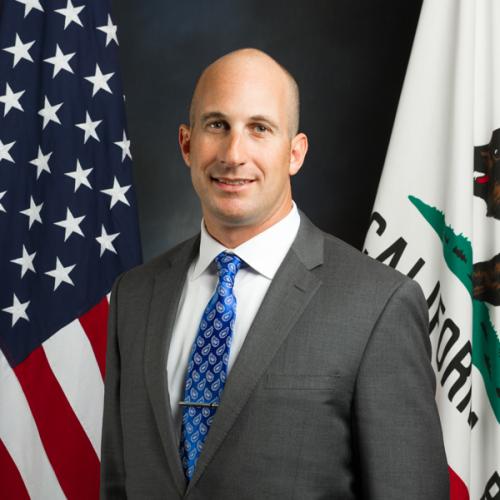
Asm. Heath Flora
Sponsored bills
This measure would name the public street, circle, and plaza at 914 and 915 Capitol Mall in the City of Sacramento as the Willie L. Brown, Jr. Circle and Plaza. The measure would request the Department of General Services to determine the cost of erecting the appropriate signage commemorating this special designation and, upon receiving donations from nonstate sources, to cover that cost to erect that signage.
Existing law, the California Whistleblower Protection Act, prohibits an employee from interfering with a person's rights to disclose improper activity and be free from reprisal under the act. The act authorizes the California State Auditor to conduct an investigation upon receiving specific information that an employee or state agency has engaged in an improper governmental activity, as defined. The act applies to state agencies, as defined, and to the University of California, the California State University, and courts, as specified. The act requires the auditor to establish a means of submitting allegations of improper governmental activity, and generally requires the California State Auditor to keep confidential every investigation, including all investigative files and work product. Under the act, a person who intentionally engages in acts of reprisal, retaliation, threats, coercion, or similar acts against a state employee or an applicant for state employment for having made a protected disclosure is subject to civil liability and criminal penalties. The act defines a "protected disclosure" to mean, among other things, a good faith communication that discloses information that may evidence an improper governmental activity. The act specifically includes in "protected disclosure" a good faith communication to the California State Auditor's Office alleging an improper governmental activity and any evidence delivered to the California State Auditor's Office in support of the allegation. Under the act, "protected disclosure" also includes, but is not limited to, a complaint made to the Commission on Judicial Performance. This bill would expand the definition of the term "protected disclosure" to include a complaint made to a Member of the Legislature, the Legislature, or any subdivision thereof. Because this bill would expand the definition of a crime, it would impose a state-mandated local program. The California Constitution requires the state to reimburse local agencies and school districts for certain costs mandated by the state. Statutory provisions establish procedures for making that reimbursement. This bill would provide that no reimbursement is required by this act for a specified reason.
Under existing law, if a person is convicted of driving under the influence and the offense occurred within 10 years after 3 or more other violations for driving under the influence that resulted in specified convictions, that person has committed an offense punishable as either a misdemeanor or a felony, and the person shall have their privilege to drive revoked. This bill would additionally make a conviction for driving under the influence that occurs within 10 years after 4 or more previous specified convictions, a felony. Under existing law, if a person is convicted of driving under the influence and the offense occurred within 10 years after a specified conviction of driving under the influence that is charged as a felony, that person has committed an offense punishable as either a misdemeanor or a felony. This bill would instead make such a conviction punishable only as a felony. Existing law requires a court, upon convicting a person for a specified offense of driving under the influence that occurred within 5 years after a previous conviction or convictions, as specified, to order that person's vehicle to be impounded for a specified period of time. This bill would instead require this impoundment of the defendant's vehicle for a specified offense that occurs within 10 years after a previous conviction or convictions. The bill would also increase the duration of the vehicle impoundment. Existing law authorizes a court, after certain repeated convictions relating to driving under the influence, to declare the person's vehicle a nuisance and have it seized, as specified. This bill would instead require the court, after certain repeated convictions relating to driving under the influence, to declare the person's vehicle a nuisance and have it seized, as specified. The bill would also expand the circumstances under which seizure as a nuisance would be required. By expanding the application of, and increasing the punishment for, certain crimes, this bill would create a state-mandated local program. The California Constitution requires the state to reimburse local agencies and school districts for certain costs mandated by the state. Statutory provisions establish procedures for making that reimbursement. This bill would provide that no reimbursement is required by this act for a specified reason.
Existing law establishes the Department of Corrections and Rehabilitation and charges it with certain duties and powers, including, among other things, the operation of prisons and other specified institutions. This bill would require the department to establish a Peace Officer Peer Support Labor Management Committee tasked with crafting, updating, and monitoring the implementation of a standardized statewide peace officer policy for the department's peer support program to provide substantive assistance to the peace officers employed by the department. The bill would require the committee to be composed of an equal number of representatives of the employer and peace officer employees, and would require the members of the committee to be selected and hold their first meeting on or before July 1, 2020. The bill would require the policy to address, among other things, the selection process and training for peer support team members, and guidelines for the types of communication that would remain confidential within the peer support program. The bill would require the policy to be fully implemented by January 1, 2022. The bill would require the department to submit, beginning July 1, 2020, an annual report to the Legislature that contains data pertaining to the utilization rates of the peace officer peer support program statewide.
Existing law dissolved redevelopment agencies and community development agencies as of February 1, 2012, and provides for the designation of successor agencies to wind down the affairs of the dissolved redevelopment agencies and to, among other things, dispose of assets and properties of the former redevelopment agency as directed by the oversight board of the successor agency. Existing law requires a successor agency to dispose of specified assets and properties of the former redevelopment expeditiously and in a manner aimed at maximizing value. This bill would authorize the successor agency to the Redevelopment Agency of the City of Manteca to dispose of assets previously used as Qualex Incorporated, as defined, to a nonprofit organization that provides resources to homeless and low-income individuals, provided that the agency requires that the property be used for those purposes. If that property ceases to be used for these purposes, the bill would require that the property revert to the successor agency or, if the successor agency has ceased to exist, the City of Manteca. The bill would then require the successor agency or the City of Manteca, as applicable, sell the property at its fair market value and distribute the proceeds from the sale to each affected taxing entity on a pro rata basis. The bill would make legislative findings and declarations regarding the public purpose served by the bill. This bill would make legislative findings and declarations as to the necessity of a special statute for the successor agency to the Redevelopment Agency of the City of Manteca.
Existing law establishes the Department of Veterans Affairs, which is responsible for administering various programs and services for the benefit of veterans. Existing law provides for the licensure of residential care facilities for the elderly, community care facilities, and residential care facilities for persons with chronic, life-threatening illness by the State Department of Social Services. Existing law exempts from the application of these provisions specified facilities, including general acute care hospitals and clinics. Existing law authorizes the California State Auditor, upon the request by the Joint Legislative Audit Committee and to the extent funding is available, to audit a state or local governmental agency, as defined, or any other publicly created entity. This bill would establish the Medical Foster Home Pilot Program until January 1, 2023, under which a United States Department of Veterans Affairs (USDVA) facility may establish a medical foster home that is not subject to licensure or regulation as a residential care facility for the elderly, a community care facility, or a residential care facility for persons with chronic, life-threatening illness, pursuant to specified federal requirements. The bill would require a USDVA facility establishing the home to agree to be subject to the jurisdiction of the California State Auditor, and would require a medical foster home caregiver or an individual, other than a veteran resident, who is over 18 years of age and is residing in the medical foster home to be a registered independent home care aide, as specified. The bill would state the intent of the Legislature that the California State Auditor, in response to a request to the Joint Legislative Audit Committee, conduct an audit evaluating the pilot program created by this bill no sooner than January 1, 2021, as specified.
This measure would recognize September 2020 as Sickle Cell Disease Awareness Month and encourage the Legislature to appropriate funds for research, treatment, and monitoring of sickle cell disease, and for related education and outreach.
This measure would designate October 23, 2020, as Chinese American Day in California to highlight the important historical contributions of Chinese Americans to California and to the United States of America.
Existing law establishes the California Conservation Corps and requires that young people participating in the corps program generally be engaged in projects that, among other things, preserve, maintain, and enhance environmentally important lands and waters. Existing law requires the director of the corps to establish a forestry corps program to accomplish certain objectives, including developing and implementing forest health projects, as provided, and establishing forestry corps crews. Existing law establishes the California Conservation Camp program to provide for the training and use of inmates and wards assigned to conservation camps to perform public conservation projects, including, but not limited to, forest fire prevention and control, forest and watershed management, recreation, fish and game management, soil conservation, and forest and watershed revegetation. This bill would authorize the director of the corps to establish the Education and Employment Reentry Program within the corps and to enroll in the program formerly incarcerated individuals who successfully served on a California Conservation Camp program crew and were recommended for participation as a program member by the Director of Forestry and Fire Protection and the Secretary of the Department of Corrections and Rehabilitation. The bill would prescribe program enrollment terms, and would require the director of the corps, in conjunction with the Employment Development Department, to prioritize developing and executing plans to assist program members in obtaining continued employment following participation in the program. The bill would also establish program activities and objectives, including, among others, assisting with the forestry corps program objectives. The bill would authorize the corps, subject to the discretion and approval of the director of the corps, to enter into a planning agreement with certain entities to develop reentry and job training opportunities for the formerly incarcerated individuals described above who do not otherwise qualify for corps enrollment under corps policies. The bill would make implementation of the program contingent upon an appropriation being made in the annual Budget Act or another statute for its purposes.