

Existing law establishes in state government the Natural Resources Agency, consisting of various departments, including the Department of Forestry and Fire Prevention. Existing law provides that the department is responsible for the fire protection, fire prevention, maintenance, and enhancement of the state's forest, range, and brushland resources, contract fire protection, associated emergency services, and assistance in civil disasters and other nonfire emergencies. This bill, beginning in the 2020–21 fiscal year and until the 2030–31 fiscal year, would continuously appropriate $500,000,000 from the General Fund annually to the Natural Resources Agency for healthy forest programs that reduce greenhouse gas emissions caused by uncontrolled wildfires, as specified, including for healthy forest projects in or adjacent to state responsibility areas, or on federal lands pursuant to Good Neighbor Authority agreements entered into with the federal government. This bill would require the agency, in consultation with the department, to establish and administer the Small Landowner Vegetation Management Assistance Program for the purpose of providing grants and loans to qualified organizations, as defined, for forest health and fire prevention projects. The bill would require the agency to allocate some of the money specified above for purposes of this program.
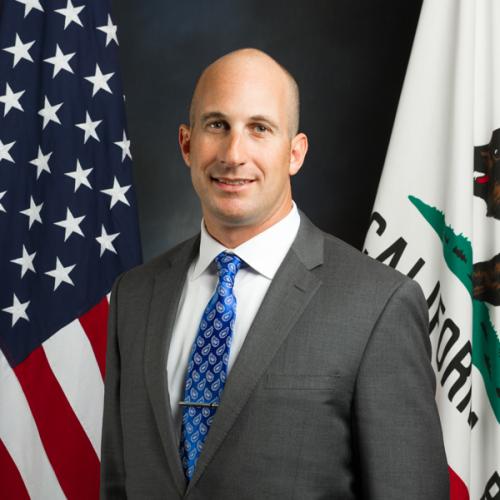
Asm. Heath Flora
Sponsored bills
Under existing law, the Public Utilities Commission has regulatory authority over public utilities, including electrical corporations, while local publicly owned electric utilities are under the direction of their governing boards. Existing law requires electrical corporations, by December 1, 2016, to procure, through financial commitments of 5 years, their proportionate shares of 125 megawatts of cumulative rated generating capacity from bioenergy projects commencing operation prior to June 1, 2013, that each produces its generation using specified minimum percentages of certain types of forest feedstock. Pursuant to this requirement, the commission has adopted resolutions establishing fuel or feedstock procurement requirements for generation from bioenergy projects intended to reduce wildfire risks that are applicable to the state's 3 largest electrical corporations. Existing law additionally requires local publicly owned electric utilities serving more than 100,000 customers to procure their proportionate shares of 125 megawatts of cumulative rated generating capacity from those kinds of bioenergy projects subject to terms of at least 5 years. Existing law requires an electrical corporation, local publicly owned electric utility, or community choice aggregator with a contract to procure electricity generated from biomass pursuant to statutory requirements or commission resolutions, that is operative at any time in 2018, and expires or expired on or before December 31, 2023, to seek to amend the contract to include, or seek approval for a new contract that includes, an expiration date 5 years later than the expiration date in the contract that was operative in 2018, so long as the contract extension follows the feedstock requirements and sources fuel material in California. Existing law exempts biomass facilities located in federal severe or extreme nonattainment areas for particulate matter or ozone from these requirements. This bill would repeal the exemption from these contract extension requirements for biomass facilities located in federal severe or extreme nonattainment areas for particulate matter or ozone.
The California Emergency Services Act creates within the office of the Governor the Office of Emergency Services, which is responsible for the state's emergency and disaster response services, as specified. The Public Safety Communication Act of 2002, among other things, requires the Public Safety Radio Strategic Planning Committee to develop and implement a statewide integrated public safety communication system that facilitates interoperability among state public safety departments and other first response agencies and coordinate other shared uses of the public safety spectrum consistent with decisions and regulations of the Federal Communications Commission. This bill would require the Office of Emergency Services to establish and operate a grant program, upon appropriation of adequate funds by the Legislature, to provide assistance in obtaining, retrofitting, purchasing, and maintaining interoperability systems in K–12 school, community college, and California State University campuses, and University of California campuses, and to enable local fire agencies to enable their systems of communications to be connected to, and coordinated with, communications and security technology systems installed and operating on K–12 school, community college, and California State University campuses, and University of California campuses, as specified.
Existing law prohibits the State Department of Social Services from authorizing individuals who have been convicted of certain crimes from working or otherwise being present at a community care facility, a residential care facility for persons with a chronic, life-threatening illness, a residential care facility for the elderly, or a child daycare facility. The act requires the department to perform criminal background investigations of individuals as part of its licensing and regulatory oversight of these facilities. This bill would enumerate additional crimes that prohibit the department from authorizing an individual from working or otherwise being present at these facilities, including, among other crimes, procuring another person for the purpose of prostitution. The bill would additionally require the department to examine and review whether the inclusion of additional specified crimes in those provisions would be appropriate, and to report its findings to the Legislature on or before January 1, 2022.
Existing law prohibits a person from driving a motor vehicle when the person has 0.08 percent or more, by weight, of alcohol in their blood. This bill would instead prohibit a person from driving a motor vehicle when the person has 0.05 percent or more, by weight, of alcohol in their blood. The bill would also make other conforming changes. By expanding the scope of an existing crime, this bill would create a state-mandated local program. The California Constitution requires the state to reimburse local agencies and school districts for certain costs mandated by the state. Statutory provisions establish procedures for making that reimbursement. This bill would provide that no reimbursement is required by this act for a specified reason.
Existing law states the intent of the Legislature that the Department of Motor Vehicles implement procedures to ensure, to the fullest extent permitted by the resources made available to it, that a person who is requesting certain services will not be required under normal circumstances to wait in any one line for service longer than 12 hour during the department's published or posted hours of operation. This bill would instead require the department to implement those procedures. The bill would also require every office of the department to post information relating to wait times and would require the department to make that wait time information available on the department's Internet Web site and by telephone.
Existing law authorizes the Department of Motor Vehicles to establish contracts for electronic programs that allow qualified private industry partners to provide services that include processing and payment programs for vehicle registration and titling transactions. Existing law authorizes the department to enter into a partnership with an interstate carrier partner to provide electronic vehicle registration services and to enter into contractual agreements with interstate carrier partners, if certain criteria are met. This bill would require the Department of Motor Vehicles to explore ways to increase its partnerships with motor clubs, qualified private industry partners, and others to provide services traditionally provided by the department and would authorize those partners to provide specified services. The bill would require the department to submit a report to the Legislature every 2 years beginning January 1, 2022, on its progress to expand and increase those partnerships.
Pursuant to existing law, the Department of Forestry and Fire Protection is responsible for fire protection in state responsibility areas, as well as the administration of the state's private and public forests. Pursuant to existing law, the Public Utilities Commission has regulatory authority over public utilities, including electrical corporations, electrical cooperatives are subject to the authority and jurisdiction of the commission for certain purposes, and local publicly owned electric utilities are under the direction of their governing boards. Existing law requires each electrical corporation, local publicly owned electric utility, and electrical cooperative to construct, maintain, and operate its electrical lines and equipment in a manner that will minimize the risk of catastrophic wildfire posed by those electrical lines and equipment. Existing law requires each electrical corporation to annually prepare a wildfire mitigation plan and to submit its plan to the commission for review and approval, as specified. Existing law requires the commission, at the time it approves each plan, to authorize the utility to establish a memorandum account to track costs incurred to implement the plan. Following approval, the commission is required to oversee compliance with the plans. Existing law requires the commission and the department to enter into a memorandum of understanding to cooperatively develop consistent approaches and share data related to fire prevention, safety, vegetation management, and energy distribution systems and to share results from various fire prevention activities, including relevant inspections and fire ignition data. This bill would require the department to establish an electrical grid inspection unit with a northern region and southern region, each region having 10 fire captain specialists and one battalion chief. The electrical grid inspection unit would be responsible for enforcing electrical corporation compliance with all statutes, regulations, and rules concerning safety, maintenance of firebreaks, and vegetation control in state responsibility areas and specified areas that are at high risk for catastrophic wildfires. The bill would require the department to adopt regulations establishing a program for the inspection of an electrical corporation's lines and associated equipment for the transmission or distribution of electricity that authorizes the electrical grid inspection unit to issue citations to an electrical corporation to correct a condition involving the utility's lines or associated equipment. The bill would require that the regulations include specified content, including protocols to notify the Public Utilities Commission of the results of inspections for which no citation is issued and of any citation issued by the department and the resolution of the citation. The bill would make the notifications admissible in specified proceedings and reviews by the commission. The bill would appropriate $5,000,000 from the General Fund to the department for purposes of establishing and staffing the electrical grid inspection unit.
Existing law establishes within the Department of Housing and Community Development the California Housing Finance Agency and provides that the primary purpose of the agency is to meet the housing needs of persons and families of low or moderate income. Existing law requires the California Housing Finance Agency administer the Roberti-Greene Home Purchase Assistance Program, to provide home purchase assistance to low- and moderate-income homebuyers to qualify for the purchase of owner-occupied homes. Existing law authorizes the agency, pursuant to specified objectives, to create its own home purchase assistance programs, home purchase assistance products, or both, on terms and conditions as the agency deems prudent. Existing law requires the agency to provide to the Legislature and the Legislative Analyst an annual report containing information concerning all units produced, assisted, or insured using agency funds. This bill would require the Legislative Analyst to conduct a study, and present the findings thereof to the Legislature, to inform the creation of a low-interest loan program for first responders. The bill would require the report to be submitted on or before January 1, 2024. The bill would require the report to include a recommendation as to which state department is best suited to administer the program, an estimation of the amount of funding that would be necessary to conduct the program, and recommendations for qualifications for participation in the program.